
Some of the most beautiful places in the world are the ones people built: temples, citadels, harbor towns, and island monasteries that have outlasted the empires behind them.
These 13 historic places around the world draw American travelers again and again, and each one still lets you walk through a chapter of the past.
For every stop, you’ll find what makes it special, what to see first, and one practical tip that makes the visit easier. Conditions abroad change, so check the U.S. State Department’s travel advisories before planning any trip.
More Than 2,000 Years in 13 Places
Approximate dates, from oldest to newest.
From the 7th century BC
The Great Wall, China (most visited sections date from the Ming era, 1368–1644)
c. 518 BC
Persepolis, Iran
447–432 BC
The Acropolis, Greece (the Parthenon)
5th century AD
Sigiriya, Sri Lanka
6th century AD
Hagia Sophia, Turkey and Jvari Monastery, Mtskheta, Georgia
c. 600–1000 AD
Chichen Itza, Mexico (its height of power)
From the 8th century AD
Mont Saint-Michel, France
c. 13th–16th centuries
Easter Island’s Moai, Chile
14th century
Ayutthaya, Thailand (founded around 1350) and Bryggen, Norway
1566
Valletta, Malta
Timeless
Serengeti National Park, Tanzania, the list’s one natural wonder
The Acropolis, Greece
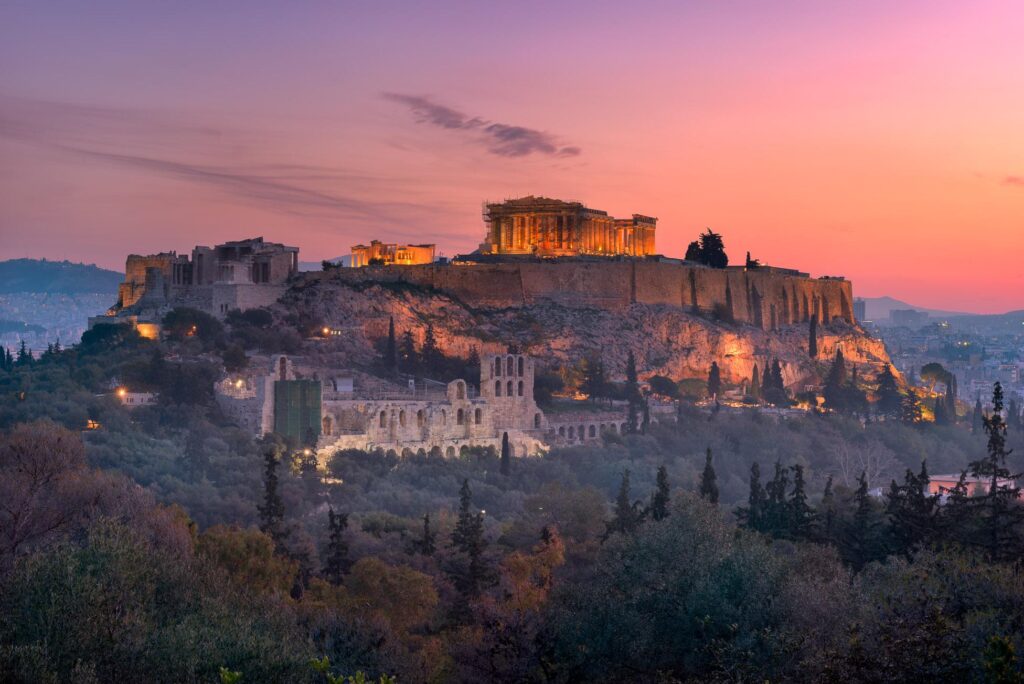
High above modern Athens, the Acropolis holds the Parthenon, the temple to Athena that became the model for classical architecture around the world.
Built in the 5th century BC, it shares the hilltop with the graceful Erechtheion and the small Temple of Athena Nike, and the view across the city’s rooftops to the sea is part of the experience.
Plan around the heat and the crowds. Entry is by timed ticket with a daily visitor limit, so book ahead in summer and aim for the first slot of the morning or the late afternoon, when tour groups have thinned out.
Wear shoes with good grip, since the ancient marble is slippery even when dry. Afterward, walk down to the Acropolis Museum, which needs a separate ticket and displays many of the original sculptures from the hill.
Ayutthaya, Thailand
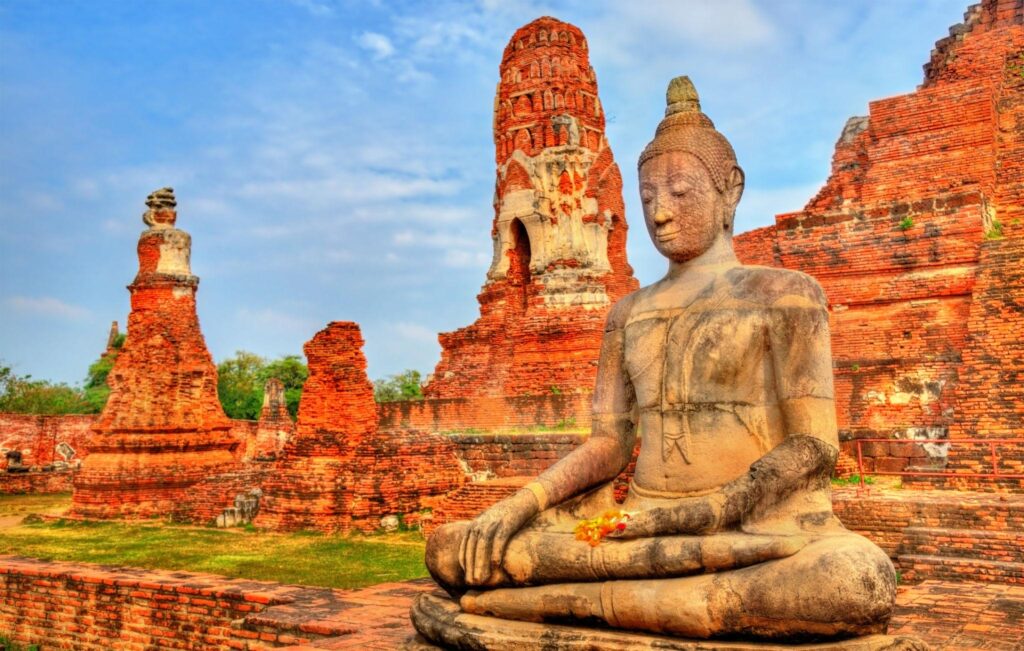
Founded around 1350, Ayutthaya was the capital of the Kingdom of Siam for four centuries and one of the largest, wealthiest cities in Asia, until a Burmese army burned it in 1767.
What survives is a sprawling field of brick temples and towering prangs, now a UNESCO World Heritage Site and an easy day trip from Bangkok.
Three sights to prioritize:
- Wat Mahathat: home to the famous stone Buddha head wrapped in the roots of a fig tree.
- Wat Phra Si Sanphet: three tall chedis in a row, the most photographed view in the park.
- Wat Chaiwatthanaram: a riverside temple that glows at sunset.
The ruins are spread out, so renting a bicycle or taking a boat around the island makes it much easier to see several in a day. Start early, before the midday heat.
Chichen Itza, Mexico
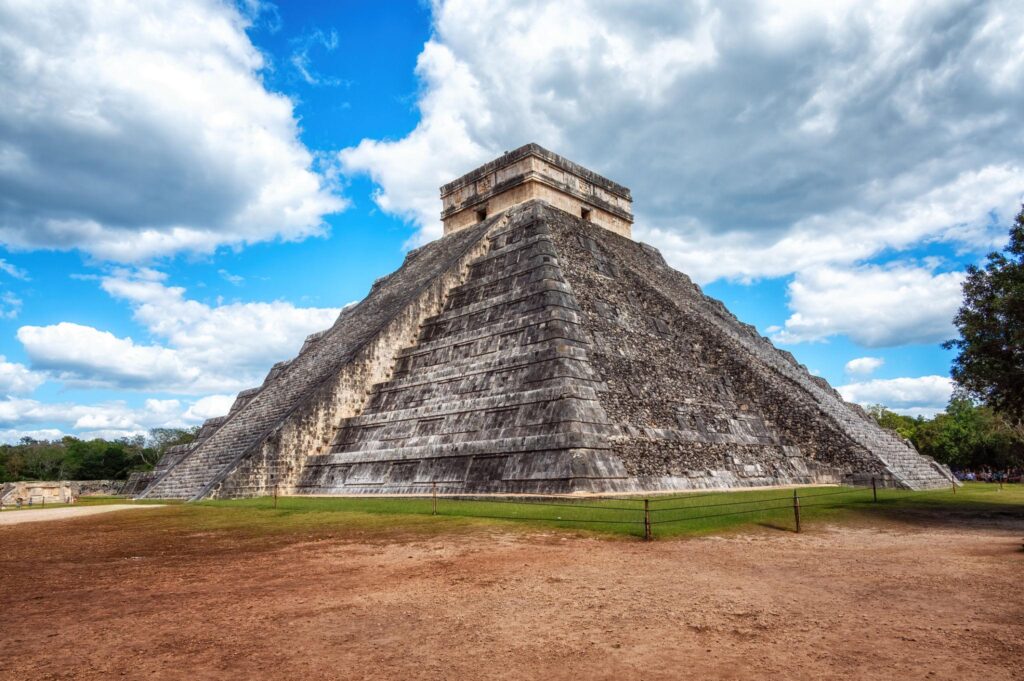
Chichen Itza was one of the great cities of the Maya world, and its centerpiece, El Castillo (also called the Temple of Kukulcán), is a stone calendar as much as a pyramid.
Its four stairways have 91 steps each, which, with the platform at the top, add up to 365. Around the spring and fall equinoxes, late-afternoon sunlight casts a pattern of shadows on the northern stairway that looks like a serpent sliding down the pyramid.
Climbing El Castillo has been prohibited for years, and visitors now view it from a set distance, so plan to admire it from the plaza.
Arrive when the gates open to beat the heat and the tour buses, then cool off afterward with a swim in one of the region’s cenotes, natural limestone sinkholes filled with clear water.
Tip: the equinox days draw enormous crowds. If you’d rather see the site calmly, visit another week.
City of Valletta, Malta
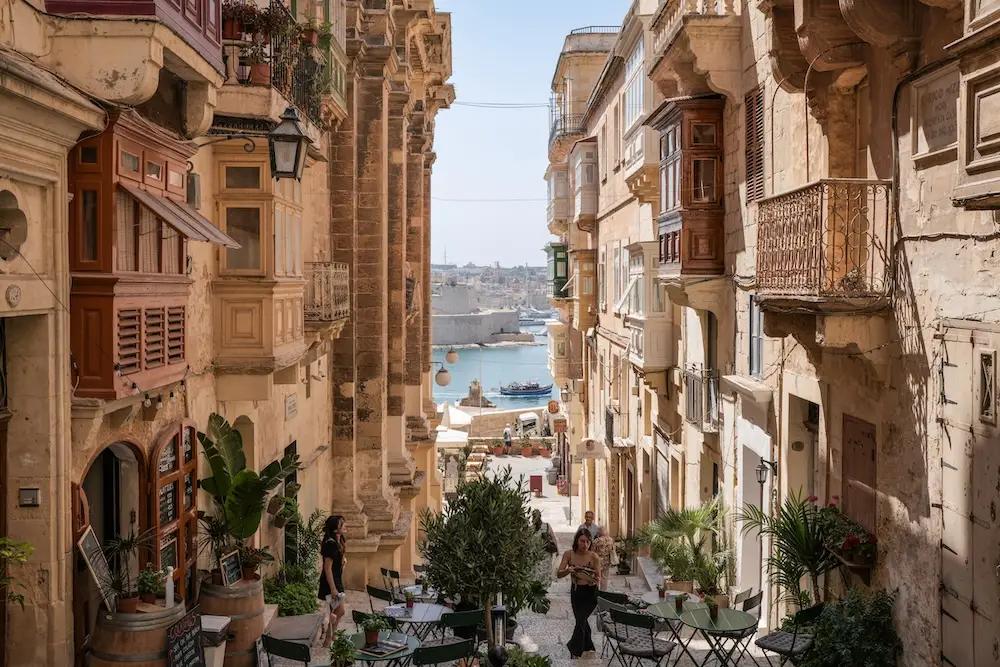
Valletta is a whole capital city built as a fortress. After the Knights of St. John held off an Ottoman invasion in the Great Siege of 1565, they founded a new city on the peninsula and packed it with palaces, churches, and honey-colored limestone streets.
Today the entire city is a UNESCO World Heritage Site, and it’s small enough to cross on foot in about 20 minutes. Step inside St. John’s Co-Cathedral, whose plain exterior hides a lavish gilded interior and a large Caravaggio painting, then walk to the Upper Barrakka Gardens for views over the Grand Harbour and the daily cannon salute from the battery below.
In the evening, the city’s wooden balconies glow in the low sun.
Serengeti National Park, Tanzania
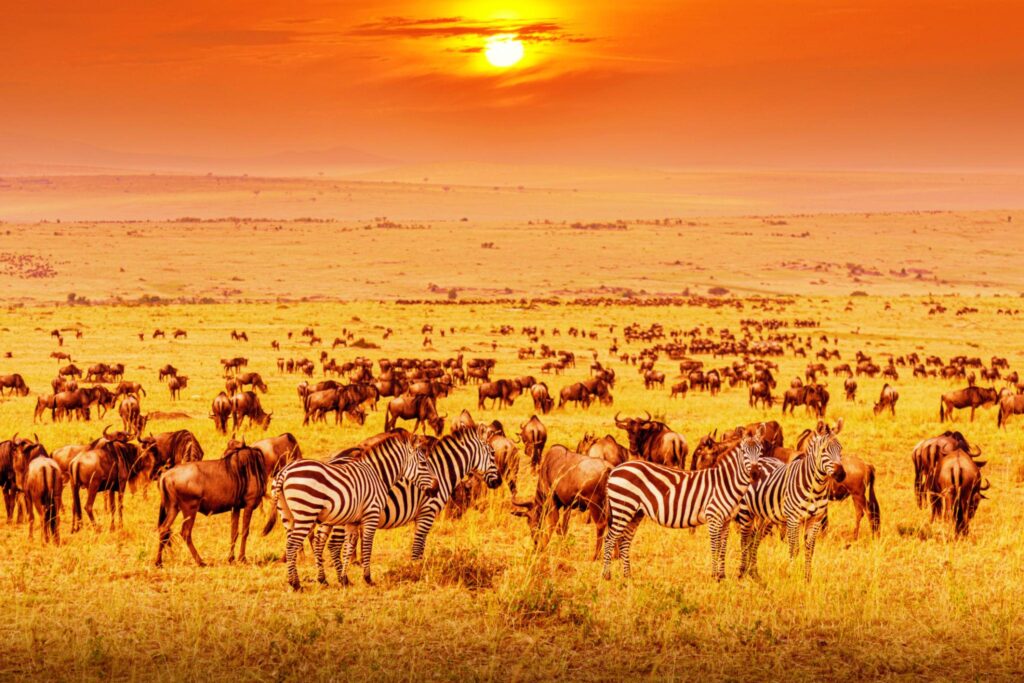
The Serengeti is the one natural wonder on this list, and it earns its place. Its grasslands host the Great Migration, a constant loop of more than a million wildebeest, along with zebras and gazelles, following the rains across Tanzania and into Kenya’s Maasai Mara.
Lions, cheetahs, elephants, and giraffes are part of an ordinary game drive here.
Where the herds are decides when you should go:
January to March: calving season in the southern Serengeti, with newborn calves and lots of predator activity.
April to June: the herds move through the central and western Serengeti, with fewer vehicles and lower prices.
July to October: dramatic Mara River crossings in the far north, the busiest and most expensive season.
Exact timing changes with the rains each year, so book with a licensed safari operator who tracks the herds and can place you in the right area.
Bryggen, Norway
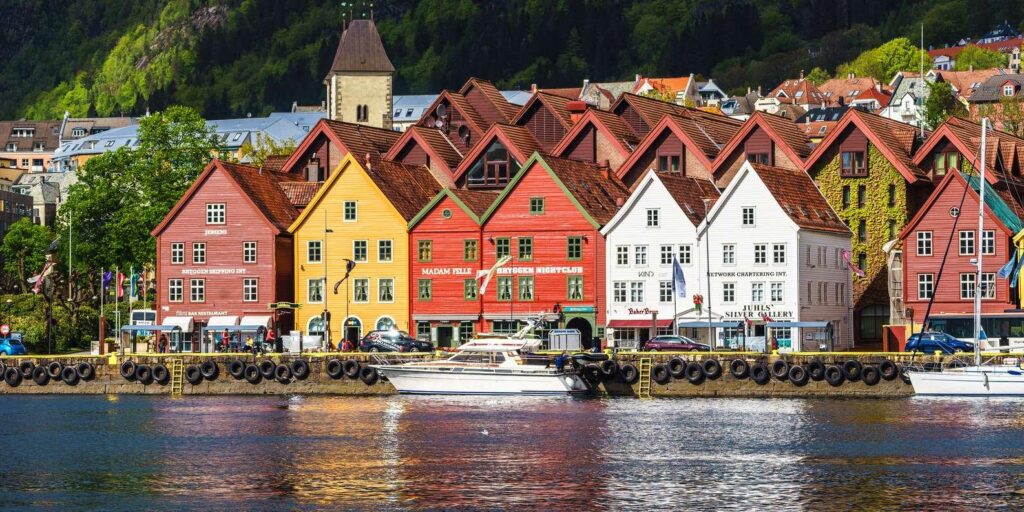
Bryggen’s row of steep-roofed wooden warehouses, painted red, ochre, and white, lines Bergen’s harbor much as it has for centuries. From the 14th to the 16th century, this wharf was the Norwegian outpost of the Hanseatic League, a powerful network of German merchants who traded dried cod from northern Norway across Europe.
Fire has destroyed Bryggen many times, but each time it was rebuilt on the same plan using the same building methods. The buildings you see today date from after a great fire in 1702, and they’re now a UNESCO World Heritage Site.
The best part is wandering off the waterfront into the narrow wooden passageways between the buildings, where the boards creak underfoot and small workshops and cafés hide in old storerooms.
For the full view of the wharf and the fjord beyond, take the Fløibanen funicular up Mount Fløyen. And pack a rain jacket: Bergen is one of the wettest cities in Europe.
The Great Wall, China
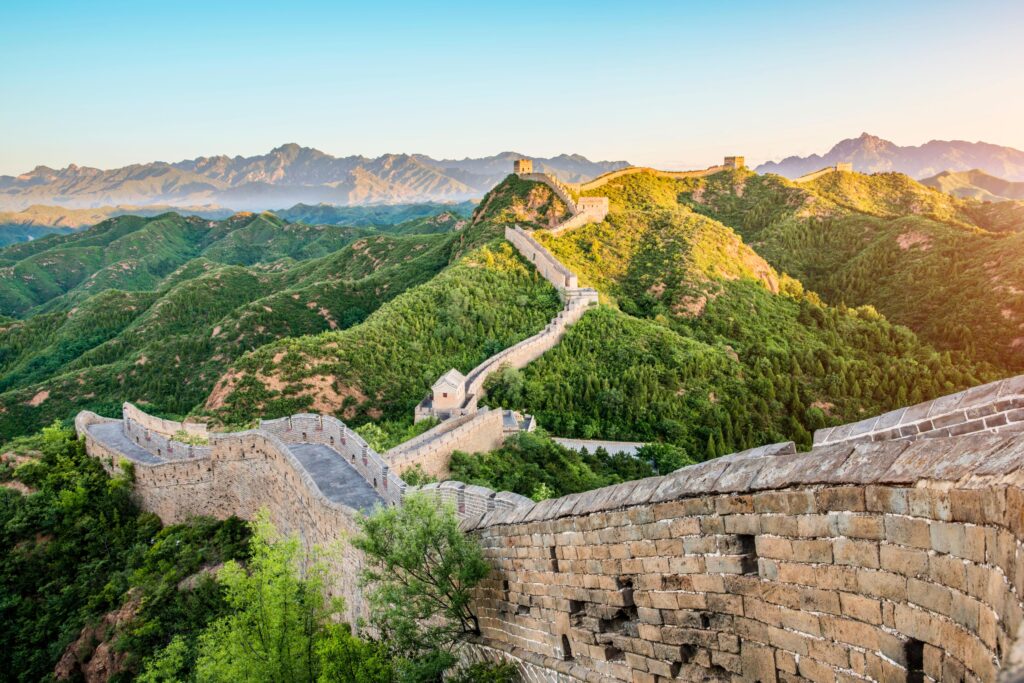
The Great Wall isn’t one wall but thousands of miles of fortifications built and rebuilt over roughly 2,000 years, and the sections most visitors see were built during the Ming dynasty. Where you go matters more than almost anything else about the visit. The main options near Beijing:
- Badaling: the most restored and easiest to reach, and also the most crowded.
- Mutianyu: restored, with a cable car up and fewer crowds. A good choice for first-timers and families.
- Jinshanling: partly restored, with scenic ridgeline hiking and watchtowers.
- Unrestored “wild” sections: crumbling and steep. Only for experienced hikers with a local guide.
Go early on a weekday to avoid tour groups. China is currently under a State Department advisory to exercise increased caution, so read the latest guidance before you plan.
Historical Monuments of Mtskheta, Georgia
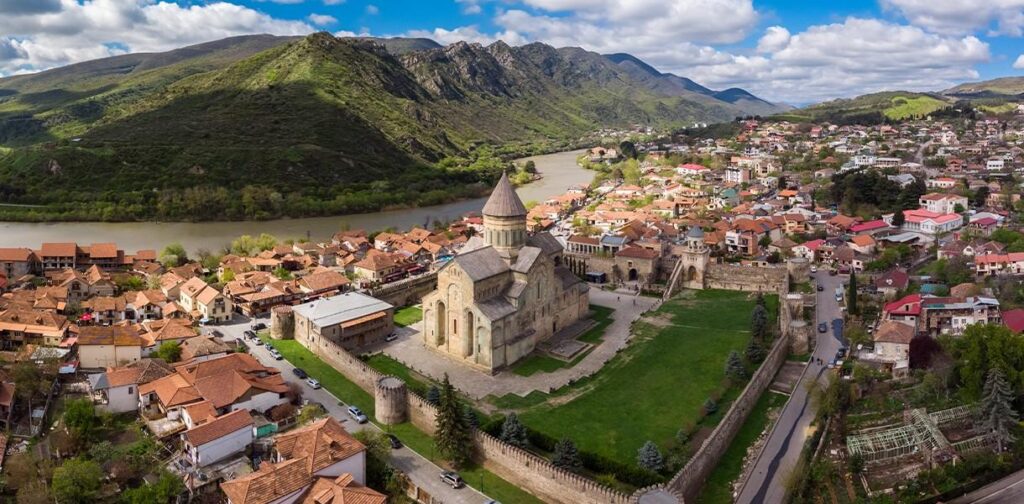
Mtskheta, the ancient capital of Georgia, sits where the Aragvi and Kura rivers meet, about half an hour from Tbilisi. It’s one of the oldest continuously inhabited towns in the country and the spiritual heart of the Georgian Orthodox Church.
Two monuments make the trip: Jvari Monastery, a small 6th-century stone church on a hilltop with sweeping views over the river confluence, and Svetitskhoveli Cathedral, an 11th-century cathedral in the town center where tradition says Christ’s robe is buried.
Both are part of a UNESCO World Heritage Site and free to enter.
Tip: dress modestly. Women are expected to cover their head and shoulders, and men to wear long trousers; scarves are usually available at the entrance. Tour groups arrive late morning, so come before 10 a.m. or after 3 p.m. for a quieter visit.
Easter Island, Chile
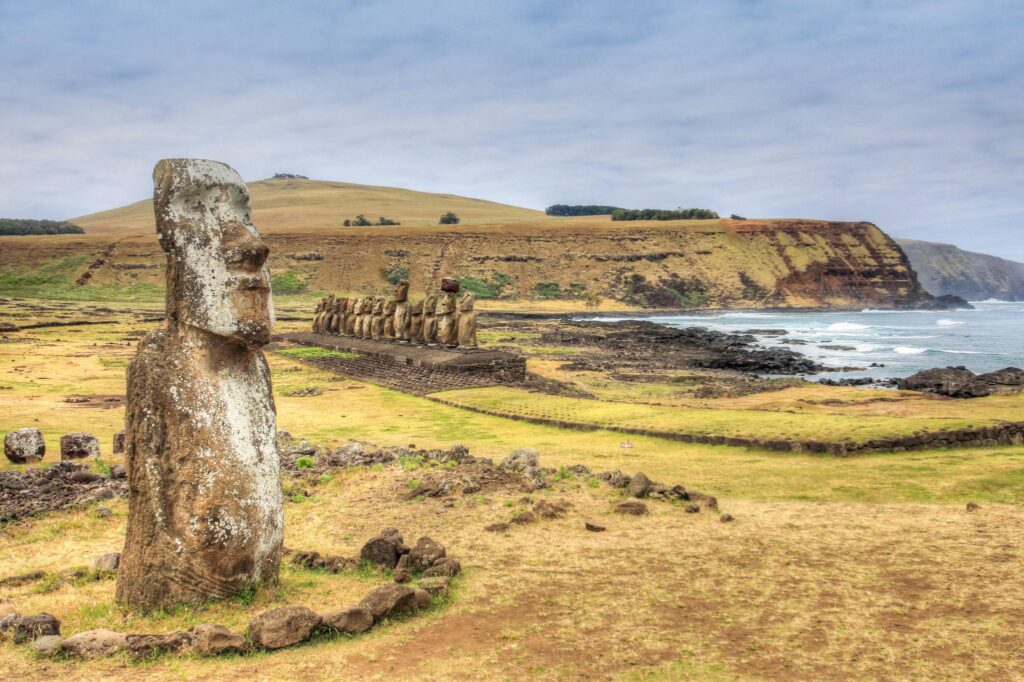
Easter Island, or Rapa Nui, is one of the most remote inhabited places on Earth, more than 2,000 miles off the coast of Chile. Its Moai, the giant stone figures carved by the Rapa Nui people, stand on ceremonial platforms around the island, most with their backs to the sea.
The two places not to miss are Rano Raraku, the volcanic quarry where nearly all the Moai were carved and where dozens still stand half-buried on the slopes, and Ahu Tongariki, where 15 Moai stand in a row, at their most striking at sunrise.
Getting there takes some planning. Flights leave from Santiago, about five hours away. Before you fly, you’ll need a return ticket, a booking at registered lodging, and an online entry form, and stays are limited to 30 days.
On the island, you’ll buy a national park ticket, many sites can only be visited with a certified local guide, and touching or climbing the Moai is strictly forbidden. They’re sacred to the Rapa Nui.
Ancient City of Sigiriya, Sri Lanka
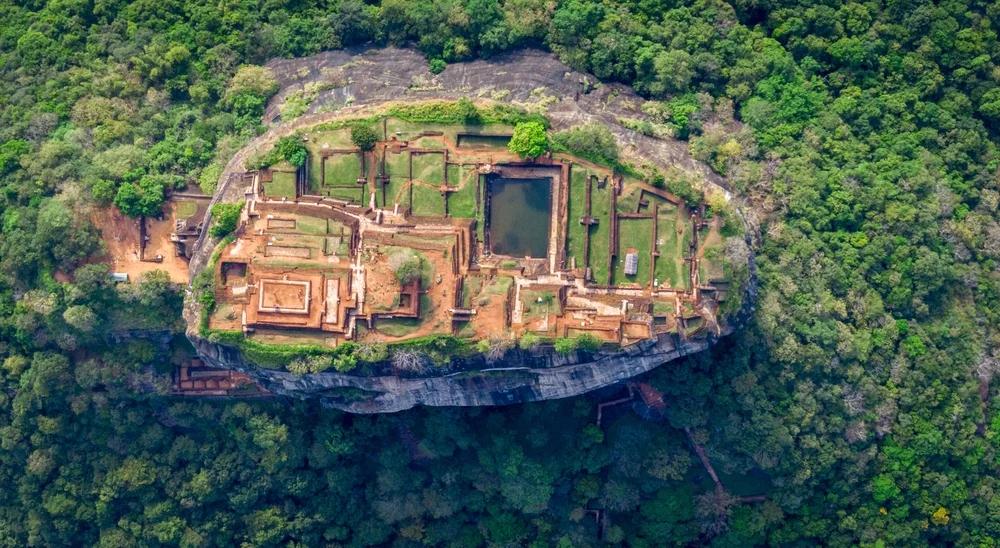
Sigiriya is a huge rock column rising about 600 feet from the jungle of central Sri Lanka. In the late 5th century, King Kashyapa built a palace and fortress on its summit, surrounded below by water gardens, moats, and ramparts.
Halfway up, painted frescoes of women still glow in a sheltered rock pocket, and the stairway to the top passes between two giant stone lion paws, all that’s left of the lion-shaped gateway that gave the “Lion Rock” its name.
You can experience it in two ways:
Climb Sigiriya: about 1,200 steps to the summit ruins and the views. It takes most people one and a half to three hours up and back.
Or view it from Pidurangala Rock: a shorter, rougher climb next door that gives you the classic view of Sigiriya itself, especially at sunrise.
For either one, start as early as possible to beat the heat and the crowds, bring water, and follow staff instructions if hornet warnings are posted on the rock.
Hagia Sophia, Turkey
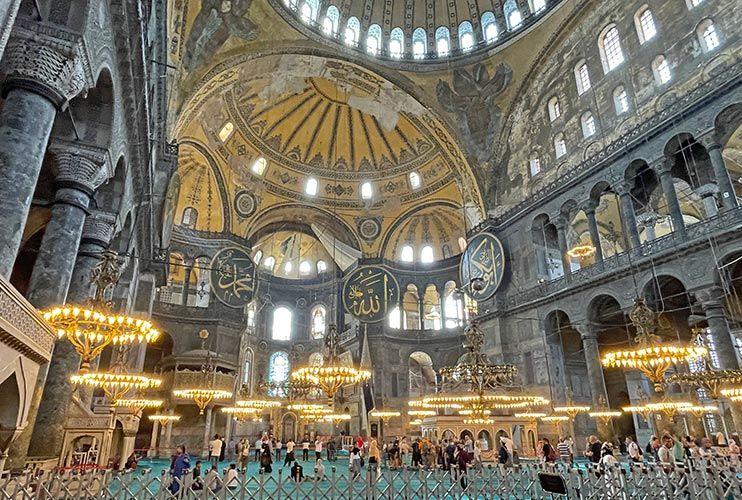
Completed in 537 under the Byzantine emperor Justinian, Hagia Sophia was for nearly a thousand years the largest church in the Christian world, and its enormous dome still seems to float above the floor on a ring of windows.
It has lived several lives since: a church for more than nine centuries, then an Ottoman mosque for nearly five, then a museum from 1935, and a working mosque again since 2020.
Inside, Byzantine mosaics, Islamic calligraphy roundels, and centuries of marble share the same space, which is what makes it unlike any other building on Earth.
Because it’s a place of worship again, visiting works differently than it did a few years ago. Istanbul falls under Turkey’s “exercise increased caution” advisory (with a stronger warning for the country’s southeast), so check the latest guidance before you go.
Mont Saint-Michel, France
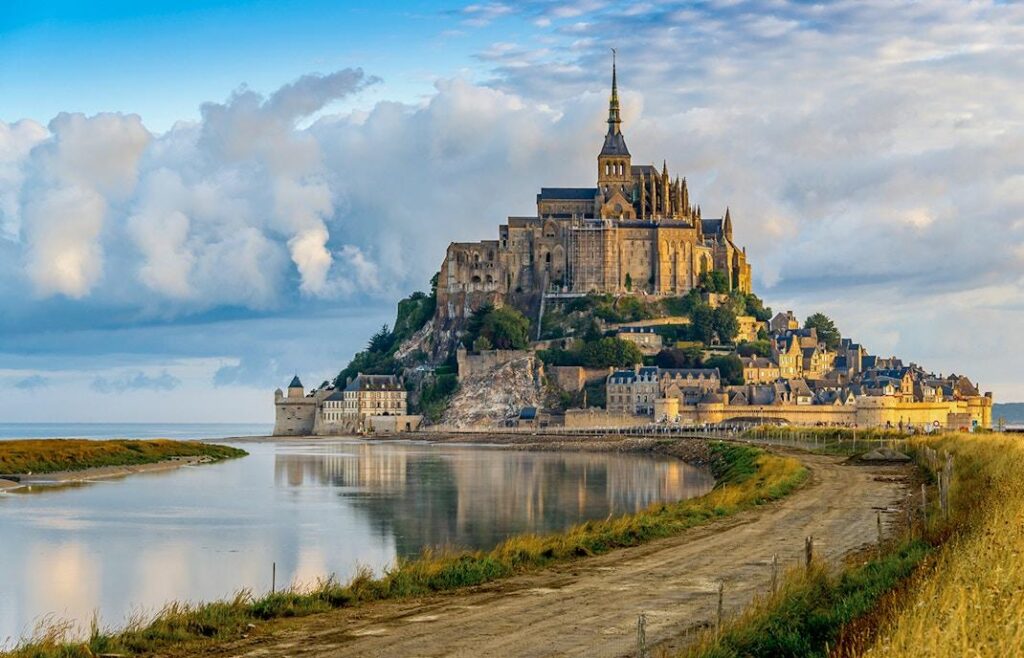
Mont Saint-Michel rises from a vast tidal bay on the coast of Normandy, a rocky island topped by a Gothic abbey with a tiny medieval village winding up its slopes.
Monks have lived here for more than a thousand years, and pilgrims once crossed the sands on foot to reach it. The bay has some of the strongest tides in Europe, so at high tide the mount can look like a castle floating on the sea, and at low tide it sits in miles of shining sand.
Most of the day, the village’s single main street is packed with day-trippers. Stay overnight on the island or nearby, and you’ll see it quiet and lit up after dark.
A safety note: the sands around the mount hide quicksand, and the tide comes in fast. Never walk out into the bay on your own. Guided walks with a certified bay guide, from short quicksand walks to the full traditional crossing, are the safe and memorable way to do it.
Persepolis, Iran
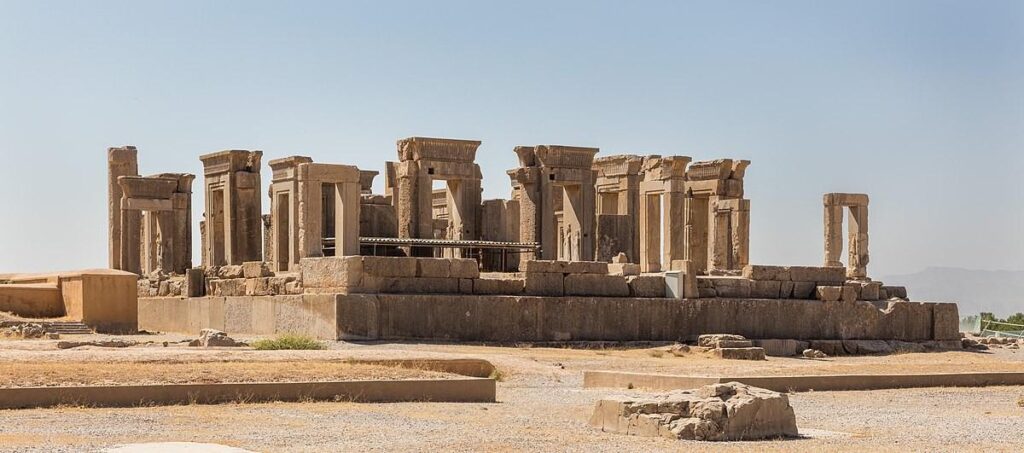
Persepolis was the ceremonial capital of the Achaemenid Persian Empire, begun around 518 BC under Darius the Great.
Its grand staircases are carved with processions of figures from across the empire bringing tribute to the king, and the stone columns of its great halls still rise from the plain.
Alexander the Great burned the city in 330 BC, but what survived is among the finest ancient carving anywhere, and the site is listed by UNESCO as a World Heritage Site. For now, it’s a place to discover through books, museums, and documentaries.
These 13 historic places span Europe, Asia, Africa, and the Americas, from Mediterranean citadels to Pacific island statues.
The easiest way to see several is to group them by region: Greece and Malta pair well on a Mediterranean trip, Thailand and Sri Lanka suit a longer Asia journey, and Georgia sits within easy reach of other Caucasus stops.
Wherever you go, start early, dress respectfully at religious sites, and check visitor rules before you arrive, since many famous sites now use timed tickets or guide requirements.
For more ancient wonders like Petra and Angkor Wat, see our bucket list of 15 beautiful places in the world, and when you’re ready to book, our practical guide to 15 places every American should visit covers seasons and routes. Save this list to Pinterest for your next trip.