![Aesthetic Beautiful Places Around the World for American Travelers]](https://happilydesigning.com/wp-content/uploads/2026/07/happilydesigning-3.jpg)
Some places seem made to be photographed. Canals reflecting gabled houses, ice glowing blue at midnight, islands so small they hold just a few palm trees: these aesthetic places around the world look even better in person than they do on your screen.
Below are 10 of the most photogenic destinations for American travelers, with when each one looks its best, where to find the signature shot, and how to photograph respectfully. Before any international trip, check the U.S. State Department’s travel advisories, since conditions change.
When Each Place Looks Its Best
Best months Also good
| Place | J | F | M | A | M | J | J | A | S | O | N | D |
|---|---|---|---|---|---|---|---|---|---|---|---|---|
| Amsterdam | ||||||||||||
| Antarctica | ||||||||||||
| San Blas Islands | ||||||||||||
| Riviera Maya | ||||||||||||
| Aruba | ||||||||||||
| Curacao | ||||||||||||
| Scottish Highlands | ||||||||||||
| Salar de Uyuni | ||||||||||||
| Halong Bay | ||||||||||||
| Bali |
General guidance based on typical weather and light. Conditions vary from year to year. For Salar de Uyuni, January to March is the “mirror” season; June to October brings clear, dry skies.
Amsterdam, Netherlands
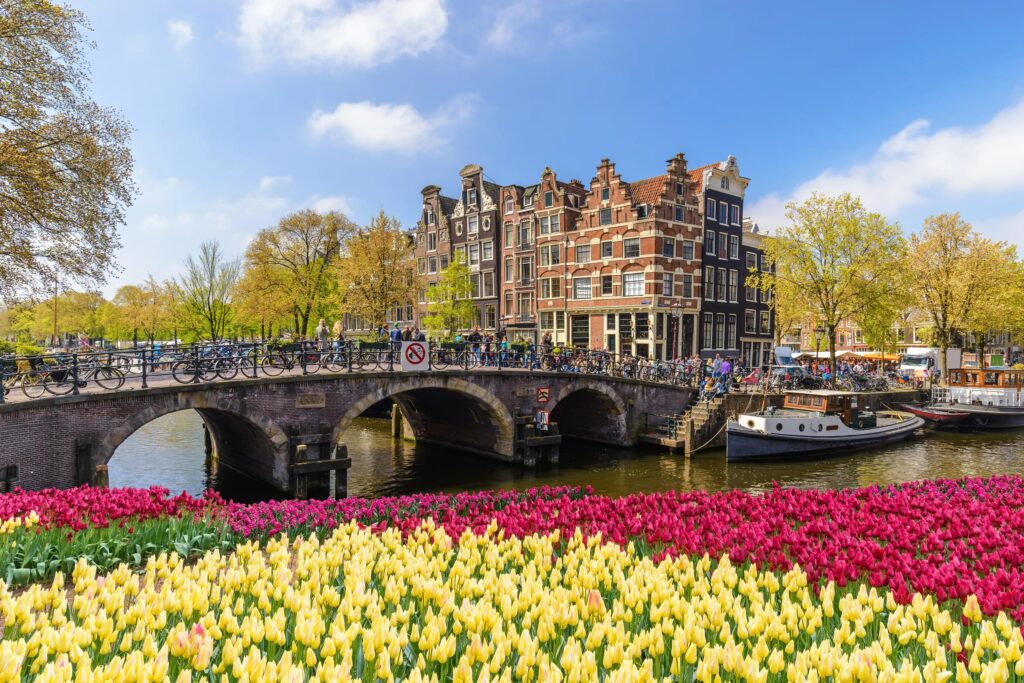
Amsterdam’s canal ring is a UNESCO World Heritage Site, and almost every bend in it looks like a postcard: tall, narrow gabled houses leaning slightly over the water, bikes chained to bridge railings, houseboats with flower boxes.
For the classic shot, find the spot where Reguliersgracht meets Herengracht, where you can line up a series of arched bridges one behind the other. After dark, the Magere Brug (Skinny Bridge) over the Amstel glows with hundreds of lights.
Go out early in the morning, when the water is still and the streets are nearly empty. In spring, the tulip fields and Keukenhof gardens, about 40 minutes outside the city, add a burst of color from roughly mid-March to early May.
One courtesy note: never stop in a bike lane to take a photo. Amsterdam’s cyclists move fast, and locals will not appreciate it.
Antarctica
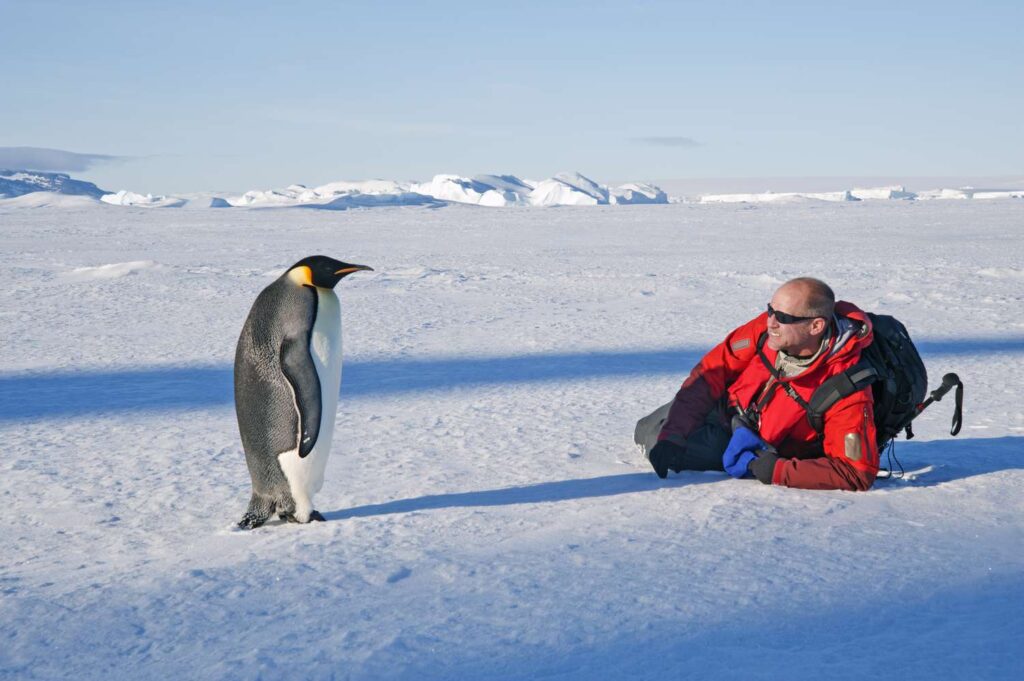
Antarctica is the most remote place most travelers will ever photograph, and it rewards the effort. Icebergs glow blue and white in impossible shapes, glaciers calve into silent bays, and penguins, seals, and whales go about their lives in front of your lens.
In December and January, the sun barely sets, giving you soft golden light at midnight.
How most people get there:
- By expedition ship. Most voyages leave from Ushuaia at the southern tip of Argentina and cross the Drake Passage, about two days each way, to the Antarctic Peninsula.
- During the southern summer. The tourist season runs from about November to March. Outside it, the continent is locked in ice and darkness.
- By flying over the Drake. Some trips fly from Punta Arenas in Chile to the South Shetland Islands, skipping the rough crossing.
Visits follow strict environmental rules. Guidelines from the industry association that governs Antarctic tourism ask visitors to stay at least 5 meters (about 15 feet) from wildlife, and only a limited number of people can go ashore at one landing at a time.
San Blas Islands, Panama
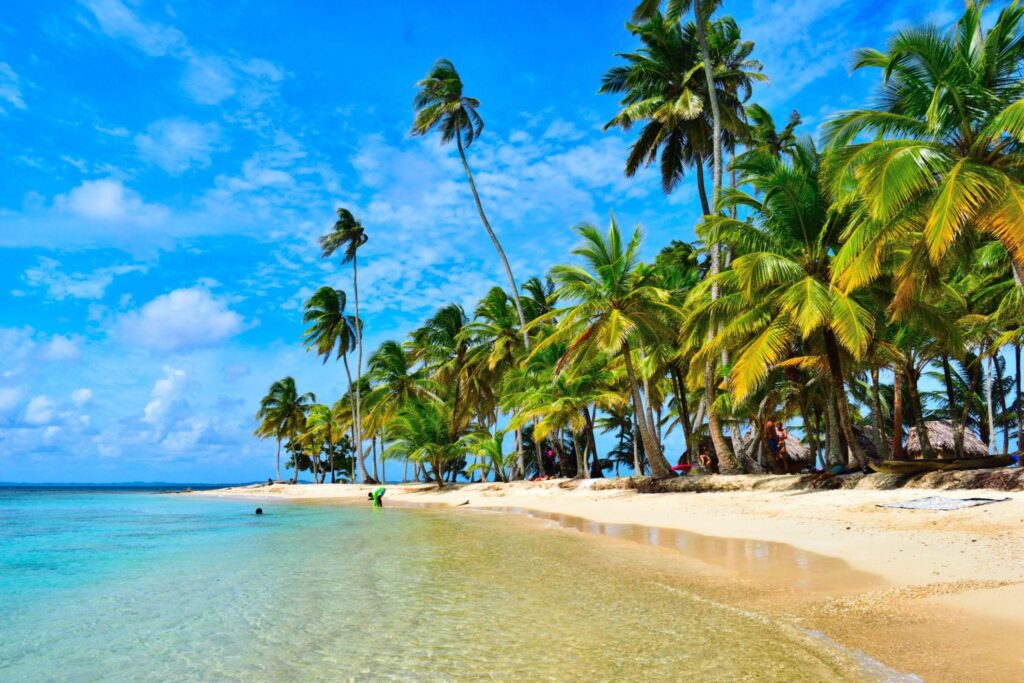
The San Blas Islands are a scattering of around 365 tiny islands off Panama’s Caribbean coast, many of them just a ring of white sand, a few coconut palms, and water so clear that boats seem to float in the air.
They’re part of Guna Yala, a self-governing territory run by the Indigenous Guna people, who in 1925 became one of the first Indigenous groups in Latin America to win autonomy.
The Guna manage tourism themselves, so visitors pass a checkpoint, show a passport, and pay an entry fee. Most trips start with a 4×4 ride from Panama City and a short boat transfer, and island stays are simple: cabins, shared bathrooms, and generator power for a few hours at night. Bring cash in small bills.
The best photos here come with good manners. Always ask before photographing Guna people, their homes, or village islands; some will agree, some will ask for a small fee, and some will say no.
Dress modestly when walking through inhabited communities, take your trash back to the mainland, and look for molas, the intricate hand-sewn textiles Guna women make. Buy them directly from the artisans. The dry season, roughly December to April, brings the calmest seas and brightest skies.
Riviera Maya, Mexico
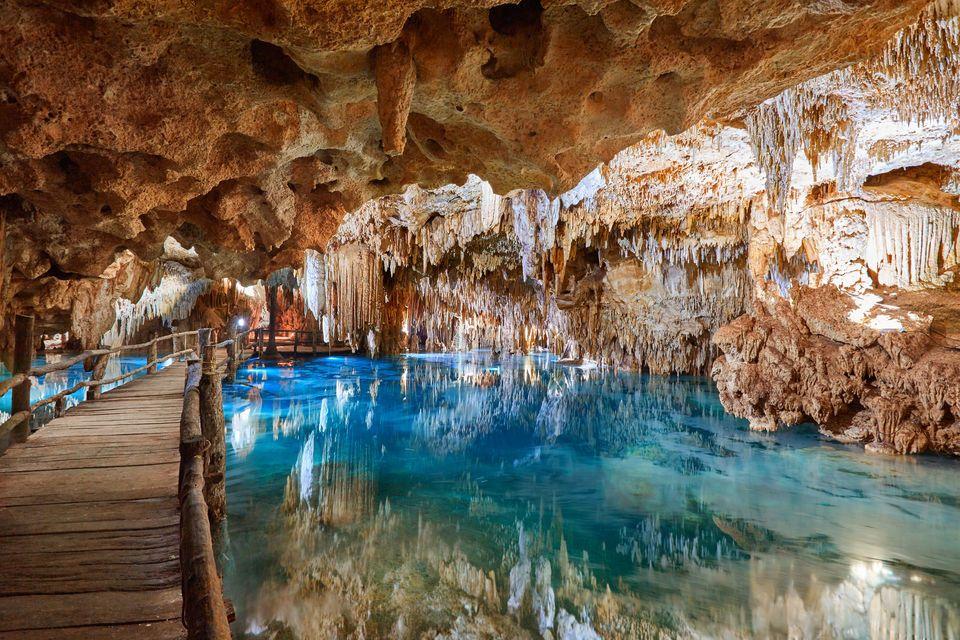
The Riviera Maya stretches along Mexico’s Caribbean coast south of Cancún, and it’s one of the few places where you can photograph turquoise sea and ancient ruins in the same frame.
The Maya ruins of Tulum sit on a cliff directly above the beach, and they look best right after opening, before the heat and crowds. Inland, cenotes (natural limestone sinkholes filled with clear water) offer a completely different shot, with beams of sunlight cutting down through the openings into blue pools.
For more Maya history, Chichen Itza is a day trip away; see our list of beautiful historic places for what to know before visiting.
Tip: sargassum, a brown seaweed, can pile up on Caribbean beaches here, usually from spring through late summer, though some years it arrives earlier. If beach photos are the point of your trip, aim for winter and check local seaweed reports before you book.
Aruba
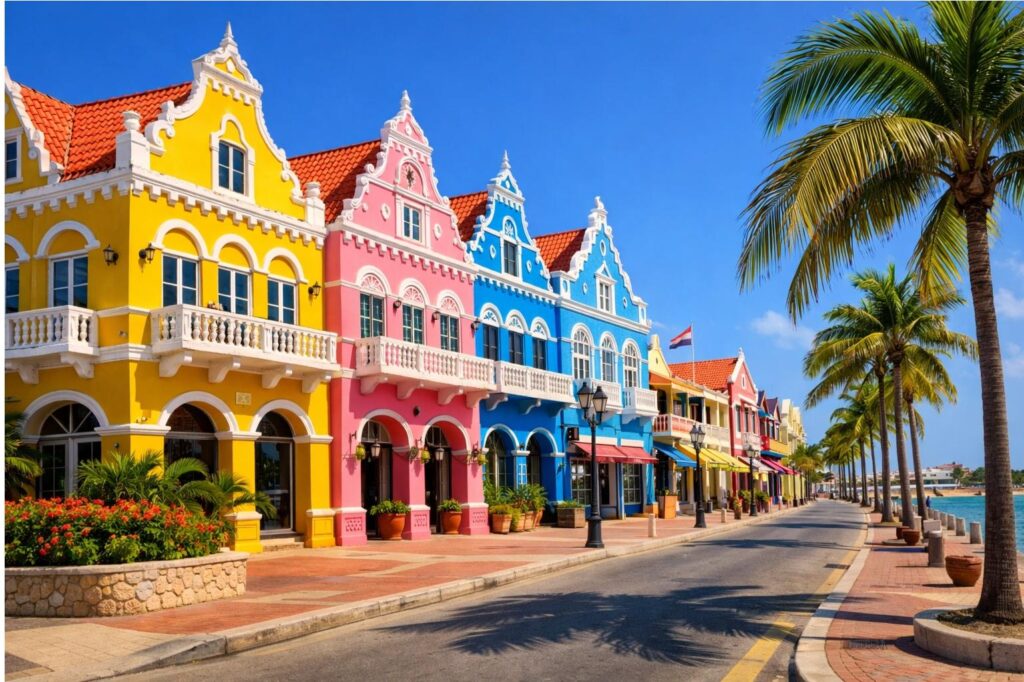
Aruba is a small desert island in the southern Caribbean, and it looks quite different from its greener neighbors. It sits outside the main hurricane belt, gets very little rain, and is cooled by steady trade winds, which means bright, reliable light almost any day of the year. Three spots make the best photos:
- Eagle Beach: wide, pale sand and the island’s famous fofoti trees, whose trunks twist and lean toward the sea from the constant wind. The beach is also a sea turtle nesting area, so stay off the dunes.
- Arikok National Park: covering nearly a fifth of the island, with cactus-studded hills, volcanic rock, and dramatic cliffs on the Atlantic side.
- The Natural Pool: a calm swimming hole ringed by rocks on the rugged north coast, reached by a rough road that needs a 4×4 or a guided tour.
Finish the day at the California Lighthouse on the island’s northwest tip, where the sunset views stretch over both coasts.
Curacao
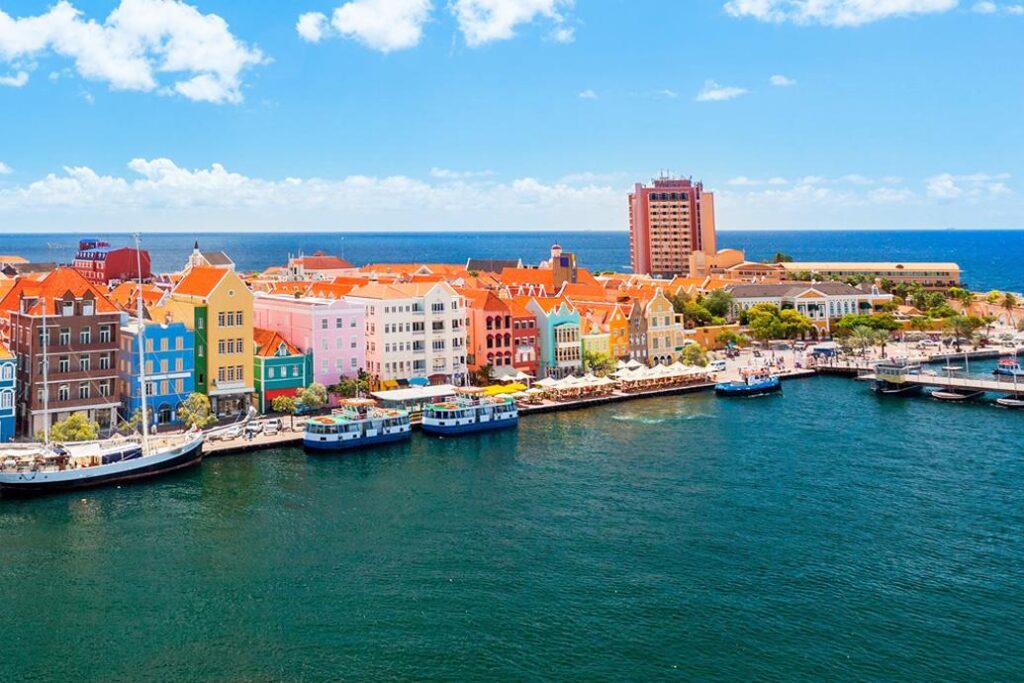
Curacao’s capital, Willemstad, has one of the most photographed waterfronts in the Caribbean. Along the Handelskade in the Punda district, a row of Dutch-style gabled buildings is painted in candy colors (canary yellow, coral, mint, sky blue), and the historic center and harbor are a UNESCO World Heritage Site.
For the classic shot, walk out onto the Queen Emma Bridge, a long floating pontoon bridge that swings open to let ships pass, and frame the whole row from across the water. Late-afternoon light makes the colors glow.
The colors come with a local legend. The story goes that an early 19th-century governor complained that the sun glaring off the white buildings gave him headaches, so he ordered them painted any color but white.
Later, the tale adds, it turned out he had a stake in the island’s paint business. Whether or not it’s true, the tradition stuck. Beyond the city, the island’s west coast has small cove beaches with cliffs and turquoise water, such as Playa Kenepa Grandi (also called Grote Knip).
The Scottish Highlands
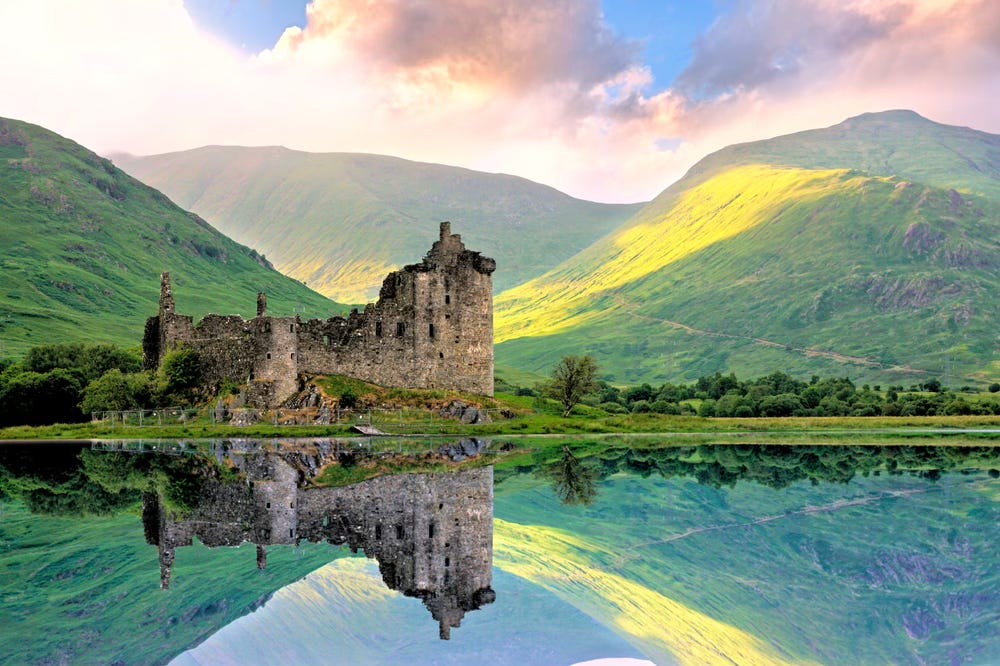
The Scottish Highlands look like a painting come to life: misty glens, mountains streaked with waterfalls, and castles reflected in still lochs. Glencoe’s steep valley walls make one of the most dramatic drives in Britain.
On the Isle of Skye, the rock pinnacle of the Old Man of Storr and the jagged ridges of the Quiraing reward short, steep hikes with huge views, and Eilean Donan Castle sits on its own small island where three lochs meet.
In late spring and summer, daylight lasts well past 10 p.m., giving you long, soft evening light for photos.
Two practical notes. Tiny biting insects called midges are common from late May to early September, peaking in July and August, especially on still, damp evenings, so pack repellent and a head net.
And many Highland roads are single-track, with small passing places to pull into so oncoming cars can get by. Never park in them for a photo. For the best balance of light, weather, and fewer crowds and midges, aim for May or September.
Salar de Uyuni, Bolivia
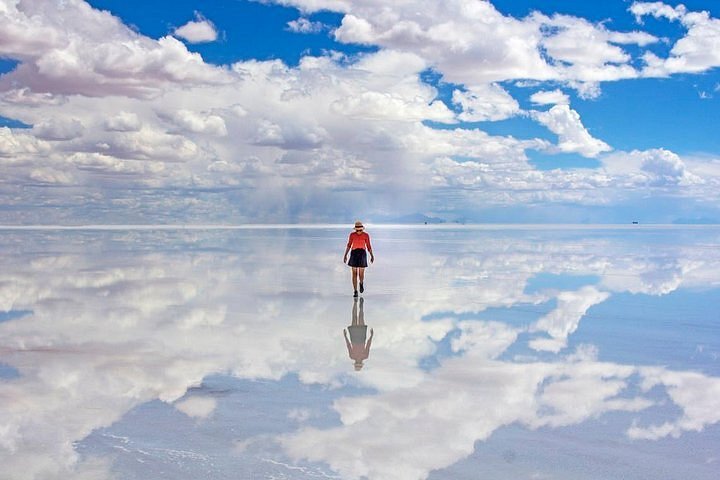
Salar de Uyuni in southwest Bolivia is the largest salt flat on Earth, a blinding white plain so flat that its height varies by less than a few feet across thousands of square miles.
It sits at about 12,000 feet, so take a day or two to adjust to the altitude before you go. Most visitors join a multi-day tour from the town of Uyuni, or from San Pedro de Atacama in Chile. What you’ll photograph depends almost entirely on the season.
Whatever the season, bring strong sunscreen and sunglasses. The bright white salt reflects intense sunlight back up at you all day.
Halong Bay, Vietnam
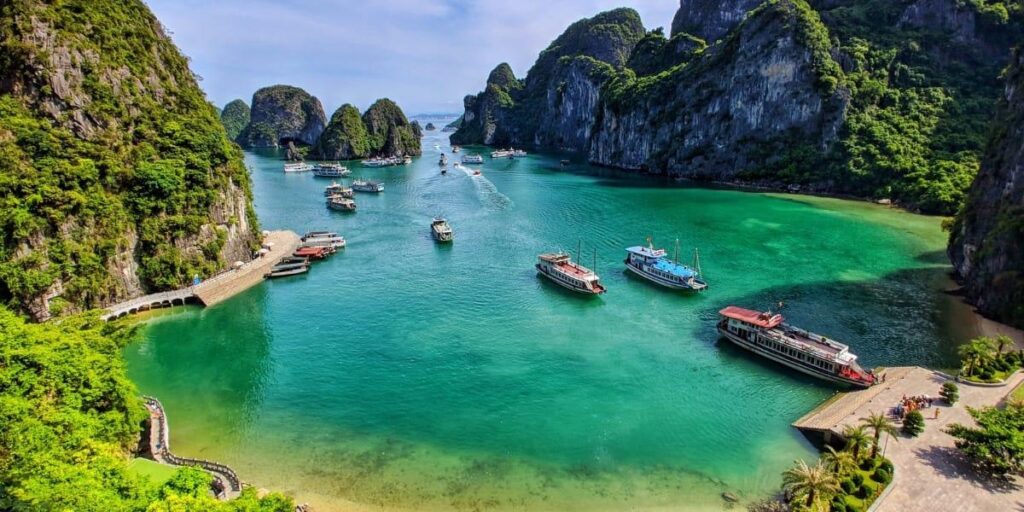
Halong Bay in northern Vietnam is a seascape of jungle-topped limestone islands rising straight out of emerald water, well over a thousand of them, many with caves and hidden lagoons.
It’s a UNESCO World Heritage Site and one of Vietnam’s most recognizable views. The best way to photograph it is from the water at dawn, when mist hangs between the peaks and the boats are still quiet. Kayaking lets you slip into lagoons and under rock arches that big boats can’t reach.
Choose your cruise carefully. The bay is very busy, with around a thousand tour boats, so book a licensed operator with good safety reviews, and consider nearby Lan Ha Bay, which has similar scenery with far fewer boats. Weather shapes the view, too.
Spring and autumn usually bring the clearest skies and calmest seas; summer can bring storms and typhoons that cancel cruises; and winter is cooler and often misty, which can be beautiful in its own moody way.
Bali, Indonesia
Bali packs an astonishing variety of photo-worthy scenes onto one island. In the hills north of Ubud, the Tegallalang rice terraces step down the valley in layers of bright green.
In the central highlands, the Ulun Danu Beratan temple seems to float on its mountain lake, especially in the early morning mist. And along the coast, clifftop temples like Uluwatu and Tanah Lot glow at sunset.
The dry season, roughly April to October, brings the most reliable sunshine, while the wetter months make the rice fields at their greenest.
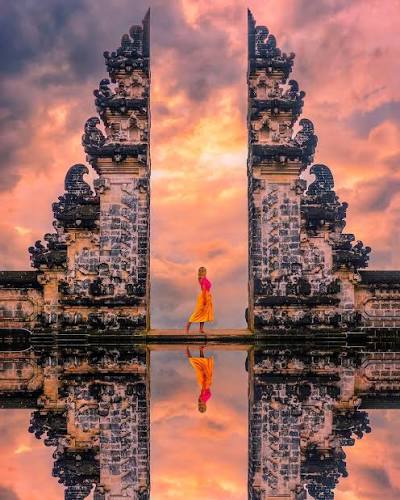
An honest heads-up: at Lempuyang Temple’s famous “Gates of Heaven,” the mirror-like lake reflection in so many photos isn’t real water. Photographers create it by holding a piece of glass under the phone, and the lines for that shot can take hours. Go for the view and the temple, not just the trick.
Two practical notes: every foreign tourist pays a one-time Bali tourism levy, so pay it only through the official Love Bali portal to avoid scam sites. And when visiting temples, cover your legs with a sarong and wear a sash, which many temples lend or rent at the entrance.
These 10 aesthetic places around the world cover every kind of beauty, from canal-side cities and pastel waterfronts to salt mirrors, ice fields, and limestone seas.
The easiest way to choose is by season: use the month grid at the top to match a destination to your travel dates, then plan your days around sunrise and golden hour, when nearly every place on this list looks its best.
For more inspiration, browse our bucket list of 15 beautiful places in the world or our list of 13 beautiful historic places around the world. And if you loved these places, save this list to Pinterest and share it with friends for future travel inspiration.
Photograph Respectfully
A few habits that keep these places beautiful for the next traveler.
Ask before photographing people
Especially in Indigenous communities and at religious sites. Accept a “no” with a smile.
Check drone rules first
Many national parks, temples, and historic sites restrict or ban drones. Rules vary by country.
Stay on paths and off fragile ground
Dunes, reefs, and salt crusts can take years to recover from footprints and tire tracks.
Give wildlife space
Use a zoom lens instead of getting closer. Never feed or touch animals for a photo.