
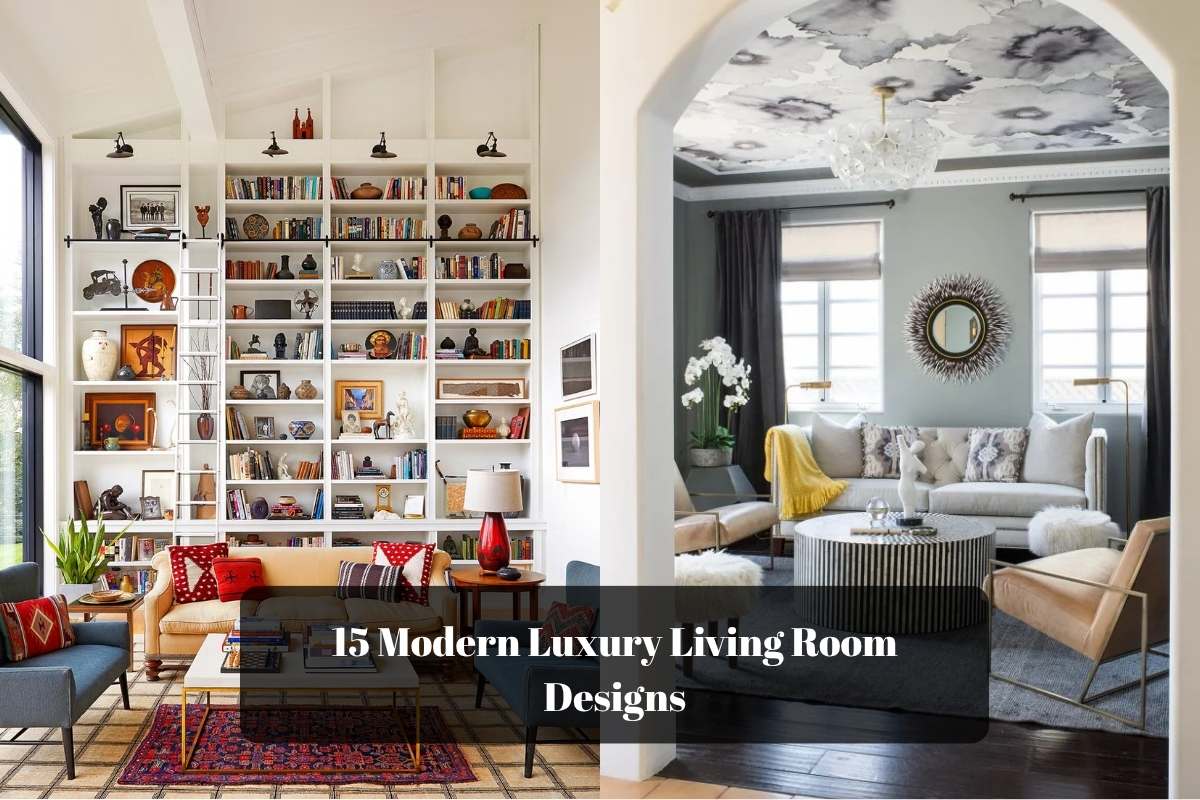
A modern luxury living room doesn’t follow one formula. For some people it means clean lines and minimal decor.
For others it’s a marble wall, a dramatic light fixture, or a sofa big enough for the whole family.
Most standout rooms share a few things, though: good materials, thoughtful lighting, and furniture scaled to the space, all in a room that still feels comfortable to live in.
Below are 15 modern luxury living room design ideas, with sizing tips, care notes, and a quick guide to which ideas are a weekend refresh and which call for a contractor.
Use it to pick two or three that suit your room and budget.
| Idea | Effort | Budget | Best for |
|---|---|---|---|
| Floor-to-ceiling windows | Renovation | $$$ | Remodels and new builds |
| Marble feature wall | Renovation | $$$ | A TV or fireplace wall |
| Curved furniture | Project | $$ | Rooms full of hard lines |
| Neutral palette with texture | Refresh | $–$$ | Calm, timeless rooms |
| Designer lighting | Project | $$ | Rooms that feel flat at night |
| Built-in shelving | Renovation | $$$ | Storage plus display |
| Warm wood accents | Project | $$ | Sleek rooms that feel cold |
| Oversized sectional | Project | $$–$$$ | Families and frequent hosts |
| Black and gold glam | Refresh to project | $–$$ | Fans of dramatic rooms |
| Layered rugs | Refresh | $ | Large or echoey rooms |
| Sculptural coffee table | Project | $$ | Simple seating that needs a focal point |
| Indoor-outdoor living | Renovation | $$$ | Homes with a patio or deck |
| Contemporary fireplace | Project to renovation | $$–$$$ | A cozy focal point |
| Gallery-style art | Refresh | $–$$ | Adding personality |
| Hidden smart home tech | Project to renovation | $$–$$$ | A clean, clutter-free look |
Budget tiers are relative: $ = small refresh, $$ = mid-range purchase or project, $$$ = renovation-level spend. Actual costs vary by region and materials.
Floor-to-Ceiling Windows with Elegant Minimalism
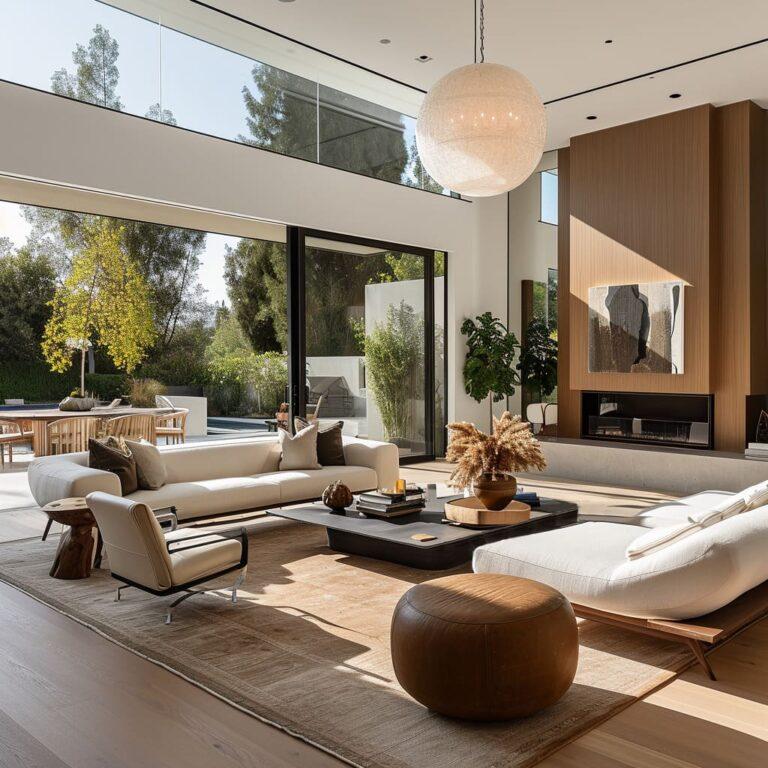
Big windows do a lot of the work in a modern luxury room, so the rest of the design should stay out of their way.
Low-profile furniture in soft neutrals keeps sight lines open, and a few metallic accents (a brass lamp base, a steel side table) add polish without competing with the view.
Window treatments matter more here than in most rooms. Mount curtain rods close to the ceiling so the panels run the full height, and layer sheers over a solar or blackout shade so you can manage glare and privacy separately.
One thing to plan for: strong daily sun can fade rugs, wood floors, and upholstery over time. If your windows face south or west, a UV-filtering shade or window film is worth a look.
Marble Feature Walls That Make a Statement
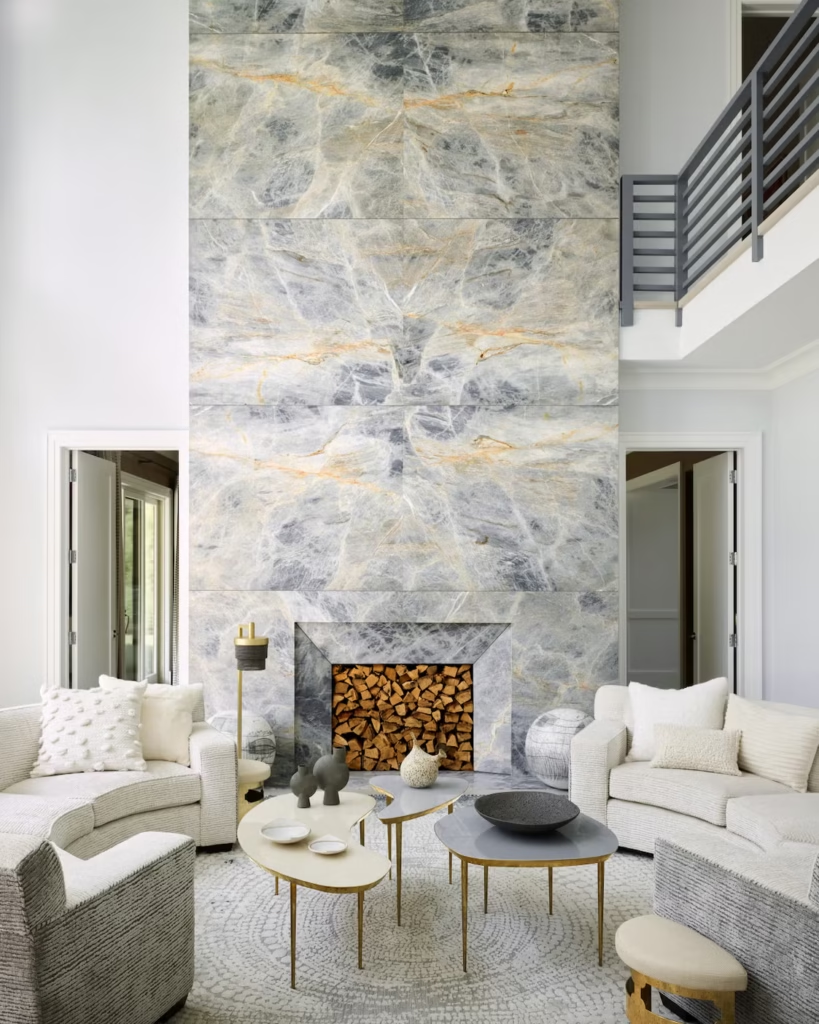
A marble wall behind the TV or around the fireplace gives the room an instant anchor. No two slabs share the same veining, which is a big part of the appeal, and stone pairs well with flat-front cabinetry and simple furniture.
Before you commit:
- Marble is porous. It can stain, and acidic spills can etch (dull) the surface, so it needs sealing from time to time.
- Slabs are heavy. Plan on professional installation and have the wall checked for support.
- Porcelain slabs and marble-look plaster give a similar effect with less weight, easier upkeep, and usually a lower price.
- If you choose real stone, see the actual slab before you buy. Veining varies a lot from piece to piece.
Curved Furniture for Soft Sophistication
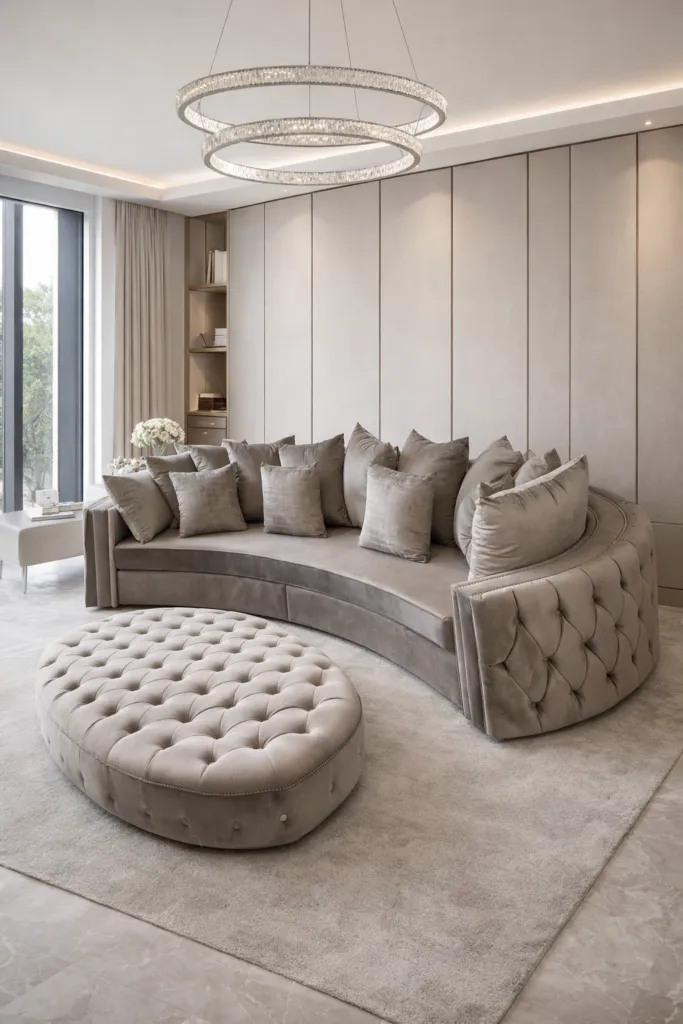
Curved sofas, rounded chairs, and circular coffee tables soften the hard edges common in contemporary homes.
They help with traffic flow too, since there are no sharp corners to walk around.
Common mistake: going all in. When every piece is round, the room starts to look shapeless.
The fix: choose one or two curved anchors, like a sofa and a round coffee table, and let straight lines carry the rest through shelving, a rectangular rug, or geometric lighting.
Velvet and bouclé suit curved shapes, but each has a quirk. Velvet can show pressure marks (a soft brush usually lifts them), and bouclé’s looped texture can snag on pet claws.
Neutral Color Palettes with Rich Textures
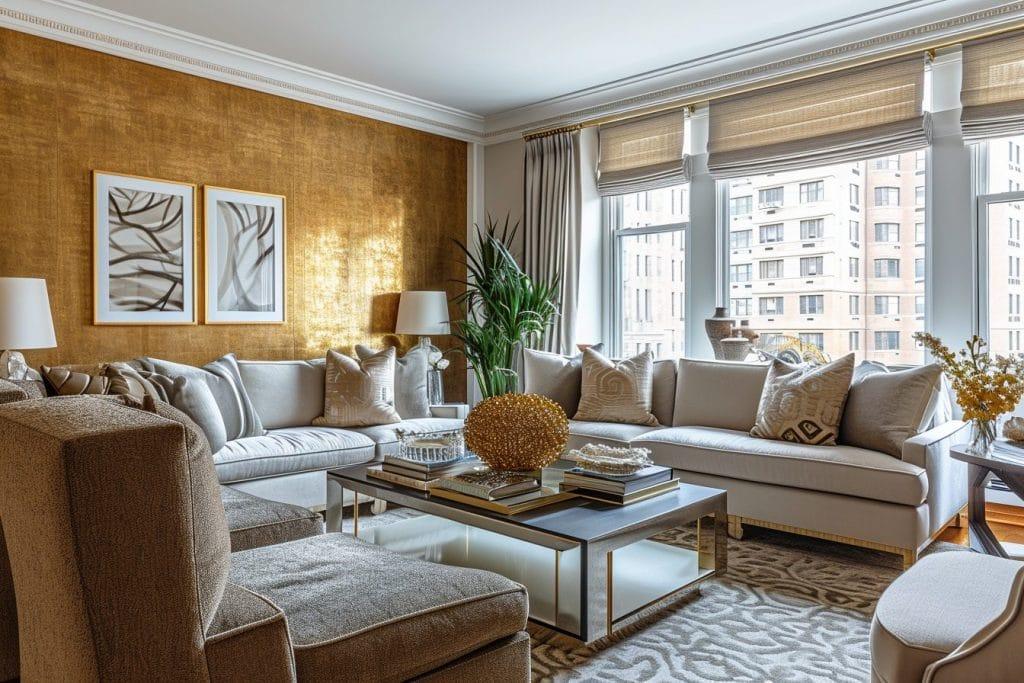
Cream, taupe, ivory, and warm gray make a calm base that looks quietly expensive. The catch is that an all-neutral room can turn flat fast.
Two habits prevent that. Keep undertones consistent, so warm neutrals sit with warm and cool with cool.
Then repeat each texture at least twice: if the sofa is linen, let linen show up again in a throw pillow or lampshade. The card below gives sample tones and texture pairings to start from.
A Warm Neutral Starter Palette
Sample tones for inspiration. Always test paint and fabric swatches in your own light.
Designer Lighting as the Focal Point
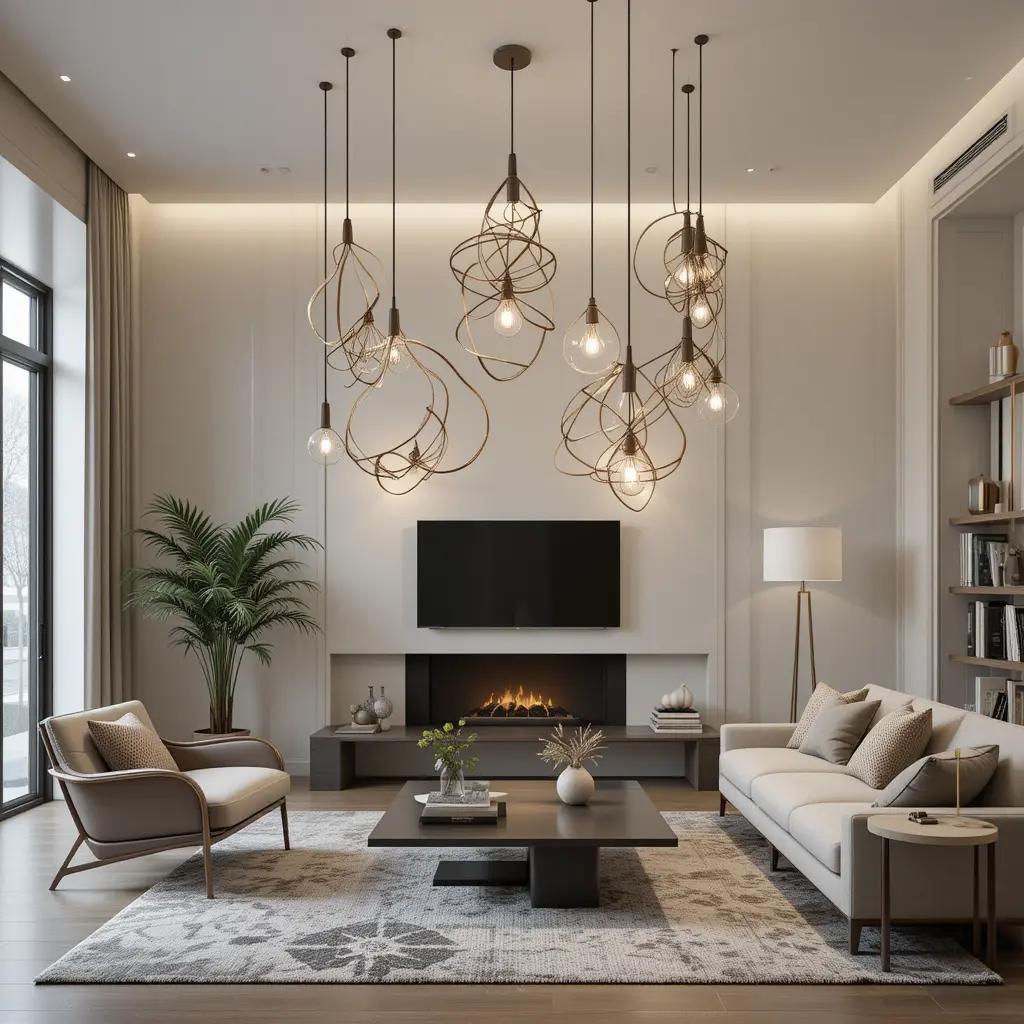
A sculptural chandelier or pendant can carry a whole room, so it pays to plan lighting early instead of choosing a fixture last. Brass finishes, hand-blown glass, and unusual shapes give a fixture presence even when it’s switched off.
Size is where most people go wrong. A common rule of thumb is to add the room’s length and width in feet and use that number in inches as the fixture’s approximate diameter.
A 14 x 18-foot room, for example, suits a fixture around 32 inches across. Over walkways, keep the bottom of a hanging fixture high enough for people to pass underneath comfortably (about 7 feet is a widely used minimum).
One statement piece won’t light a room on its own. Plan for three layers:
- Ambient: the overall glow from the main fixture, recessed lights, or cove lighting.
- Task: reading lamps beside chairs and the sofa.
- Accent: picture lights, shelf lighting, or uplights that pick out texture.
Put each layer on a dimmer, and the room can shift from bright afternoon to soft evening with a few switches.
Built-In Shelving with Custom Styling
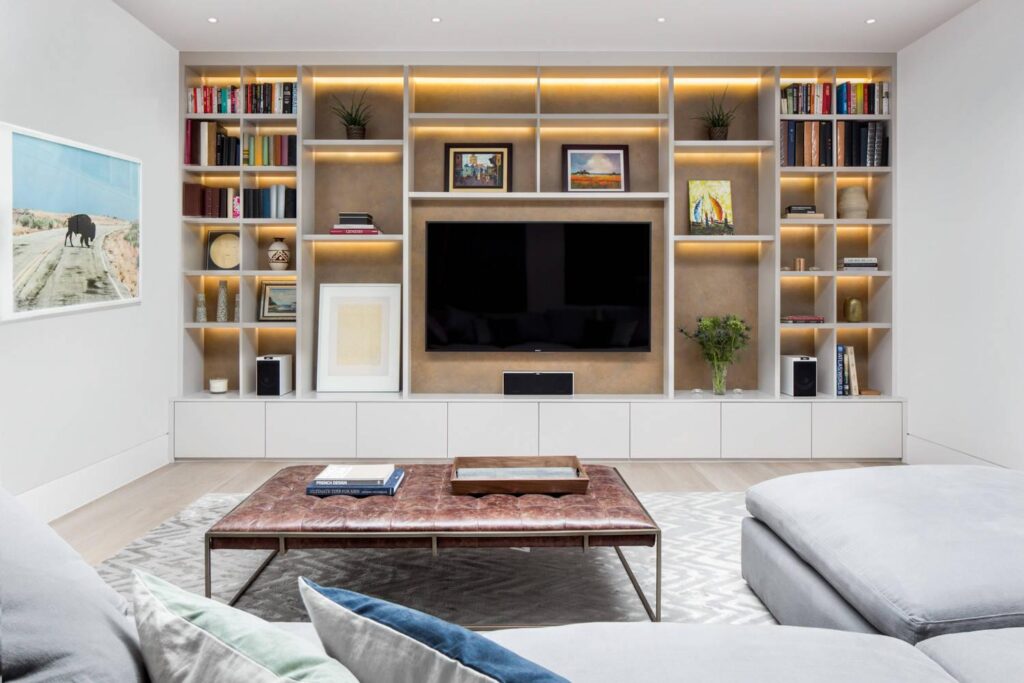
Custom shelving gives you storage and a display wall in one, but it only looks high-end when the shelves have room to breathe. A good styling order helps:
- Start with books. Mix upright rows with a few horizontal stacks so the lines don’t all run the same way.
- Add your larger pieces next. Vases, ceramics, or framed art go on next, spread across different shelves rather than grouped in one spot.
- Fill in with a few small objects. A bowl, a candle, a small sculpture. Keep it to a handful.
- Repeat colors in a zigzag. If a shelf on the left has a green vase, echo that green on a lower shelf to the right. It leads the eye across the whole unit.
- Leave some space empty. Open spots read as intentional and keep the wall from looking crowded.
If you’re using freestanding bookcases instead of true built-ins, anchor them to the wall. Tall shelving can tip, especially in homes with young kids who like to climb.
Warm Wood Accents for Contemporary Elegance
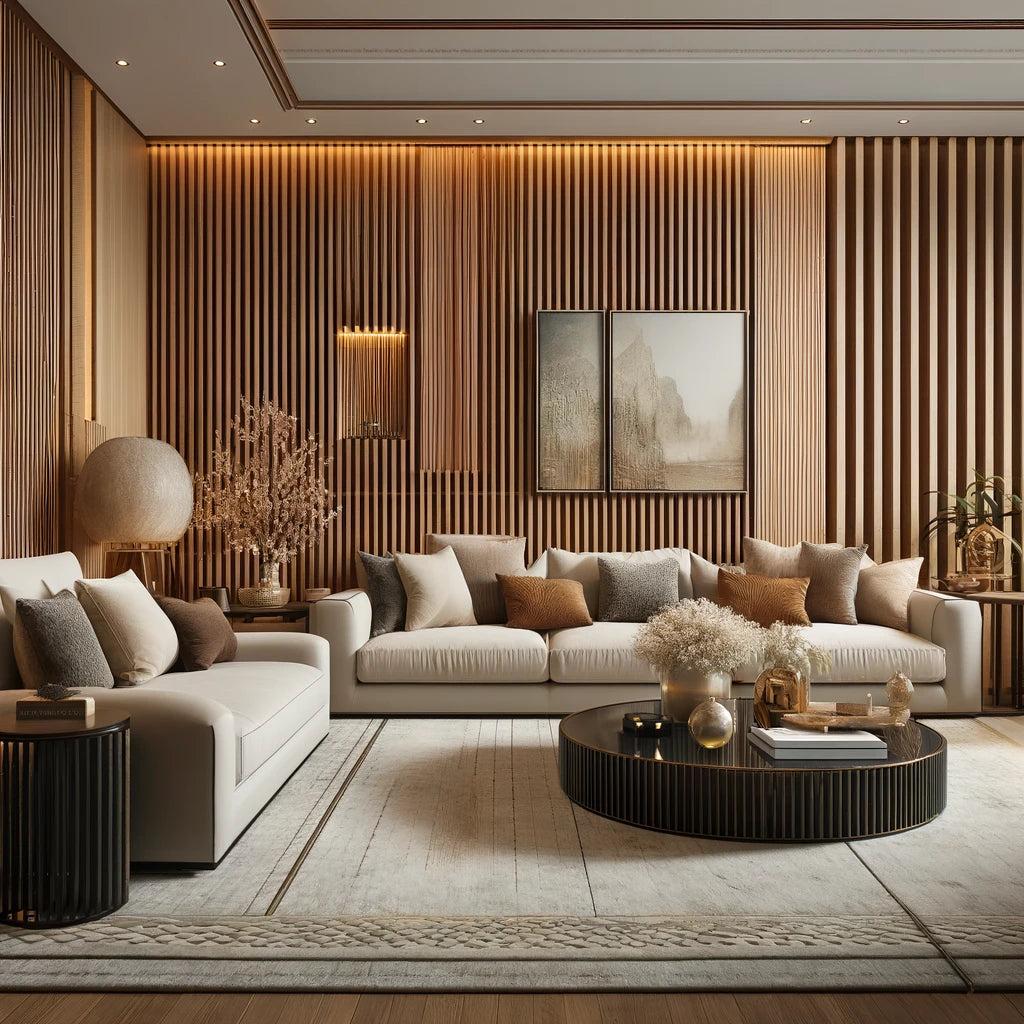
Sleek modern finishes can feel cold on their own, and wood is one of the easiest ways to warm them up.
Walnut wall panels, an oak coffee table, or vertical wood slats add texture without pushing the room toward rustic.
Wood also plays well with the other materials in this list, especially marble, glass, and metal.
The trickiest part is mixing tones. Choose one dominant wood (usually the floor or the largest furniture piece) and let the others play supporting roles. Match undertones where you can, since a red-toned cherry and a yellow-toned pine tend to clash, while walnut and warm oak sit together comfortably.
Repeating each tone at least twice in the room makes the mix look planned rather than accidental.
Oversized Sectional Sofas for Everyday Luxury
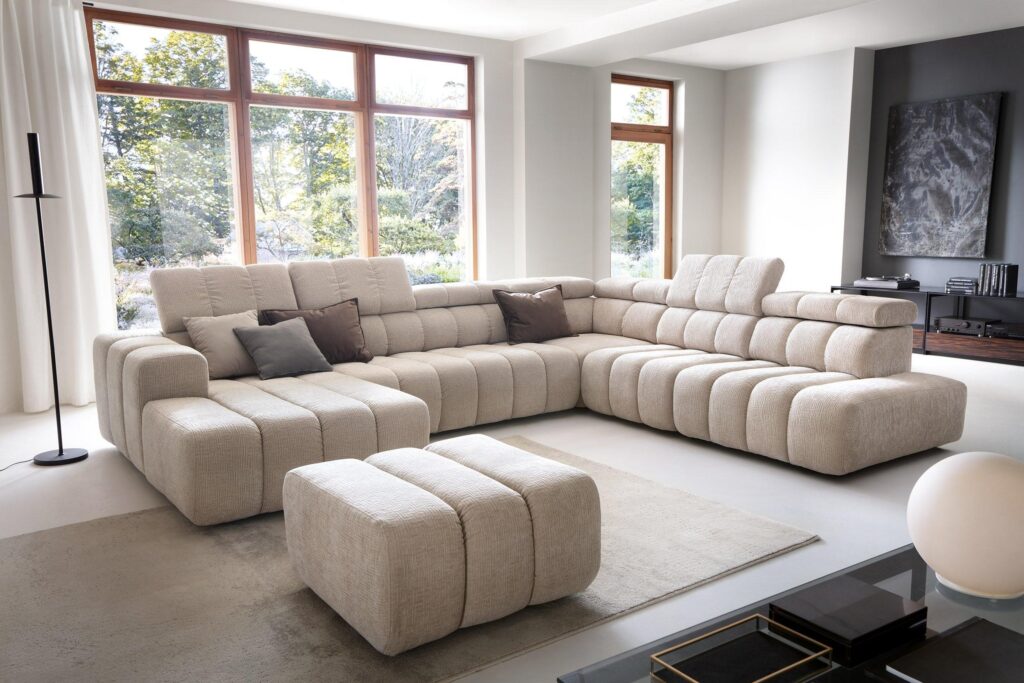
Comfort is part of luxury, and a big sectional delivers both seating and a clear visual anchor.
Soft neutral upholstery keeps it flexible as the rest of the room changes, and layered cushions and textured throws keep it inviting.
The risk with a sectional is buying one that overwhelms the room or doesn’t make it through the front door. Run through the checklist below before you order.
Before You Buy a Sectional
A quick checklist to avoid the most common sizing and delivery problems.
- Tape it out. Mark the sofa’s footprint on the floor with painter’s tape and live with it for a day or two.
- Keep walkways clear. Designers commonly aim for about 30 to 36 inches for main paths through the room.
- Leave coffee table space. Around 14 to 18 inches between sofa and table is a comfortable reach.
- Measure the delivery path. Check doorways, hallways, stair turns, and elevators against the largest piece’s dimensions.
- Check seat depth. Deep seats are great for lounging, but shorter household members may need extra back cushions.
- Pick fabric for real life. With kids or pets, look at performance fabrics and removable, washable cushion covers.
Black and Gold Modern Glam Interiors
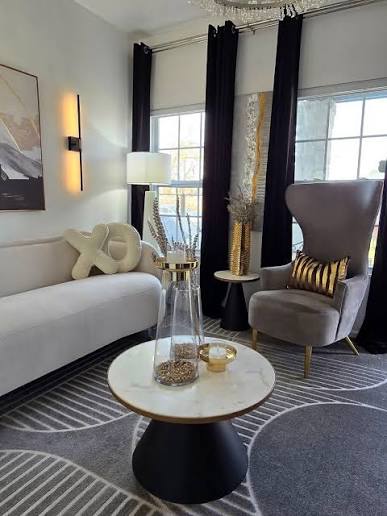
Black and gold is a classic pairing for dramatic rooms. Matte black walls, dark furniture, or black marble add depth, while brushed gold lighting and hardware bring warmth back in.
This look tips over easily, though. Too much gold reads flashy, and too much black can make a room feel like a cave.
A simple way to keep it balanced is the 60-30-10 approach: about 60% of the room in a main color (black or a deep neutral), 30% in a secondary tone like warm white or wood, and just 10% in gold.
Brushed, satin, or antique gold finishes look richer than high-shine ones and show fewer fingerprints.
Dark walls also absorb light. If you’re painting the walls black, plan for strong layered lighting so the room still feels warm after sunset.
Layered Rugs for a Boutique Hotel Feel
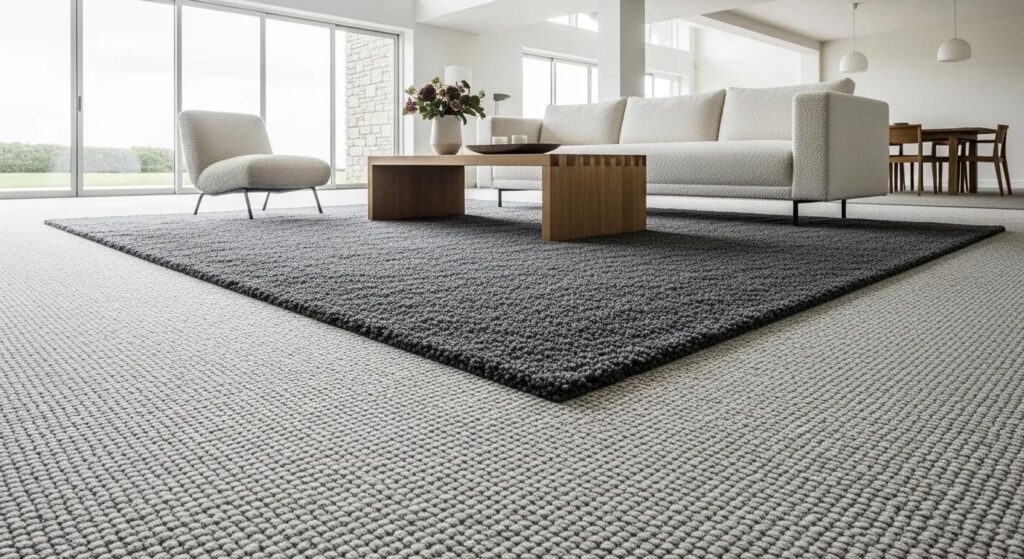
Layering rugs is a low-cost way to add depth and define a seating area, especially in a large room that feels echoey or a little empty. Usually it’s a big neutral rug on the bottom with a smaller patterned or softer rug on top.
A few things make the layers work:
- Size the base rug first. It should be big enough for at least the front legs of every seat to rest on it. In many living rooms that means an 8 x 10 or 9 x 12.
- Use a flat base. Jute, sisal, or flat-woven wool lies flat and gives the top rug a stable surface.
- Leave a visible border. The top rug should be noticeably smaller so a good band of the base shows around it.
- Contrast the textures. A nubby jute base under a soft vintage-style or cowhide-look rug reads as intentional.
- Use a rug pad and keep the top layer low-pile. Both help stop slipping and curled edges, which are common trip hazards.
Sculptural Coffee Tables with Artistic Appeal
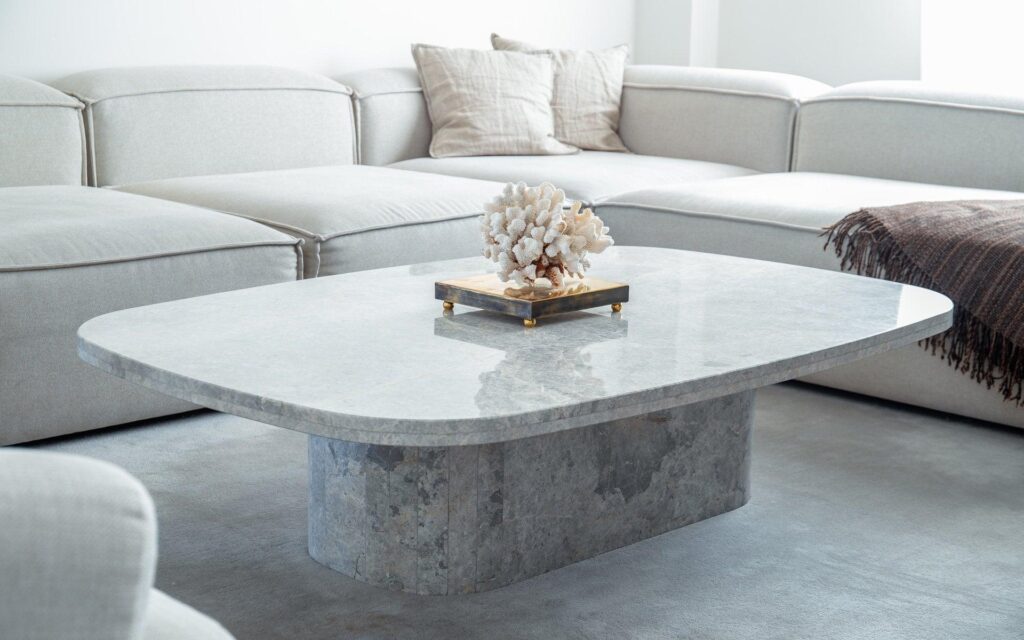
A sculptural coffee table works like a piece of art you also use every day. Marble, travertine, glass, and solid wood each give a different look, and they live very differently too.
Pair a bold table with simple seating so its shape stays the focus, then keep styling light: a short stack of books, a candle, or a small vase of flowers.
The right material depends a lot on who uses the room. Here’s how the four common choices compare.
Choosing a Coffee Table Material
General guidance. Check the maker’s care instructions for your specific piece.
Marble
Weight: Very heavy
Upkeep: Needs sealing. Can stain, and acidic drinks may etch it, so use coasters.
Kids & pets: Sturdy, but look for rounded edges.
Travertine
Weight: Very heavy
Upkeep: Porous with natural pits. Usually filled and sealed. Wipe spills quickly.
Kids & pets: Stable, but hard corners call for rounded shapes.
Glass
Weight: Light to medium
Upkeep: Easy to wipe, but shows fingerprints and dust quickly.
Kids & pets: Choose tempered glass and softened edges.
Solid Wood
Weight: Medium to heavy
Upkeep: Durable. Scratches can often be sanded and refinished. Coasters prevent water rings.
Kids & pets: The most forgiving option overall.
Seamless Indoor-Outdoor Living Spaces
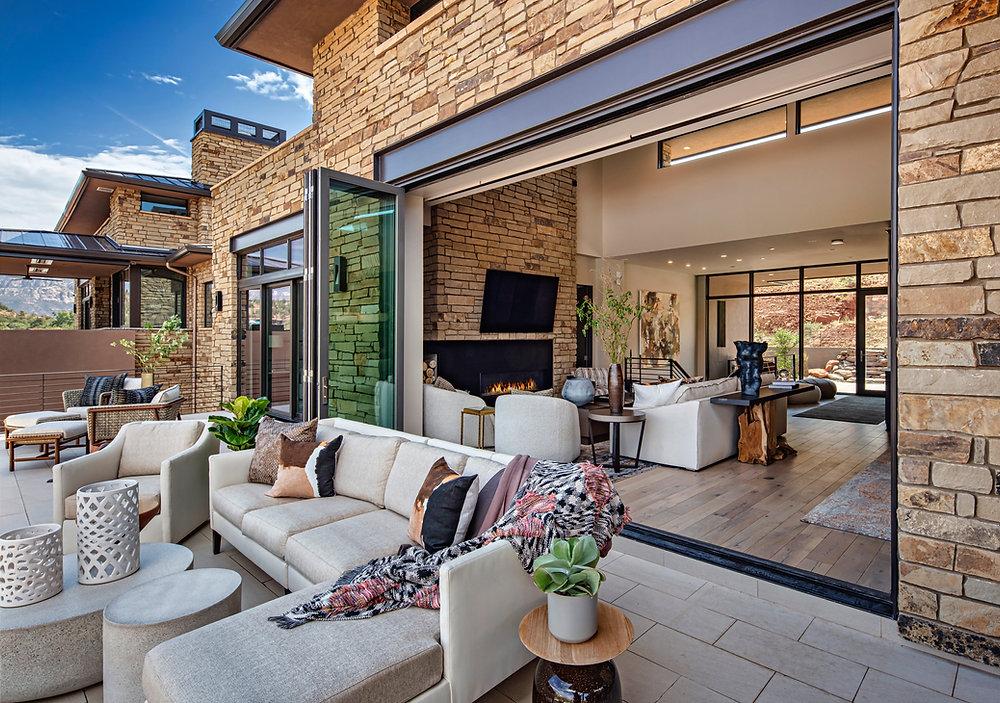
Large sliding or folding glass doors make the living room feel bigger by borrowing space from the patio.
The connection looks strongest when the flooring carries through. Look for an outdoor-rated, slip-resistant tile in the same color and size as your indoor floor, and keep the threshold as flush or low as your doors allow.
Furniture near the doors takes extra sun and the occasional rain, so outdoor-rated fabrics are a smart choice for that zone.
In colder climates, this idea works best as a seasonal shift: open everything up in summer and rely on good insulated glass to keep the room comfortable in winter.
Contemporary Fireplace with Clean Architectural Lines
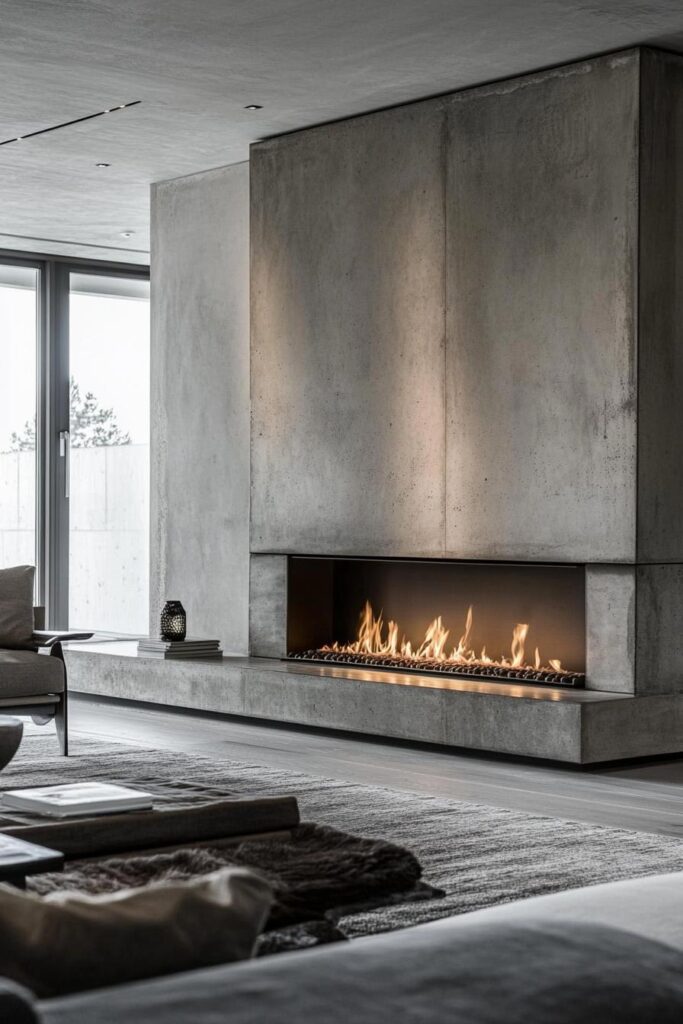
A long, linear fireplace gives a modern room a cozy focal point without breaking its clean lines. Stone, concrete, or textured plaster around the opening finishes it off.
Your choice of fireplace type shapes the whole project:
- Electric: the easiest to install, often with no venting. Good for apartments and quick upgrades, with lower heat output.
- Gas: real flames at the flip of a switch. Needs a gas line, venting, and professional installation.
- Wood-burning: the most traditional feel, but needs a chimney, regular cleaning, and the most upkeep.
Whatever you choose, follow the manufacturer’s clearance specs and your local building code. And if you plan to mount a TV above it, check how much heat reaches that spot first.
Gallery-Style Art Displays
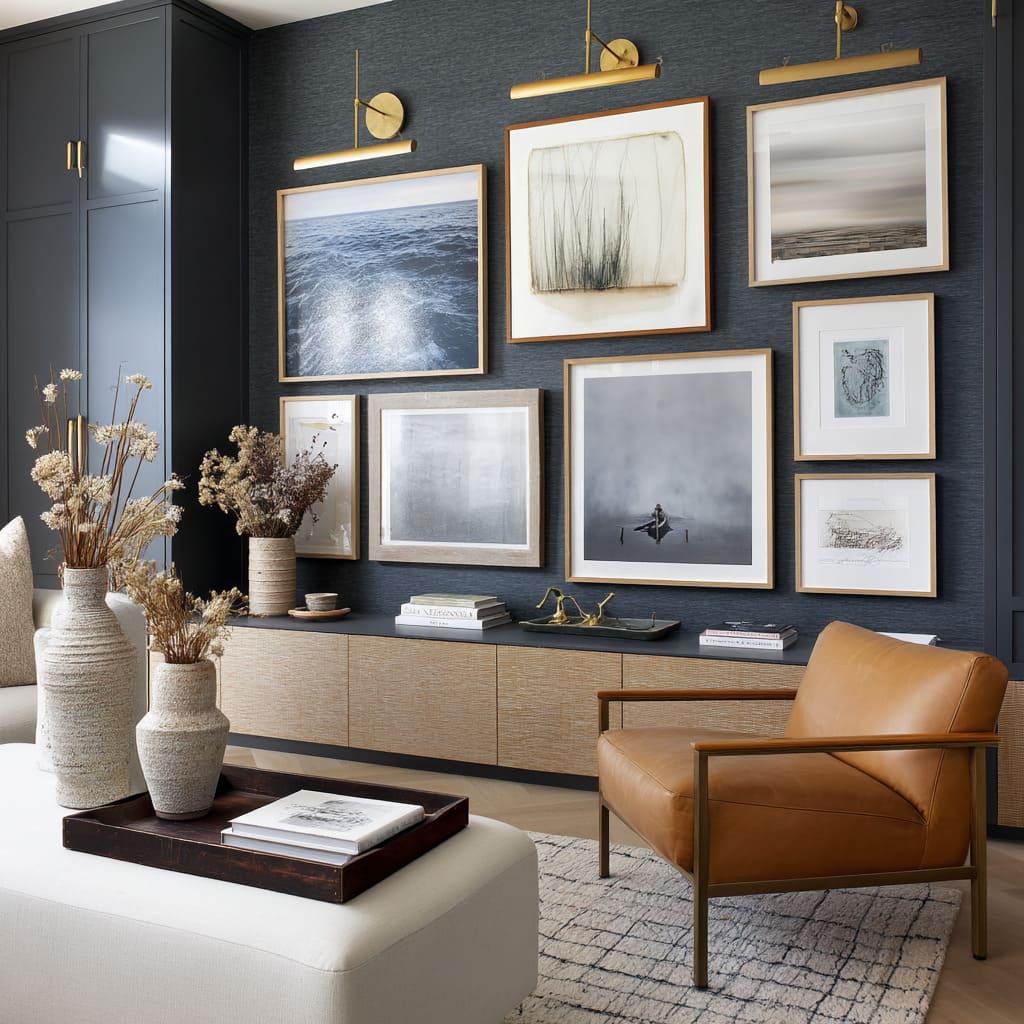
Art is what makes a well-designed room feel like yours. Oversized abstract paintings, large-format photography, or a curated gallery wall all suit contemporary interiors.
Placement makes the difference between a gallery look and a few frames on a wall. Galleries commonly center artwork around 57 to 60 inches from the floor, which is roughly eye level for most adults.
Over a sofa, a piece about two-thirds the sofa’s width looks balanced. For a gallery wall, trace each frame on kraft paper, tape the cutouts up, and adjust until the spacing feels even (a 2- to 3-inch gap between frames is a common starting point). Only then pick up the hammer.
Smart Home Technology Hidden Within Luxury Design
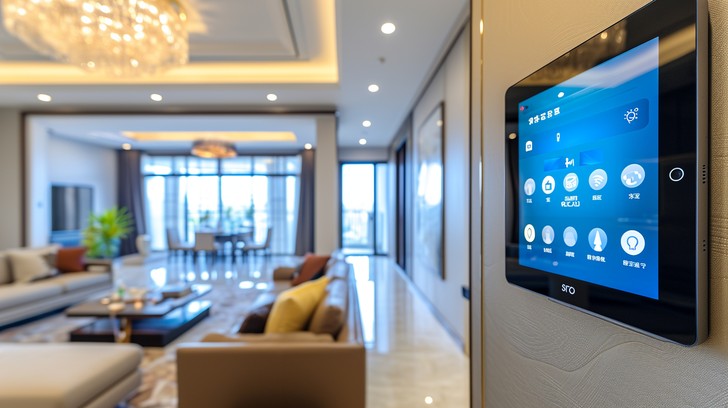
Modern luxury pairs good looks with useful technology. Hidden speakers, motorized blinds, lighting controls, and concealed media systems add convenience while keeping surfaces clear.
How much you can hide depends on timing:
If you’re renovating: run wiring for in-wall or in-ceiling speakers, hardwired shades, and central lighting controls while the walls are open.
If you’re retrofitting: look at battery-powered motorized shades, smart bulbs and plug-in switches, and wireless speakers that tuck into shelving.
Before buying, check that your devices work with the same app or platform, or support the Matter standard, so you aren’t juggling five different controls.
You don’t need all 15 ideas to create a modern luxury living room.
Start with one anchor, such as the sofa, the lighting, or a good rug, and build two or three ideas around it.
If your budget is tight, begin with the refresh ideas (layered rugs, a warmer neutral palette, styled shelves, art) and save marble walls or new windows for later.
Before you buy anything large, measure the room, your walkways, and your doorways.
A few care habits also keep things looking good for years: seal natural stone, anchor tall shelving, and follow the clearance rules for any fireplace.