
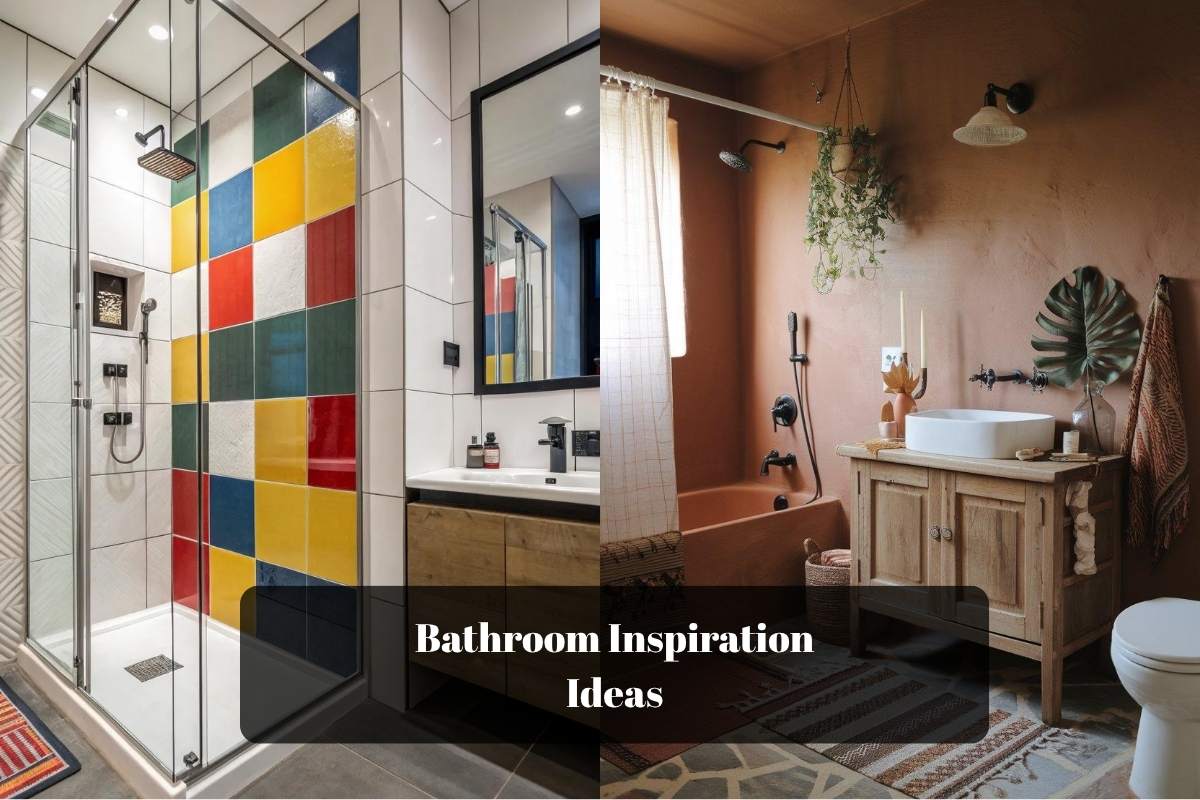
The best bathroom inspiration isn’t always the room you want to copy from top to bottom.
Sometimes it’s one detail that makes you stop scrolling: a warm wood vanity, an unexpected tile pattern, beautiful lighting, or a color combination you hadn’t considered before.
That’s how I like to approach bathroom design. Start with the feeling you want, then choose the colors, materials, textures, and details that help create it.
A spa-inspired bathroom can feel calm, while a moody black bathroom can feel dramatic. Scandinavian design brings simplicity, and earthy tones add warmth.
Find Your Bathroom Style
Spa + Soft Neutrals + Natural Materials
Wood + Earthy Tones + Organic Texture
Black + Statement Tile + Layered Lighting
Scandinavian + Light Wood + Clean Lines
Coastal + White + Soft Blue + Natural Texture
Eclectic + Pattern + Mixed Materials
Start with the feeling you want, then choose the finishes that create it.
I’ve gathered 15 bathroom inspiration ideas below, with practical details you can borrow for your own space.
You don’t need a complete renovation for every idea. Sometimes one well-chosen change is enough to shift the entire look.
Spa-Inspired Bathroom Retreat
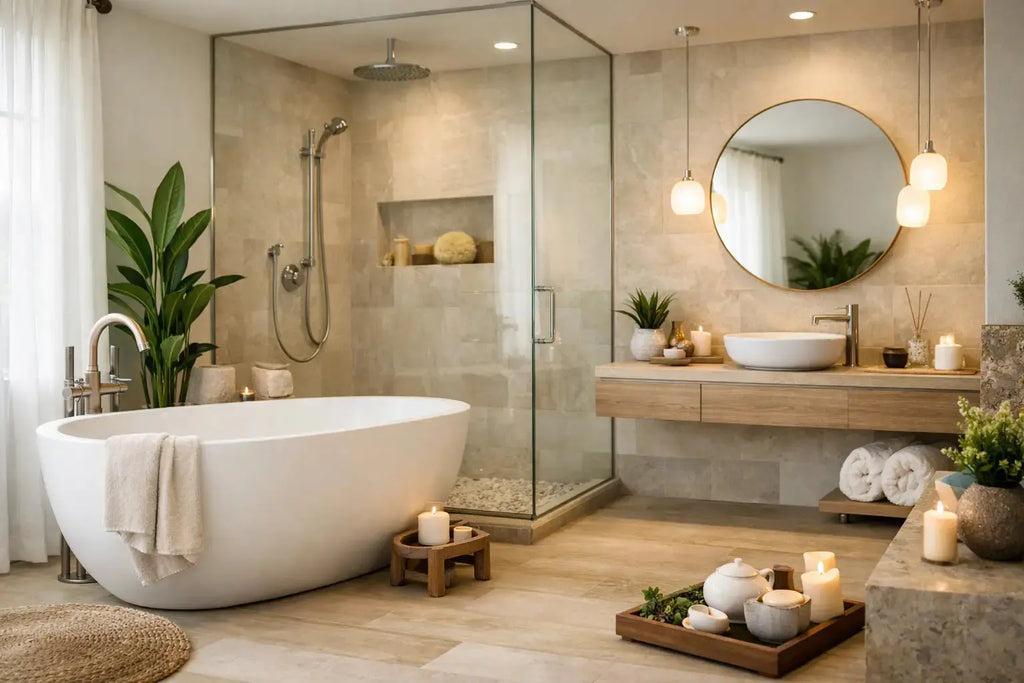
A spa-inspired bathroom is less about expensive fixtures and more about creating a calm sensory experience.
Soft neutrals, natural materials, comfortable towels, and gentle lighting can immediately make the room feel more relaxing.
A wood vanity or stool can warm up white tile, while a few plants can bring a natural touch. If you have the room, a freestanding tub can become the focal point, but you don’t need one to create the same feeling.
Even a smaller bathroom can take this approach. Keep the surfaces relatively uncluttered, use soft lighting, and choose a few materials that feel pleasant rather than adding lots of decoration.
Soft Lighting + Neutral Colors + Natural Materials + Comfortable Textiles
Chic Bathroom Inspiration
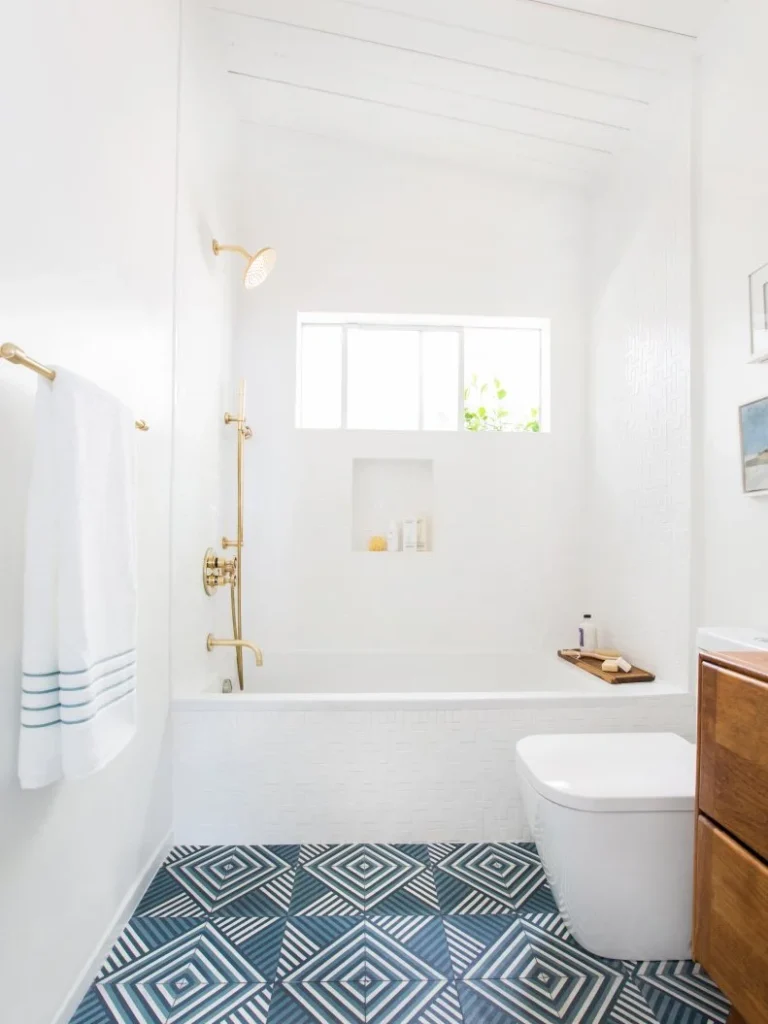
A chic bathroom usually doesn’t need dozens of decorative details. The look comes from choosing a few polished elements and giving them enough space to stand out.
Think of a statement mirror, elegant sconces, a beautiful vanity, marble, or warm metallic hardware. You can use just one of these as the main feature and keep the surrounding finishes simple.
For example, a basic vanity can look much more considered when paired with a distinctive mirror and good lighting.
The same principle works in a rental or a budget refresh where replacing the entire bathroom isn’t realistic.
Choose One Luxury Detail
Mirror or Lighting or Vanity or Countertop
Let one feature lead instead of making every surface compete for attention.
Bohemian Bathroom Inspiration
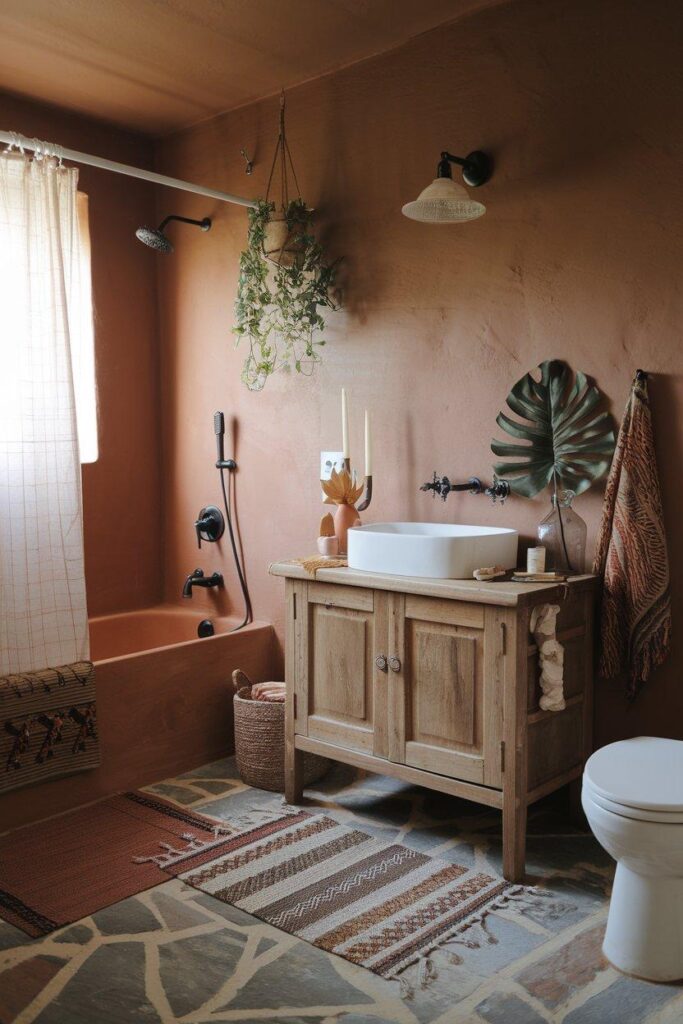
Bohemian bathrooms have room for personality. Woven baskets, greenery, textured rugs, handmade accessories, and vintage pieces can create a relaxed look that doesn’t feel overly coordinated.
The trick is layering rather than simply collecting more things. Start with a neutral foundation, then introduce natural textures and a few pieces that have character.
A woven basket can provide storage while adding texture. A small rug can soften hard flooring. Greenery can bring color without requiring another strong decorative finish.
Woven baskets, rugs, and natural fibers.
Plants add life and natural color.
Vintage and handmade pieces make the room feel collected.
The goal is a bathroom that feels personal, not like every item came from the same display set.
Warm Wood Bathroom Design
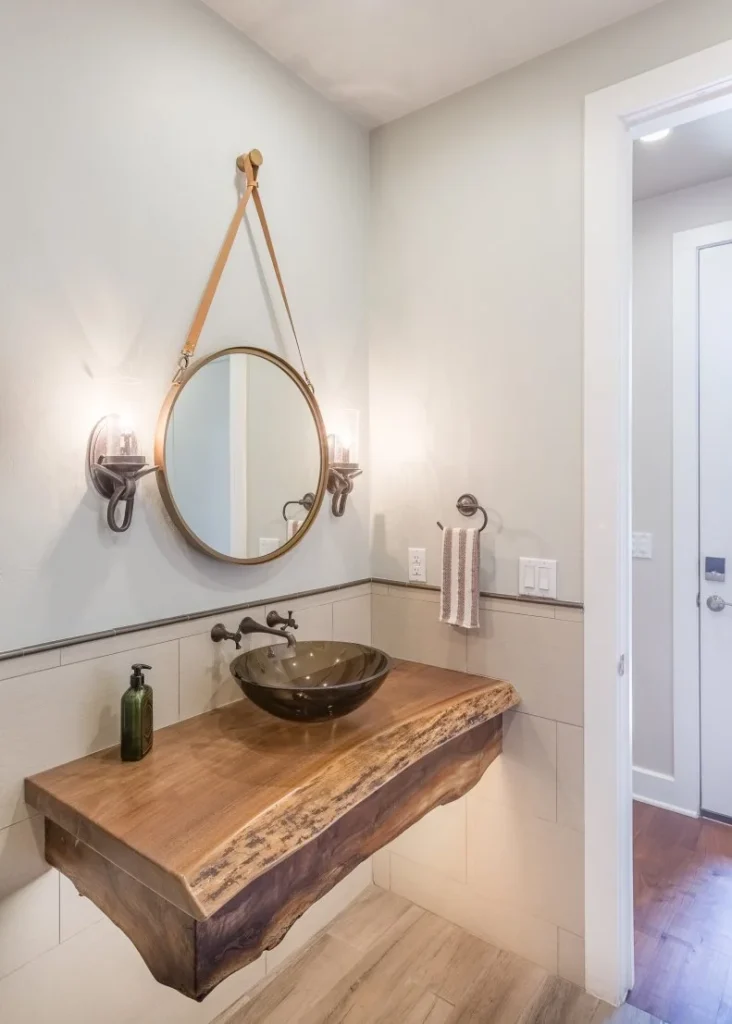
Wood can completely change the feeling of a bathroom. Against white tile or stone, natural grain adds warmth and makes hard surfaces feel softer.
Oak works well when you want a light, airy look. Walnut creates more depth and works beautifully with cream, beige, or darker finishes.
If you’re not using real wood, wood-look tile or other moisture-appropriate materials can still bring that visual warmth.
You don’t need wood everywhere. A vanity, shelf, stool, or framed mirror can be enough to introduce the material.
Walnut + Cream → Rich and warm
Wood + Stone → Organic and grounded
Eclectic Bathroom Style
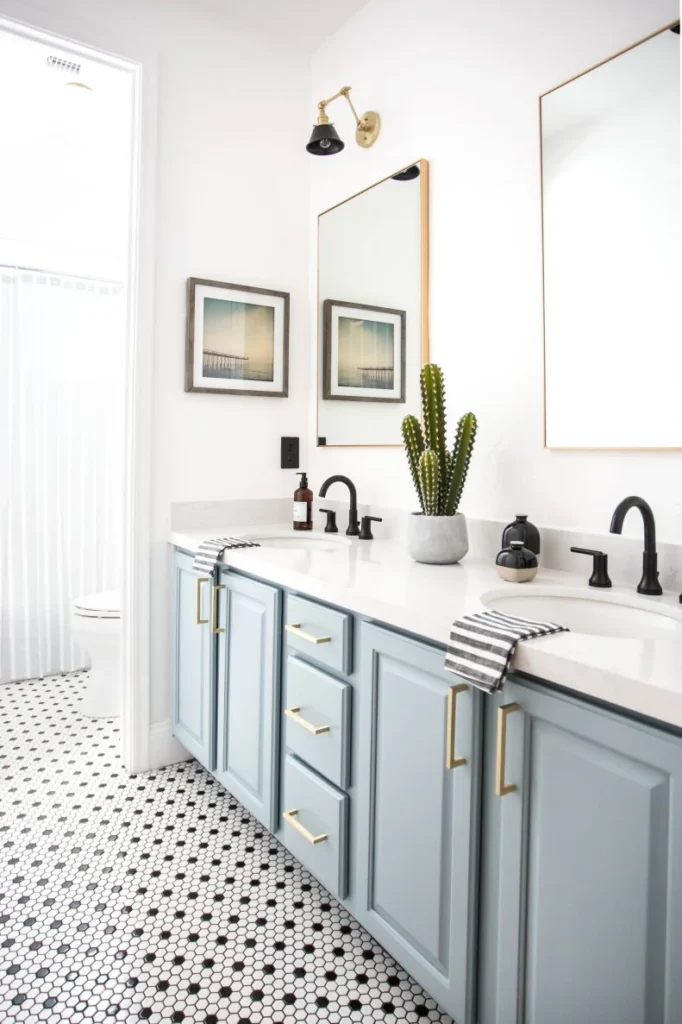
An eclectic bathroom gives you permission to mix different design influences. A vintage mirror can sit above a modern vanity, while patterned tile works alongside contemporary lighting.
The secret is finding something that connects the different pieces. A consistent color palette is one of the easiest ways to do it.
You might use three main colors throughout the room and let the materials and shapes vary. This gives you freedom to mix styles without making the bathroom feel random.
The Eclectic Rule
Mix styles, repeat colors.
Keep the palette connected while allowing mirrors, lighting, tile, and accessories to bring different personalities into the room.
Natural Stone Bathroom
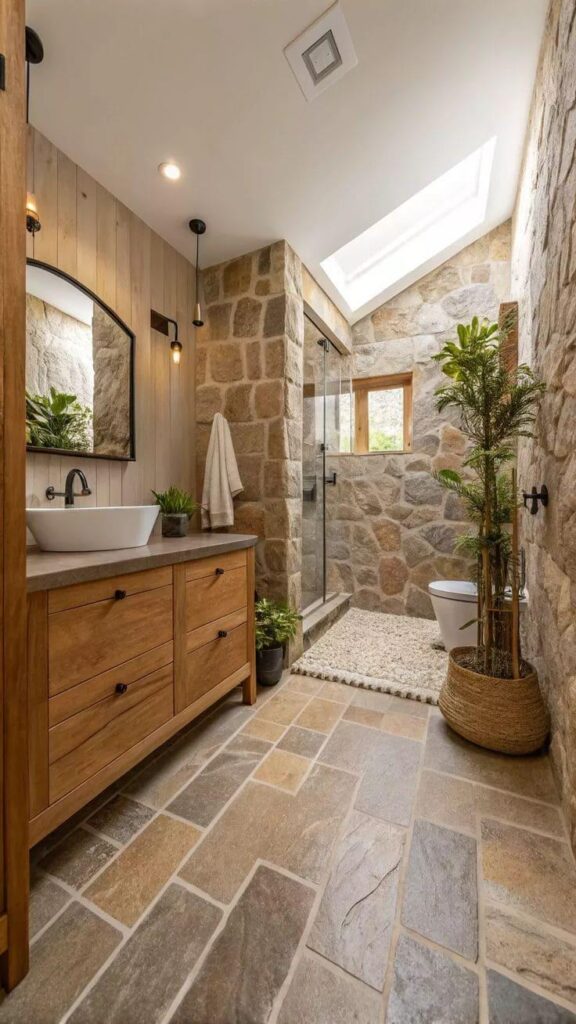
Natural stone brings texture and variation into a bathroom in a way that feels inherently connected to nature.
Marble, travertine, limestone, and slate can each create a completely different mood.
Marble tends to feel polished and refined. Travertine brings warmth. Limestone has a softer, earthy quality, while slate can give the room a deeper, more rustic character.
You don’t have to cover the entire bathroom in stone. A countertop, shower wall, floor, or small feature area can provide enough texture to make the material noticeable.
Warm and natural.
Refined and elegant.
Soft and earthy.
Rustic and dramatic.
Penny Round Tile Bathroom
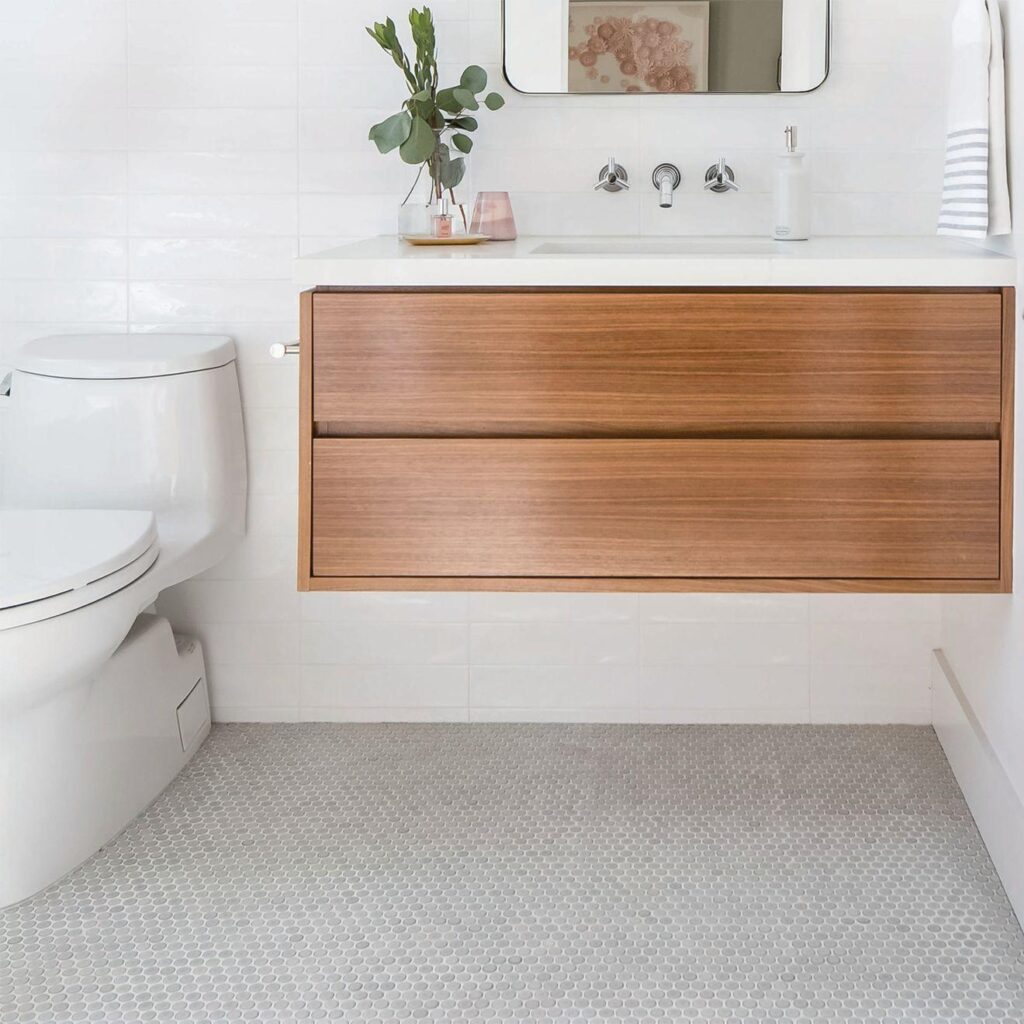
Penny round tile is one of those small details that can give a bathroom a lot of character. The repeated circular pattern adds texture while staying relatively simple.
It’s especially useful when you want to introduce a tile detail without using a large, dramatic pattern.
A penny tile shower floor can become a subtle feature, while a backsplash or accent wall can make the pattern more noticeable.
The grout color also changes the effect. A closer grout color creates a softer appearance, while stronger contrast makes each individual tile stand out more.
Where Penny Tile Works
Adds small-scale texture.
Creates a subtle feature.
Makes the pattern more noticeable.
Mixed Materials and Textures
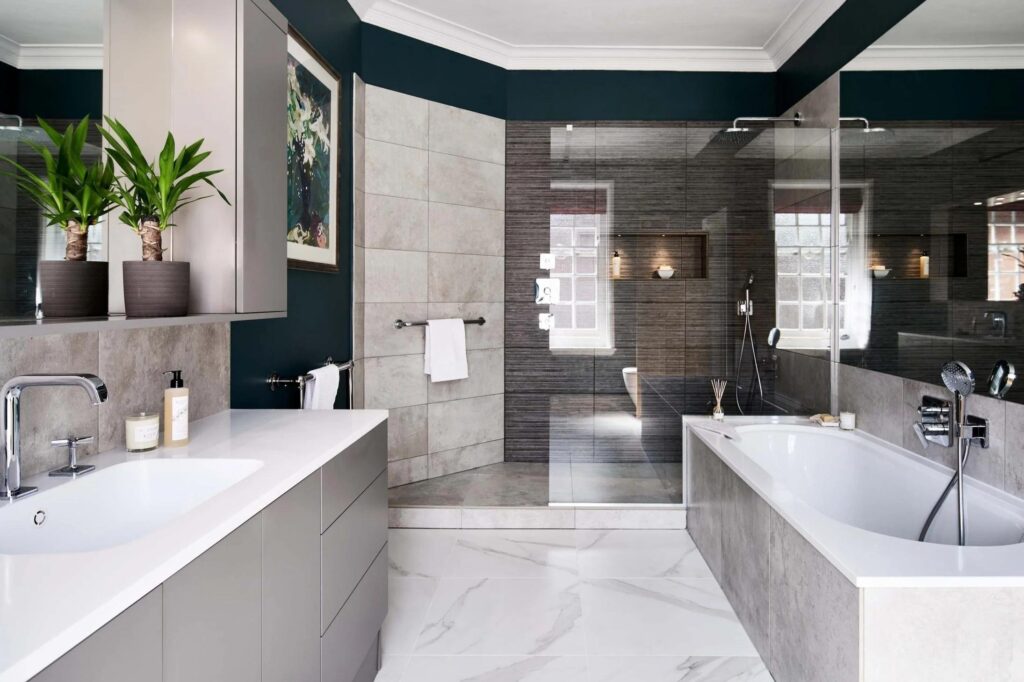
A bathroom can have a neutral color palette and still feel rich. The difference often comes from mixing materials that feel different to the eye and touch.
Think smooth stone next to natural wood, metal against concrete, or clean tile paired with a woven basket and soft towels.
You don’t need ten different finishes. Three well-chosen materials can be enough to create depth.
The 3-Material Rule
One Smooth + One Natural + One Textured
Try stone + wood + woven texture, or polished tile + metal + linen.
This approach is especially useful if you prefer neutral bathrooms but don’t want them to feel flat.
Natural and Earthy Tone Bathroom
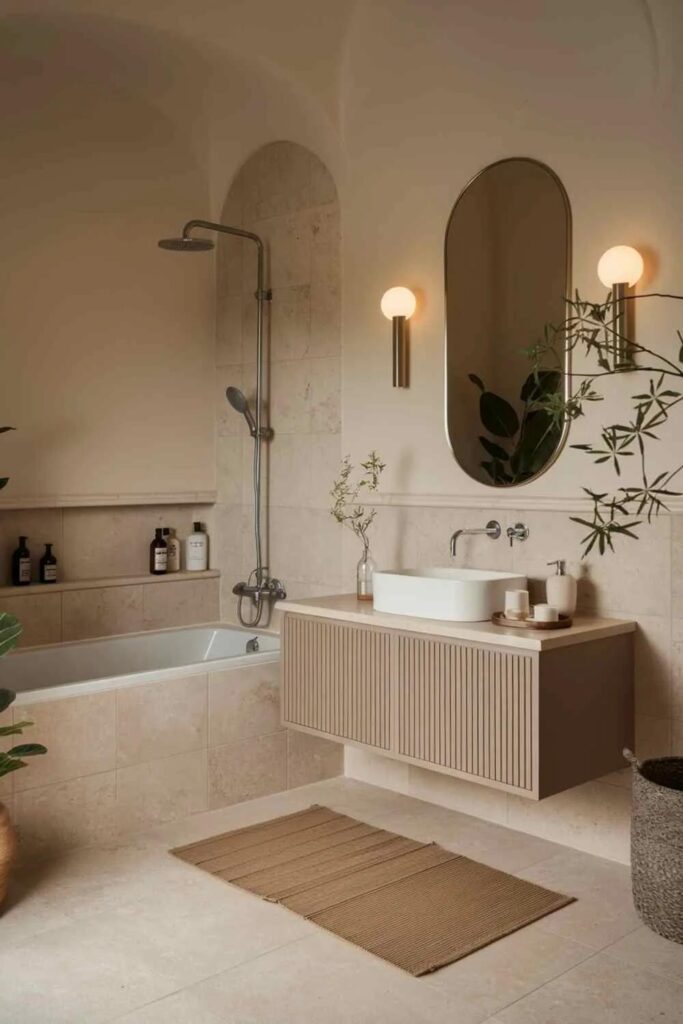
Earthy bathrooms use colors found in nature to create a warm, grounded atmosphere.
Think sand, clay, olive, warm beige, soft brown, and natural wood.
You can keep the overall palette light or take it deeper depending on the mood you want. Soft beige with pale oak feels airy, while olive and walnut create something richer.
The important part is keeping the colors connected. Let your materials do some of the work rather than adding lots of decorative objects.
Sand + Clay + Olive + Soft Brown + Natural Wood
Earthy doesn’t have to mean dark. Warm cream and soft beige can create the same natural direction in a brighter room.
Statement Shower Tile Design
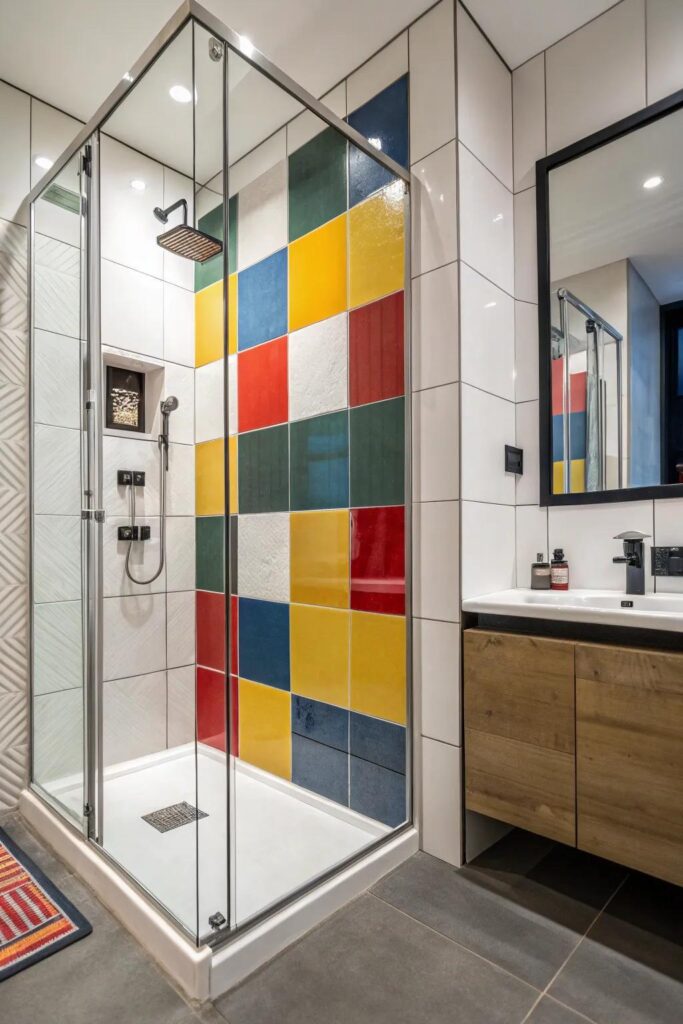
If you want one part of the bathroom to make an immediate impression, the shower is a natural place to do it.
Large-format tiles, colorful mosaics, dramatic patterns, or stone-look surfaces can turn the shower wall into the main feature.
Once you’ve chosen a strong shower tile, resist the temptation to compete with it everywhere else.
A simpler vanity, quieter floor, and restrained accessories can actually make the statement tile look more expensive and intentional.
Statement Tile Rule
Let the shower be the star.
Keep the vanity, walls, hardware, and accessories relatively restrained so the tile has room to stand out.
Encaustic Tile Bathroom
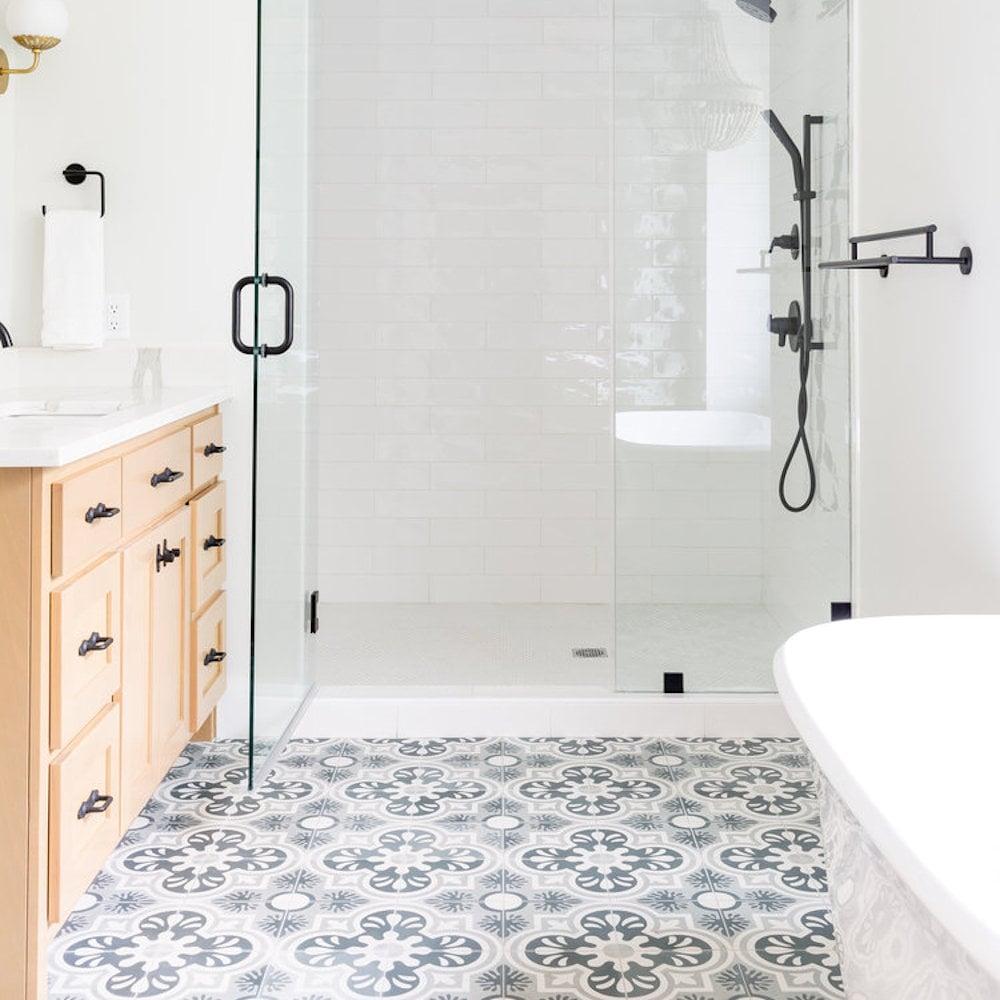
Patterned encaustic-style tiles can bring personality to a bathroom without relying on artwork or lots of accessories.
They can work particularly well on floors, where the pattern becomes part of the architecture.
Because the tile already provides visual interest, the surrounding finishes should usually be quieter. Simple walls, a clean vanity, and restrained accessories give the pattern space to breathe.
If you’re worried about using too much pattern, start with a smaller area instead of covering every wall.
Patterned Floor + Simple Walls + Minimal Accessories
The result can feel decorative without becoming visually overwhelming.
Moody Black Bathroom
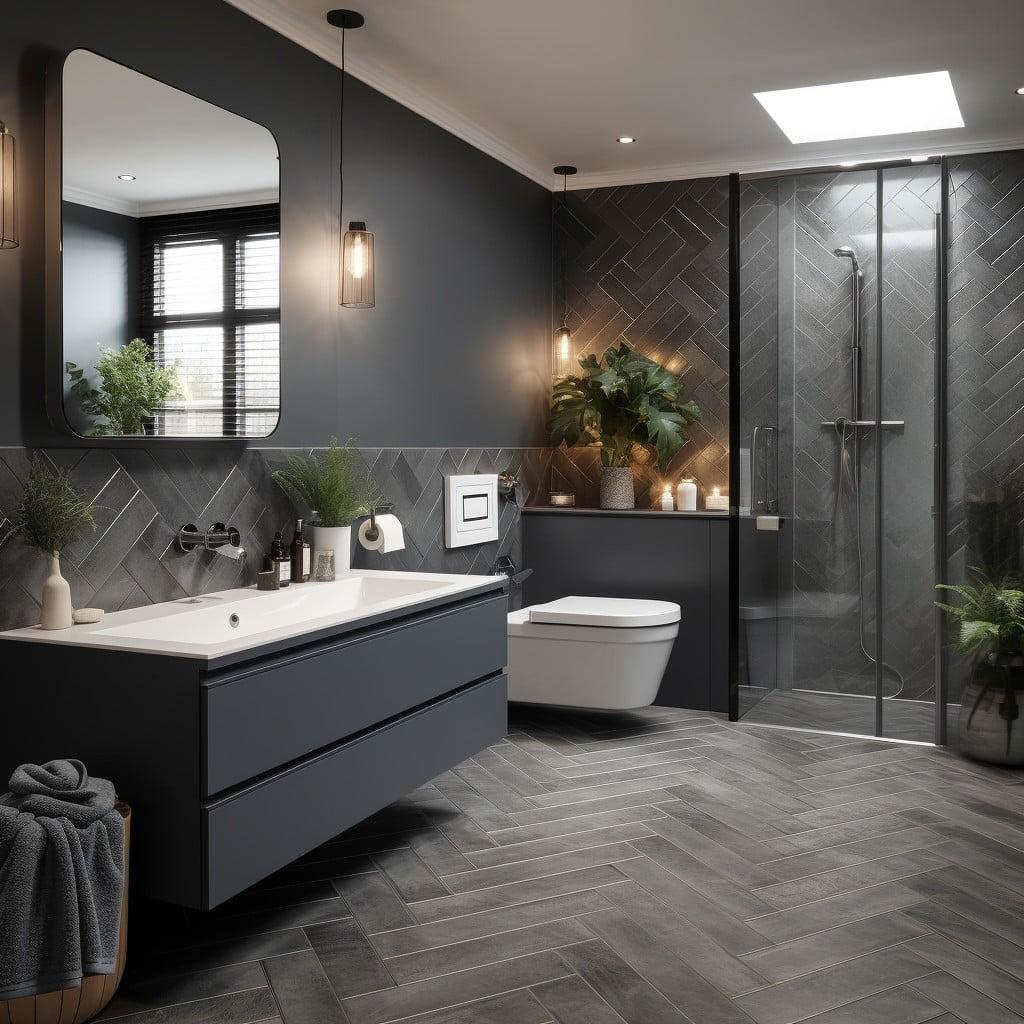
Black can create a dramatic bathroom, but it doesn’t have to feel cold. The key is introducing enough warmth, texture, and light to balance the darker surfaces.
Matte black fixtures, charcoal walls, warm wood, natural stone, and brass can all work together. A large mirror adds reflection, while layered lighting helps prevent the room from feeling flat.
You don’t need every surface to be black. Sometimes a black vanity, dark wall, or strong floor is enough to establish the mood.
Moody Bathroom Formula
Black + Warm Wood + Reflective Surface + Layered Lighting
The goal isn’t simply darkness. It’s contrast and atmosphere.
Coastal Bathroom Inspiration
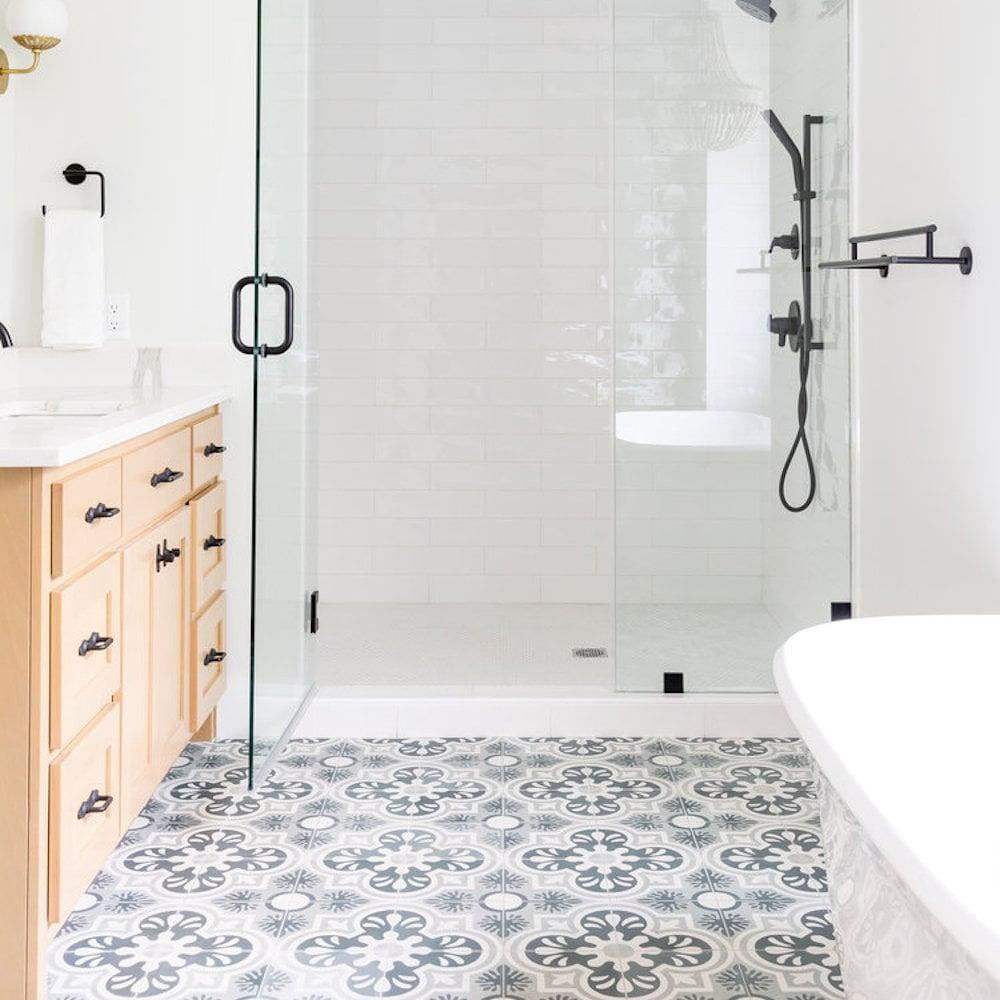
A coastal bathroom doesn’t need to look like a beach souvenir shop. You can create the feeling of a seaside retreat with a much quieter combination of colors and materials.
Crisp white, soft blue, weathered wood, woven baskets, and natural textures provide the foundation. Keep the shapes simple and let the materials bring the relaxed feeling.
A pale blue vanity or blue-gray tile can introduce color without making the room feel overly themed.
White + Soft Blue + Weathered Wood + Natural Texture
You don’t need seashells, anchors, or obvious beach décor to make the room feel coastal.
Scandinavian Minimal Bathroom
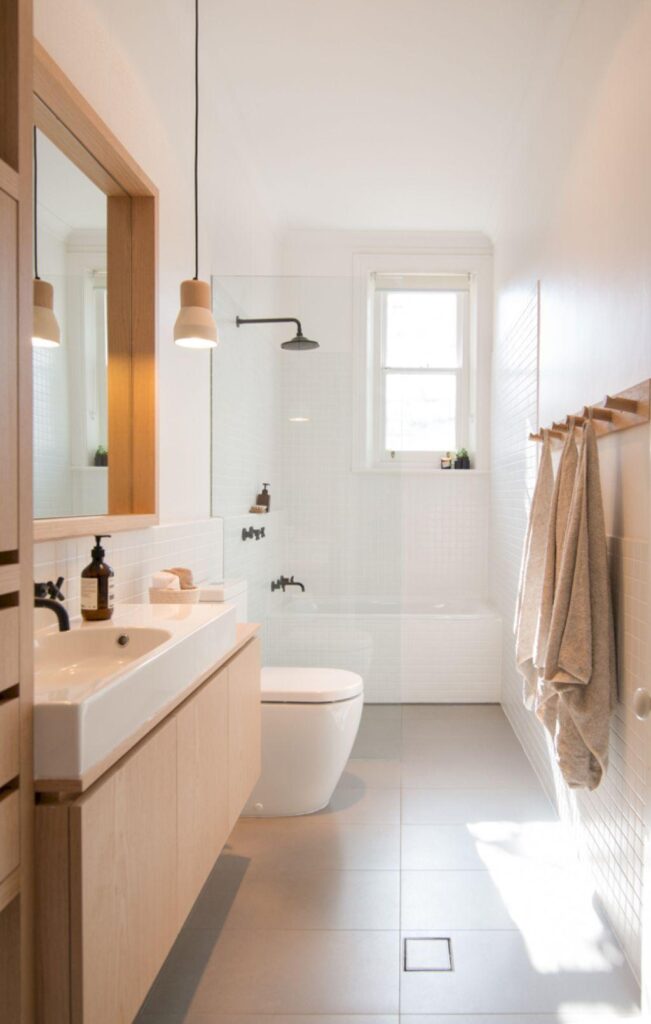
Scandinavian bathrooms are a good reminder that a room doesn’t need lots of decoration to feel finished. Clean lines, pale wood, white surfaces, and practical storage create a calm foundation.
A floating vanity can keep the floor visually open, while simple shelves or concealed storage prevent everyday products from taking over the room.
I especially like this approach for smaller bathrooms because every item has a purpose. Instead of asking what else you can add, ask what you can remove.
White, pale oak, soft gray, and a little greenery are enough to create a peaceful bathroom without making it feel bare.
The Scandinavian Editing Rule
Keep what you use. Remove what you don’t.
Double Vanity With Luxury Lighting
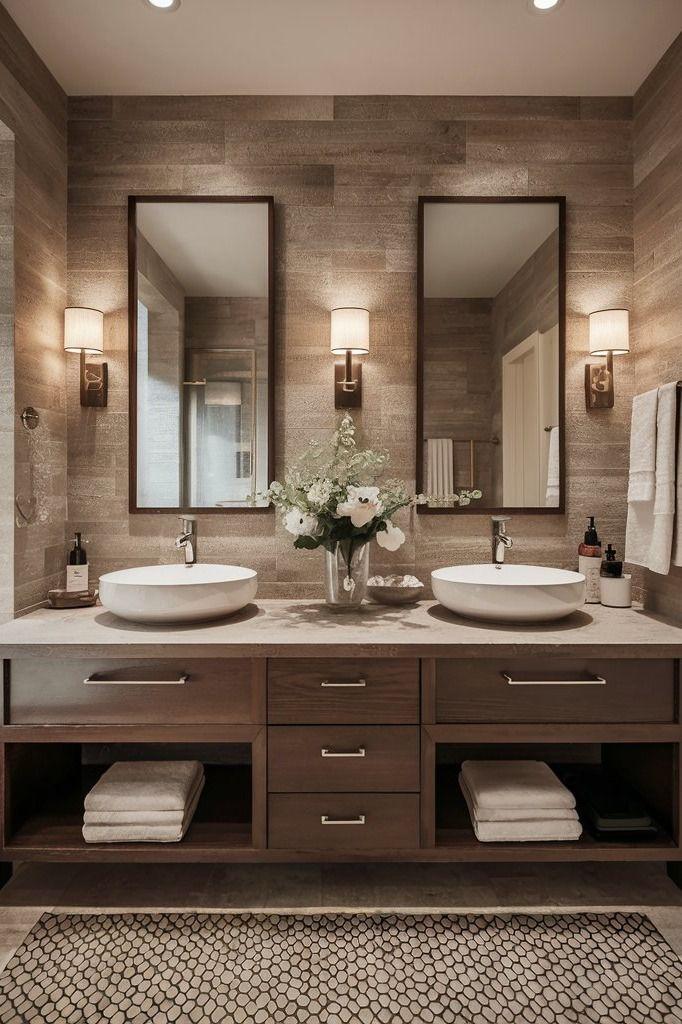
A double vanity can become the architectural anchor of a larger bathroom. Matching sinks and mirrors create symmetry, while carefully chosen lighting adds another layer of design.
Wall sconces placed around the mirrors can provide useful task lighting, while a statement ceiling fixture can bring more personality to the room.
Don’t overlook storage. A beautiful double vanity still needs enough drawers and cabinets to keep everyday products organized.
Double Vanity Checklist
- Enough counter space for two people
- Useful and accessible storage
- Good mirror lighting
- Balanced mirror placement
- Easy-to-clean surfaces
- Lighting that works for both function and atmosphere
You don’t need to copy an entire bathroom to get inspired by it. Maybe it’s the warm wood from one room, the tile from another, or the lighting idea you’ve been looking for.
The best bathroom design ideas usually start with one thing you genuinely love.
Build around that detail, keep the surrounding choices connected, and resist the urge to add something simply because there is an empty spot.
Find the one detail that makes you stop scrolling, then build your bathroom around it.