
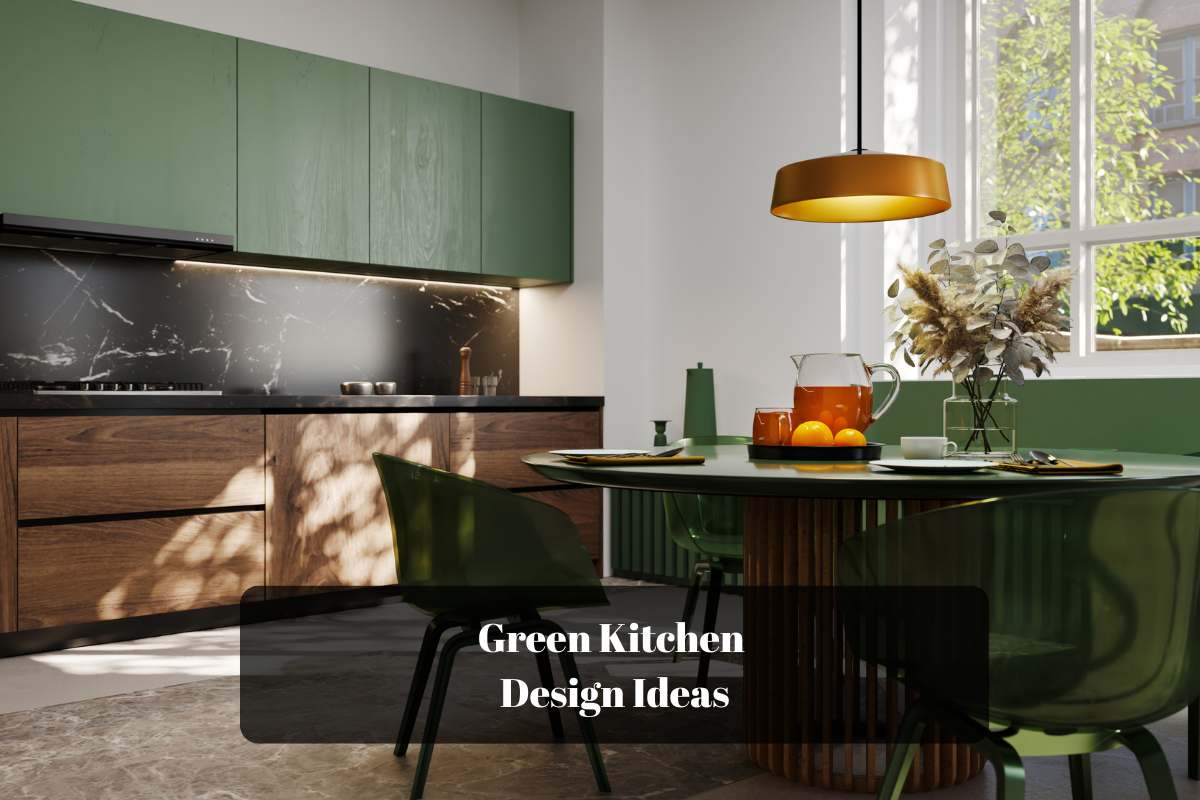
Green kitchens can feel soft and calming, rich and dramatic, rustic and welcoming, or clean and modern. The shade you choose matters, but it is only the starting point.
The real difference comes from what you pair with it. White can make green feel lighter, wood adds warmth, black creates contrast, and brass brings a little polish. Even the amount of green you use can completely change the look.
That is why you do not need to cover every cabinet in green to create a beautiful green kitchen. A green island, a soft sage lower cabinet, or even a few botanical details can be enough.
Quick Glance: 16 Green Kitchen Ideas
Here are 16 green kitchen design ideas to help you find a combination that feels right for your home.
Sage Green Shaker Cabinets
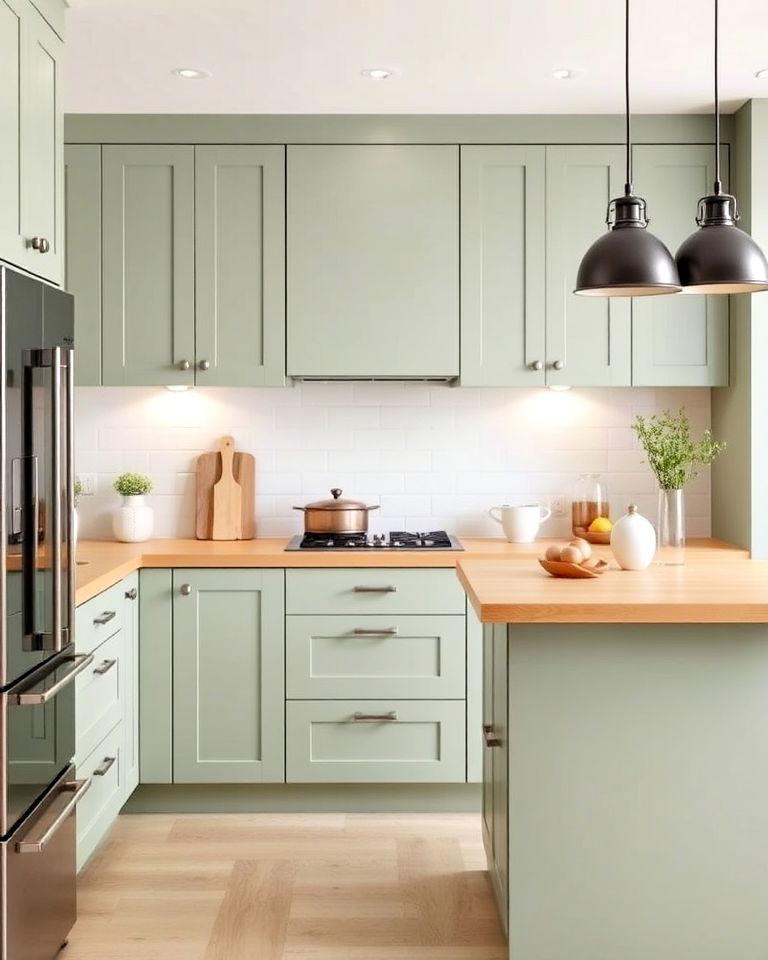
Sage green is one of the easiest shades to bring into a kitchen because it has a muted, slightly gray quality. It feels colorful without demanding all the attention.
Shaker cabinets make this shade even more approachable. Their simple recessed panels add enough detail without competing with the color.
For a warm, balanced palette, try sage cabinets with white countertops, warm oak accents, and simple dark hardware. The wood keeps the green from feeling too cool, while black or charcoal hardware gives the cabinets definition.
A simple sage green formula:
Main cabinet color
Counters or backsplash
Shelves, stools or flooring
Small, controlled contrast
Dark Emerald Statement Kitchen
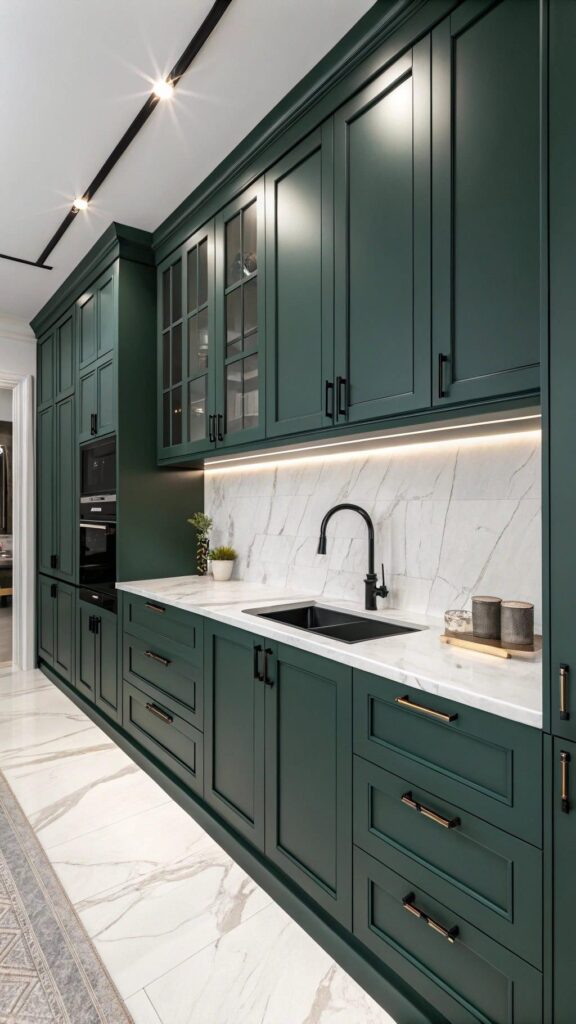
Emerald green creates a much stronger visual statement. Instead of trying to make the color feel subtle, let it become the focal point.
Full-height emerald cabinets can look especially rich when balanced with a lighter countertop and backsplash. White marble or another light surface can break up the darker cabinetry and keep the room from feeling visually heavy.
Warm lighting also matters here. Cool lighting can make deep green appear harder or more blue-toned, while warmer light can bring out its richness.
If the cabinetry is already dramatic, keep the surrounding decor fairly quiet. You do not need several competing focal points.
Let the cabinetry lead.
Use a lighter counter or backsplash.
Add wood, brass or warm lighting.
Avoid filling every surface with decor.
Olive Green Rustic Kitchen
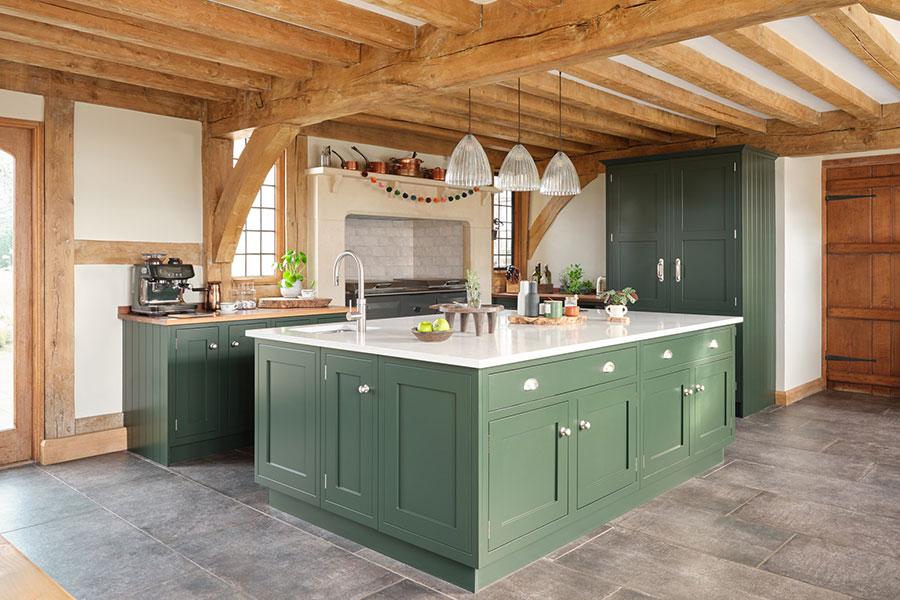
Olive green works beautifully with materials that already have variation and texture. Think natural wood, aged metal, stone, woven baskets, and handmade-looking ceramics.
Instead of making the kitchen look overly polished, allow a few imperfections and natural textures to remain visible. A wood island paired with olive cabinetry can create a grounded palette without needing lots of decorative accessories.
For the rustic look to feel intentional, repeat the same warm materials in more than one place. For example, if you use wood shelving, echo that wood tone through stools or a cutting board.
Read More – 14 Rustic Scandinavian Interior Ideas with Natural Charm
Green and White Two-Tone Kitchen
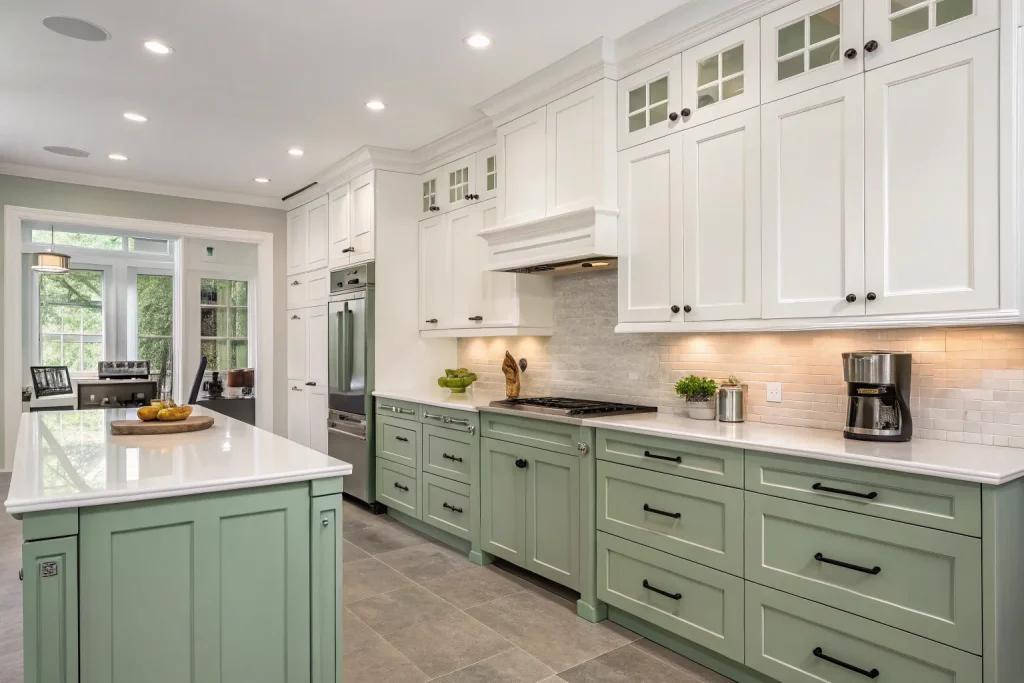
Green and white is a useful combination when you want color without making the entire kitchen feel dark.
The easiest approach is to decide where the green belongs before choosing the exact shade.
Lower cabinets can anchor the room while white upper cabinets keep the walls visually lighter. A green island can work in a similar way.
Best if you want color while keeping the upper half light.
A lower-commitment way to introduce a stronger green.
Choose this when you want the green to define the room.
A white backsplash and countertop can provide enough visual space between the two colors. You can then introduce wood or black accents depending on whether you want the room to feel warmer or more graphic.
Forest Green Cabinets with Gold Hardware
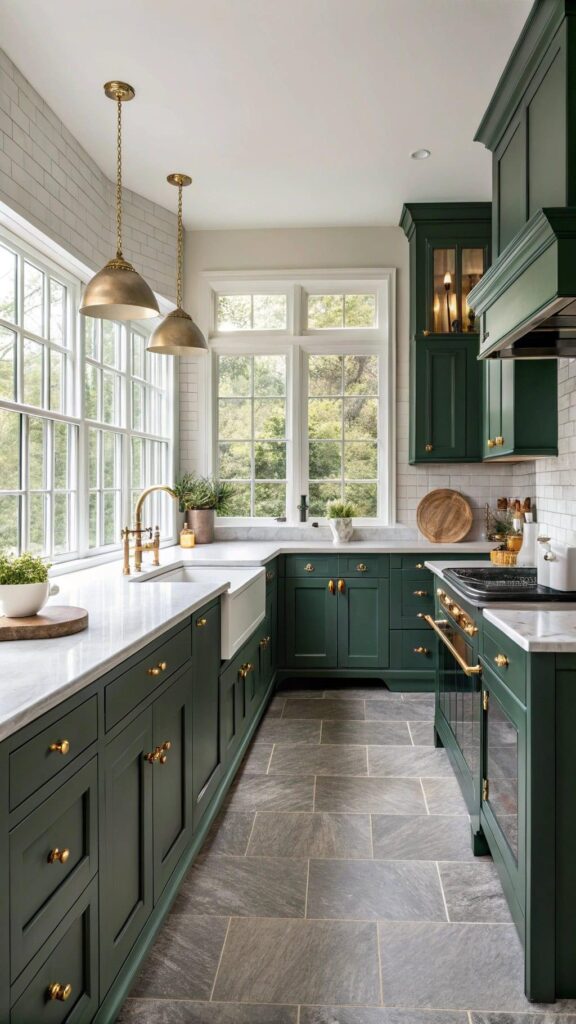
Forest green has more depth than softer greens, making it a good choice for a kitchen with a richer, more dramatic mood.
Gold hardware can warm it up, but restraint is important. Cabinet pulls, a faucet, or pendant lights may be enough. You do not need gold on every visible surface.
A light countertop, pale walls, and warm flooring can prevent the combination from becoming too dark. If your kitchen has limited natural light, consider using forest green on one cabinet run or the island instead of every cabinet.
Mint Green Vintage Kitchen
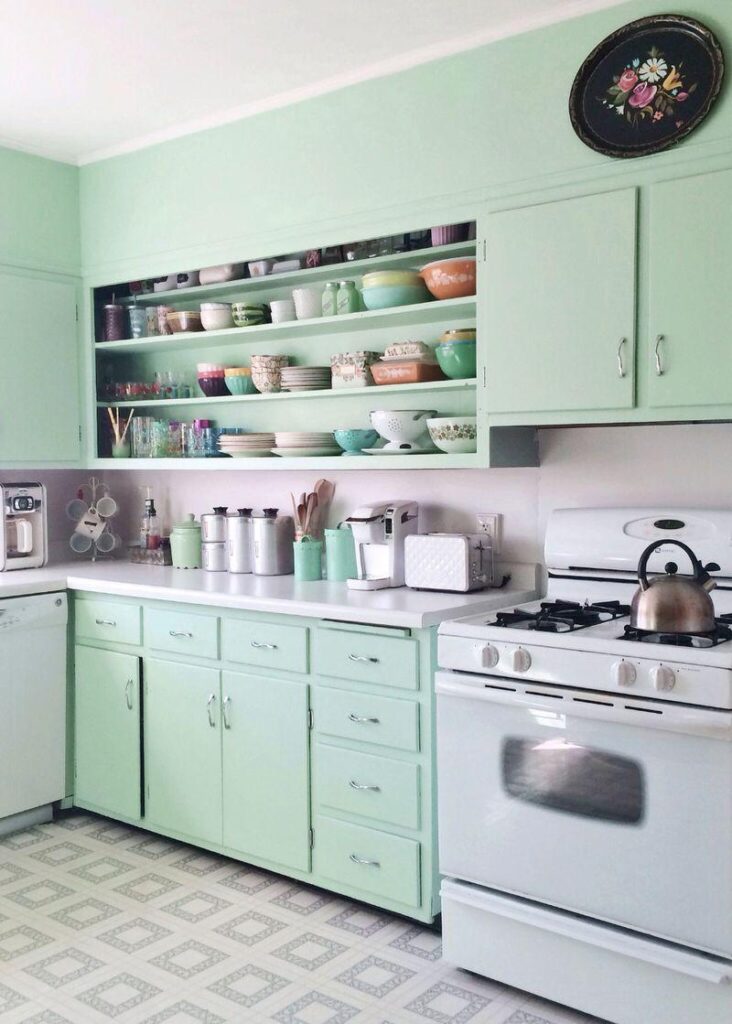
Mint green instantly brings a lighter, playful quality to a kitchen. Pair it with vintage-inspired details such as chrome hardware, retro lighting, checkerboard flooring, or classic appliances.
You can also use just one or two vintage elements rather than turning the whole room into a period-style kitchen.
For example, mint cabinets with a simple white backsplash and modern countertops can feel fresh, while a retro pendant or chrome faucet provides the nostalgic touch.
The key is choosing which decade-inspired details you actually love. Too many competing vintage references can make the kitchen feel themed instead of personal.
Green Kitchen with Natural Wood Accents
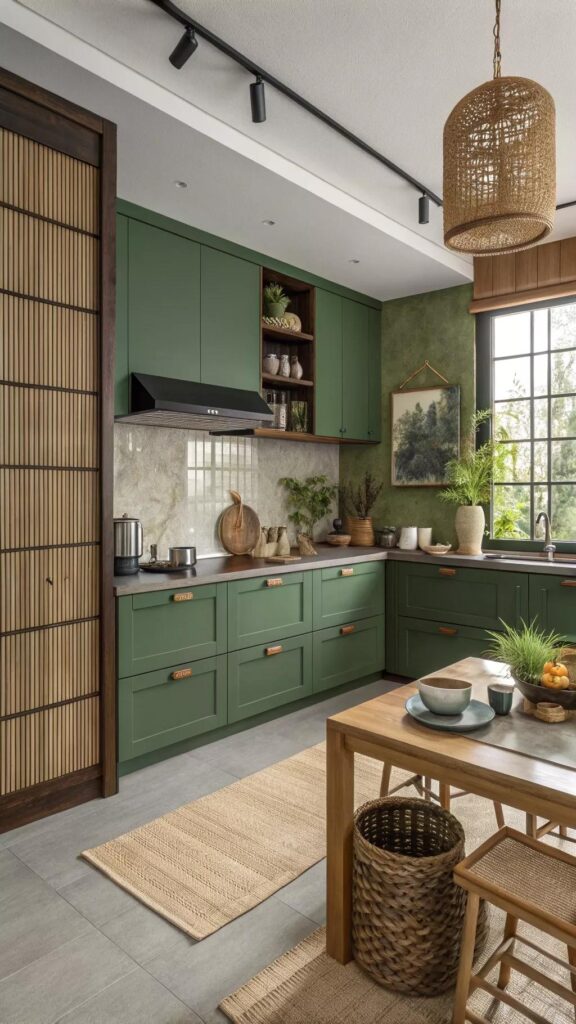
Green and natural wood are a natural pairing because both bring an earthy quality to the kitchen.
The wood does not have to be limited to cabinets. Try open shelves, a butcher-block section, bar stools, ceiling beams, flooring, or even smaller everyday items such as wooden cutting boards.
If your green is cool or muted, warm wood can add needed softness. If the green is already warm, a lighter wood can keep the overall palette from becoming too heavy.
A small visual break from cabinetry.
Useful if you have an island or peninsula.
Creates a larger warm foundation.
Cutting boards and simple accessories can echo the tone.
Matte Green Modern Kitchen
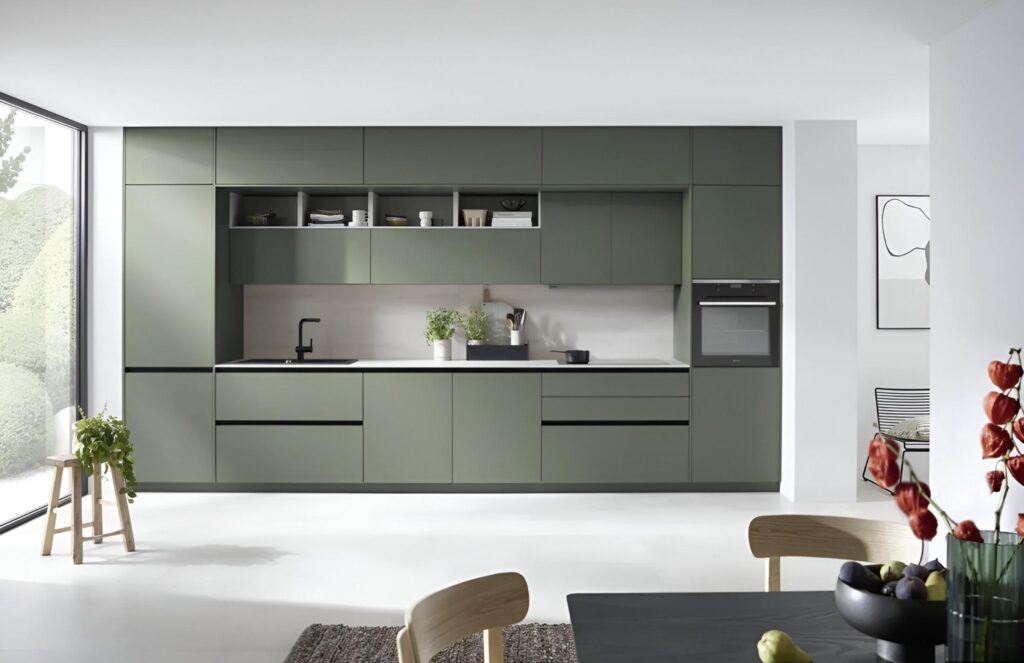
Green does not have to look traditional. A matte green finish paired with flat-panel cabinets can create a clean modern kitchen.
Keep the cabinet fronts simple and let the finish provide most of the visual interest. Handleless cabinetry or slim hardware can reinforce the streamlined look.
Integrated appliances, a simple backsplash, and uncluttered counters can also help the green remain the main design feature.
A useful formula here is:
Matte green + clean lines + simple hardware + one warm material
The warm material might be oak, natural stone, or another finish that keeps the modern kitchen from feeling too stark.
Green Kitchen with Marble Countertops
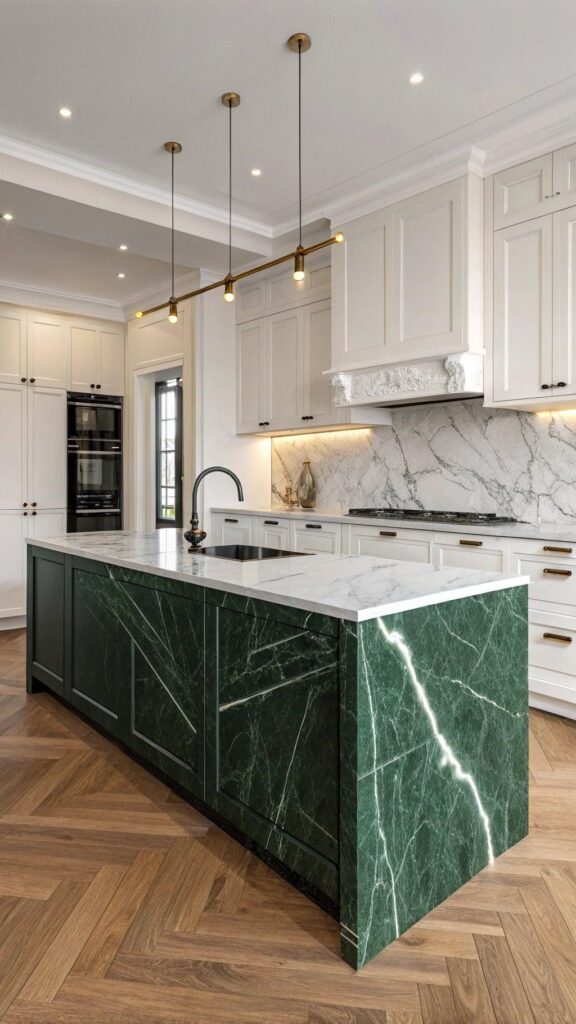
Green cabinetry and marble can create a beautiful contrast because one brings color while the other introduces movement through its veining.
The trick is to look at the undertones rather than simply choosing any white marble. If your green has warm undertones, a warmer stone may feel more connected. A cooler green may work better with a crisp white surface.
Provides depth and personality.
Adds light and natural movement.
Can connect the countertop visually to the cabinet color.
If the marble has noticeable veining, keep the backsplash and decorative pieces fairly quiet. The combination already has plenty of visual information.
Cottage Style Green Kitchen
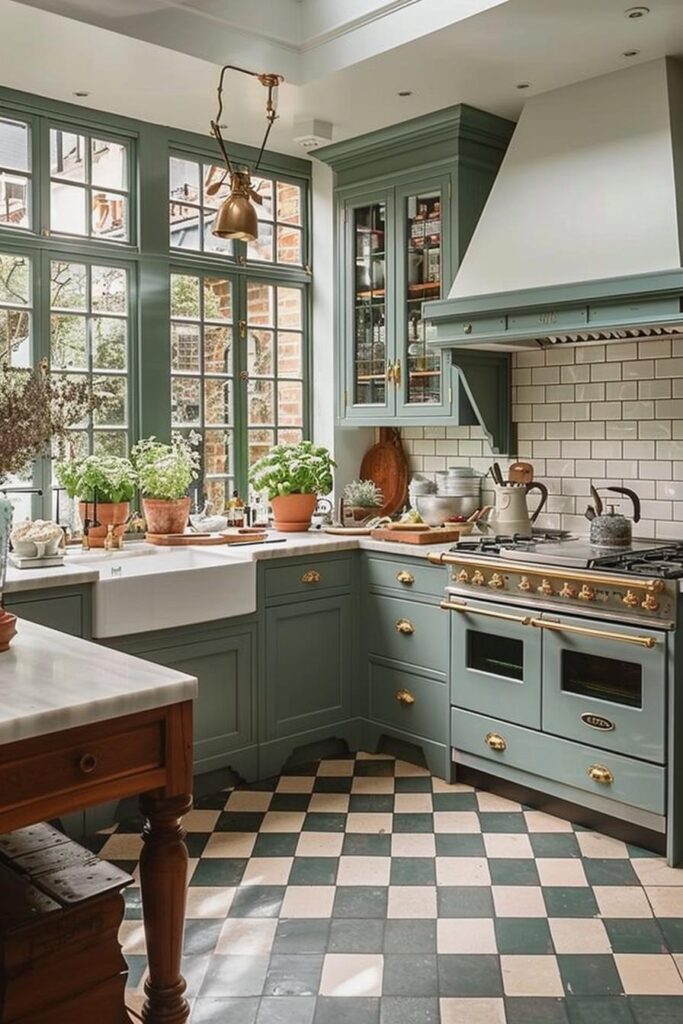
A cottage kitchen gives you room to mix softer green cabinetry with beadboard, wood, vintage fixtures, floral touches, and open shelving.
But cottage style does not mean every surface needs decoration. The charm usually comes from a few well-chosen details.
Think about what creates character first. A farmhouse sink, aged hardware, a simple floral print, or a row of everyday ceramics can do more than a shelf packed with decorative objects.
Add personality through a soft, considered palette.
Use wood, ceramics, and natural finishes for warmth.
Choose one or two details that make the kitchen feel personal.
Green Kitchen with Black Accents
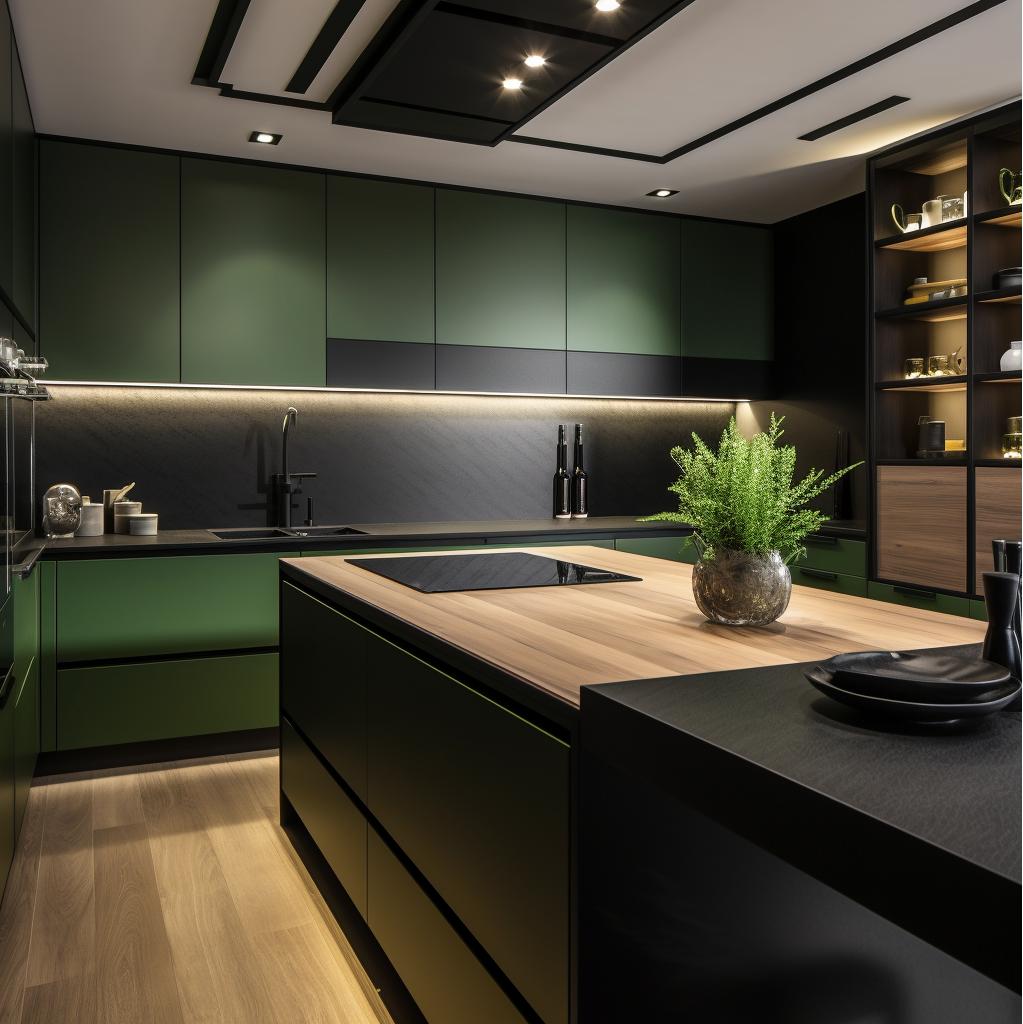
Black can give green cabinetry a sharper, more modern edge.
You do not need much of it. A black faucet, cabinet pulls, pendant lights, window frames, or a few stools can be enough to create contrast.
This works particularly well with muted green shades because the black provides definition without introducing another strong color.
Think of black as punctuation. Use it to highlight important details rather than covering every available surface.
For a softer result, combine green and black with white or warm wood. For a more dramatic kitchen, pair deeper green cabinetry with black lighting and hardware.
Scandinavian Green Kitchen
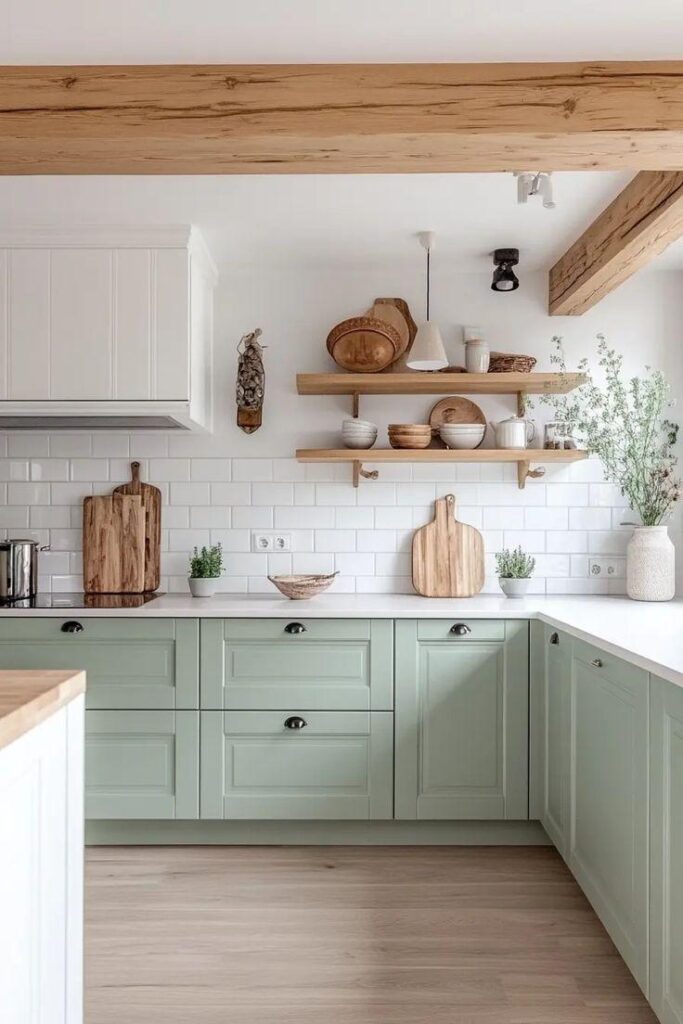
A Scandinavian green kitchen should feel calm rather than busy. Choose a pale green with white, light oak, simple hardware, and plenty of open visual space.
The cabinetry can carry the color while the rest of the kitchen stays restrained.
Avoid filling every shelf or countertop with accessories. Scandinavian-inspired spaces usually benefit from useful objects, natural materials, and a limited palette.
Keep the color soft.
Keep the room feeling open.
Add warmth and texture.
Let the materials speak.
Read More- 16 Cozy Scandinavian Interior Ideas for a Warm and Inviting Home
Green Kitchen Island as a Focal Point
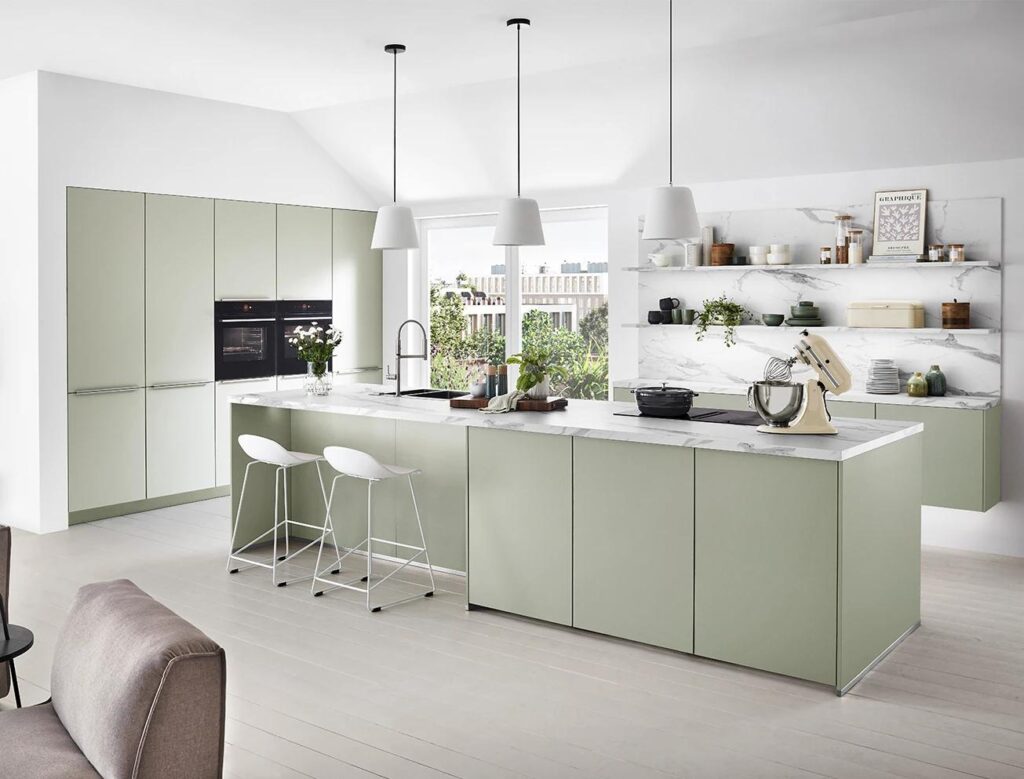
Not ready to commit to an entirely green kitchen? Start with the island.
A green island can become the focal point while the perimeter cabinets remain white, natural wood, or another neutral finish. This is especially useful if you love a stronger shade such as emerald, forest, or deep olive but are unsure about using it throughout the room.
The island is also a good place to experiment with color because it naturally separates itself from the surrounding cabinetry.
If you want a strong focal point with more flexibility around the rest of the kitchen.
If you want the cabinetry color to become a major part of the room’s identity.
You can also coordinate the island with a small detail elsewhere, such as a runner, artwork, pendant finish, or ceramic pieces.
Botanical Inspired Green Kitchen
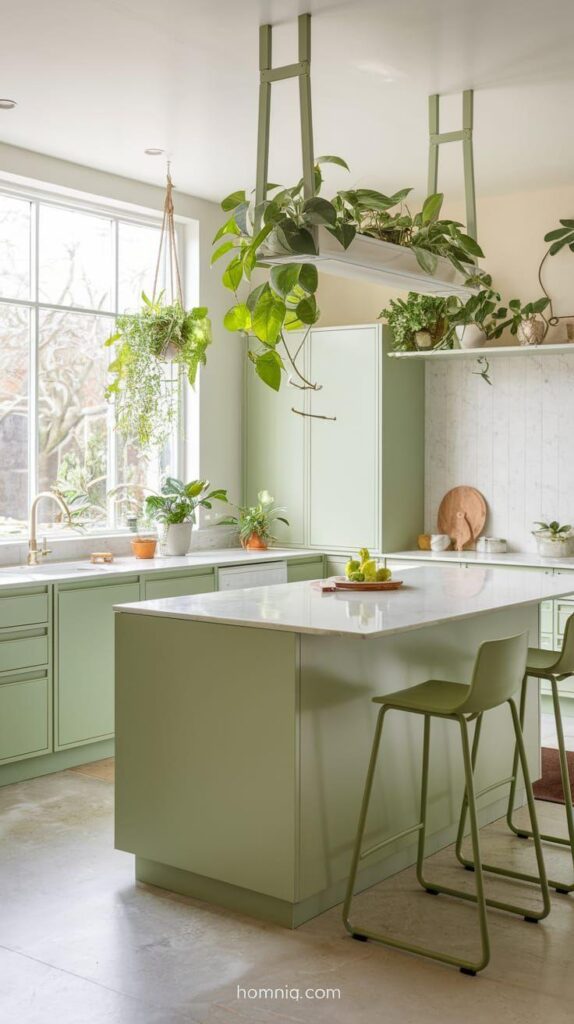
A botanical-inspired kitchen takes its color cues from nature rather than relying only on green cabinetry.
Plants, fresh herbs, botanical artwork, woven materials, bamboo, linen, and natural wood can all support the palette.
This approach is useful if you prefer neutral cabinetry but still want the kitchen to feel connected to nature.
Try grouping a few natural elements rather than placing one plant in every corner. A small herb garden near a window, a wooden shelf with ceramics, and one botanical print may be enough.
Green Kitchen with Open Shelving
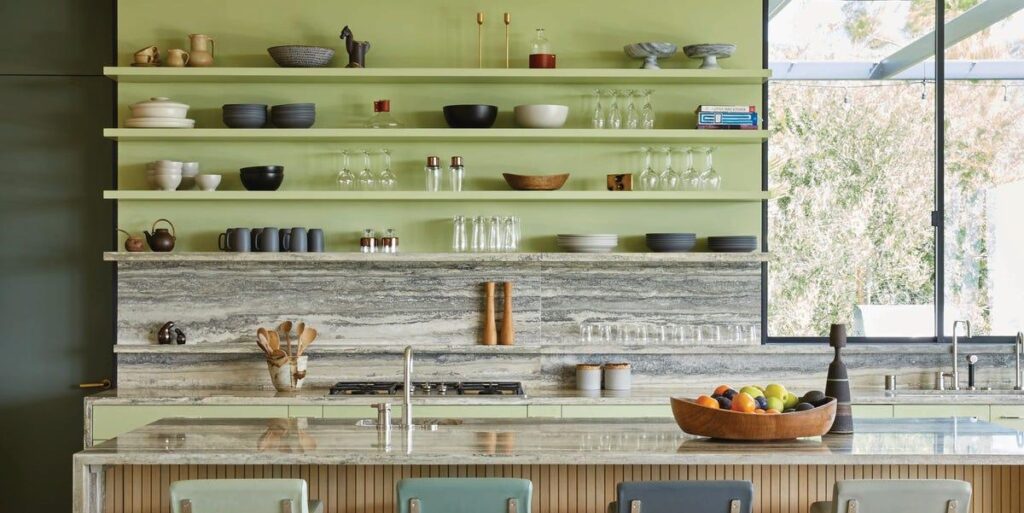
Open shelving can break up a long stretch of green cabinetry and give you a place to display useful everyday pieces.
White dishes, clear glasses, simple ceramics, cookbooks, wooden boards, and a small plant can all work well.
The important part is to treat open shelving as visible storage, not an invitation to display everything you own.
Keep the color palette connected to the kitchen. If your cabinets are deep green, light ceramics can provide contrast. If your cabinets are pale green, wood and darker ceramics can add definition.
A simple rule is:
Everyday use + useful beauty + breathing room.
If an item is rarely used and does not add anything visually, it probably does not need to live on an open shelf.
Soft Green Kitchen with Plenty of Natural Light
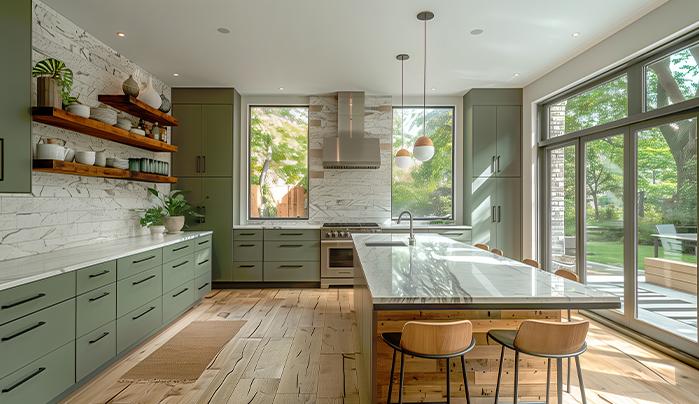
Natural light can change how a green kitchen looks throughout the day. A soft green that appears warm in the morning may look cooler later, especially depending on the direction and quality of the light.
This is one reason it is worth testing paint or cabinet samples before committing.
Place your sample near the cabinets and look at it at different times rather than judging it from a store card or phone screen.
Notice the warmth and undertones.
See how the color behaves in stronger natural light.
Check how artificial lighting changes the shade.
If your kitchen gets plenty of daylight, you can usually explore richer shades with more confidence. For darker rooms, lighter greens, white surfaces, and reflective finishes may help maintain a brighter feel.
Choose Your Green First, Then Build the Palette Around It
Choosing a green kitchen is about more than picking your favorite shade.
Start with the green you actually love, then decide how much of it you want to see. From there, choose the supporting colors and materials. White can lighten the palette, wood can add warmth, black can create definition, and brass can introduce a little shine.
Then check the lighting. A simple process looks like this:
Choose the shade → Decide the amount of green → Pick the supporting material → Add one accent finish → Check the lighting
You do not need the most dramatic green kitchen to make an impact. A soft sage island can be just as memorable as deep emerald cabinets.
The best green kitchen is not necessarily the greenest one. It is the one where the shade, materials, lighting, and surrounding colors work together.