
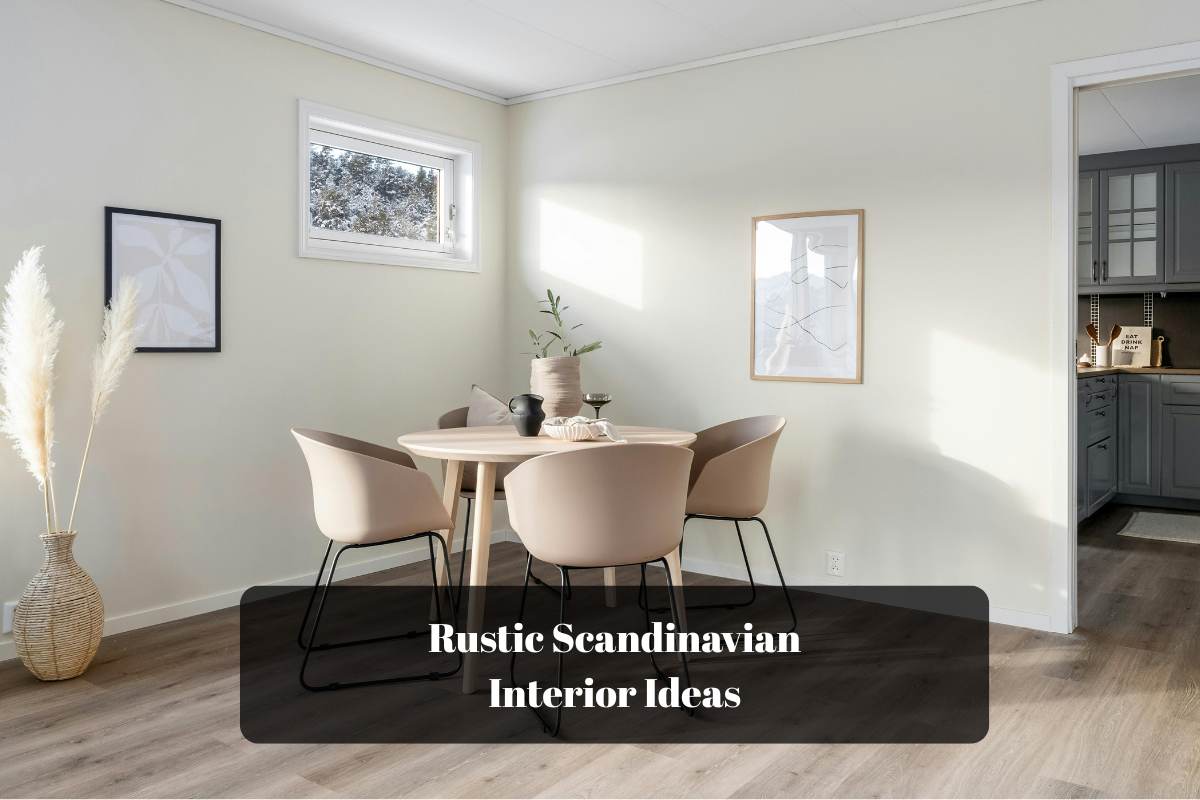
Rustic Scandinavian interiors bring together two decorating styles that share a love for simplicity and natural materials.
Scandinavian design keeps the space clean and functional, while rustic elements add texture, age, warmth, and a stronger connection to nature.
Wood is usually the starting point. Reclaimed boards, exposed beams, oak furniture, stone, linen, wool, jute, and handmade ceramics all work beautifully here.
Instead of making everything look perfectly polished, the style leaves room for natural imperfections and visible craftsmanship.
The color palette stays quiet too. Warm whites, beige, soft gray, brown, natural wood, and other earthy shades create a calm backdrop for the heavier rustic elements.
The key is finding the right balance. Too much rustic detail can make a room feel heavy, while too much minimalism can take away the character.
These Rustic Scandinavian interior ideas show how to bring both sides together.
Reclaimed Wood Walls with Scandinavian Simplicity
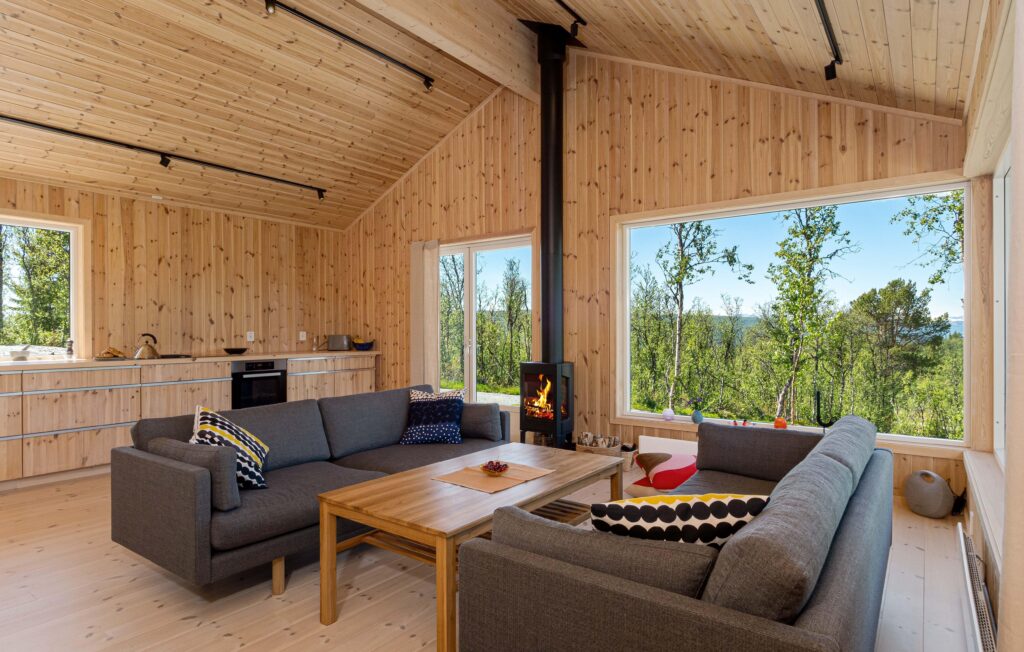
Reclaimed wood immediately gives a room a sense of age and character. It can work particularly well as an accent wall behind a sofa, bed, dining table, or fireplace.
But you do not need to cover every wall in timber.
The Scandinavian approach is to let the wood make a statement while keeping everything around it relatively simple.
Pair weathered boards with clean-lined furniture, neutral upholstery, and uncluttered surfaces.
Look for wood with visible grain, knots, and subtle variations rather than boards that look overly processed.
A simple way to use reclaimed wood
- Living room: behind the sofa or television
- Bedroom: behind the headboard
- Dining room: one feature wall
- Entryway: a smaller vertical section
- Kitchen: a rustic backsplash or shelving detail
Character
Clean lines
Quiet neutrals
Keep it simple
Cozy Neutral Living Rooms
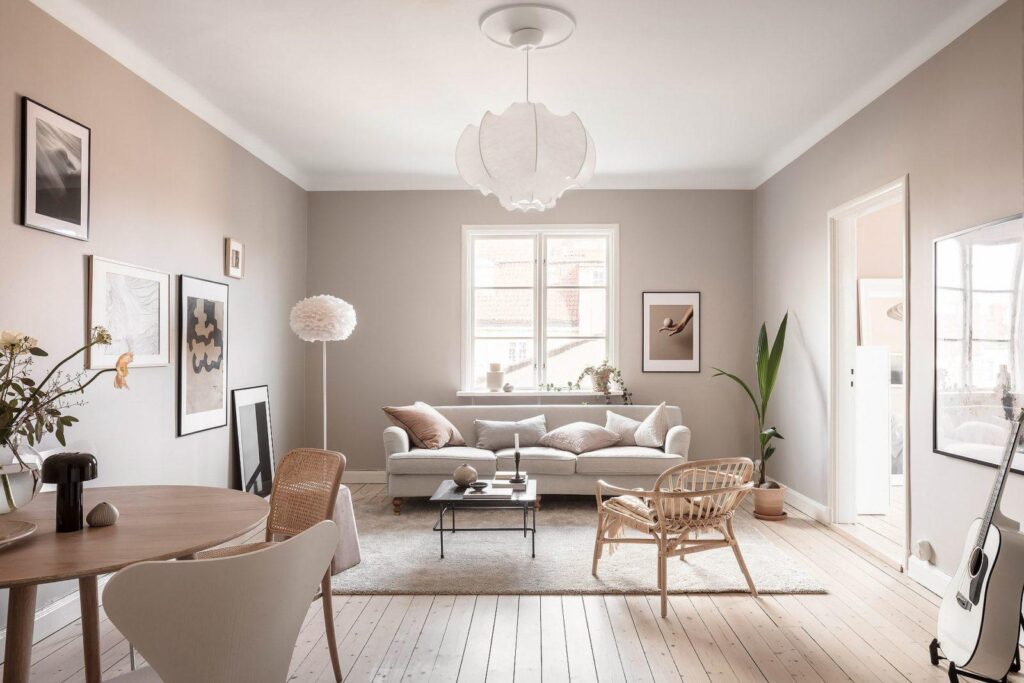
A neutral living room gives rustic materials plenty of room to stand out.
Instead of using bright white, try warmer shades such as cream, oatmeal, beige, taupe, or soft gray. These colors work naturally with wood and woven materials without competing with them.
Then bring in comfort through texture.
A linen sofa, wool throw, woven basket, textured rug, and a few cushions can make a neutral room feel layered without adding lots of color.
One thing to avoid: making every surface the exact same beige. Use slightly different tones and textures so the room has some visual depth.
Exposed Wooden Ceiling Beams
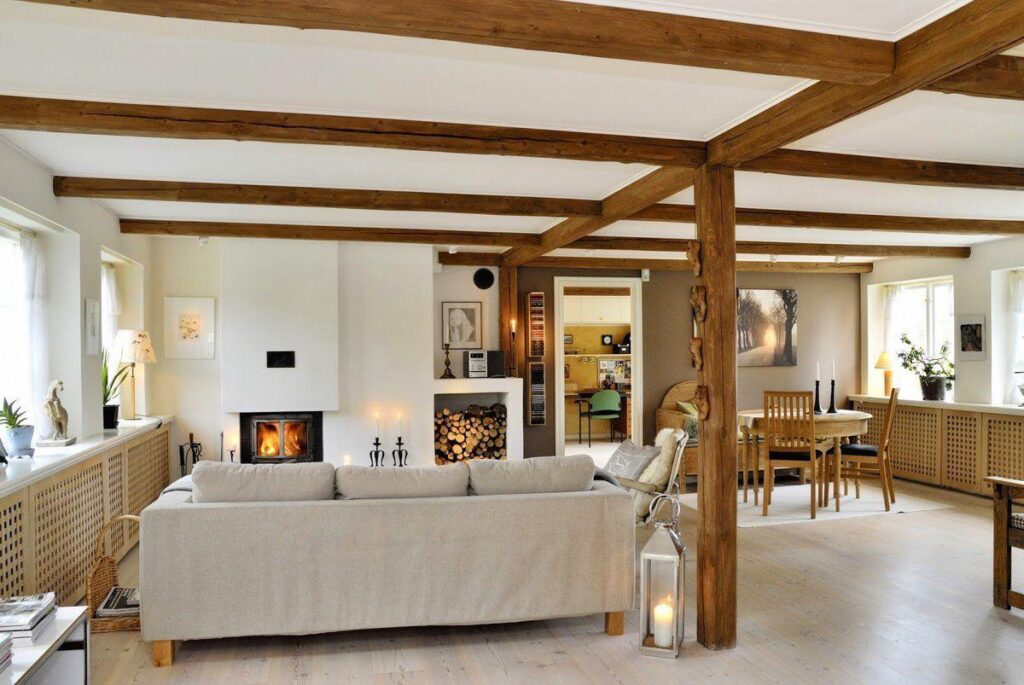
Ceiling beams can completely change the character of a room.
They bring the rustic side of the style into the architecture itself, while the Scandinavian influence comes from keeping the rest of the room light and uncomplicated.
If your home already has original beams, consider letting their natural character remain visible instead of covering them with heavy finishes.
For newer homes, faux or decorative beams can create a similar visual effect, but they should still look intentional and proportional to the room.
Keep the room below the beams lighter
Use:
- Pale walls
- Simple furniture
- Light textiles
- Minimal wall decoration
- Soft natural colors
The contrast between the heavier wood overhead and the lighter room below is what makes the beams stand out.
Natural Linen and Cotton Textiles
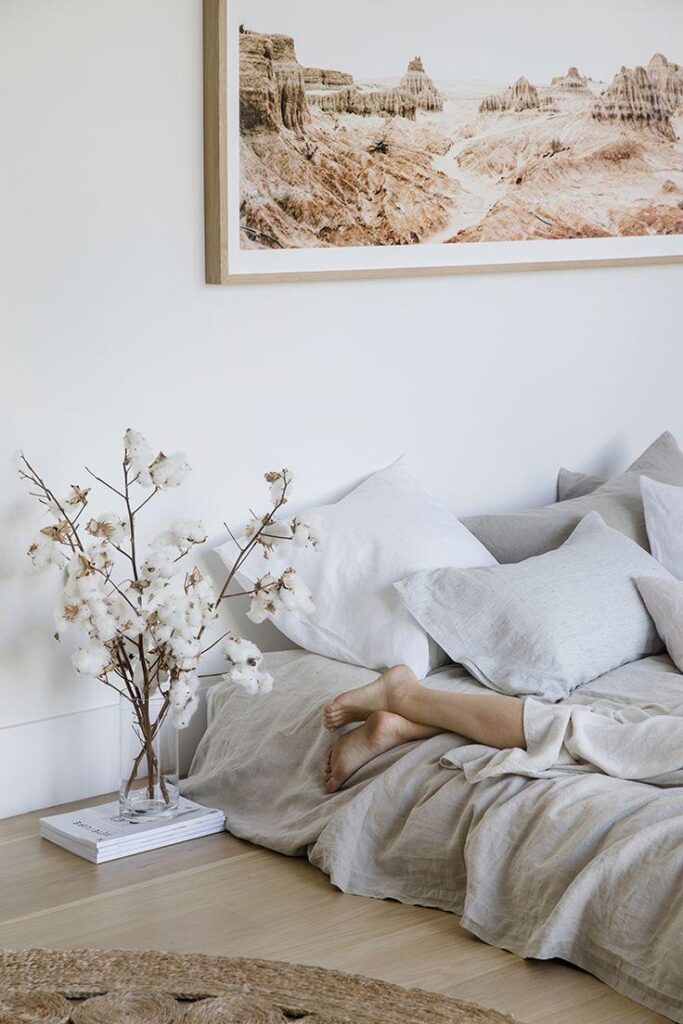
This is one of the easiest ideas to introduce without making major changes to your home.
Swap overly polished fabrics for materials that have a little more natural texture.
Think linen curtains that move slightly with the light, cotton bedding, loosely woven cushions, and soft throws with visible texture.
You can also layer these fabrics.
A crisp cotton sheet underneath a relaxed linen duvet, for example, creates a bedroom that feels comfortable without looking overly styled.
Keep the colors close together and let the different fabric textures create the interest.
Stone Fireplaces as Focal Points
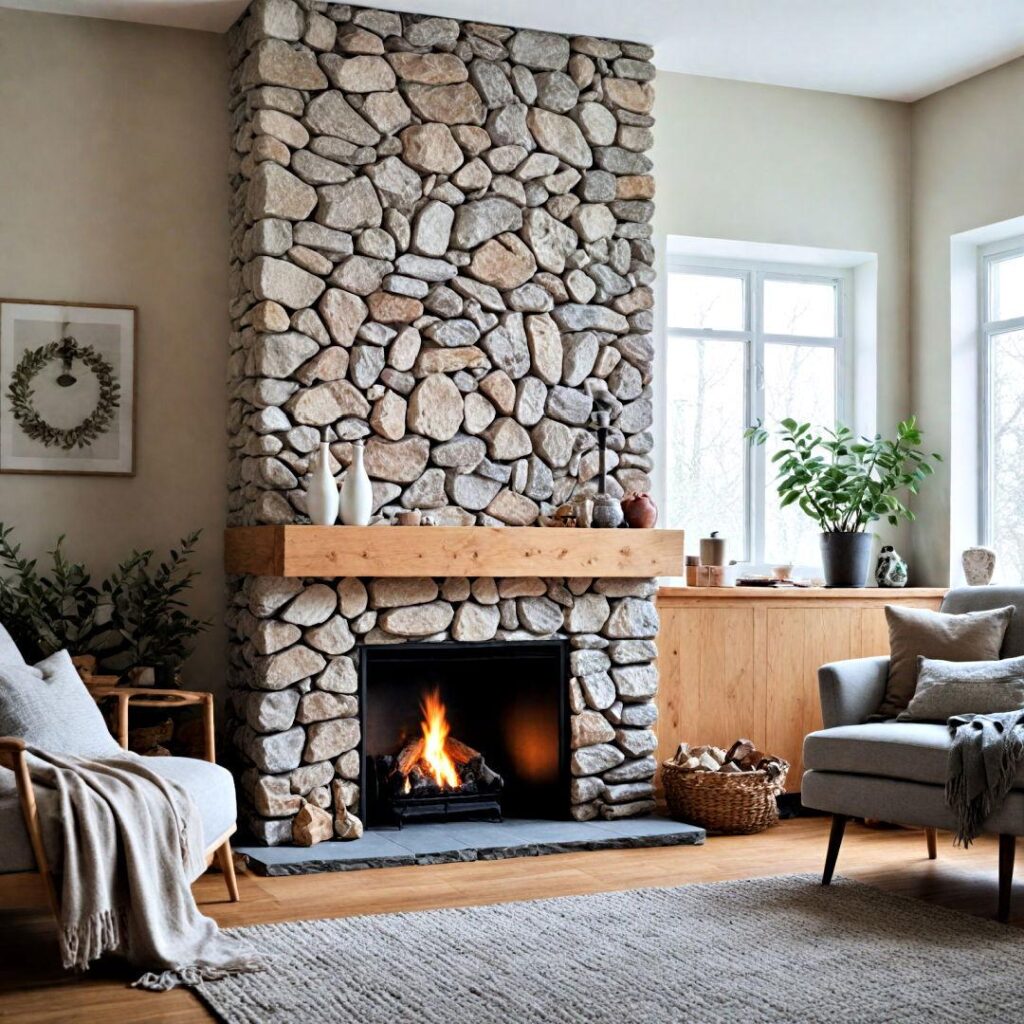
A stone fireplace can become the natural center of a Rustic Scandinavian room.
Rough stone introduces a completely different texture from smooth walls, soft upholstery, and clean-lined furniture. That contrast is what gives the room character.
You do not need to decorate the mantel heavily either.
Let the stone do most of the work. A simple piece of artwork, a few natural objects, or even an empty mantel can look more appropriate than a collection of accessories.
If you are planning a fireplace from scratch, consider how its size will relate to the rest of the room.
A large stone surround needs enough open space around it to avoid making the room feel crowded.
Light Wood Furniture with Organic Character
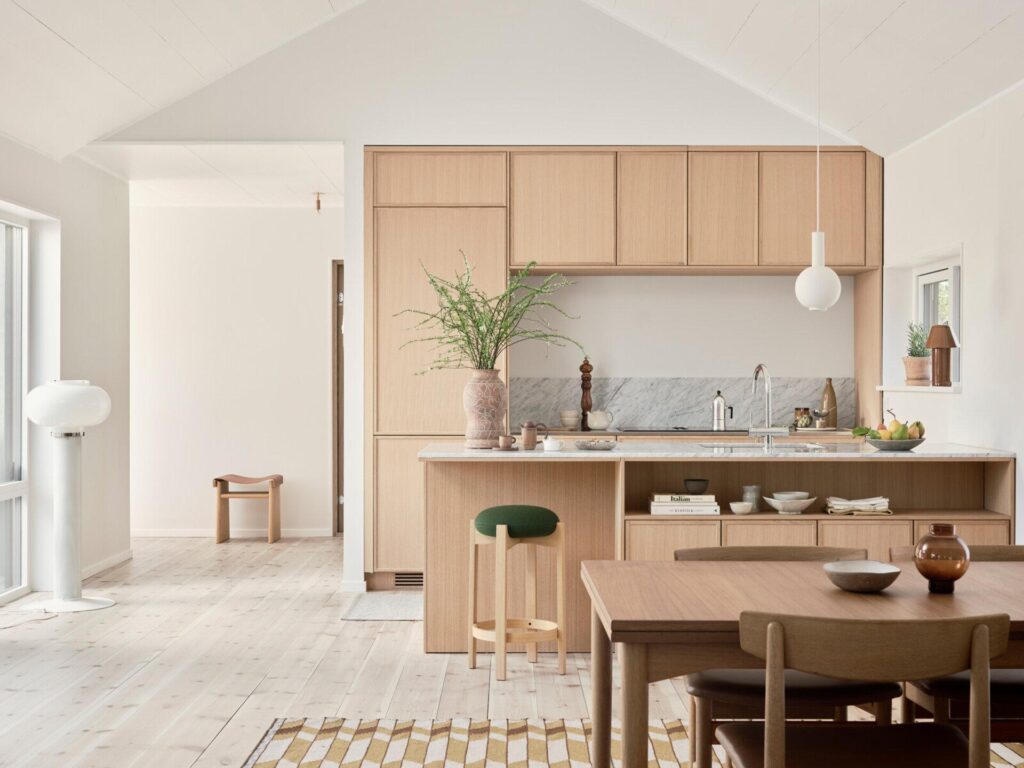
Light wood furniture is where the Scandinavian side of this style really comes through.
Oak, ash, and pine can provide warmth without making the room feel visually heavy.
Look for furniture where you can actually see the grain and natural variation of the material.
The shapes should remain relatively simple.
A rustic Scandinavian dining table does not need elaborate carved legs. A wooden cabinet does not need decorative molding. The beauty comes from the material itself.
Look for these details:
Visible grain
Choose finishes that allow the natural pattern of the wood to show.
Simple silhouettes
Clean shapes keep rustic furniture from feeling too traditional.
Natural finishes
Matte or lightly finished wood tends to work well with the relaxed aesthetic.
Useful pieces
Choose furniture that serves a real purpose rather than filling empty space.
Layered Natural Fiber Rugs
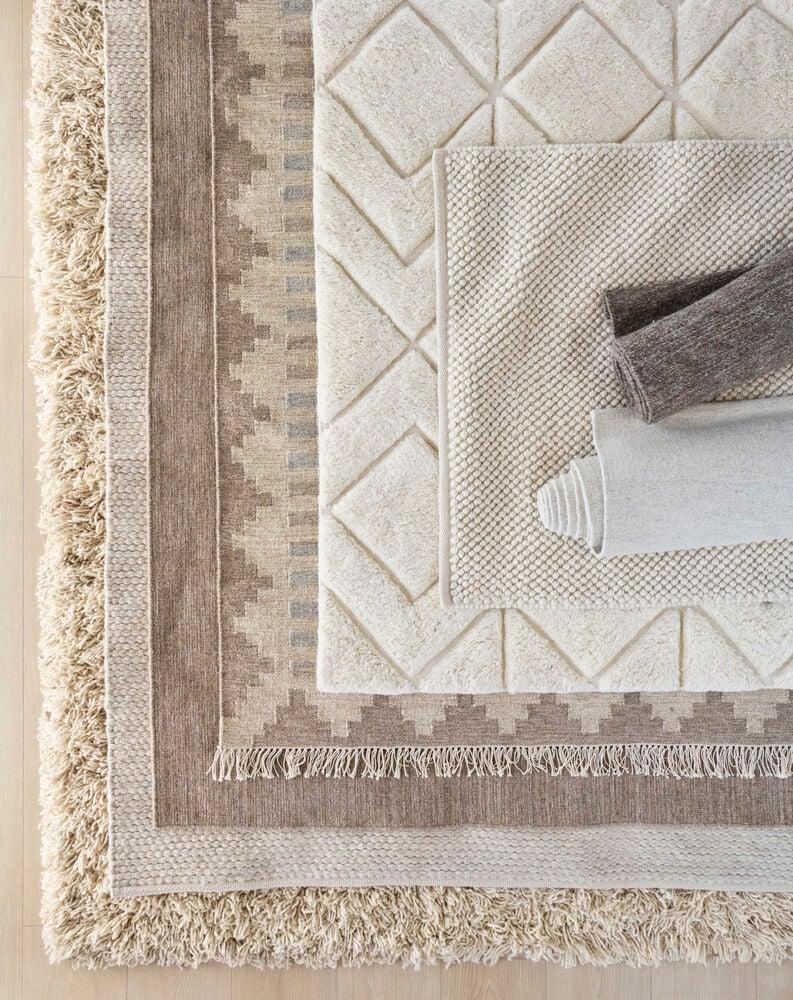
Rugs are especially useful in Rustic Scandinavian rooms because they soften all the harder materials.
Jute, wool, sisal, and other natural fibers can introduce texture while keeping the palette earthy and understated.
And you do not always need one large patterned rug.
Try layering two simple rugs with slightly different textures or tones. This can work particularly well in a large living room where you want the seating area to feel more defined.
Rustic Scandinavian Dining Spaces
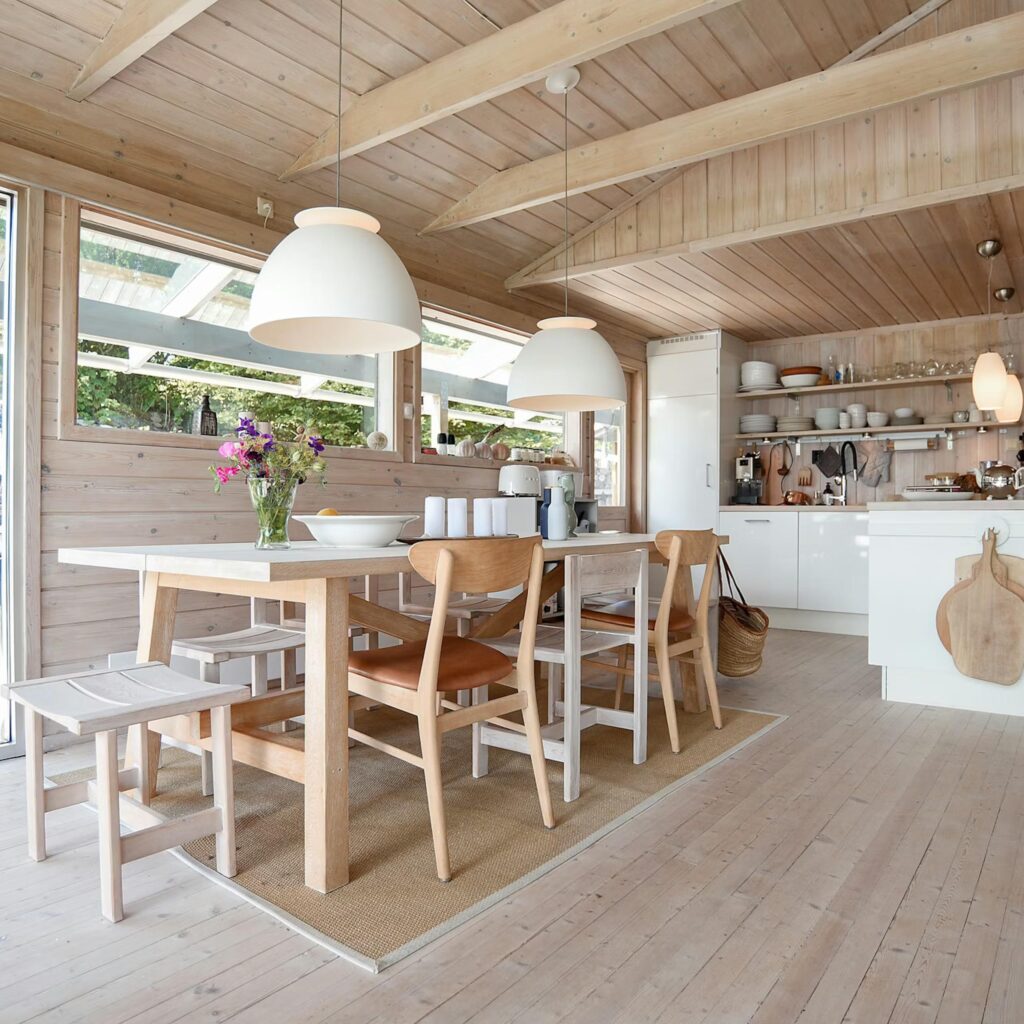
The dining room is a natural place to make rustic materials more prominent.
A substantial wooden table can become the main feature, while simple Scandinavian-style chairs keep the arrangement from feeling too heavy.
You can soften the combination with linen napkins, a woven runner, simple ceramics, and warm lighting.
There is no need to make the table look perfectly styled every day.
In fact, a few everyday pieces left within reach can make the dining area feel more relaxed and authentic.
For a rustic Scandinavian dining table:
- Choose natural wood over heavily polished finishes.
- Keep the table setting simple.
- Use one interesting pendant above the table.
- Mix wood with linen or ceramic pieces.
- Leave some empty space around the table.
Handmade Ceramics and Artisan Decor
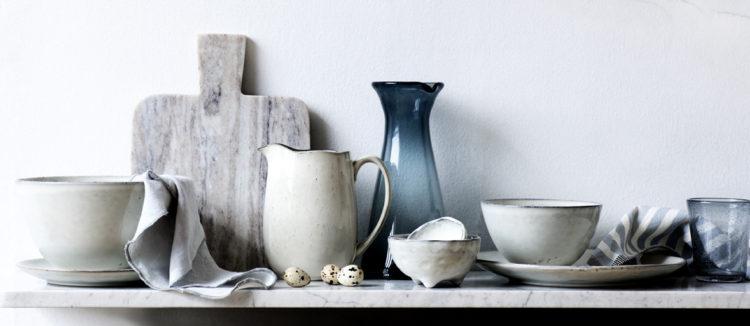
Handmade pieces add something that mass-produced accessories often cannot: visible individuality.
A slightly uneven ceramic vase, handmade bowl, pottery cup, or small artisan object can make a simple Scandinavian room feel more personal.
You do not need a large collection.
One handmade vase on a dining table or a small group of ceramics on an open shelf can be enough to introduce the idea of craftsmanship.
The trick is restraint.
Choose pieces because you genuinely like their shape, texture, or imperfections rather than simply filling every empty surface.
A single imperfect, handcrafted object can bring more personality than a shelf packed with decorative accessories.
Nature-Inspired Bedroom Retreats
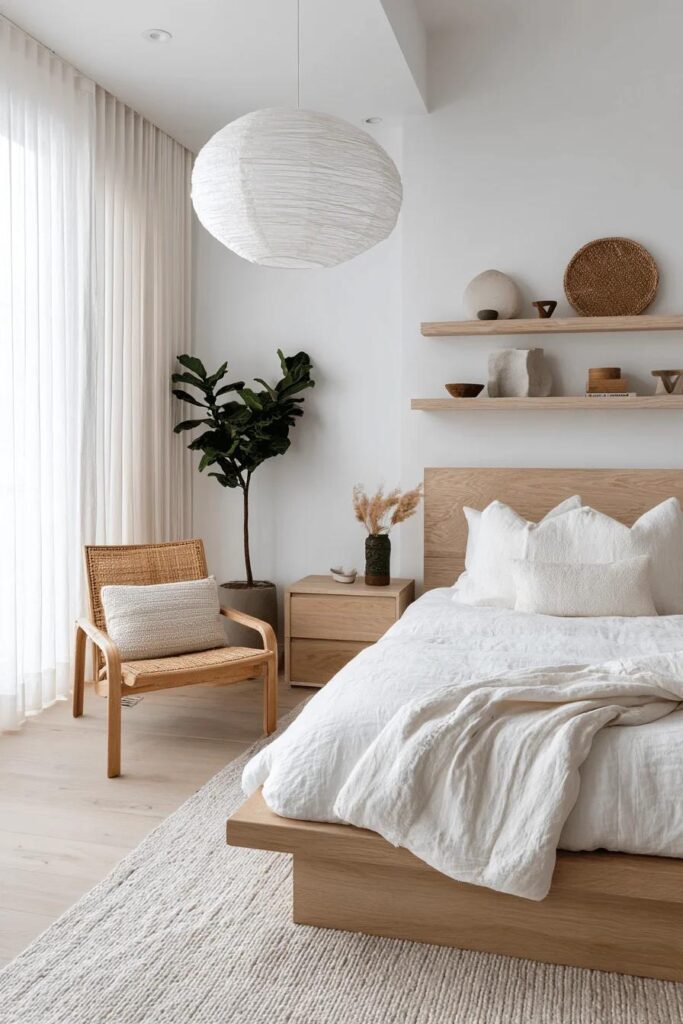
The bedroom is where Rustic Scandinavian style can become especially soft.
Keep the foundation simple: natural wood furniture, neutral bedding, linen curtains, and a few layers of soft fabric.
Then bring in small references to nature through materials rather than relying on lots of obvious decorations.
A wooden bedside table, woven basket, wool throw, stone-colored textiles, or a simple branch arrangement can all contribute to the feeling.
Open Shelving with Rustic Appeal
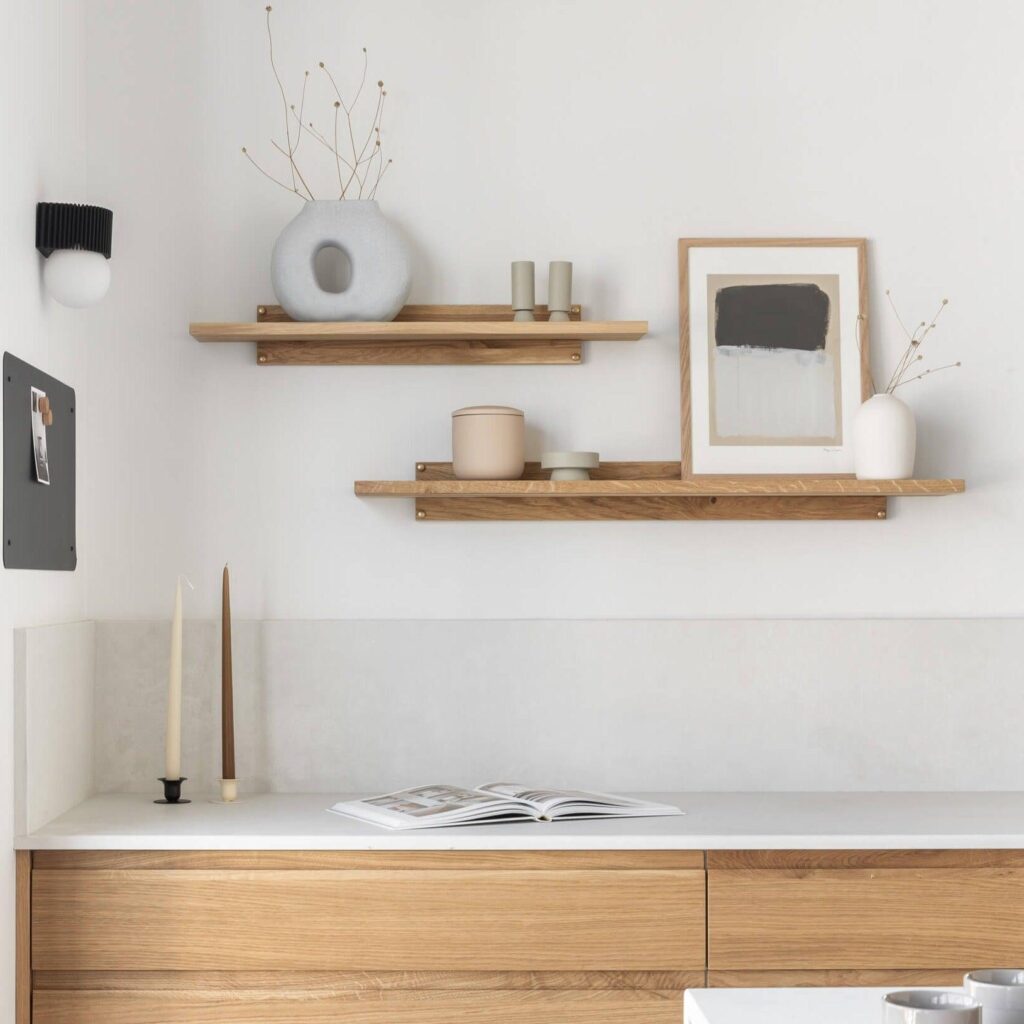
Open shelving works particularly well when the shelves themselves become part of the design.
Use chunky or naturally finished wood for a more rustic effect, then keep the objects displayed on them simple.
You could arrange:
- Everyday ceramics
- Glassware
- Small plants
- Cookbooks
- Wooden bowls
- A few handmade objects
The important part is leaving some empty space between the items.
If every inch of the shelf is filled, the room can quickly lose the uncluttered Scandinavian quality.
Beautiful everyday pieces
Similar materials together
Leave breathing room
Bringing the Outdoors Inside
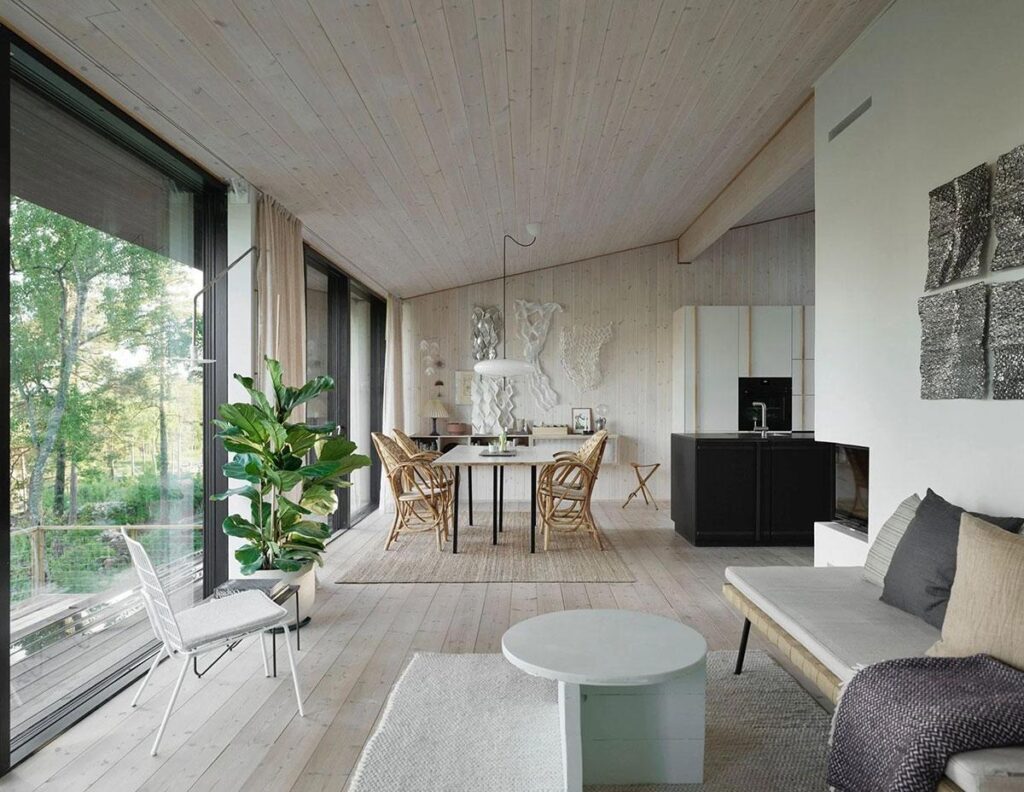
Plants are an easy way to add life to a Rustic Scandinavian interior, but there are other ways to bring the outdoors in too.
Think beyond houseplants.
Branches in a simple vase, dried grasses, natural stones, wooden objects, and seasonal greenery can all reinforce the connection with nature.
A large leafy plant can fill an empty corner, while a small herb planter can bring greenery into the kitchen.
Try matching the natural element to the room:
Kitchen: herbs or branches
Living room: larger leafy plant
Bedroom: small greenery
Entryway: tall floor plant
Dining room: seasonal branches
Keep the containers simple so the natural materials remain the focus.
Rustic Scandinavian Kitchens with Warmth
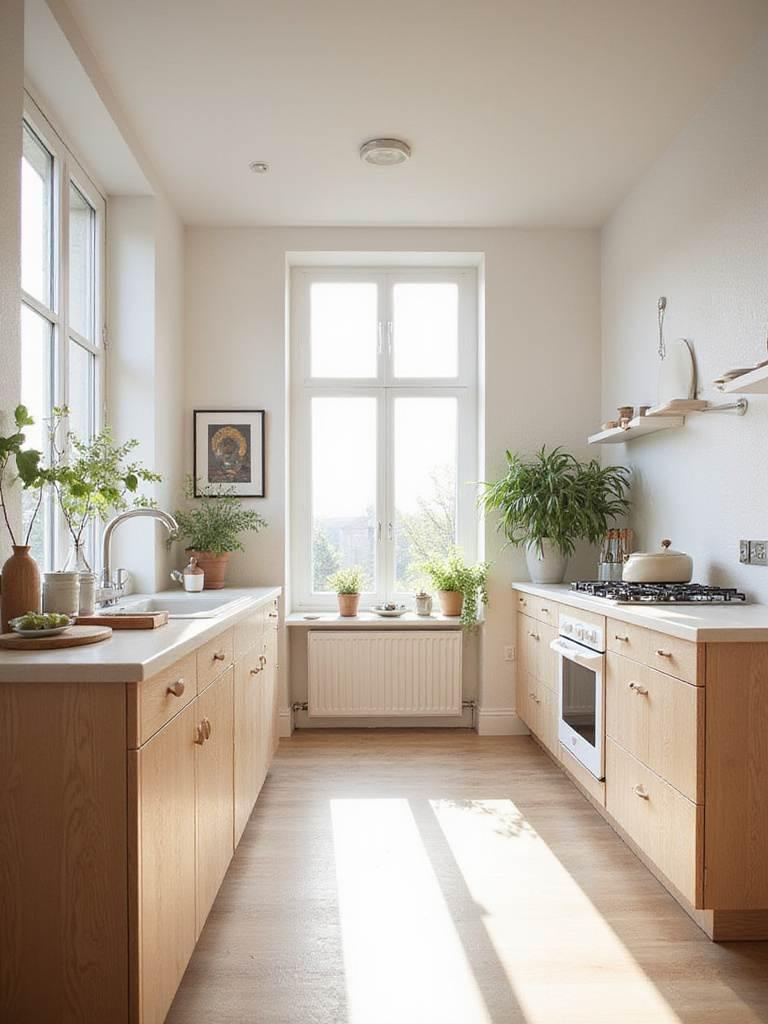
A Rustic Scandinavian kitchen should feel useful first and beautiful as a result of that practicality.
Wood cabinetry, stone countertops, open shelves, simple hardware, and uncluttered surfaces create the foundation.
But there is no need to hide every sign of daily life.
A wooden chopping board, ceramic bowl, linen towel, or a few pieces of cookware can make the kitchen feel more natural.
Cabinetry or shelves
Countertop or backsplash
Handmade details
Warm layered lighting
Soft Lighting for Hygge Comfort
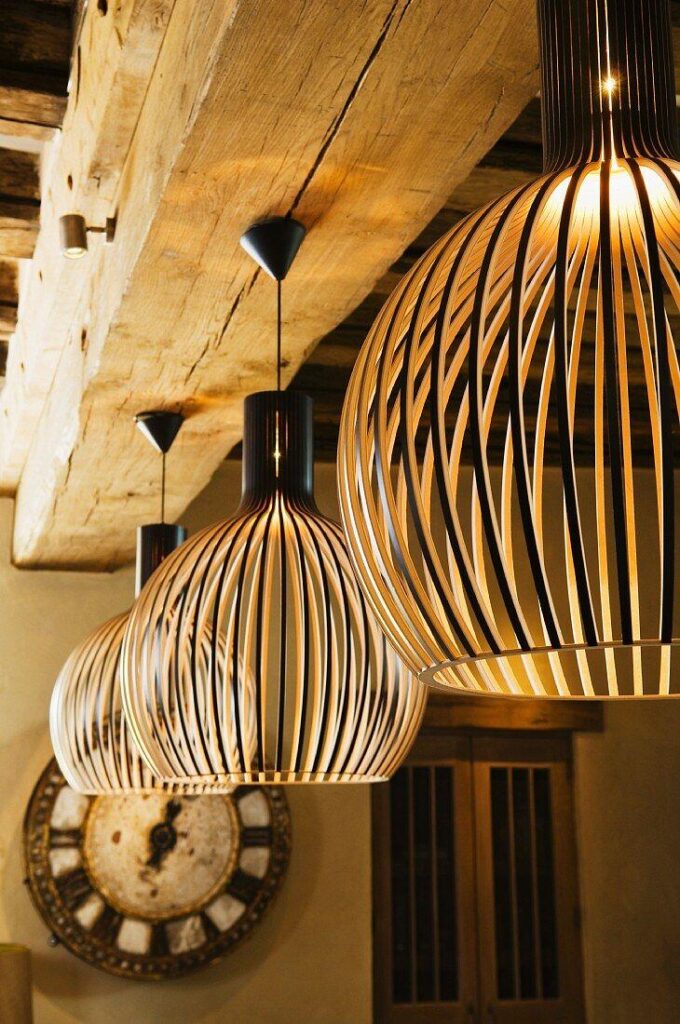
Lighting can completely change how rustic materials look once the sun goes down.
A wooden room illuminated by one bright overhead light can feel very different from the same room lit with several smaller, warmer sources.
Use a mixture of table lamps, floor lamps, wall lights, pendants, and candles where appropriate.
Place the light sources at different heights so the room develops little pockets of warmth instead of one uniform glow.
A simple evening lighting setup
- Table lamp: beside the sofa or bed
- Floor lamp: next to a reading chair
- Pendant: over the dining table
- Small lamp: on a console or shelf
- Candles: for an occasional softer glow
Mix different heights and smaller sources of light so the room feels warm and layered rather than brightly illuminated from one point.
The Rustic Scandinavian Formula
You do not need to completely redesign your home to get this look.
Start with the materials already present, then introduce a few rustic elements and balance them with the clean, practical side of Scandinavian design.
Start with wood, stone, linen, wool, and jute.
Use beige, cream, gray, brown, and soft earthy tones.
Bring in reclaimed wood, beams, stone, or aged finishes.
Balance heavier rustic materials with clean furniture.
Mix linen, wool, woven fibers, ceramics, and wood.
Use a few handmade and artisan pieces.
Use plants, branches, stone, and natural finishes.
Layer warm lighting for an inviting evening atmosphere.
Before You Finish the Room
The rustic side should give your home character, while the Scandinavian side keeps it from feeling overloaded.
Use this quick check before adding more:
The best Rustic Scandinavian interiors do not try to make every element look rustic.
They let a few natural materials, imperfect textures, simple furniture, and warm lighting carry the personality of the room.
That is what keeps the style feeling cozy without being cluttered, rustic without being heavy, and Scandinavian without feeling stark.