
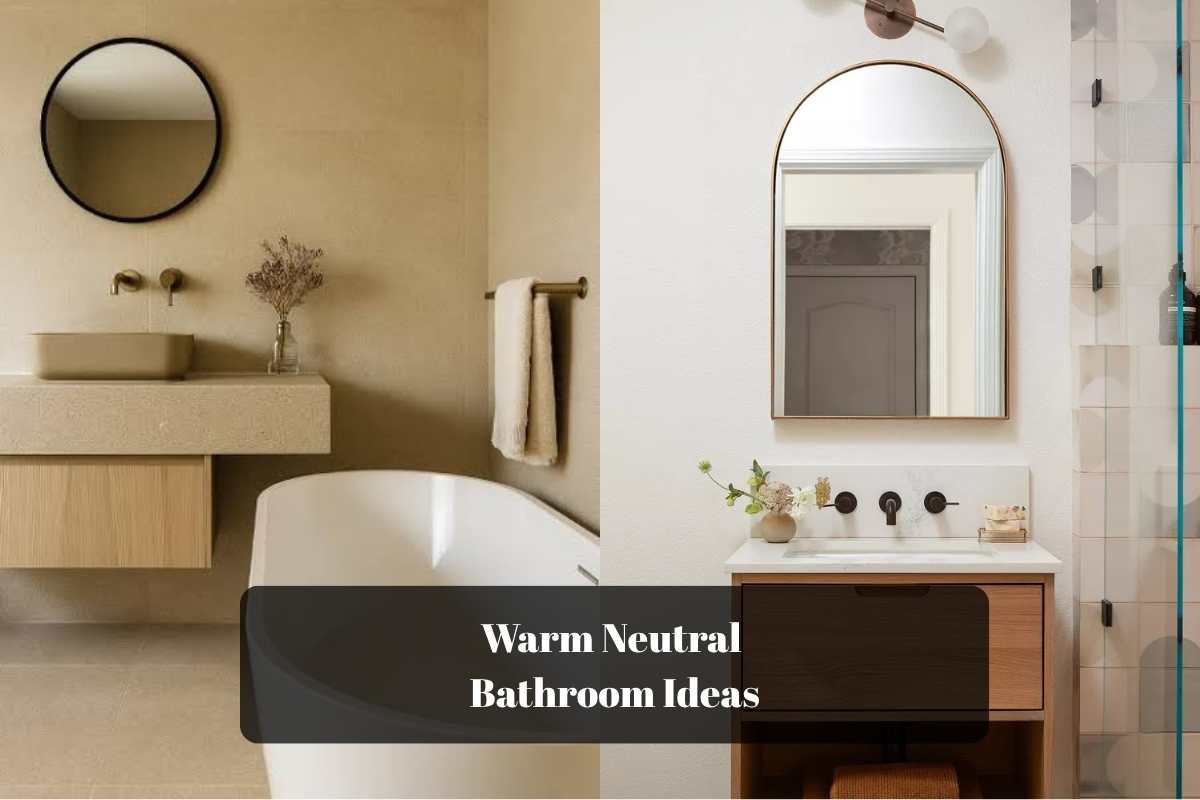
Warm neutral bathrooms have a way of making a space feel calm without looking plain. Soft beige, creamy white, taupe, sand, warm wood, and natural stone can create a bathroom that feels comfortable and timeless.
The best part is how flexible this color palette can be. You can keep the room bright and traditional, add dark accents for contrast, or create a minimalist space with barely any decoration.
These warm neutral bathroom ideas show nine different ways to work with the look.
How to Create a Warm Neutral Bathroom
5 Elements of a Warm Neutral Bathroom
The secret to a warm neutral bathroom is mixing finishes and textures instead of using the same shade everywhere.
Start with creamy white, beige, sand, or warm taupe.
Add stone, textured tile, wood, or woven accessories.
Consider brass, bronze, or brushed metal finishes.
Use darker wood, deeper beige, or black accents for definition.
Choose a few useful accessories and leave breathing room.
The key is not to make every surface the exact same shade. Warm neutral bathrooms look much richer when different tones and textures are layered together.
Classic White Warm Neutral Bathroom
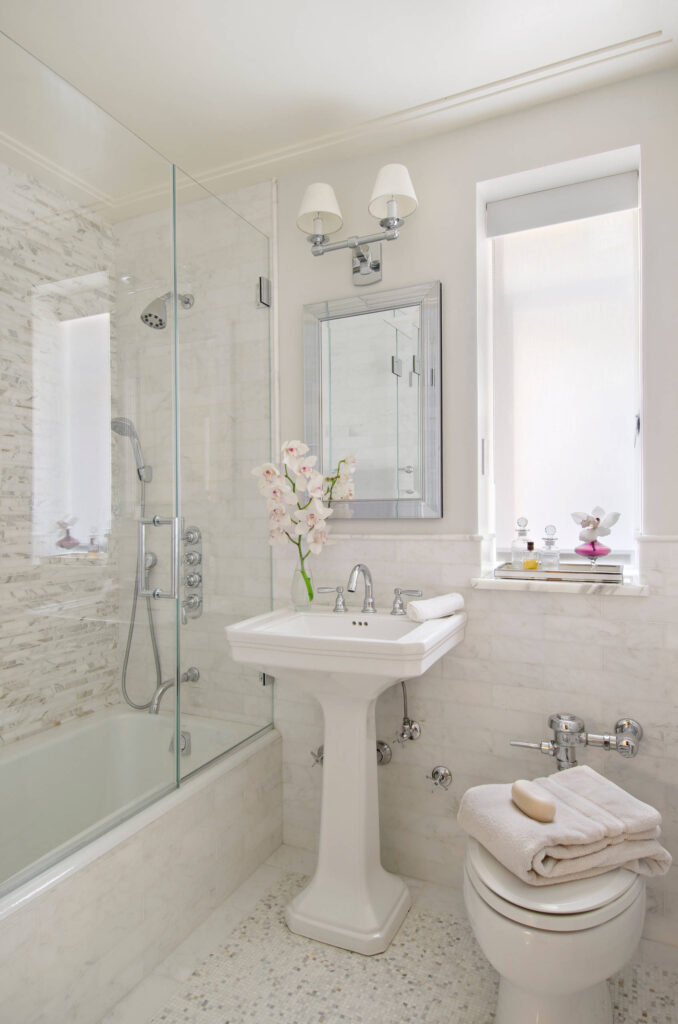
This bathroom takes a bright and traditional approach to warm neutrals.
Creamy white walls, pale stone surfaces, and a classic pedestal sink keep the room light. The white clawfoot-style bathtub blends into the palette instead of becoming a strong focal point, while the glass shower enclosure keeps the space visually open.
The small details matter here. Soft lighting, simple framed mirrors, folded towels, and a few delicate flowers add warmth without making the bathroom feel decorated to excess.
If your bathroom is small, this is a useful direction to borrow. Keep the main finishes light and use texture rather than bold color to add interest.
Warm Taupe Bathroom With a Walk-In Shower
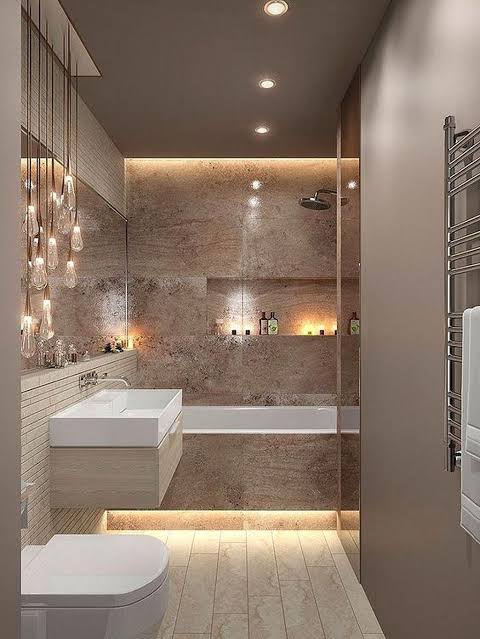
Taupe gives a warm neutral bathroom a deeper, more sophisticated feeling.
This space uses warm brownish-gray surfaces throughout the shower and vanity area. Small recessed lights add a soft glow, while the illuminated niches inside the shower create another layer of warmth.
Instead of relying on decoration, the design gets its character from lighting, tile texture, and tonal variation.
Try this approach if you want a bathroom that feels calm and modern without going completely white.
The Warm Neutral Trick
Don’t stop at one beige. Combine two or three related shades, then add one natural material such as wood or stone. The subtle difference between the tones gives the room depth.
Simple Beige Bathroom With a White Vanity
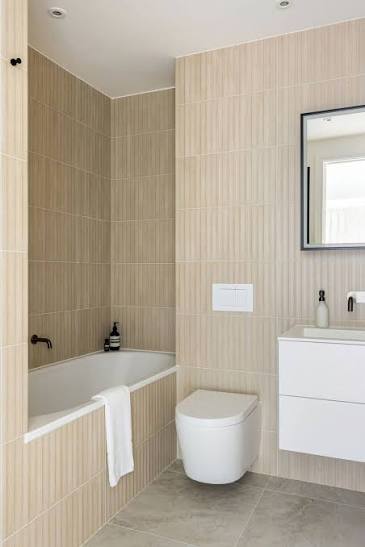
This bathroom keeps things straightforward with beige wall tile, a white bathtub, a compact white toilet, and a clean-lined vanity.
The consistent tile creates a calm backdrop, while the white fixtures prevent the room from feeling too heavy. There is very little decoration, which makes the bathroom feel practical and uncluttered.
This is a good option if you prefer a neutral bathroom that won’t quickly feel dated.
To recreate the look, choose one warm beige tile for most of the walls and floor, then use white for the main fixtures.
Warm Stone Bathroom With a Natural Wood Vanity
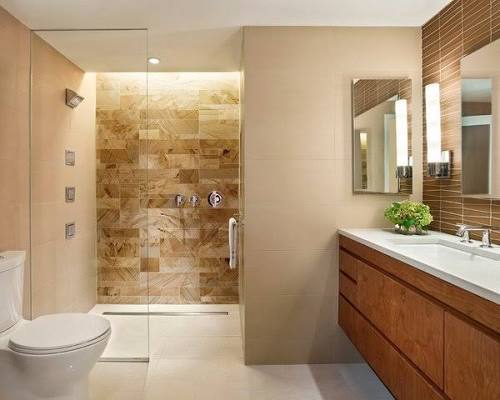
Natural stone gives this bathroom a warmer and more substantial appearance.
The shower wall has a layered stone finish, while the rest of the room uses soft beige surfaces. A long natural wood vanity adds contrast and brings an organic element into the space.
The wood is especially important because it prevents all the neutral surfaces from blending together.
If your bathroom feels too cold, adding a wood vanity, wooden shelving, or even a small wood stool can make a noticeable difference without changing the entire color palette.
White Subway Tile Bathroom With a Dark Wood Vanity
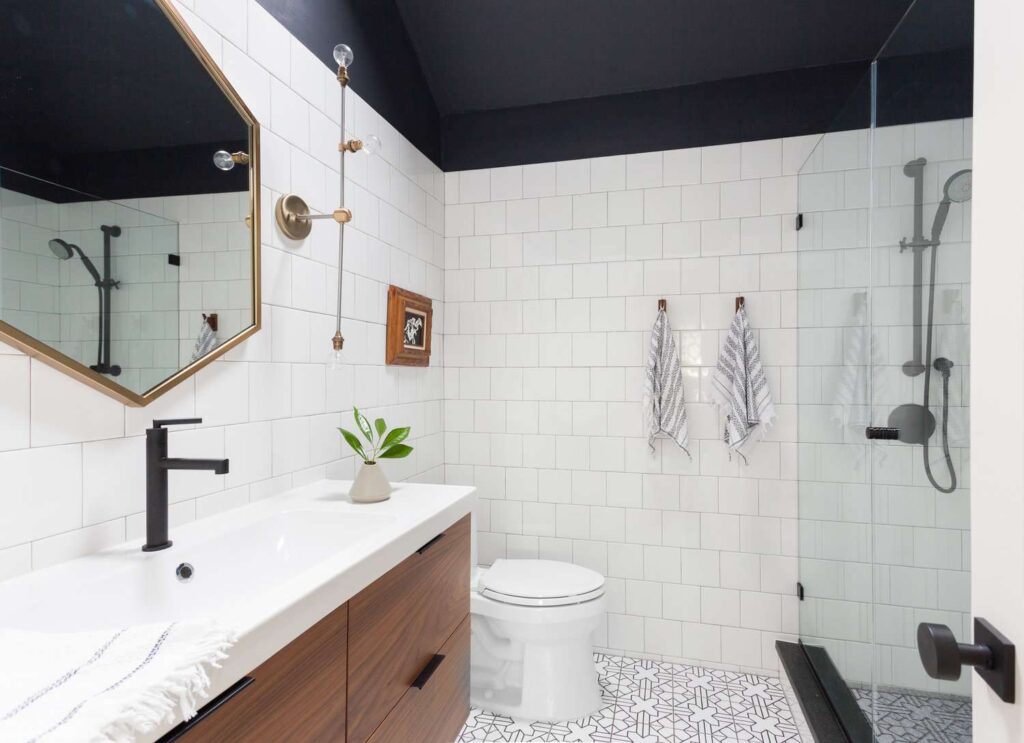
This bathroom shows how warm neutrals can work with stronger contrast.
White subway tile covers the walls, while a dark wood vanity brings warmth and visual weight. The black shower fixtures and dark ceiling add another layer of contrast without taking the room away from its neutral foundation.
The patterned floor is also important. It breaks up the white tile and gives the bathroom more personality.
Want More Contrast?
This combination works particularly well if you like the softness of a neutral bathroom but don’t want everything to be pale.
Soft Neutral Bathroom With a Black-Framed Vanity
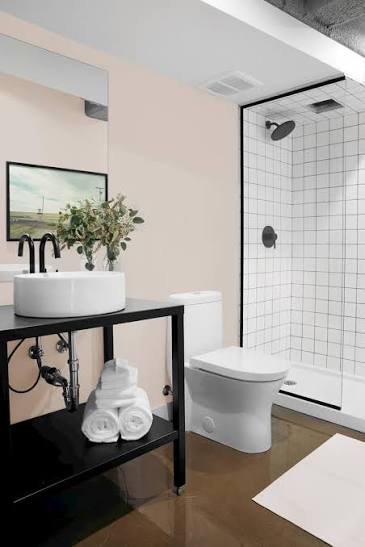
A black-framed vanity gives this soft neutral bathroom a modern edge.
The pale pinkish-beige walls keep the space warm, while the black metal vanity provides a clear visual anchor. The white countertop and sink balance the darker frame, and the small plant adds a natural touch.
This is a simple way to introduce black into a warm neutral bathroom without making the room feel harsh.
If you’re updating an existing bathroom, black hardware or a black-framed vanity can provide a similar effect without replacing every finish.
Read Now-
Creamy Beige Bathroom With a Freestanding Tub
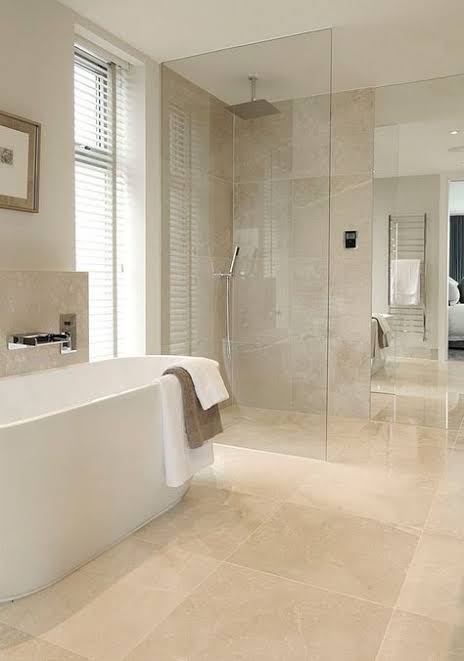
This bathroom uses a soft creamy beige palette from the floor to the walls, creating a quiet and cohesive look.
The freestanding tub becomes the main feature because the surrounding surfaces remain understated. Large windows bring in plenty of natural light, while the simple woven window shade adds a little texture.
The small wooden or metallic side pieces and greenery keep the room from feeling too uniform.
For a relaxing bathroom, this is a strong combination: warm neutral surfaces, one sculptural bathtub, natural light, and minimal decoration.
Warm Neutral Bathroom With a Classic Clawfoot Tub
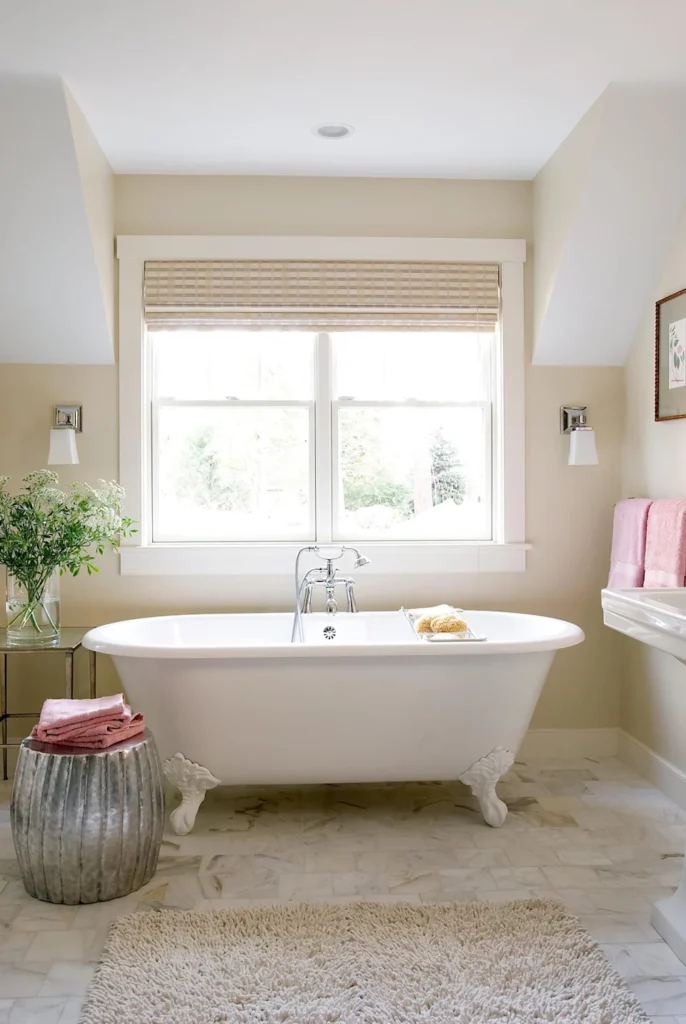
A traditional clawfoot tub adds a softer, more decorative note to the warm neutral palette.
The creamy walls and pale stone floor keep the bathroom bright, while the tub introduces a classic shape. A woven shade at the window adds texture and helps soften the large amount of light.
This style works especially well if you want your bathroom to feel elegant without using strong colors.
You can get a similar effect with a freestanding tub, traditional faucet, warm white walls, and one or two natural accessories.
Minimal Warm Beige Bathroom With a Freestanding Tub
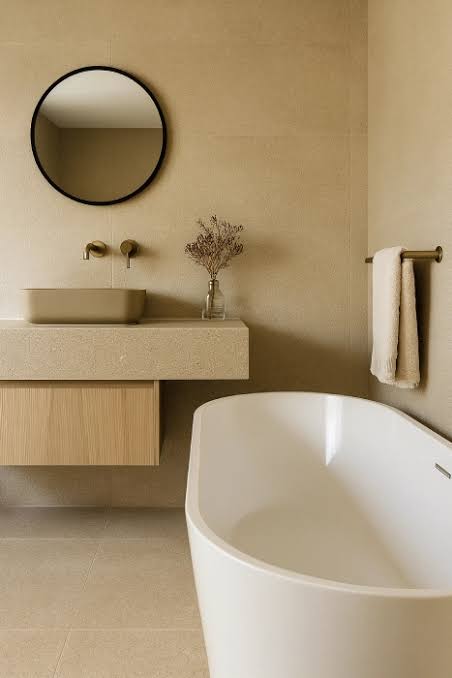
The final example takes warm neutral design in a much more minimalist direction.
Warm beige walls and flooring create a continuous backdrop, while the floating wood vanity adds just enough contrast. The round black-framed mirror introduces a small amount of definition without overpowering the space.
The freestanding tub has a simple sculptural shape, and there are very few accessories on display.
This is a good reminder that warm neutral design doesn’t have to mean traditional. The same palette can look very modern when you use clean lines, hidden storage, and fewer decorative pieces.
How to Make a Warm Neutral Bathroom Feel Interesting
Layer Your Neutrals
Keeps the bathroom bright.
Adds warmth to the main surfaces.
Introduces natural contrast.
Adds depth without adding bold color.
Creates definition when the room feels too pale.
You don’t need a large collection of colors to make a neutral bathroom interesting. Small changes in tone, texture, finish, and material can do most of the work.