
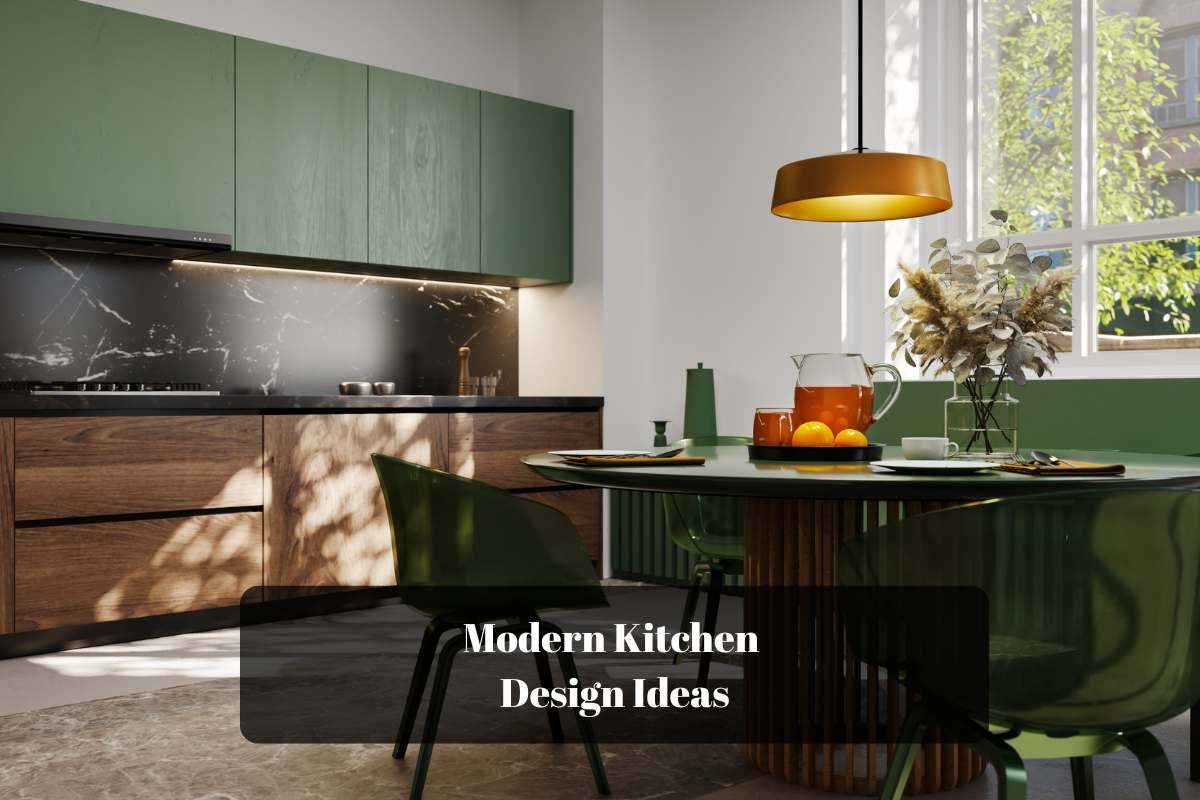
A modern kitchen does not have to look cold, empty, or overly polished. The most inviting modern kitchens usually combine clean cabinetry and simple layouts with warmer materials, useful storage, good lighting, and a few details that make the room feel personal.
You can create the look with a dramatic black kitchen, a soft neutral palette, warm wood, marble, concrete, or even a simple white kitchen.
What matters most is how the materials, storage, lighting, and proportions work together.
The ideas below cover different ways to bring a modern look into your kitchen while keeping it practical enough for everyday life.
Minimalist White Kitchen
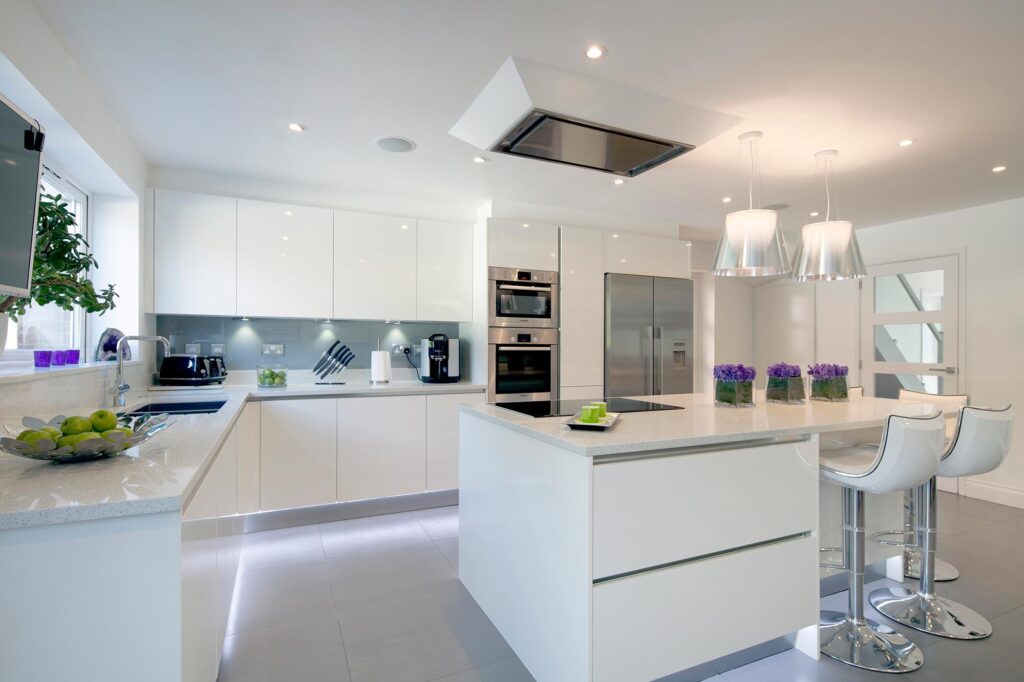
A white kitchen is one of the simplest ways to create a clean modern foundation.
But instead of making every surface bright white, introduce subtle variation through materials. A white cabinet can sit alongside pale stone, light wood, brushed metal, or textured tile.
This keeps the kitchen from looking flat.
To keep a white kitchen interesting:
- Mix at least two different textures.
- Add natural wood somewhere in the room.
- Use a slightly warmer white instead of making everything stark.
- Introduce one darker detail for contrast.
- Keep countertop clutter to a minimum.
White cabinetry
Natural wood
Texture
One darker detail
Matte Black Kitchen Cabinets
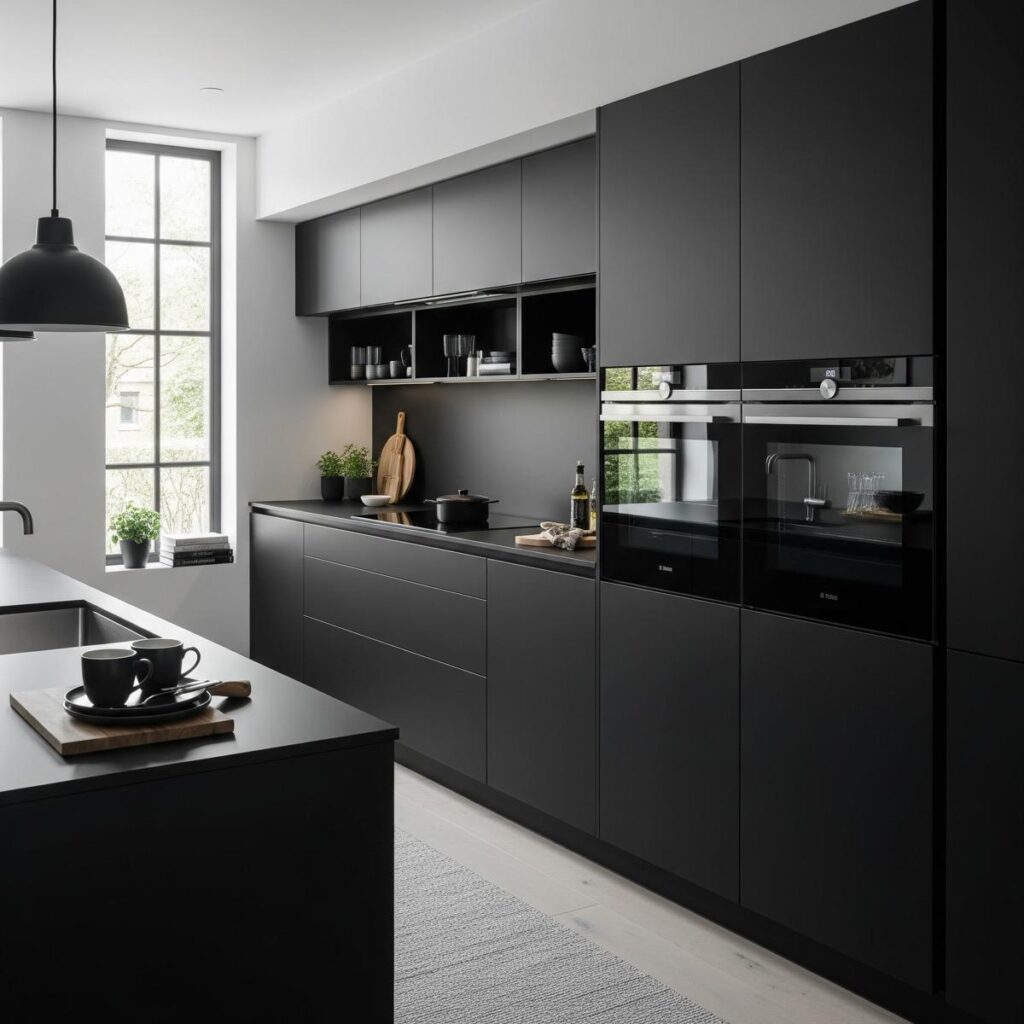
Black cabinetry gives a modern kitchen much more visual weight.
Matte finishes are especially useful when you want the cabinets to look contemporary without adding a glossy, reflective surface everywhere.
The important part is balance.
Pair black cabinetry with something lighter or warmer, such as pale countertops, natural wood shelving, light flooring, or warm lighting.
A completely dark kitchen can work, but it needs enough variation in material and tone to stop the room from feeling visually heavy.
Try this pairing: matte black cabinets + light stone + warm wood + simple hardware.
Read More
Warm Wood Scandinavian Kitchen
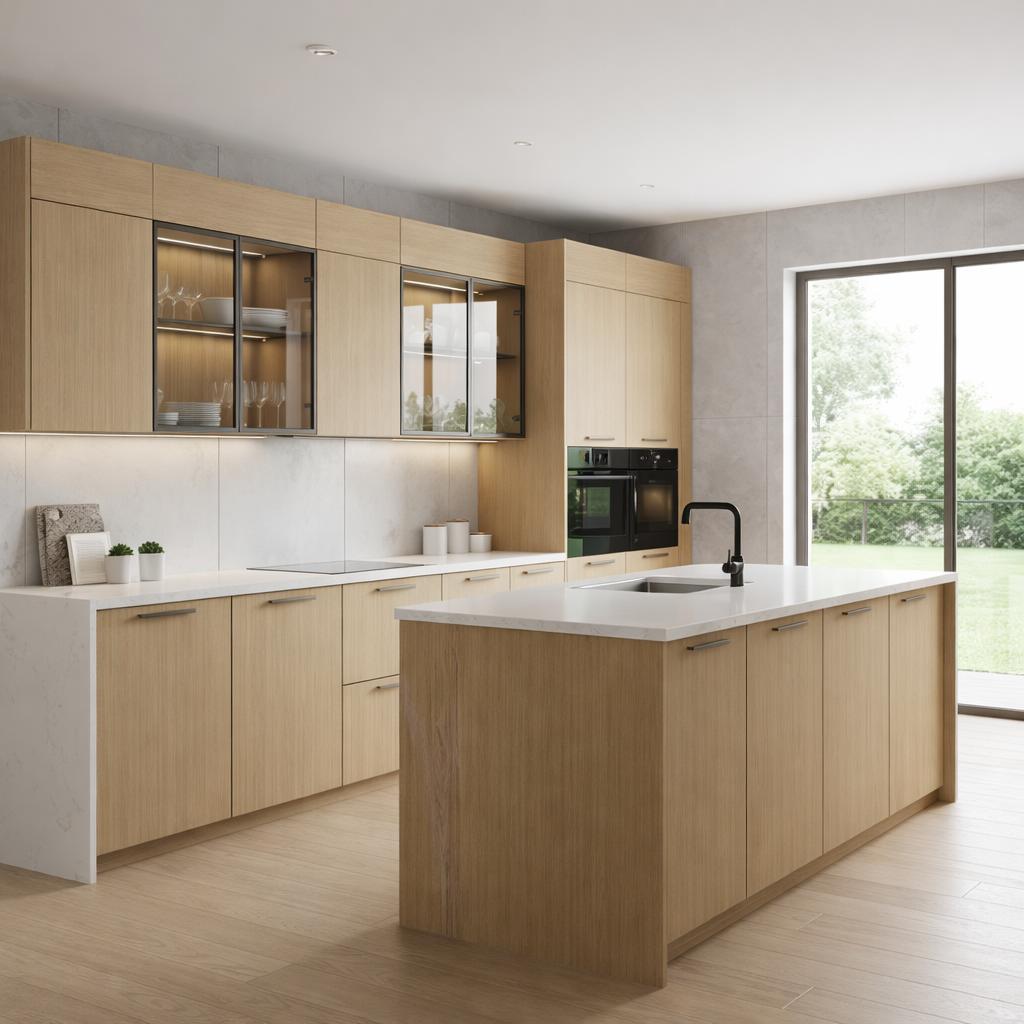
Modern kitchens can sometimes feel too hard because they rely heavily on white, gray, metal, and stone.
Wood immediately softens that combination.
You do not need wooden cabinets throughout the entire kitchen. A wood island, lower cabinets, open shelving, ceiling detail, or even a simple dining table can introduce enough warmth.
Keep the rest of the cabinetry clean and uncomplicated so the wood becomes a deliberate feature rather than visual noise.
A good place to start
If your kitchen already has white cabinets, try adding one substantial wood element rather than replacing everything.
Large Waterfall Kitchen Island
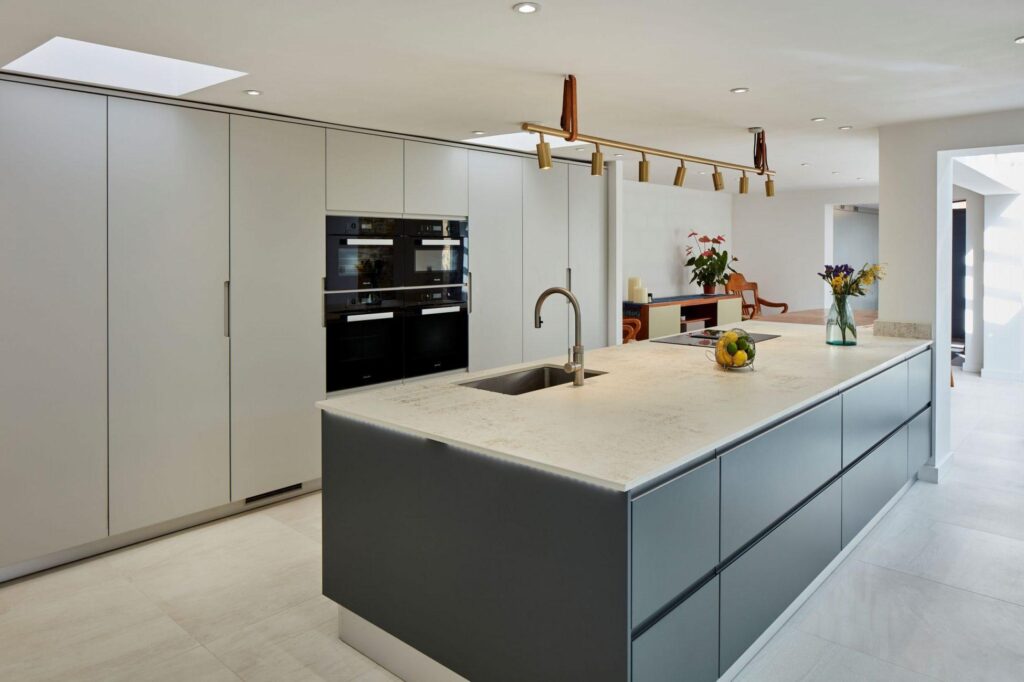
A waterfall island creates a strong architectural feature because the countertop material continues down the side of the island.
It works particularly well in open-plan kitchens where the island can be seen from the living or dining area.
Because the island itself makes a statement, keep the surrounding cabinetry relatively simple.
Think about:
- Countertop thickness
- Island proportions
- Seating clearance
- Pendant scale
- The material used on the sides
- How the island connects visually with the rest of the kitchen
Handleless Cabinet Design
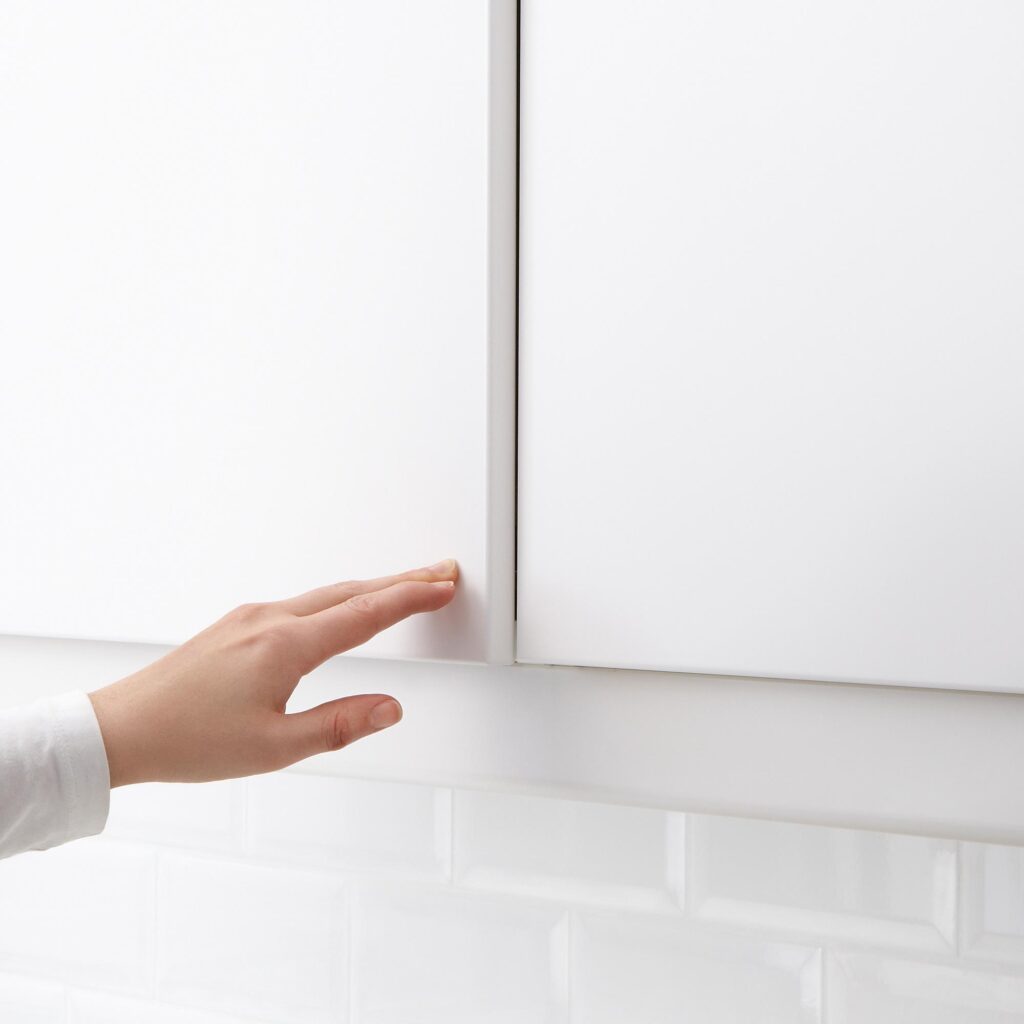
Removing visible handles gives cabinetry a very streamlined appearance.
Push-to-open mechanisms, integrated pulls, and recessed channels can all help create that uninterrupted look.
This works particularly well in smaller kitchens because there are fewer visual details competing for attention.
But handleless does not mean every surface needs to be completely plain.
You can bring warmth through:
- Wood grain
- Stone
- Textured backsplash tile
- Open shelving
- Lighting
The cabinetry can stay simple while the materials provide the character.
Two-Tone Kitchen Cabinets
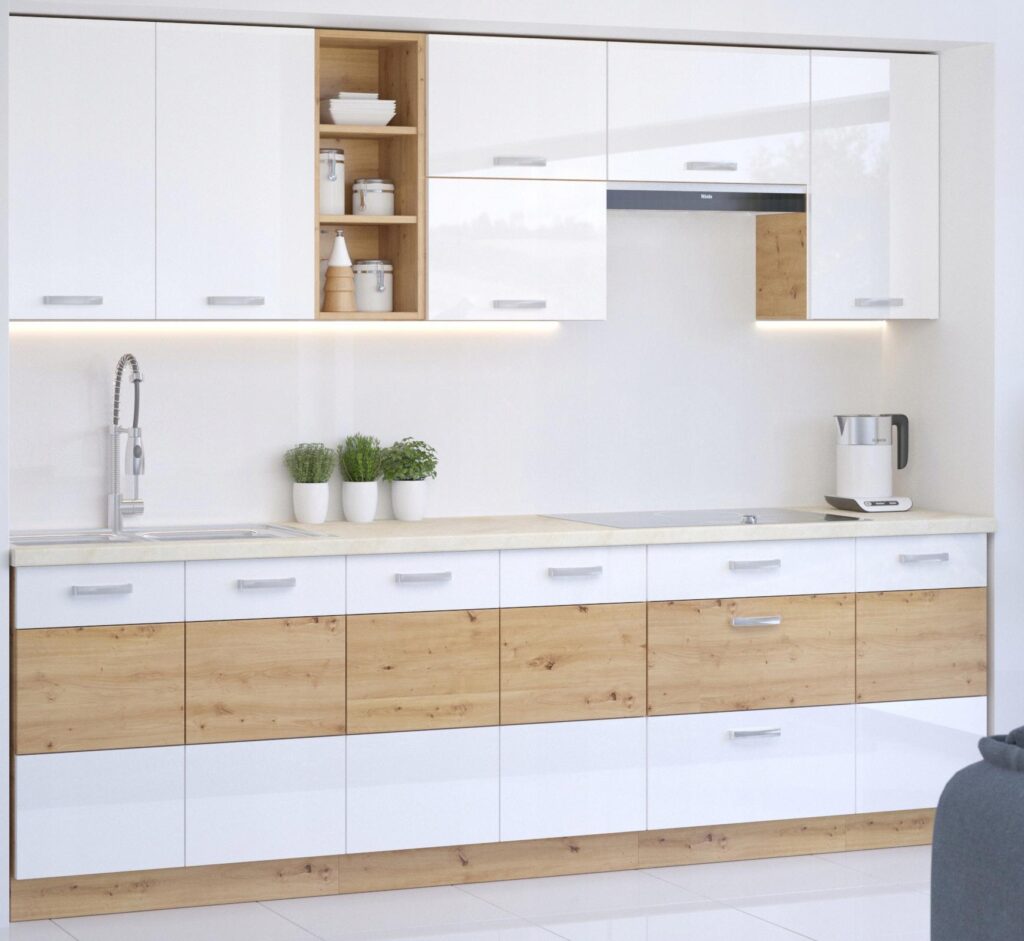
Using two cabinet colors is an easy way to add depth without introducing lots of different materials.
One common approach is to keep the upper cabinets light and use a darker tone below. Another is to use one color throughout the cabinetry and reserve the second color for the island.
The best combinations usually have some relationship between them.
For example, warm white with natural wood feels very different from white with charcoal, but both can create a contemporary kitchen.
Quick styling tip
If you are using two cabinet colors, keep the countertop and backsplash relatively quiet.
That gives the cabinetry room to stand out.
Open Shelving with Modern Decor
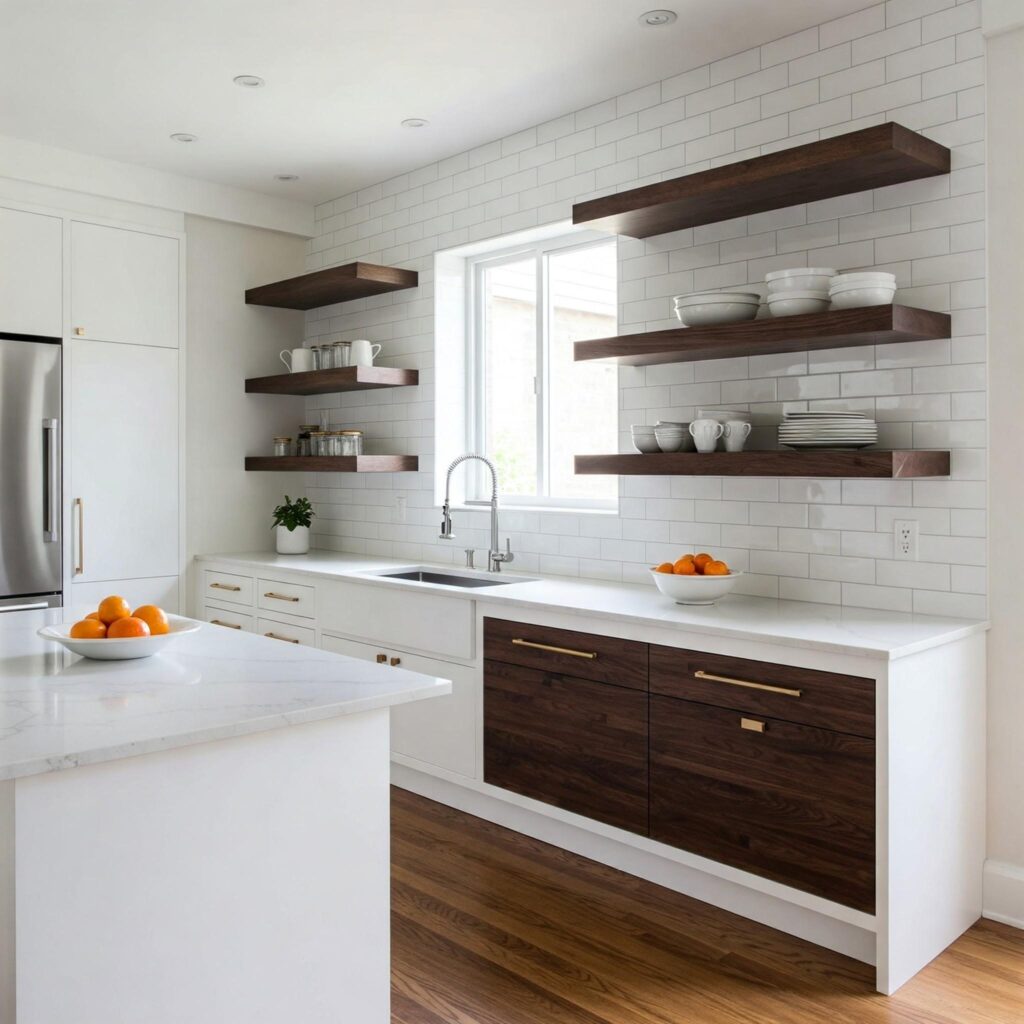
Open shelving can make a modern kitchen feel less rigid.
It also gives you somewhere to display everyday objects that are useful and attractive.
Think about displaying:
- Ceramic bowls
- Glassware
- Cookbooks
- Wooden cutting boards
- Small plants
- A few decorative objects
Do not fill every inch.
The empty space is what keeps the shelves looking intentional.
A few useful pieces, grouped thoughtfully, usually look better than a shelf packed with decoration.
Floor-to-Ceiling Kitchen Cabinets
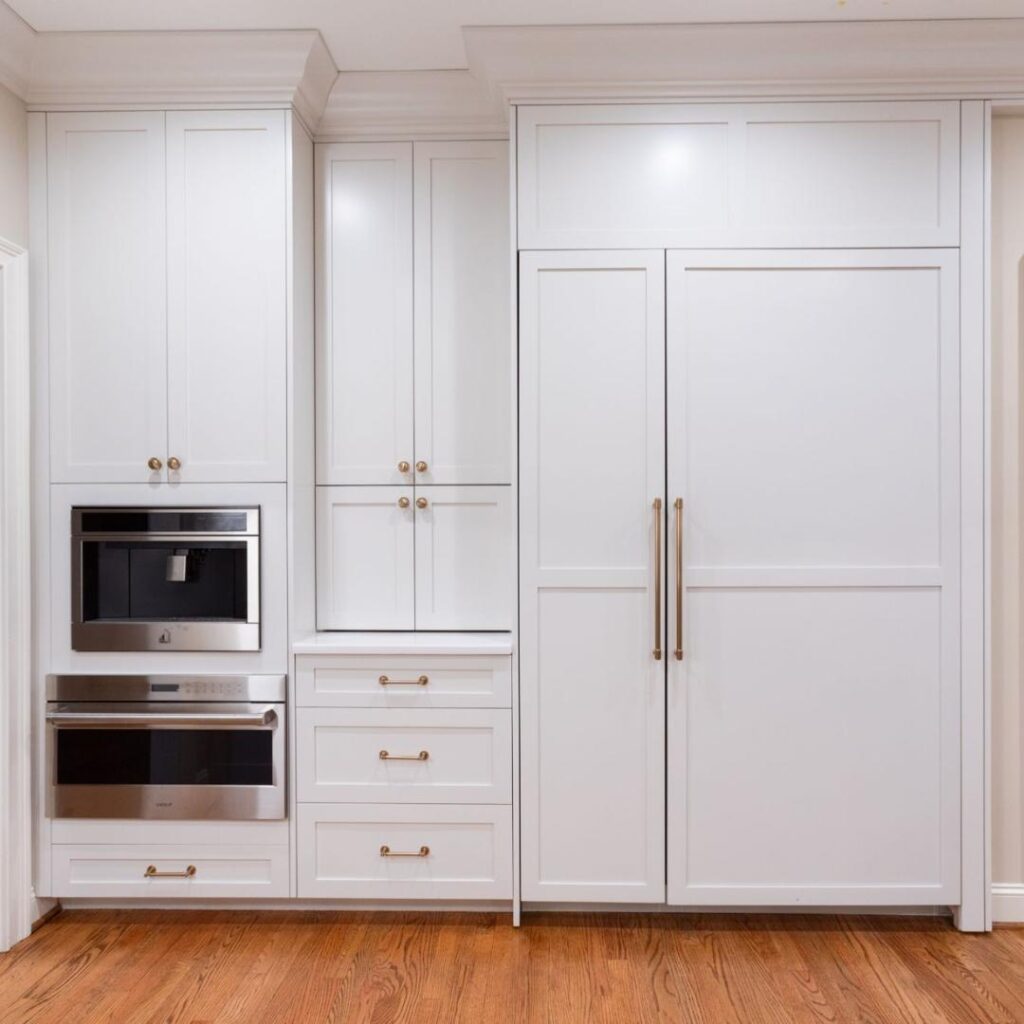
Tall cabinetry makes use of vertical space while giving the kitchen a more architectural appearance.
It is particularly useful for kitchens where floor space is limited but there is plenty of unused wall height.
You can use the upper sections for items that are needed less often while keeping everyday essentials at easier-to-reach levels.
Another advantage is visual continuity. When tall cabinets share the same finish, they can create a cleaner wall rather than breaking it up into lots of separate storage pieces.
Design tip: If floor-to-ceiling cabinetry feels too heavy, introduce an open section or a contrasting material to break up the run.
Marble Backsplash Statement
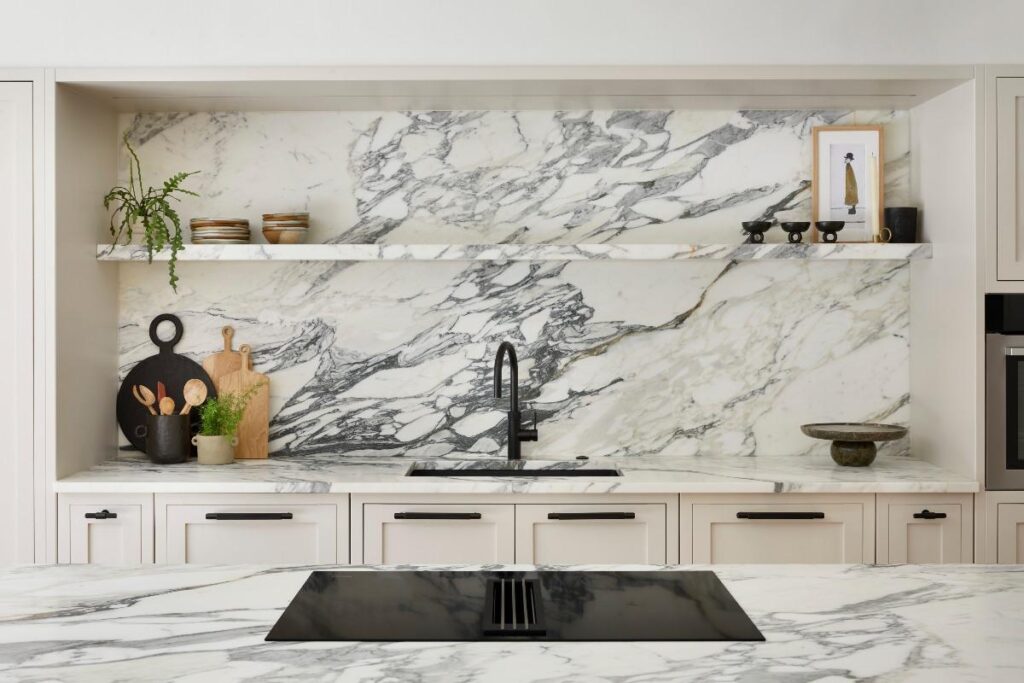
A marble backsplash can become the main decorative feature of a modern kitchen.
Instead of using marble only as a narrow strip behind the counter, extending the material higher can create a much stronger visual effect.
The rest of the kitchen can then remain simple.
Pair a dramatic stone with understated cabinets, minimal hardware, and uncomplicated lighting.
Smart Kitchen Technology
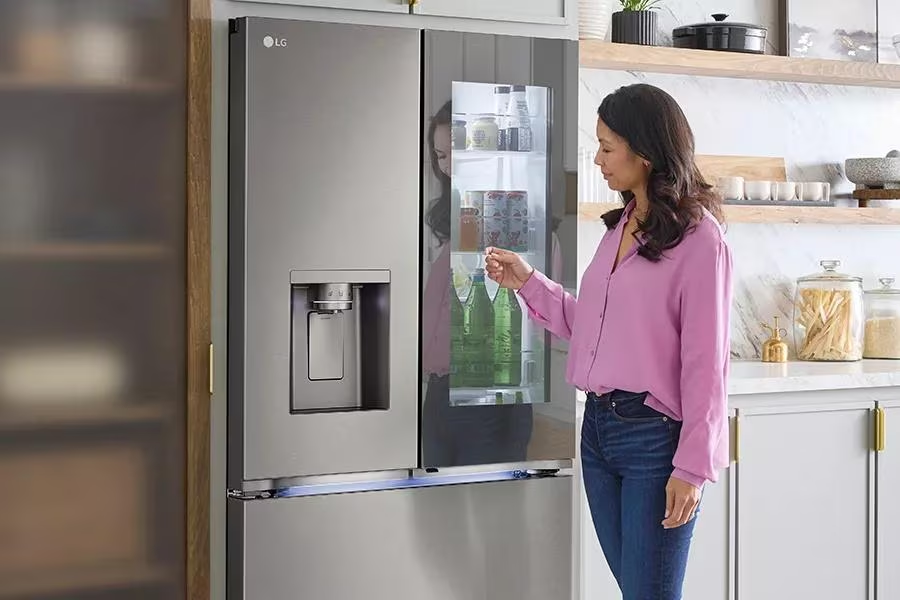
Modern kitchen design is not only about how the room looks.
Technology can also make the space easier to use.
Depending on your needs, this could include integrated appliances, smart lighting, touchless faucets, hidden charging areas, or appliances that blend into the cabinetry.
The goal is not to add technology simply because it is available.
Instead, think about the small frustrations you have in your current kitchen.
What takes too long?
What creates clutter?
What would be easier if it were built into the space?
That is where technology can actually improve the design.
Concrete and Industrial Style Kitchen
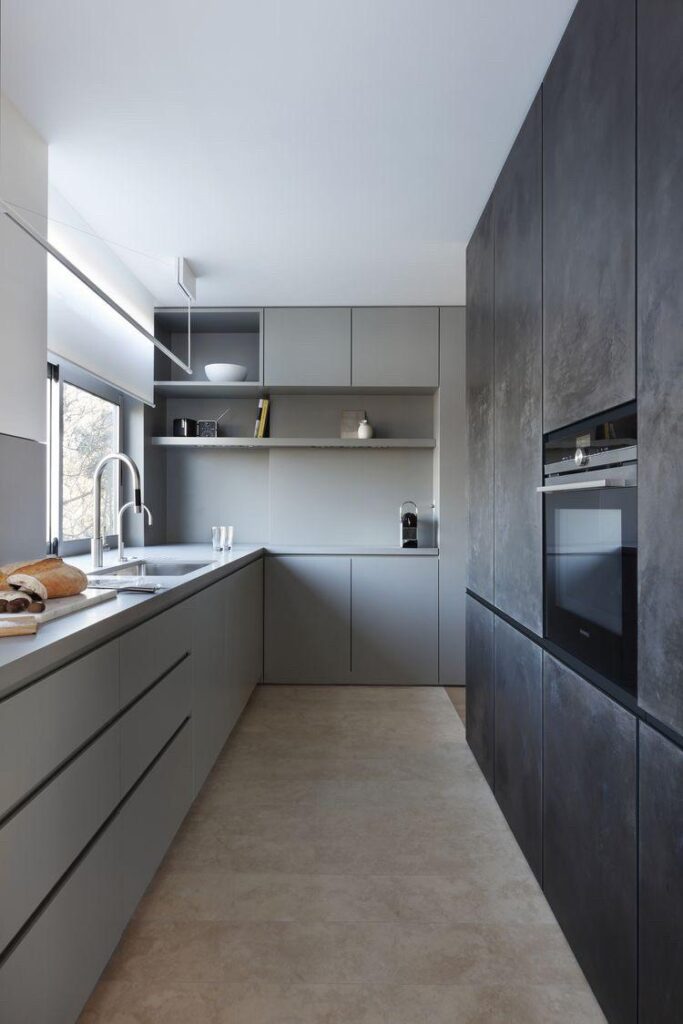
Concrete introduces a raw, architectural quality that works surprisingly well with modern cabinetry.
You can use it through countertops, floors, walls, an island, or smaller decorative details.
The trick is softening the harder look.
Add wood, warm lighting, textiles, plants, or natural finishes so the kitchen does not become one continuous collection of hard surfaces.
That combination can create an industrial kitchen that still feels comfortable.
Glass Cabinet Doors
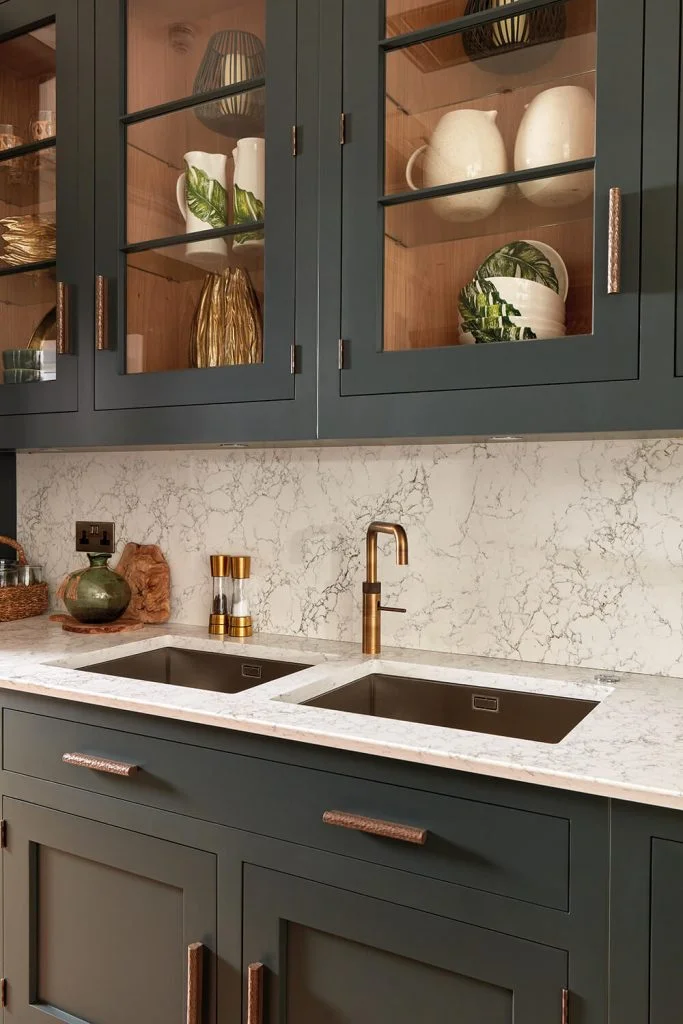
Glass-front cabinets provide a middle ground between completely closed storage and open shelving.
They allow you to display selected pieces while protecting them from everyday kitchen mess.
Use them for things you actually want to see, such as attractive ceramics, glassware, or neatly arranged serving pieces.
If you are using several glass doors, keep the interiors organized.
Otherwise, the transparency can make clutter much more visible.
Hidden Pantry Storage
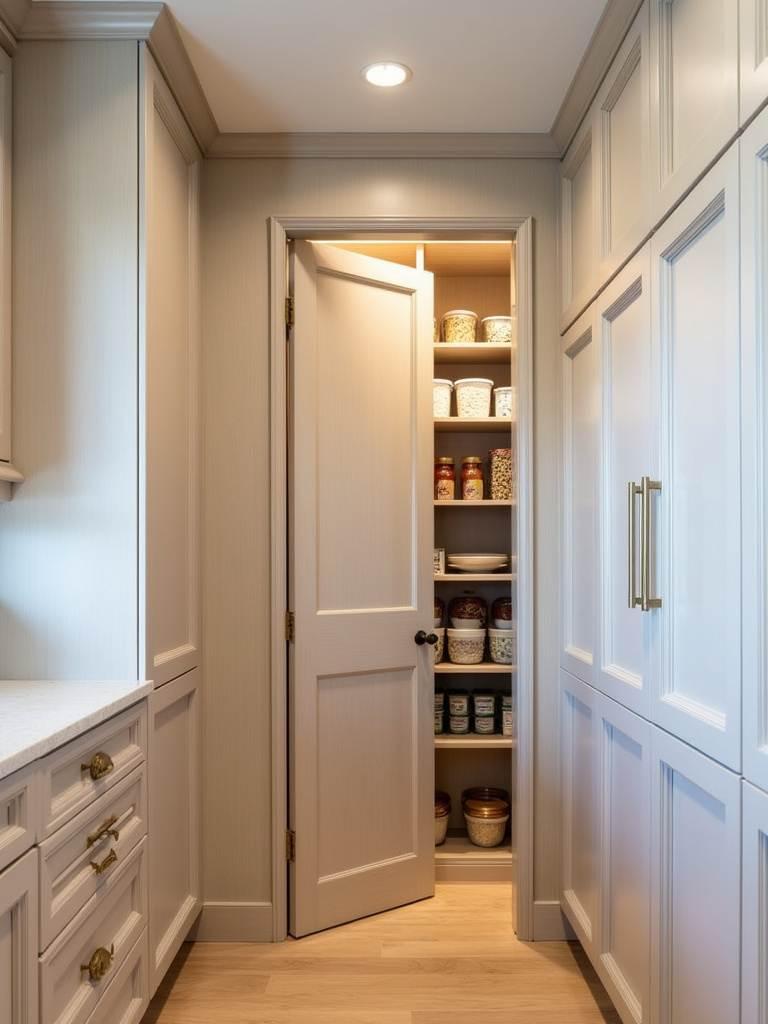
One of the smartest modern kitchen ideas is simply making clutter disappear.
A hidden pantry can be built behind a tall cabinet door, inside a wall of cabinetry, or in a separate small room if your layout allows.
The idea is to keep frequently used items close while maintaining a cleaner visual surface.
Inside, use shelves, drawers, containers, and vertical storage according to what you actually store.
You do not need a huge pantry.
Even a narrow, well-organized storage zone can make a noticeable difference to how the kitchen functions.
Neutral Gray Kitchen Design
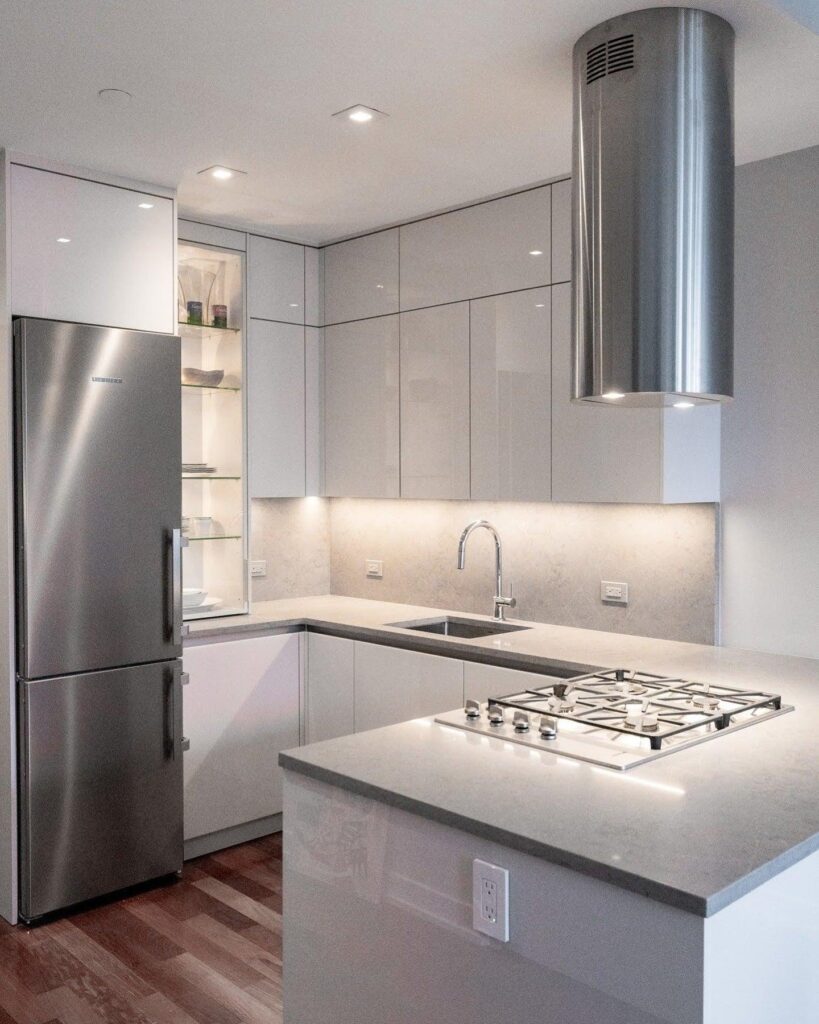
Gray can create a sophisticated modern kitchen without the starkness of pure black and white.
The key is choosing the right undertone.
Warm gray works particularly well with wood and beige, while cooler gray can create a sharper contemporary look when paired with black, white, or metal.
Instead of using the same gray everywhere, combine different finishes.
A matte gray cabinet next to a slightly textured stone countertop will have much more depth than two perfectly smooth gray surfaces.
Modern Kitchen with Natural Light
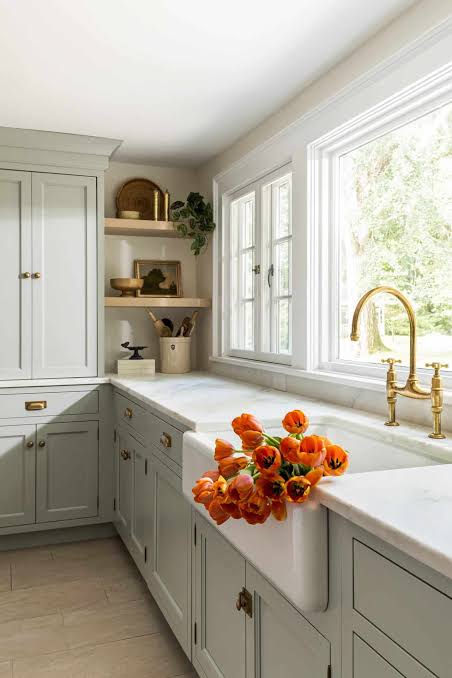
A kitchen with plenty of natural light gives you more flexibility with materials and colors.
Large windows, skylights, glass doors, and open connections to outdoor spaces can all help make the kitchen feel brighter during the day.
But natural light is also something you can work with through your material choices.
Light wood reflects the brightness of the room. Pale cabinetry keeps the space visually open. Reflective surfaces can bounce light around, while darker materials can be used selectively for contrast.
If your kitchen gets limited daylight
- Keep the main surfaces lighter.
- Avoid blocking windows with tall furniture.
- Use layered lighting for evening.
- Choose reflective or lightly textured surfaces.
- Introduce darker colors in smaller areas.
Black and Wood Modern Kitchen
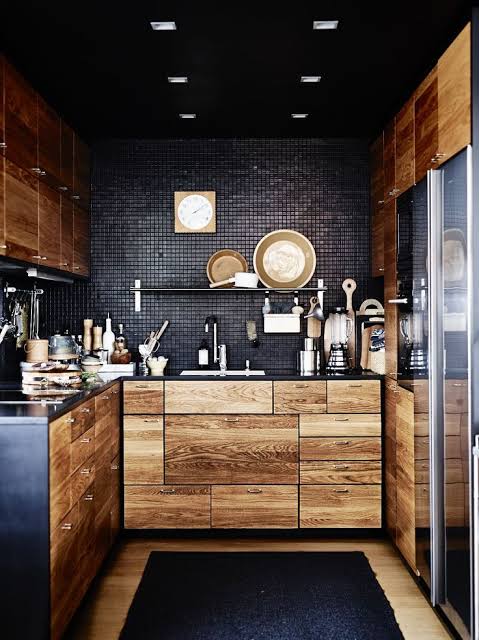
Black and wood create one of the strongest combinations in a modern kitchen.
The black brings definition while the wood prevents the space from feeling too stark.
You can reverse the proportions depending on the room.
A mostly black kitchen with a wooden island creates a dramatic look. A mostly wood kitchen with black cabinets or black accents feels warmer while still having a contemporary edge.
Contrast and definition
Warmth and texture
Clean supporting details
Before You Finish the Kitchen
Modern design can sometimes tempt you to keep adding more features. Before doing that, step back and look at the kitchen as one space.
Ask yourself:
The strongest modern kitchens are not necessarily the ones with the most expensive finishes or the most technology. They are the ones where the layout makes sense, storage is intentional, materials work together, and every major feature has room to breathe.
Keep the foundation simple, add warmth where you can, and let one or two strong details carry the personality of the space.