
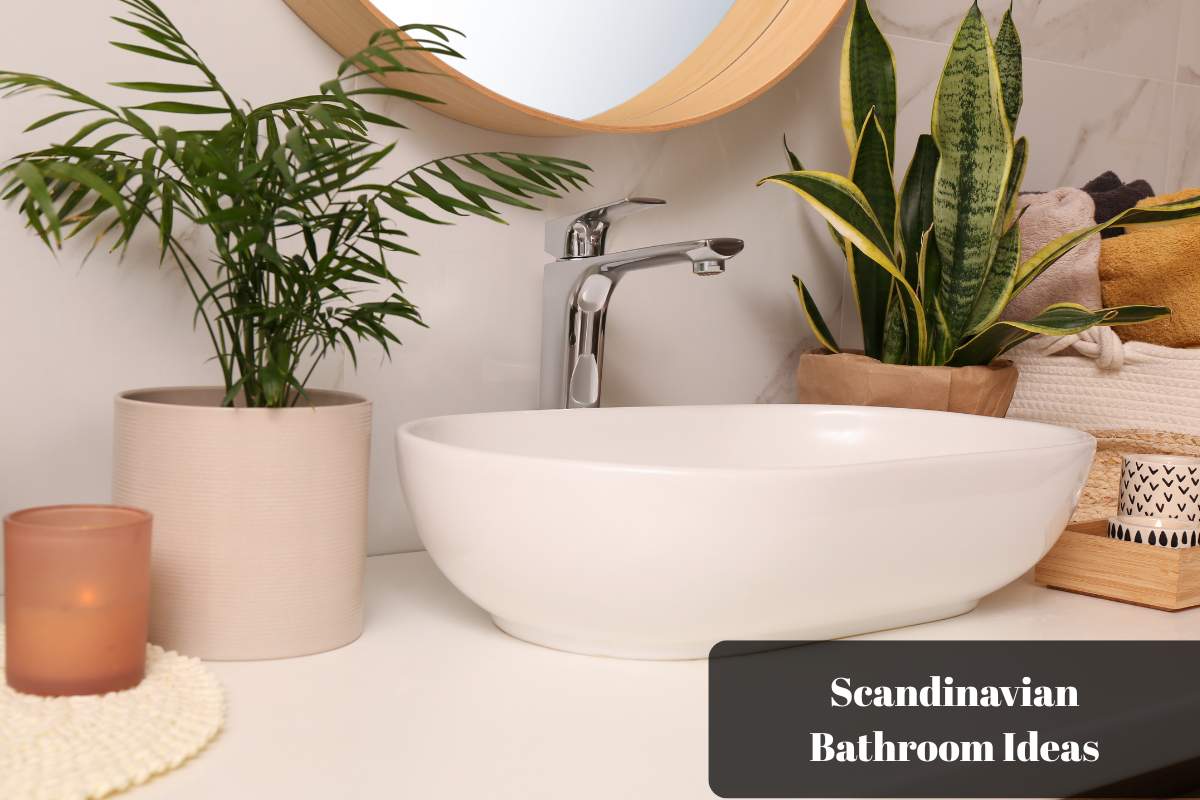
Scandinavian bathrooms are all about finding the right balance between simplicity and warmth. Clean lines, natural wood, soft colors, practical storage, and a few well-chosen details can make a bathroom feel calm without making it look plain.
You don’t need to completely remodel your bathroom to bring in this style. A light wood vanity, black fixtures, a round mirror, soft textiles, or even a few plants can change the overall feel of the space.
These Scandinavian Bathroom Ideas will help you create a bathroom that feels clean, comfortable, and easy to live with.
1. Light Wood Vanity for Warmth
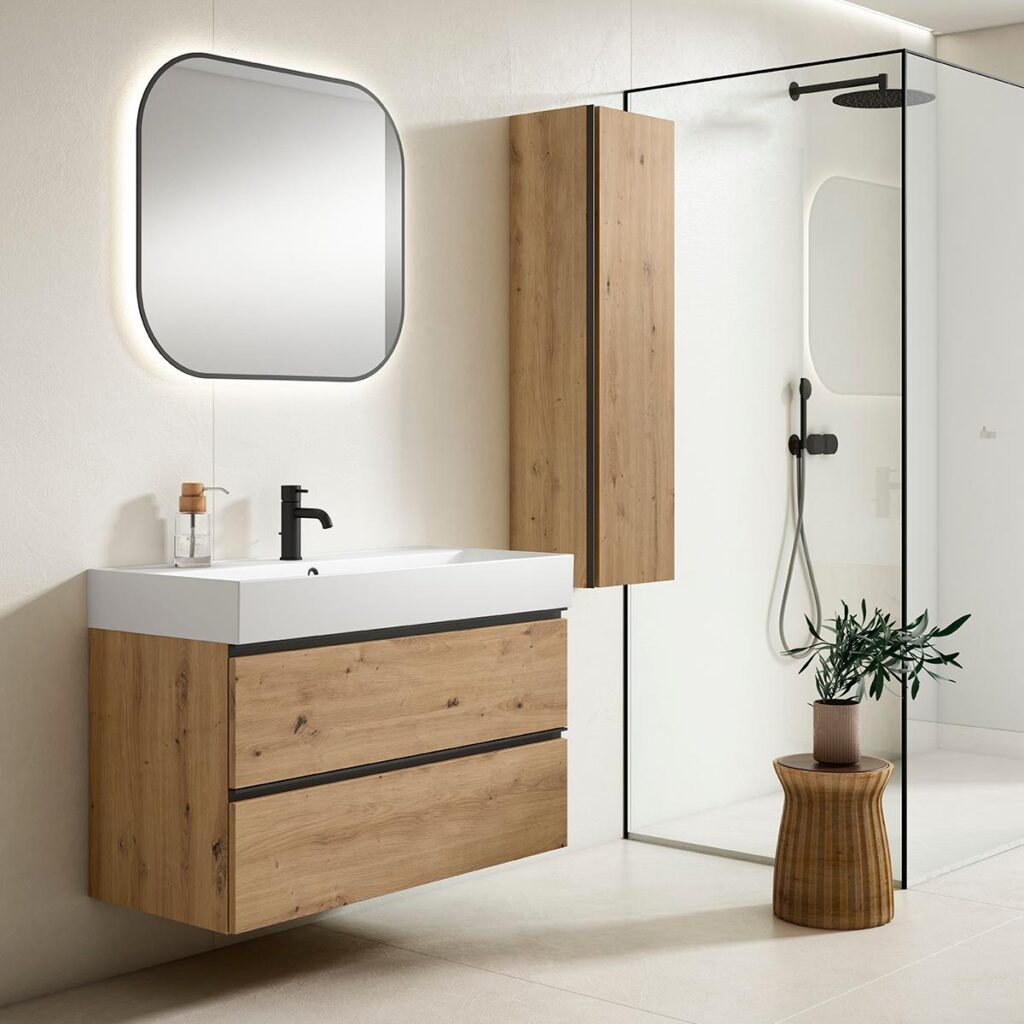
A light wood vanity is one of the easiest ways to bring warmth into a Scandinavian bathroom.
Pale oak, ash, and similar wood tones add natural texture while keeping the room feeling bright and uncluttered.
Pair the vanity with a simple countertop and clean-lined hardware. If your bathroom already has white walls or tile, the wood becomes a warm focal point without making the room feel busy.
Oak, ash or pale wood
Keep the shapes simple
White or soft neutral
2. Crisp White Walls and Tiles
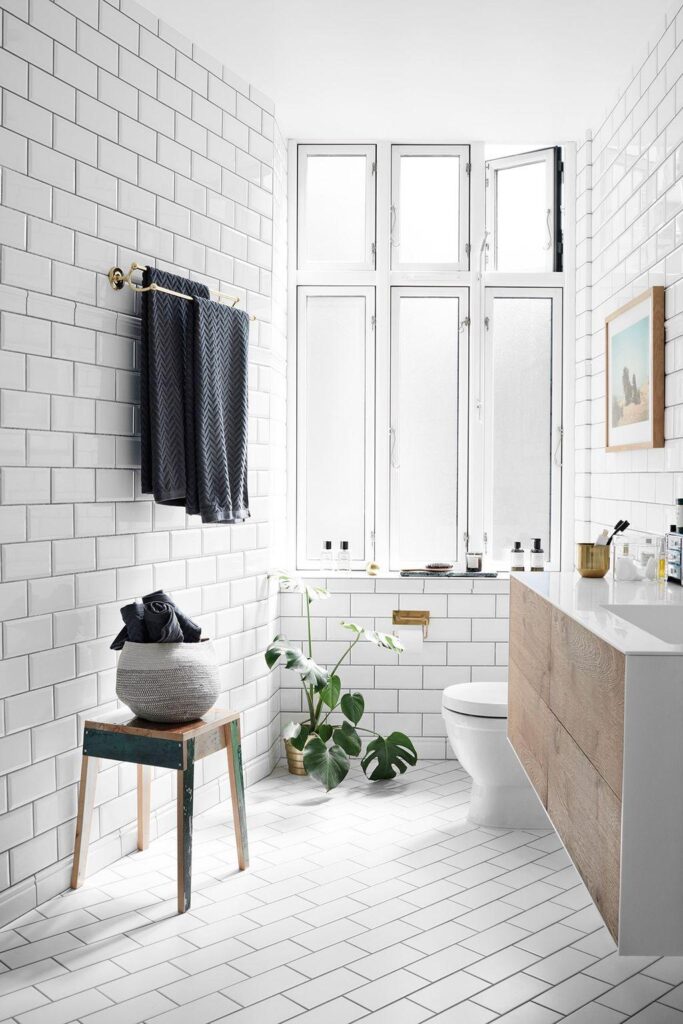
White is a natural starting point for a Scandinavian bathroom because it keeps the room feeling bright and visually clean.
It can also help a compact bathroom feel more open.
Instead of adding lots of decoration, let the white surfaces create the backdrop for warmer details.
Wood, black fixtures, woven baskets, beige towels, and simple greenery can all stand out beautifully against a crisp white base.
If an entirely white bathroom feels too stark, introduce a warmer white or cream rather than adding lots of different colors.
Walls and tile
Vanity or shelving
Small fixtures
3. Black Fixtures for Contrast
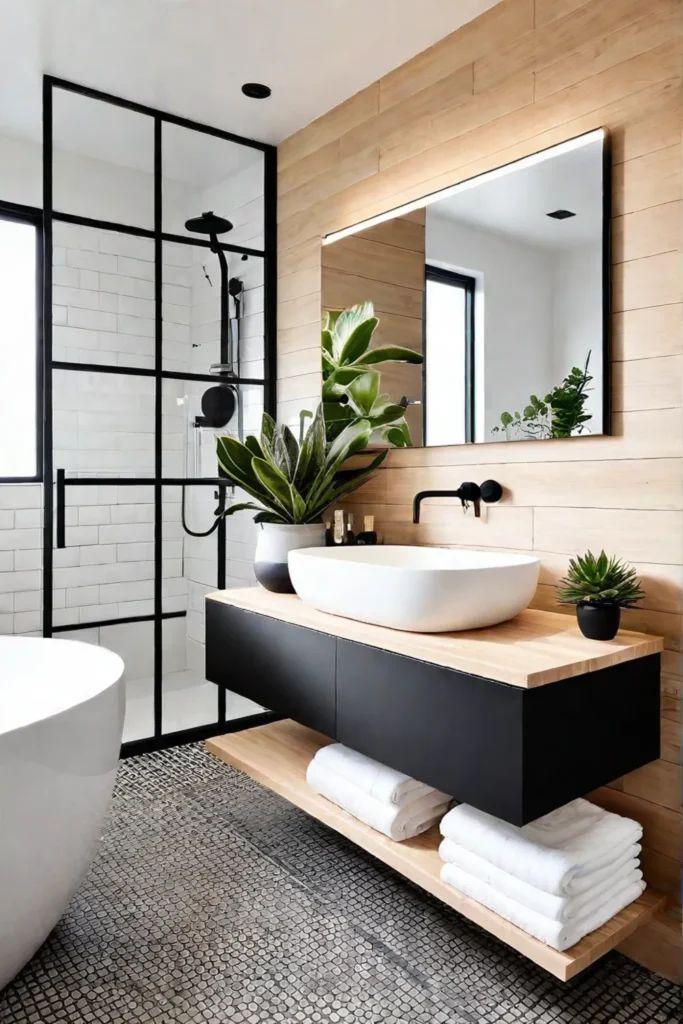
Black faucets, shower frames, mirrors, and other small fixtures can give a light Scandinavian bathroom a sharper edge.
The easiest approach is to repeat black in a few places rather than using it everywhere. For example, pair a black faucet with a black-framed mirror or shower hardware so the room feels coordinated.
Against white tile and pale wood, these darker details become graphic accents without taking over the space.
4. Floating Vanity Design
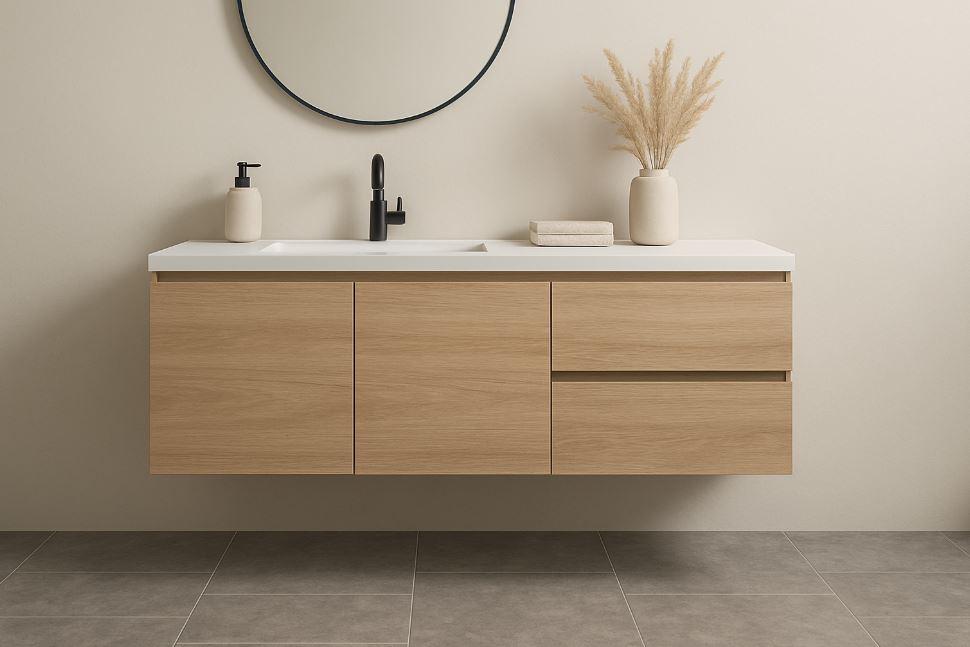
A floating vanity leaves some of the floor visible underneath, which can make the bathroom feel lighter and less crowded. It’s especially useful when you’re working with a smaller room.
Choose a simple rectangular design without excessive detailing. You can use the open area underneath for visual breathing room rather than filling it with storage.
If you need extra bathroom storage, combine the floating vanity with a tall cabinet or recessed storage elsewhere.
5. Large Round Mirror
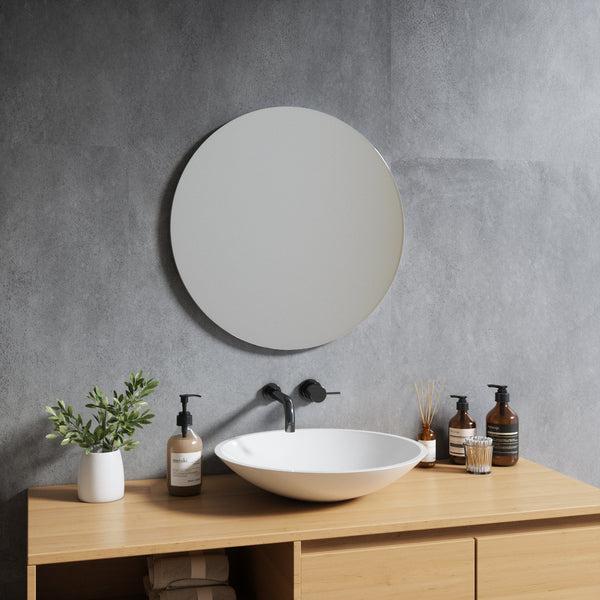
A round mirror brings a softer shape into a bathroom filled with straight lines. It can also become a strong focal point above a simple vanity without requiring additional decoration.
Choose a mirror that is proportionate to the vanity and leave enough breathing room around it. A thin black frame can create contrast, while a frameless or light-toned option keeps the look softer.
6. Natural Stone Details
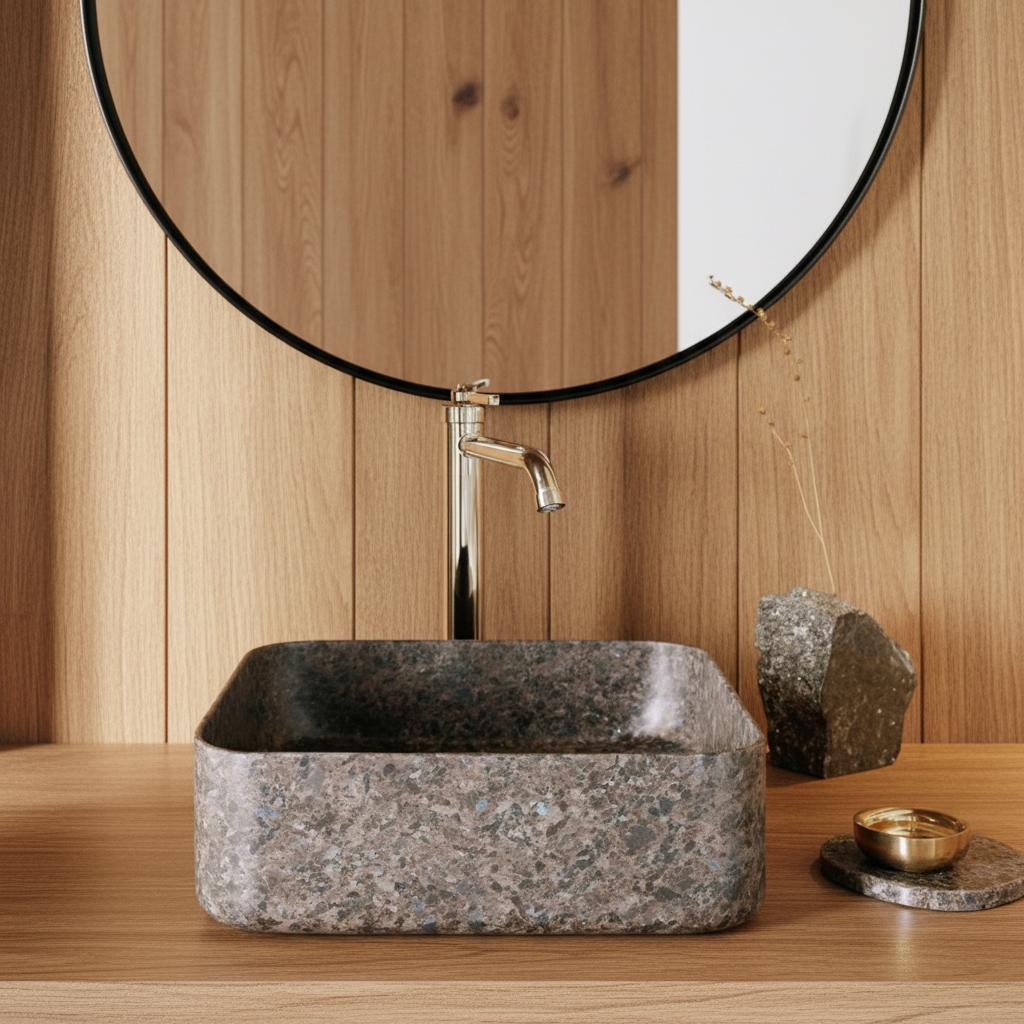
Natural stone can add texture and variation to an otherwise simple Scandinavian bathroom. You can use it on a countertop, sink, shower surface, backsplash, or a smaller accent area.
The key is restraint. Let the stone provide the visual interest and keep the surrounding finishes relatively simple.
Warm wood is particularly useful alongside stone because it prevents the room from feeling too hard or cold.
Adds texture and variation
Adds warmth and softness
7. Open Wooden Shelving
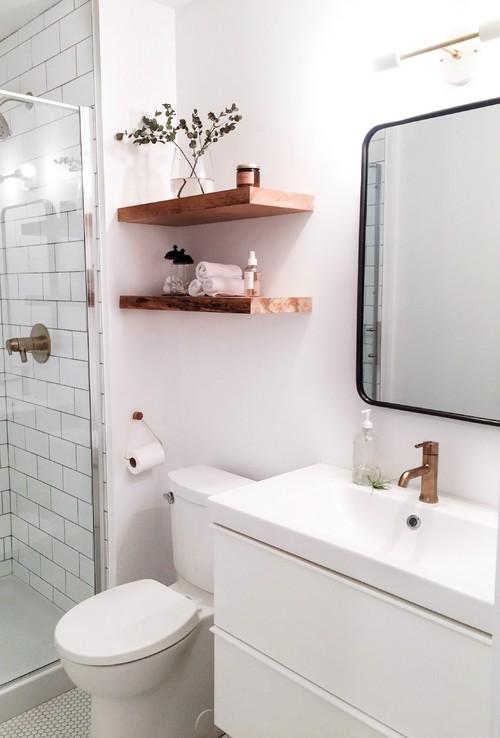
Open shelves can make a Scandinavian bathroom feel more relaxed while giving you somewhere to keep towels, baskets, and a few everyday items.
The trick is to avoid turning the shelves into a storage dump. Fold towels neatly, use baskets for smaller items, and leave some empty space between objects.
A simple wooden shelf can be enough to bring warmth to a bathroom dominated by tile and porcelain.
Read More – 15 Dark Scandinavian Interior Ideas with Sophisticated Style
8. Walk-In Glass Shower
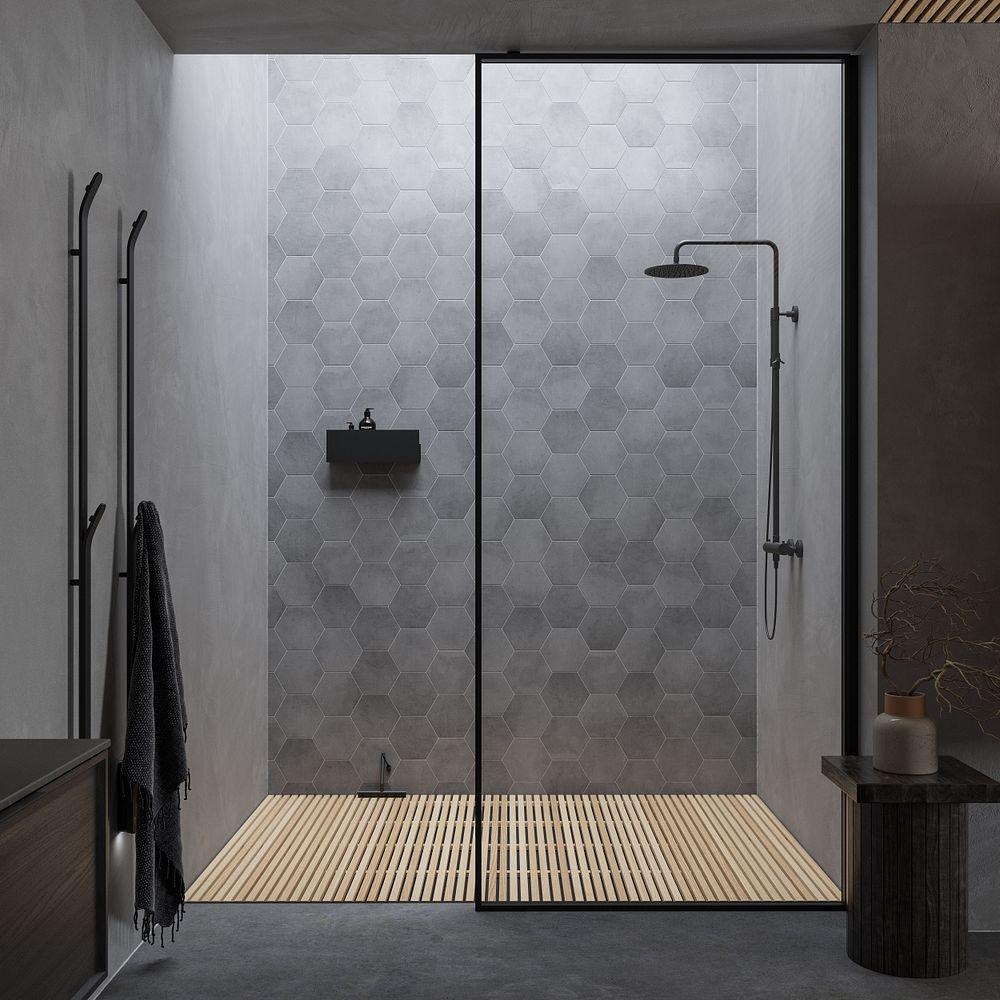
A glass shower enclosure can help preserve an open sightline across the bathroom. Frameless glass in particular keeps the visual separation between the shower and the rest of the room to a minimum.
This can be especially useful in compact bathrooms where every visual barrier makes the room feel more divided.
Pair the glass with simple tile and minimal hardware to keep the overall design clean.
9. Soft Gray Color Palette
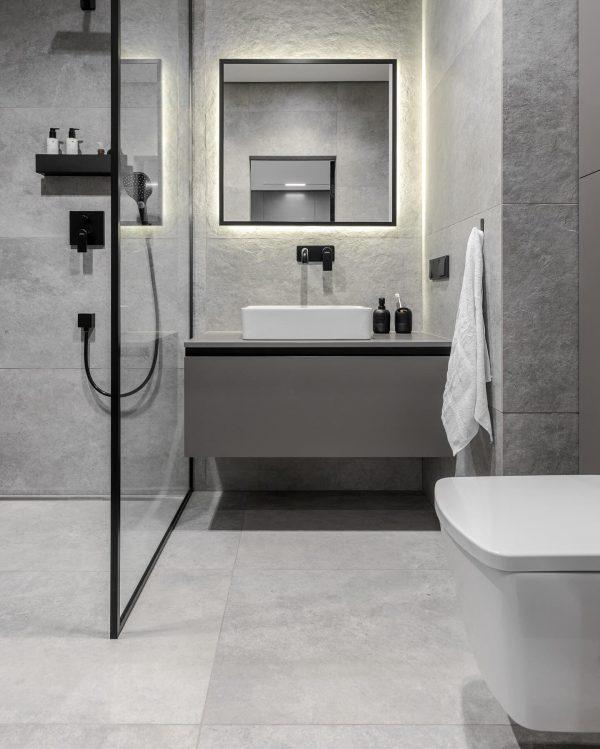
White isn’t your only option for a Scandinavian bathroom. Soft gray can add depth while maintaining the calm quality of a light, neutral palette.
Try pale gray tile, gray walls, or a gray vanity with warmer wood and cream accessories. Different shades of gray can also create subtle layering without introducing strong color.
Base
Main tone
Contrast
Softness
10. Minimalist Pendant Lighting
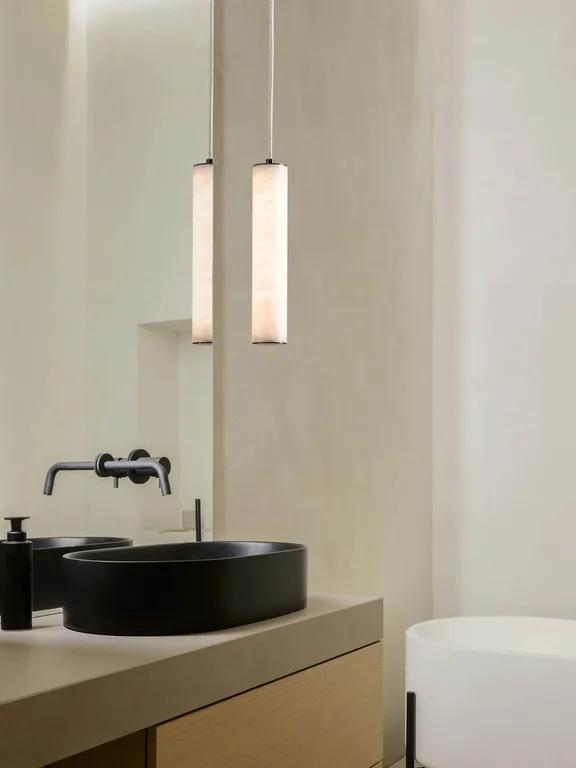
Lighting is an important part of a Scandinavian bathroom because it can make simple materials feel warmer and more inviting.
A small pendant can work well beside a mirror or above an area where it won’t interfere with everyday use. Choose a simple silhouette and avoid adding too many decorative fixtures.
For a complete lighting plan, combine decorative lighting with appropriate general and task lighting.
11. Wooden Slat Accent Wall
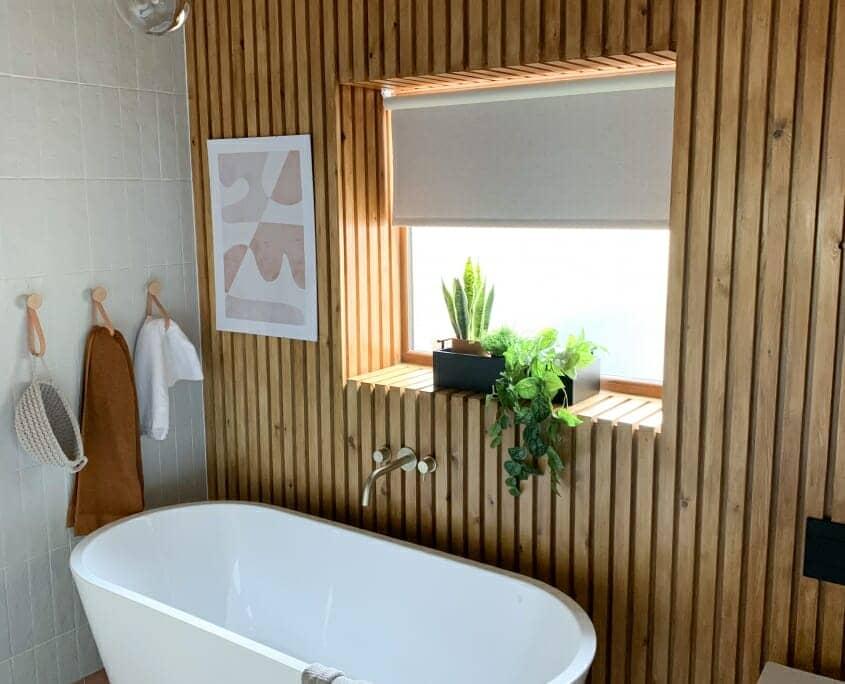
Vertical wooden slats can introduce texture without adding a busy pattern. Behind a vanity or in another carefully chosen area, they can become a warm architectural feature.
Use this idea selectively. One slatted section can have much more impact than covering every wall.
Pair the wood with simple tile, neutral colors, and clean-lined fixtures so the texture remains the focus.
12. Freestanding Bathtub
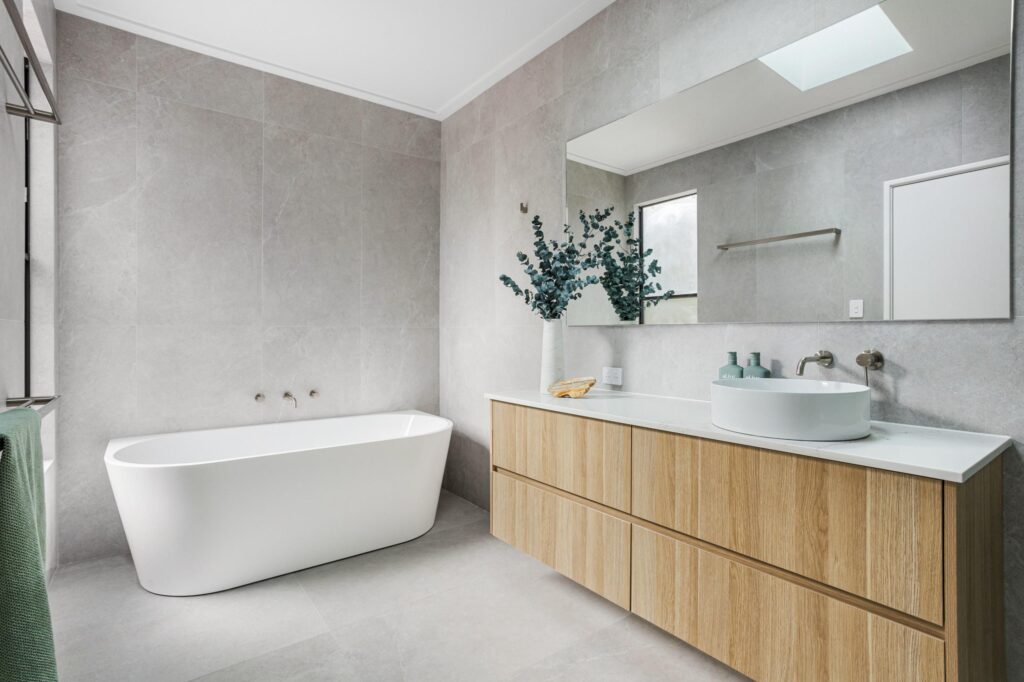
A freestanding bathtub can act as the main sculptural feature in a larger Scandinavian bathroom. Its simple silhouette fits naturally with the uncluttered approach of Nordic design.
Keep the area around the tub relatively open. A small stool, simple plant, or understated floor lamp can add function without competing with the tub.
If your bathroom is compact, measure carefully before choosing a freestanding model. The goal is to preserve comfortable movement around it.
13. Textured Linen Accessories
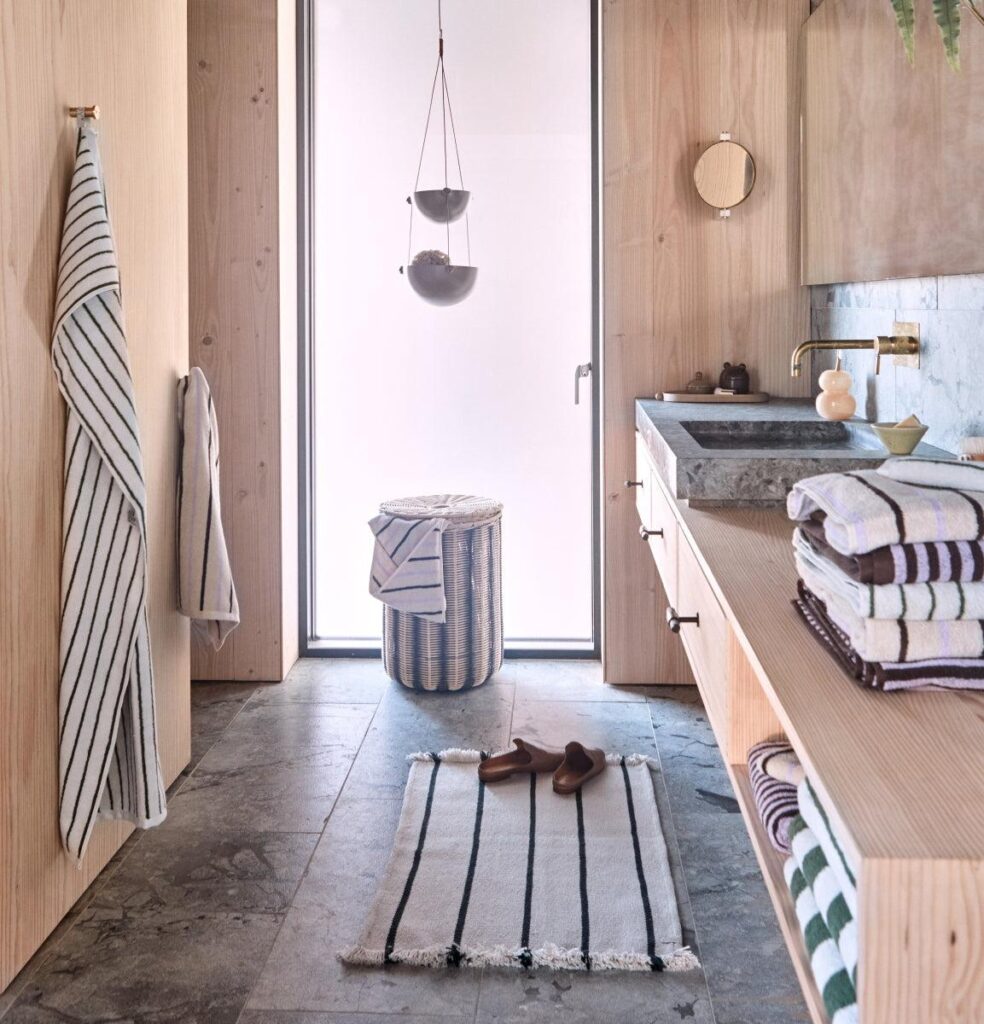
Bathrooms can sometimes feel dominated by hard surfaces. Linen and other soft textiles help introduce a more relaxed layer.
Try linen-look towels, a simple shower curtain where appropriate, fabric storage baskets, or a small textile accent in cream, beige, or soft gray.
You don’t need many accessories. A few tactile pieces can make a noticeable difference.
14. Small Indoor Plants
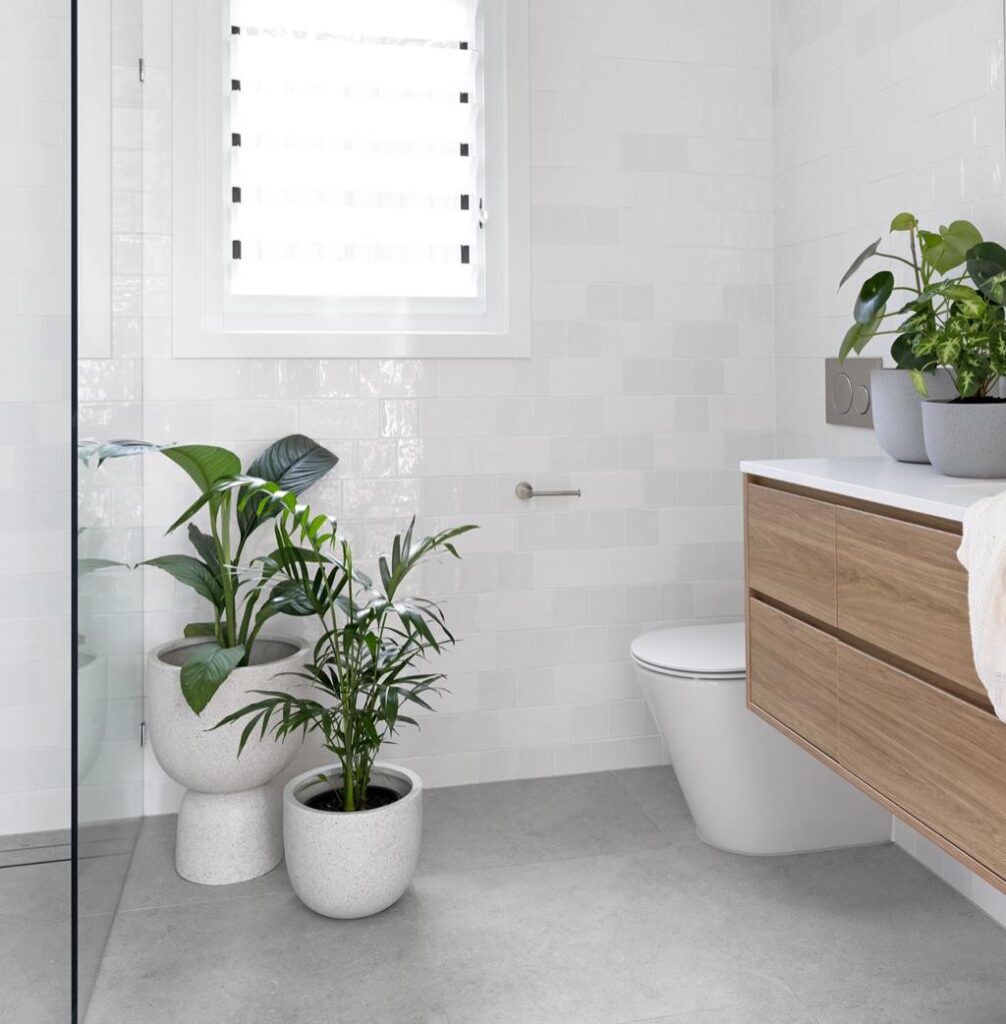
A little greenery can bring life into a neutral bathroom without disrupting the minimalist look. Choose plants that suit the light and humidity conditions of your particular space.
A small plant on a shelf, vanity, or windowsill can be enough. If natural light is limited, check the care requirements of the plant before placing it there.
One compact plant
Small pot near the sink
Use when light suits the plant
15. Herringbone Tile Pattern
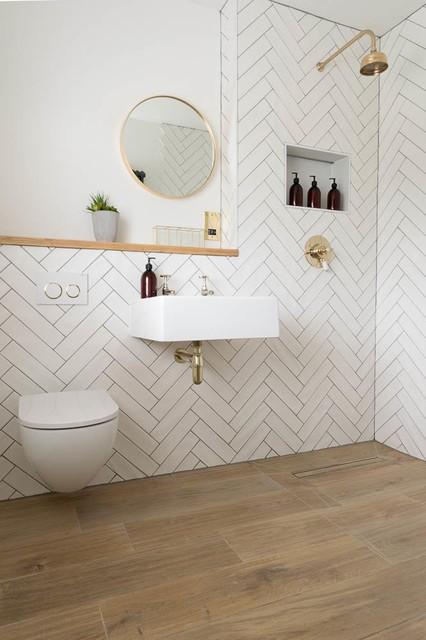
Herringbone tile adds movement to a Scandinavian bathroom without requiring a complicated color scheme.
You can use the pattern on a shower wall, vanity backsplash, or another defined area. Keeping the tile color simple lets the pattern provide the visual interest.
For a calmer result, choose a subtle grout contrast rather than combining the pattern with several other bold finishes.
16. Warm Neutral Color Scheme
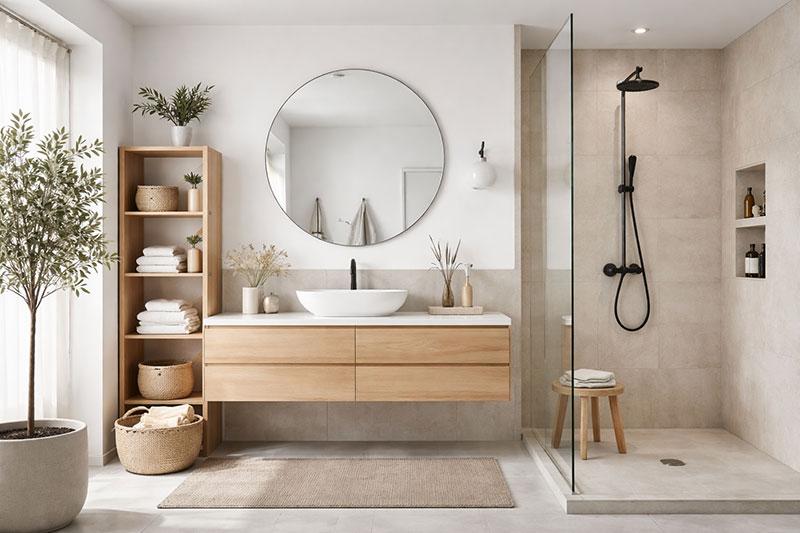
Warm beige, cream, sand, and similar neutrals can make a Scandinavian bathroom feel softer and more welcoming. They don’t have to be used throughout the entire room.
Try a warm neutral on the walls, towels, vanity, or accessories while keeping some lighter surfaces for contrast.
The important thing is that the palette feels connected. Choose a few related neutral shades rather than adding many unrelated colors.
Soft base
Textiles
Natural element
Small contrast
17. Integrated Storage Solutions
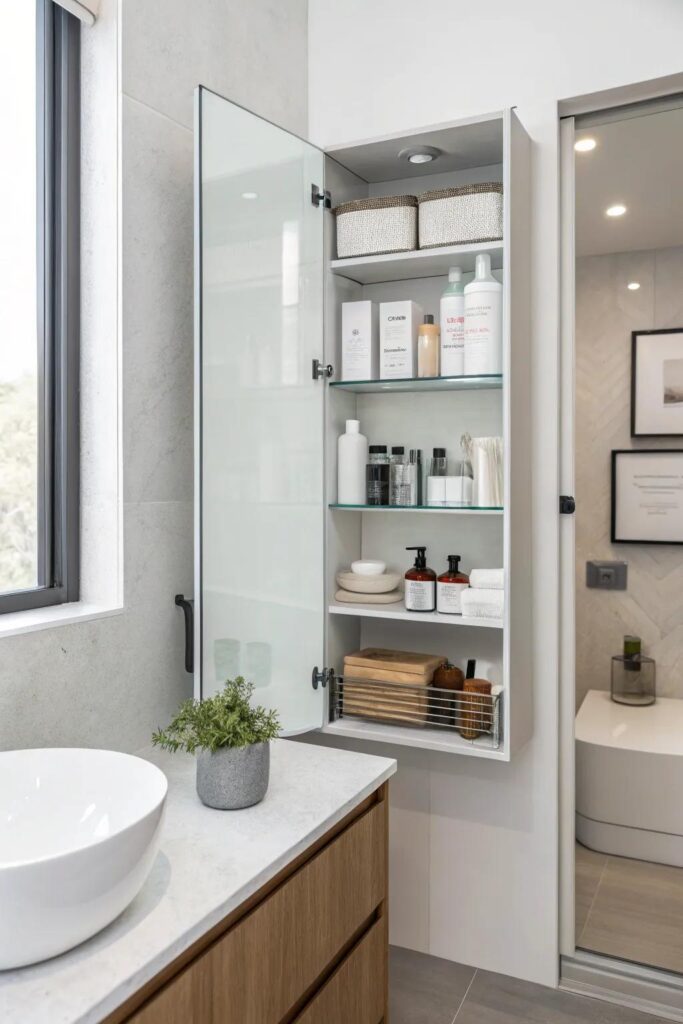
A calm bathroom is much easier to achieve when everyday products have a designated place. Integrated storage can keep toiletries, towels, cleaning supplies, and other essentials out of sight.
Consider recessed shelving, vanity drawers, tall cabinets, or built-in niches depending on the layout of your bathroom.
Good storage isn’t just about hiding things. It also makes the room easier to use every day.
18. Concrete Finishes
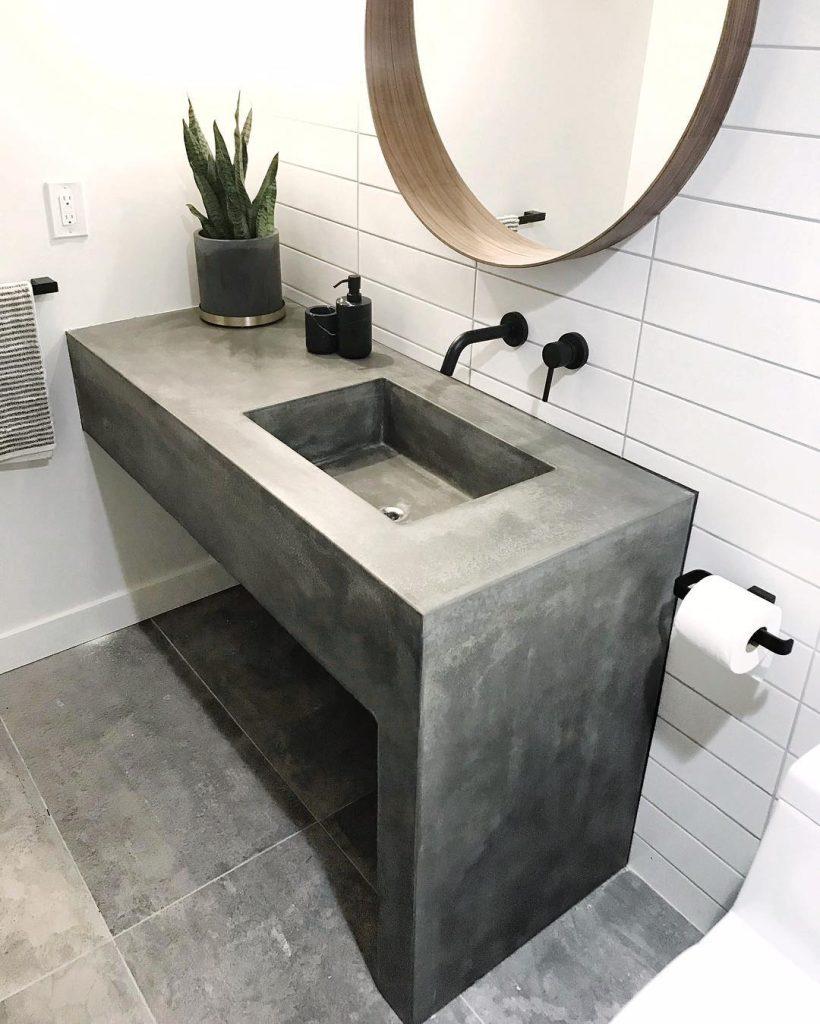
Concrete brings a more contemporary side to Scandinavian bathroom design. Its soft gray appearance works particularly well with pale wood, white surfaces, and warm textiles.
You don’t need concrete everywhere. A countertop, sink, floor, or small accent surface can introduce the material without making the room feel industrial.
Gray foundation
Adds warmth
Adds softness
19. Vertical Subway Tiles
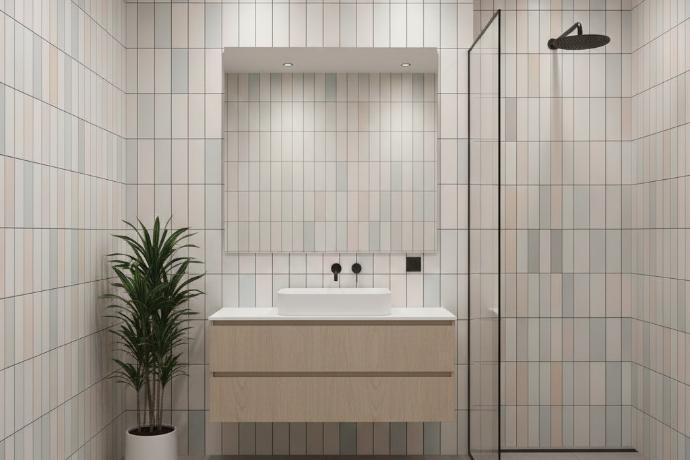
Changing the direction of a familiar subway tile can completely alter its appearance. Installing tiles vertically draws attention upward and can emphasize the height of the room.
This is especially useful in a smaller bathroom where you want to create a stronger sense of vertical space.
Keep the rest of the design simple so the tile layout remains noticeable without making the room feel overly patterned.
20. Mixed Wood Tones
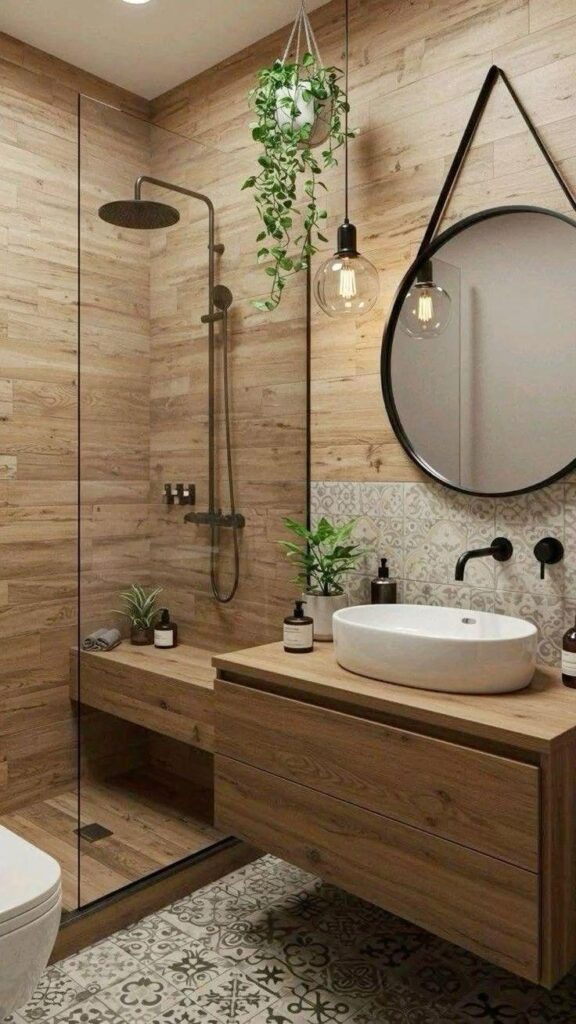
You don’t have to use exactly one wood finish throughout a Scandinavian bathroom. Mixing closely related wood tones can create more depth and make the room feel collected rather than overly coordinated.
For example, you might pair a pale wood vanity with slightly deeper wooden shelving. Keep the undertones reasonably compatible so the different finishes still feel connected.
Vanity or main furniture
Shelving or accessories
21. Simple Wall Hooks Instead of Bars
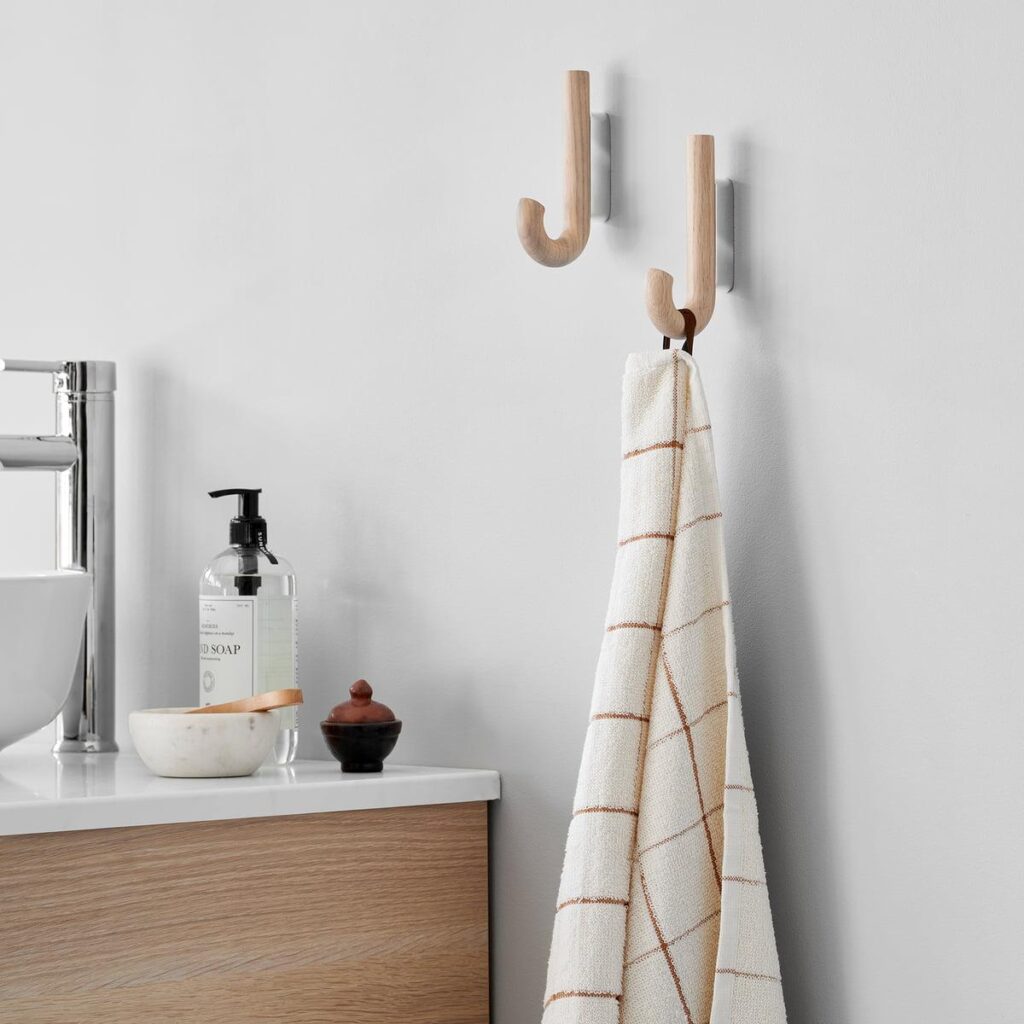
Sometimes the smallest details make the biggest difference. Simple wall hooks can replace bulky towel bars in areas where you want a lighter, less structured look.
They’re particularly useful near a vanity, shower, or bathroom entrance. Choose a finish that connects with your other hardware so the hooks feel like part of the overall design.
Keep the number of hooks practical for the people using the bathroom. Scandinavian design is about useful simplicity, not removing storage just for the sake of minimalism.
The Scandinavian Bathroom Formula
You don’t need all 21 ideas to create this look.
In fact, choosing a few elements and repeating them thoughtfully will usually give you a more cohesive result.