
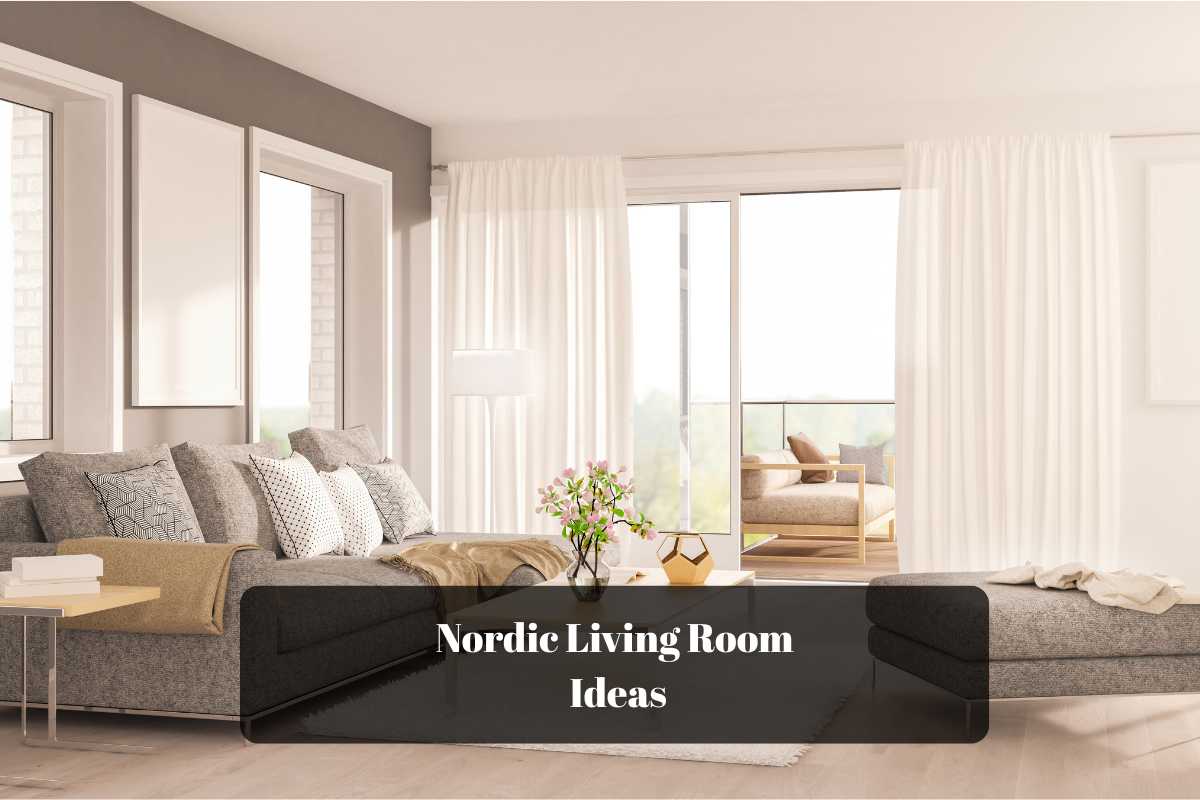
A Nordic living room is less about decorating with a specific set of objects and more about creating a room that feels light, useful, comfortable, and connected to nature.
The look usually starts with a quiet color palette, natural wood, soft textiles, and plenty of breathing room.
Then come the details that make the room feel personal, such as artwork, plants, vintage furniture, ceramics, and warm lighting.
You do not need a completely white room or an expensive Scandinavian furniture collection to get the look. A few thoughtful changes can make an ordinary living room feel much more Nordic.
Here are 13 Nordic living room ideas to help you create that balance.
Embrace a Soft Neutral Color Palette
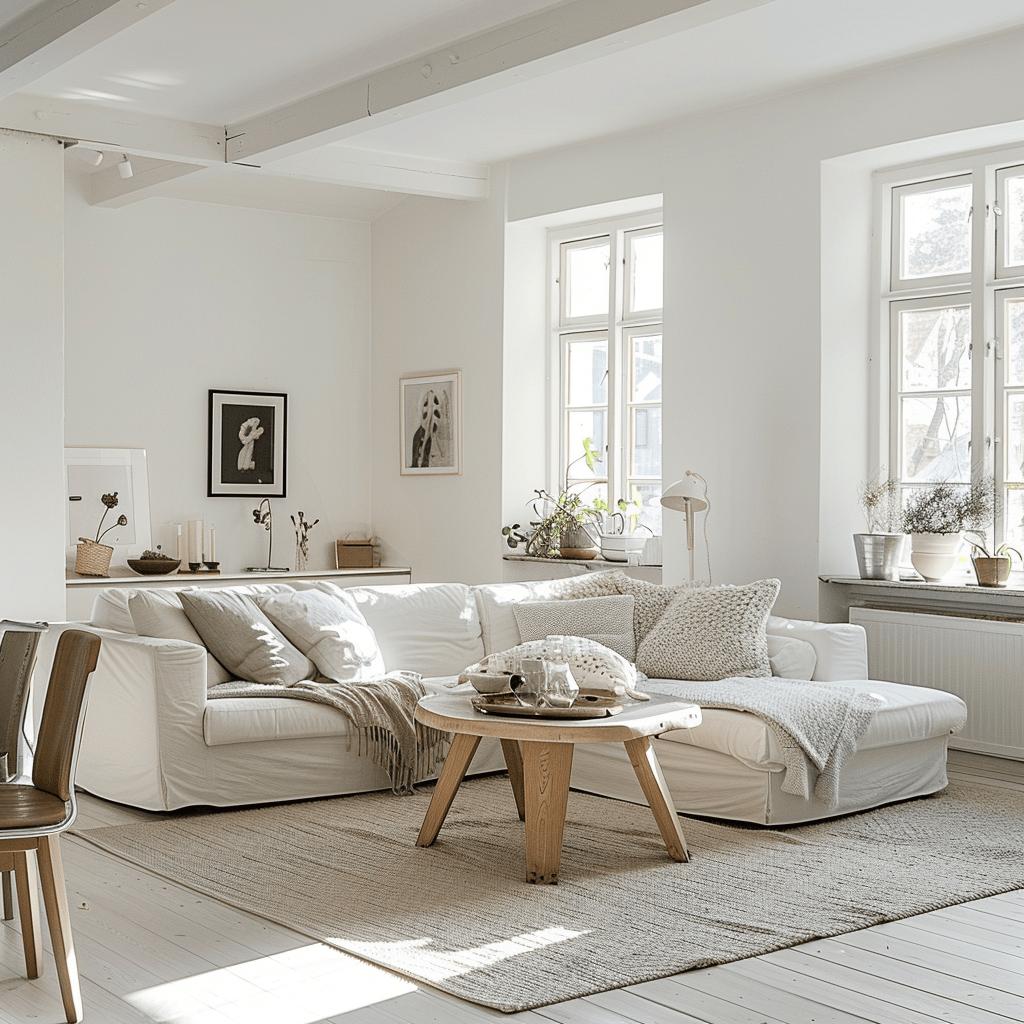
Nordic living rooms often start with a restrained palette of whites, creams, beige, soft gray, and warm taupe.
But neutral does not have to mean boring.
The trick is to use several related shades instead of covering everything in one color.
A warm white wall can sit behind a beige sofa, pale wood furniture, and slightly darker cushions.
This creates subtle contrast while keeping the room visually calm.
Layer Cozy Textures for Warmth
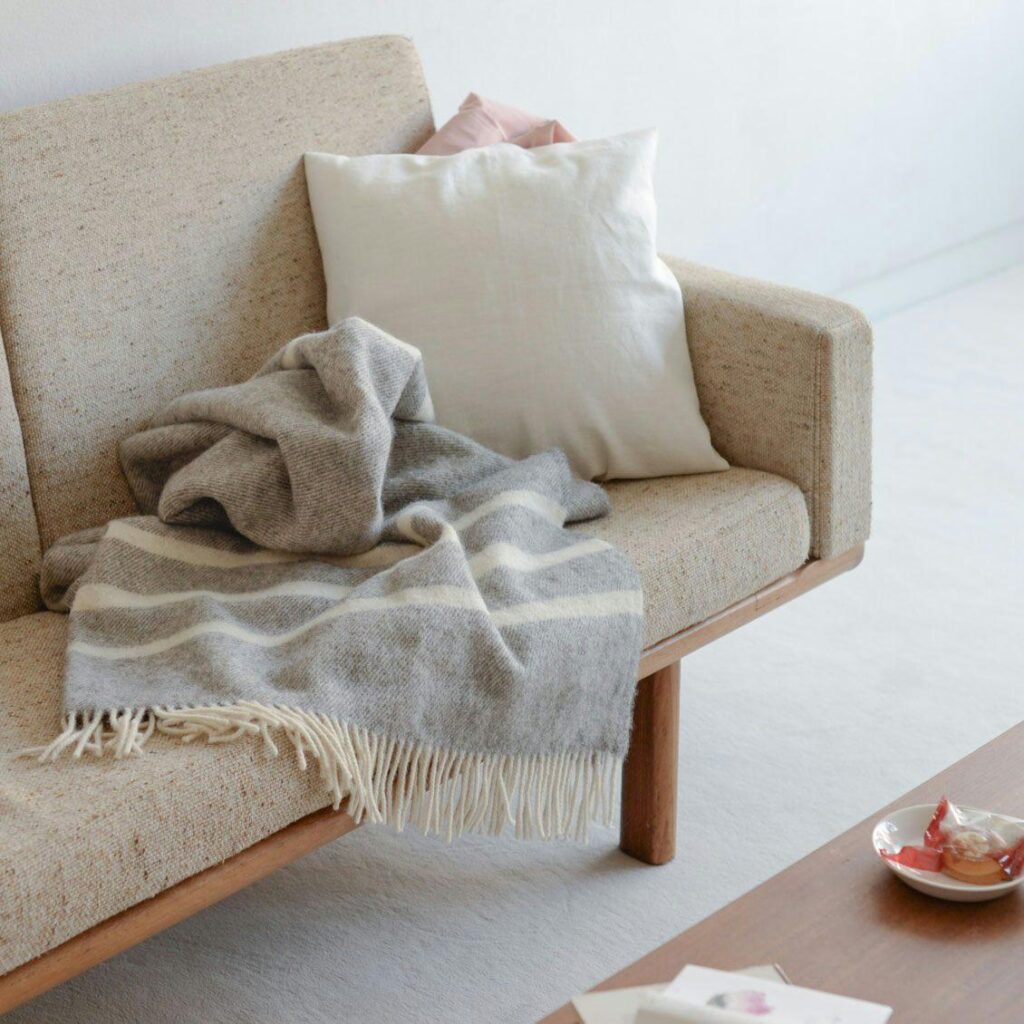
If the color palette is quiet, texture becomes much more important.
A linen curtain, wool throw, woven rug, boucle chair, cotton cushion, and wooden table can all sit within the same neutral color family while still giving the room plenty of visual interest.
Instead of asking yourself which new color the room needs, ask:
Which texture is missing?
For example, if you already have smooth upholstery and polished wood, add something chunky or woven. If the room feels visually heavy, bring in lighter linen or cotton.
That small change can make the entire space feel more relaxed.
Texture ideas for a Nordic living room
- Linen curtains
- Wool throws
- Knitted cushions
- Woven baskets
- Jute or wool rugs
- Boucle seating
- Natural wood
Choose Light Wood Furniture
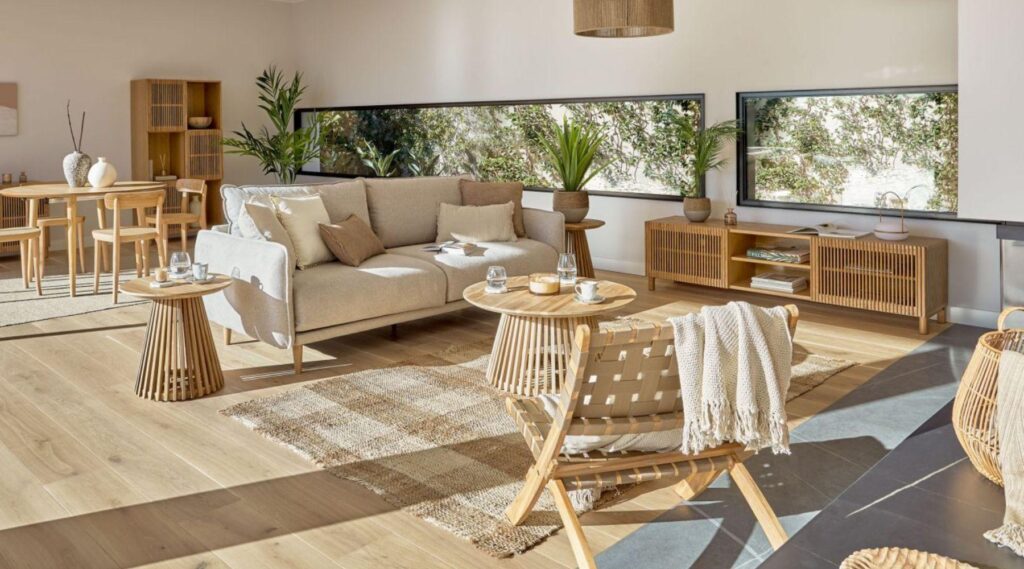
Light wood is one of the easiest ways to bring Nordic character into a living room.
Oak, ash, and birch can add warmth while keeping the overall look light. You can introduce wood through the obvious pieces, such as a coffee table or media console, or through smaller details like side tables, shelving, frames, and stools.
Do not worry about making every wood finish identical.
A room can feel more natural when there are subtle differences in grain and tone.
Tip: If you already have wooden flooring, choose one or two furniture pieces in a slightly different wood tone rather than trying to match everything exactly.
Maximize Natural Light
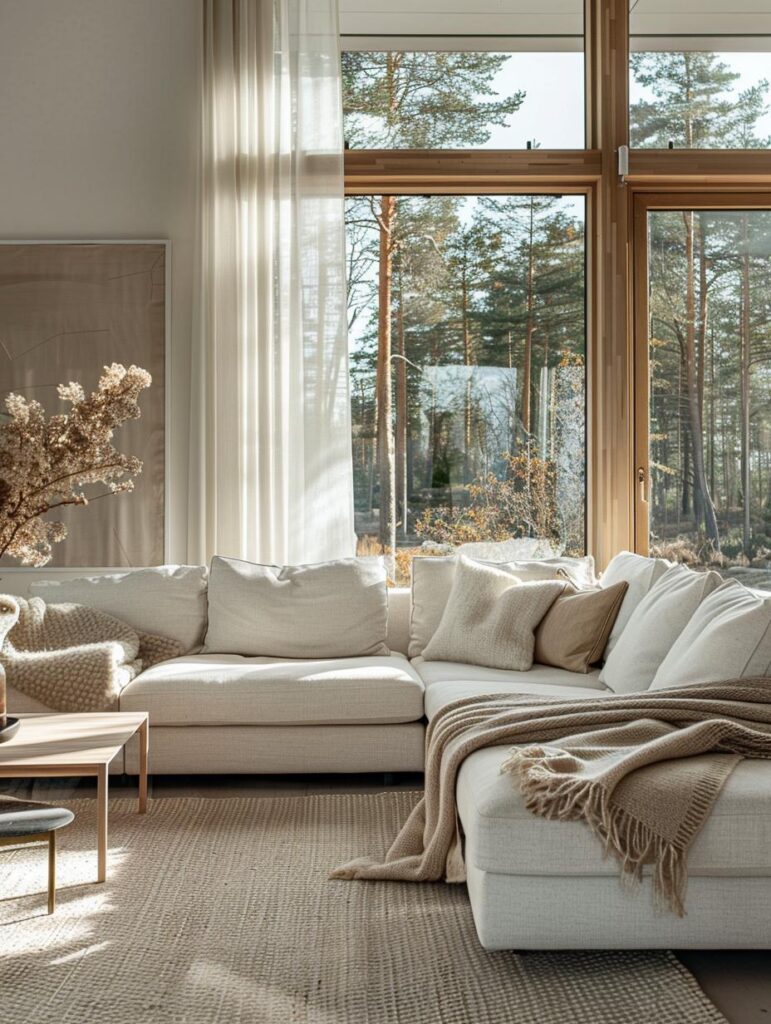
Natural light is particularly valuable in a Nordic-inspired living room.
Keep windows as visually open as possible and avoid placing bulky furniture directly in front of them. Lightweight curtains can provide softness without making the windows feel blocked.
You can also use mirrors strategically.
Place one opposite or near a window to reflect available daylight deeper into the room.
A lighter window setup
- Use sheer or lightweight curtains.
- Keep large furniture away from the brightest part of the window.
- Choose lighter wall colors.
- Use mirrors where they can reflect natural light.
- Avoid unnecessary objects covering the windowsill.
The goal is not to fill the room with more light-colored objects. It is to make better use of the light you already have.
Add a Scandinavian Sofa
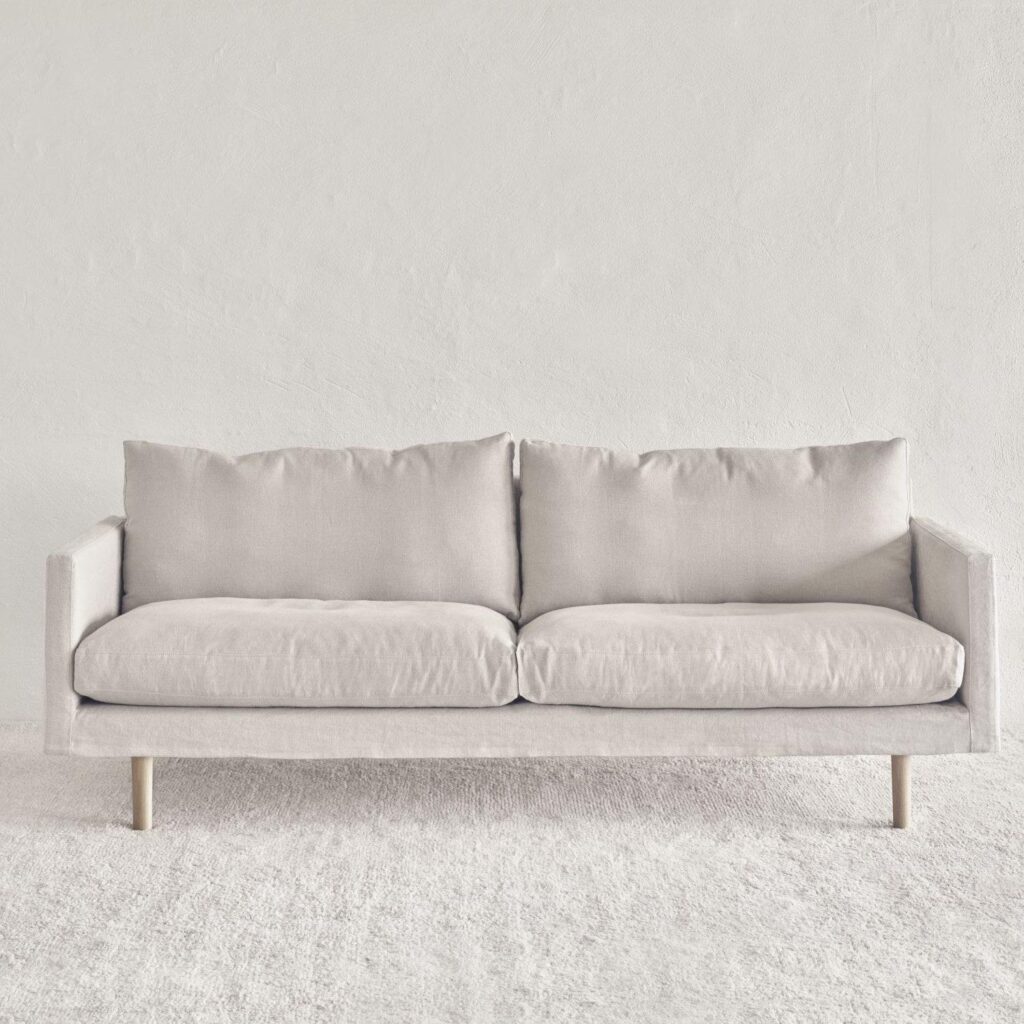
The sofa is usually one of the largest pieces in a living room, so its shape has a major effect on the overall style.
For a Nordic look, choose a sofa with a simple silhouette, comfortable proportions, and relatively understated upholstery.
Cream, light gray, beige, taupe, and soft earthy colors are easy choices.
Look for details such as:
- Clean lines
- Simple legs
- Soft upholstery
- Comfortable cushions
- A shape that does not visually overpower the room
Then add personality through the smaller pieces rather than choosing an overly decorative sofa.
Decorate with Indoor Plants
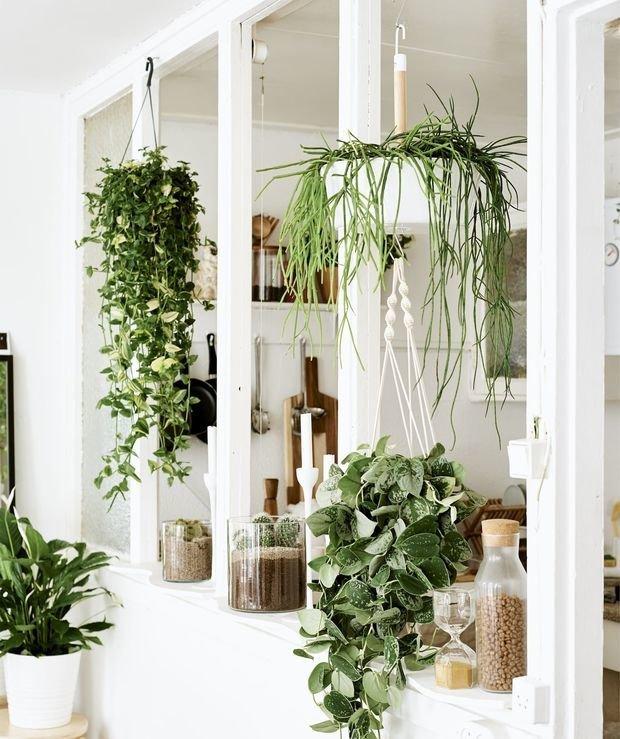
Greenery adds a natural element to a Nordic living room without disturbing the neutral palette.
A large plant can fill an empty corner, while smaller plants can work on a shelf, side table, or windowsill.
You do not need plants everywhere.
In fact, a single large plant can often make a stronger statement than several tiny pots scattered across the room.
Use plants to solve decorating problems
Empty corner: Tall floor plant
Bare shelf: Small trailing plant
Plain side table: Compact potted plant
Window area: Herb or smaller greenery
Choose simple planters in understated finishes so the plants remain the focus.
Black Accents for Interiors
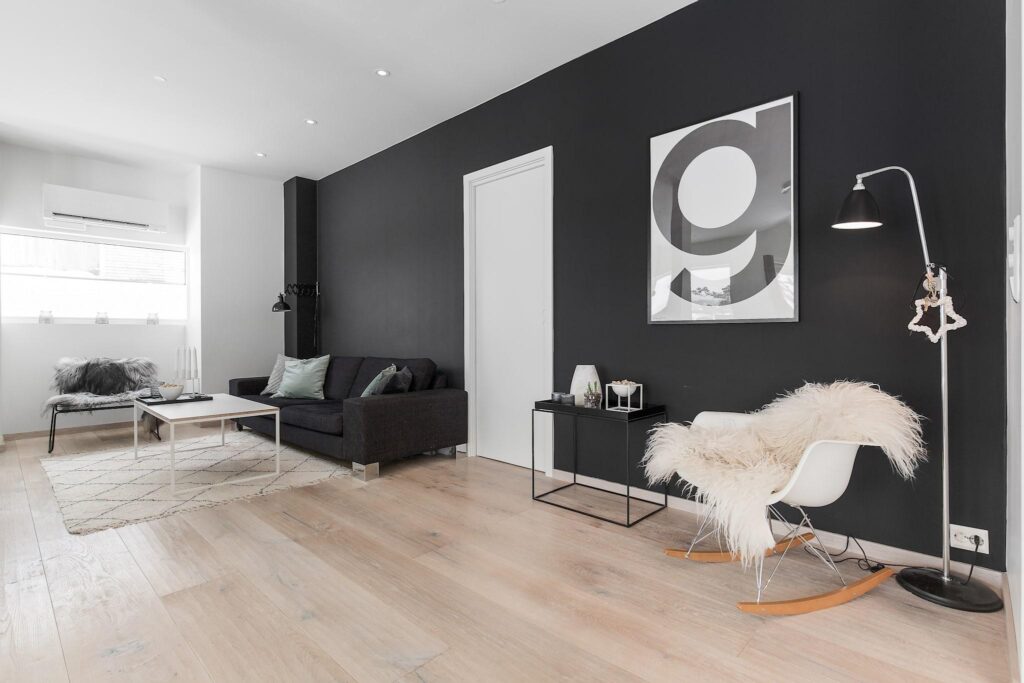
Black is useful in a Nordic living room because it gives all those soft neutrals a little definition.
You can introduce it in surprisingly small ways.
A black picture frame, table leg, pendant light, floor lamp, or coffee table can create enough contrast to keep the room from looking washed out.
The key is repetition.
If you have a black lamp on one side of the room, repeat a little black somewhere else. It could be in the artwork, furniture legs, or another small accessory.
Keep it simple and intentional
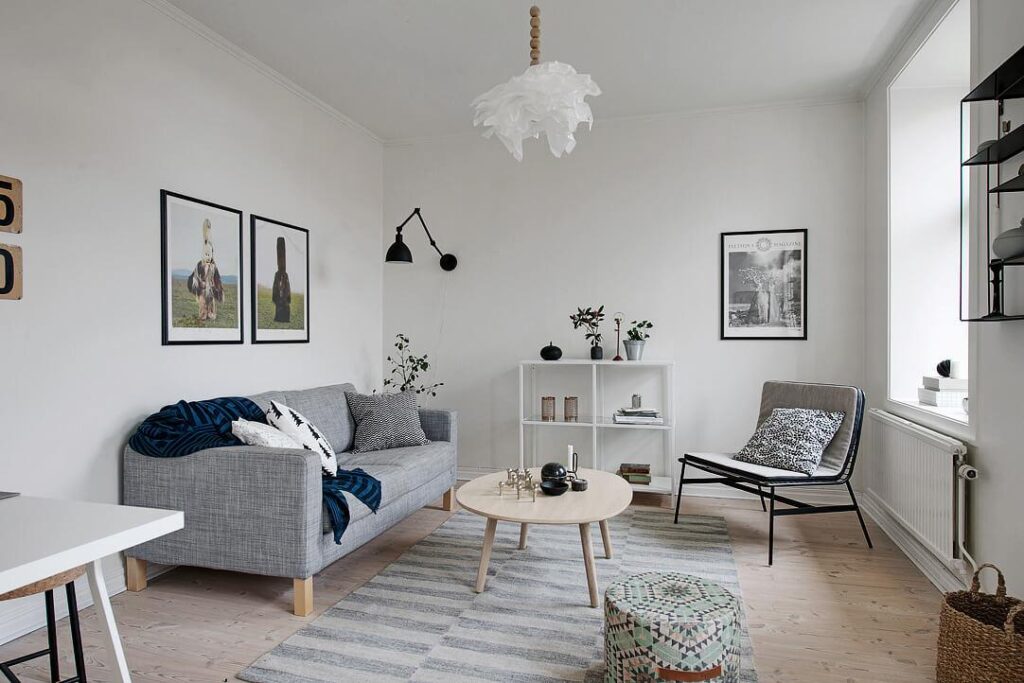
This is where Nordic design really benefits from editing.
You do not need to decorate every shelf, table, wall, and corner.
Instead, give the pieces you love some room to breathe.
Before adding another decorative object, ask:
Does it serve a purpose? Do I actually like it? Does it add something the room is missing?
If the answer to all three is no, leave the space empty.
That empty area is not unfinished. It is part of the design.
Add a Rug Area
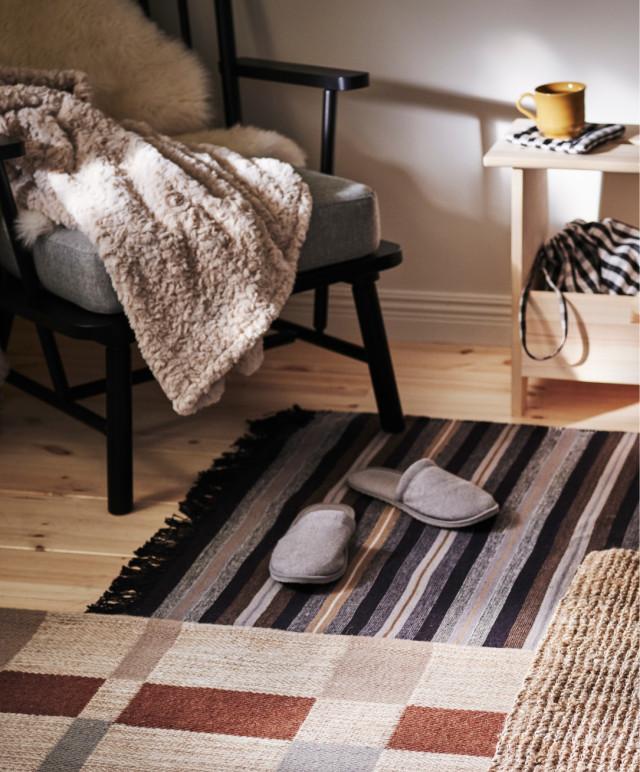
A rug can visually pull the entire seating arrangement together.
In a large living room, it helps define where the sofa and chairs belong. In a smaller space, it can make the seating area feel more finished and comfortable.
For a Nordic look, consider wool, jute, cotton, or another natural-looking material.
Neutral rugs work particularly well, but you can also use a subtle pattern if the rest of the room is very simple.
One small placement tip
Try to make sure at least the front legs of the main seating pieces sit on the rug.
This usually creates a more connected arrangement than placing a small rug completely underneath the coffee table.
Add a Functional Open Shelving
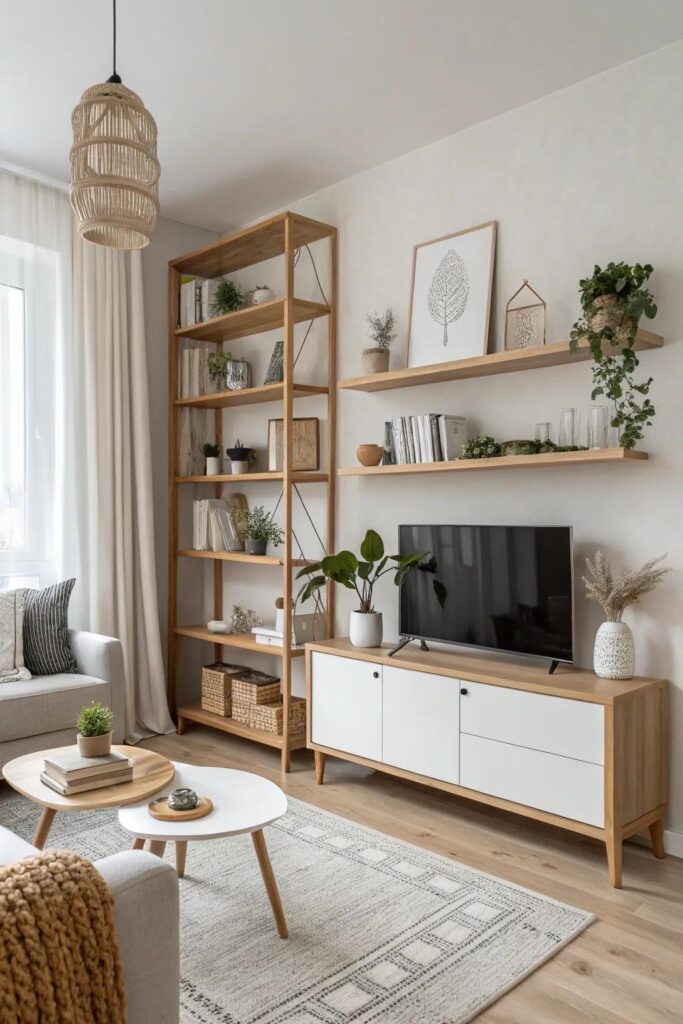
Open shelving can be both practical and decorative, but it needs editing.
Use it to display the things that deserve to be seen rather than treating every shelf as storage.
Good options include:
- A few favorite books
- Handmade ceramics
- Small plants
- Framed artwork
- Wooden objects
- A small collection of meaningful pieces
Leave some empty space between groups.
Things you love
Similar objects together
Remove visual clutter
Fireplace Focal Point
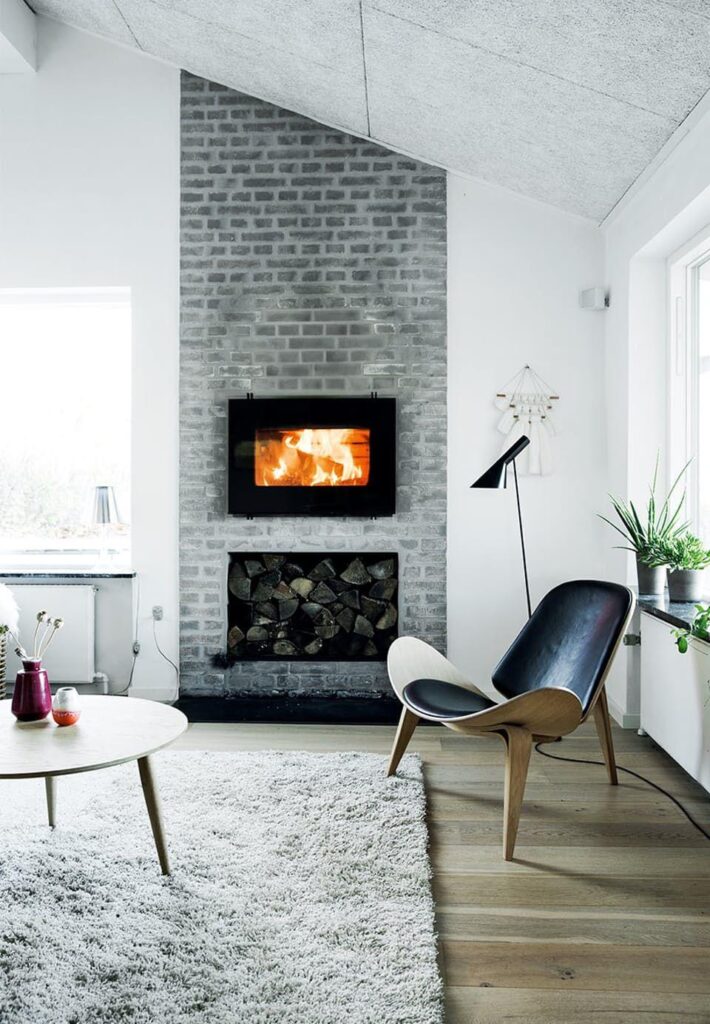
If your living room has a fireplace, you already have a natural focal point.
Rather than competing with it using lots of wall decor, let the fireplace remain the star.
A simple wooden mantel, a piece of artwork, a few ceramics, or even an intentionally empty surface can work beautifully.
The surrounding furniture should help direct attention toward it.
For a particularly rustic Nordic feel, natural stone or textured finishes can add warmth and character.
Mix Modern and Vintage Pieces
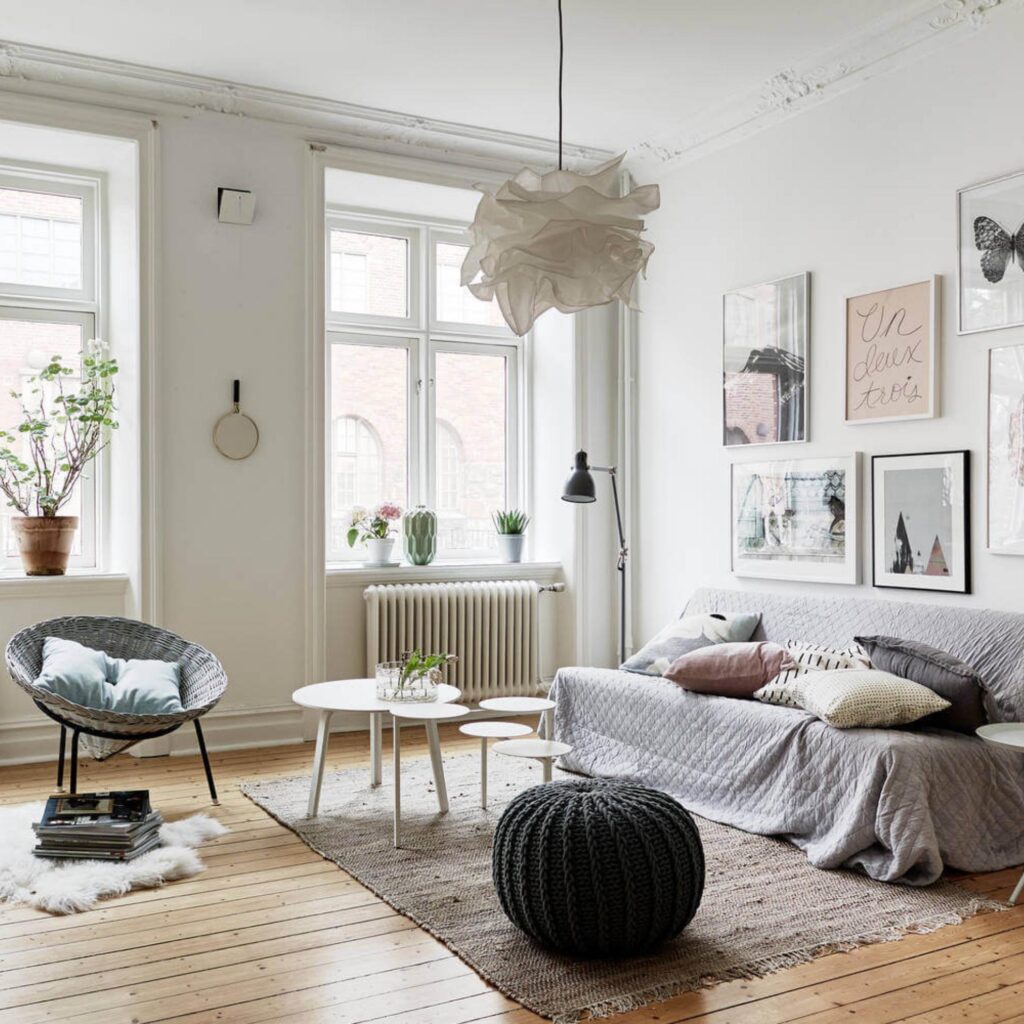
This is one of my favorite ways to stop a Scandinavian living room from feeling too perfect.
Pair a clean-lined modern sofa with a vintage side table. Place contemporary lighting above an older wooden cabinet. Add a traditional-looking chair to an otherwise simple room.
The contrast gives the space some history.
Try the 80/20 approach
80%: Keep the room simple, modern, and cohesive.
20%: Introduce vintage, antique, handmade, or unusual pieces.
You do not need an entire vintage collection. One memorable piece can be enough to give the room personality.
Sofa, lighting, clean-lined furniture
Table, chair, cabinet or artwork
Let the contrast between old and new become part of the room’s personality.
Focus on Comfort and Functionality
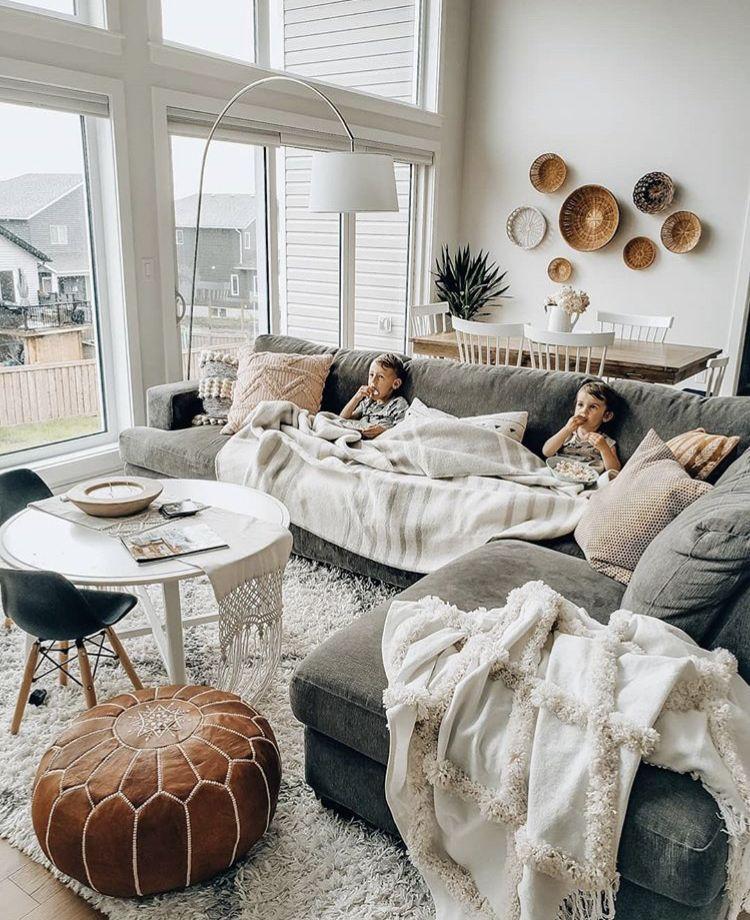
At the heart of Nordic living room design is a very simple idea: the room should actually work for the people living in it.
A beautiful sofa is not useful if there is nowhere to put your coffee. A gorgeous coffee table is not helpful if it blocks the walking path. A perfectly styled shelf is not practical if everyday items have nowhere to go.
Before you buy another decorative piece, look at how the room functions.
Ask yourself:
- Can everyone sit comfortably?
- Are the main walkways clear?
- Is there a table within easy reach of the seating?
- Is there enough storage for everyday items?
- Can you use the lighting comfortably in the evening?
- Does the layout encourage conversation?
The best Nordic living rooms are not empty showroom spaces. They are comfortable, practical rooms that happen to look beautifully considered.
The Nordic Living Room Formula
You do not need to use every idea from this list. Start with the elements that suit your existing room and build from there.
Start with warm whites, cream, beige, and soft gray.
Use oak, ash, birch, or other warm wood finishes.
Add wool, linen, cotton, jute, and woven pieces.
Use plants to add natural color and softness.
Repeat small black details around the room.
Keep meaningful pieces and leave breathing room.
Use a few vintage pieces for character.
Make the layout practical for everyday living.
Before You Finish the Room
Stand back and look at the living room as a whole.
Does the furniture have enough breathing room?
Are the natural materials visible?
Is there enough texture?
Have you added a little contrast?
Does the room feel comfortable enough to actually live in?
A Nordic living room does not need to look perfectly styled. The strongest spaces combine simple furniture, natural materials, soft light, useful storage, and a few personal pieces.
Keep the foundation calm, add texture where the room needs it, and leave enough empty space for the design to breathe.
That balance is what gives Nordic interiors their relaxed character.