
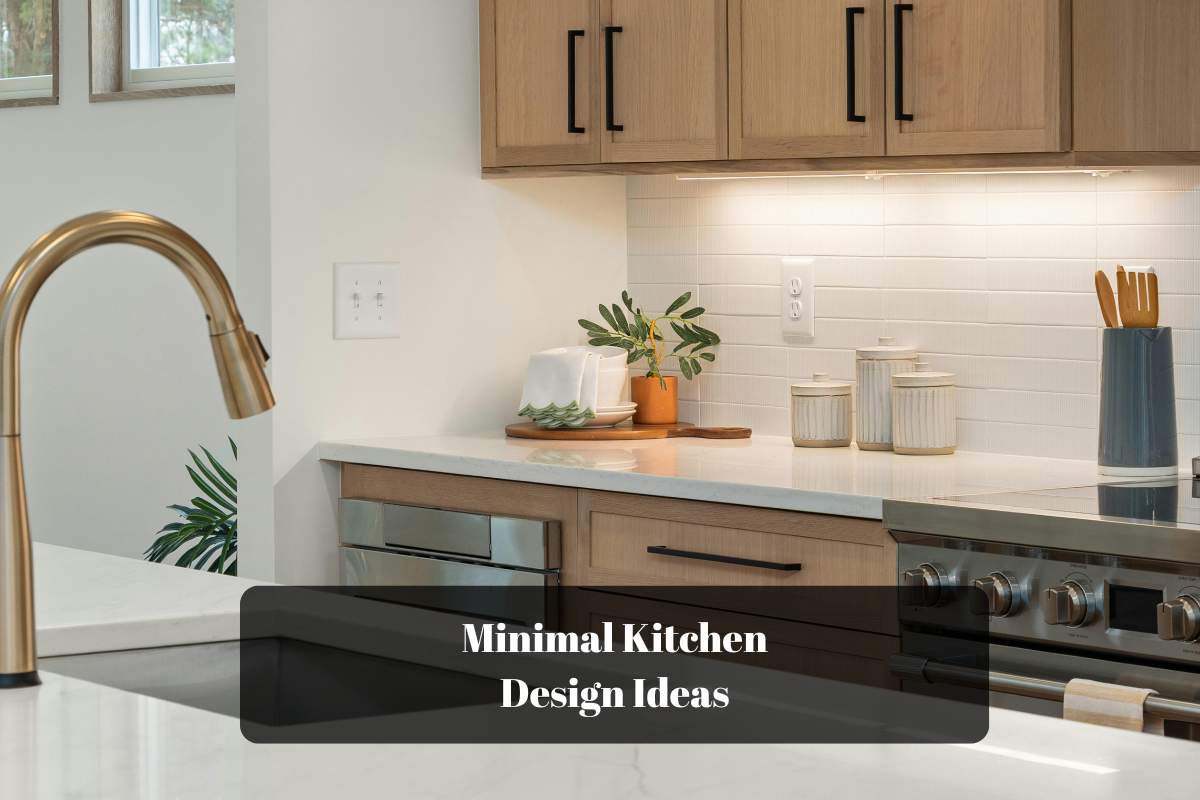
A minimal kitchen is not about having an empty countertop and almost nothing in the cabinets. It is about making the space feel calm by being intentional about what you see, what you store, and how the different materials work together.
Simple cabinet fronts, a restrained color palette, smart storage, and a few natural materials can make a kitchen feel much more organized. But there is an important balance to find.
If you remove too much warmth, the room can start to feel cold. If you add too many decorative pieces, you lose the clean look.
The ideas below show different ways to create a minimal kitchen while keeping it practical, comfortable, and personal.
Practical Guide: The 5 Rules of a Minimal Kitchen
Choose simple cabinet fronts and restrained hardware.
Give appliances and everyday items a proper home.
Stick to a few connected colors and materials.
Use wood, stone, greenery, or natural textures.
An uncluttered countertop is part of the design.
White-on-White Minimal Kitchen
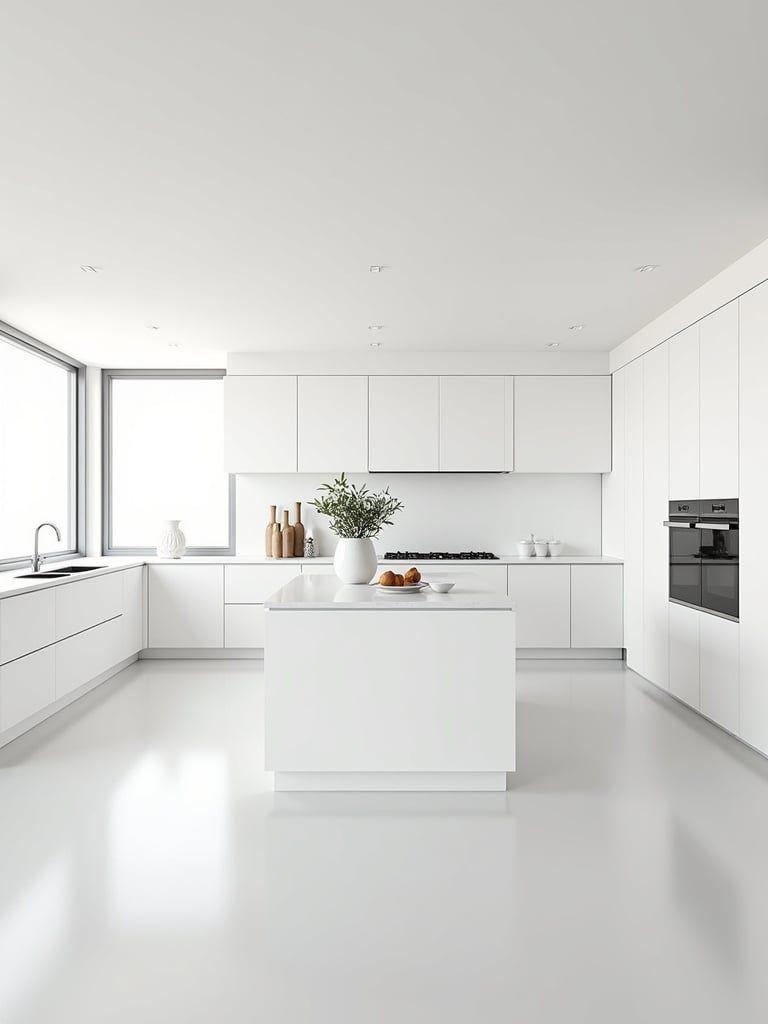
An all-white kitchen is one of the simplest ways to create a clean minimal look, but using exactly the same white everywhere can make the room feel flat.
The trick is to create subtle variation.
Try combining white cabinets with a slightly different white countertop, a textured backsplash, light flooring, or soft linen window treatments. Small differences in texture create depth without adding another strong color.
You can also introduce a warm element, such as pale oak stools or a wooden cutting board. It only takes a few natural details to keep the kitchen from feeling overly clinical.
A simple white-on-white formula
White cabinets + light countertop + subtle texture + one warm accent
If your kitchen receives limited natural light, test your whites during the day and under your evening lighting. Some whites can appear noticeably cooler or warmer depending on the light.
Warm Wood Cabinet Kitchen
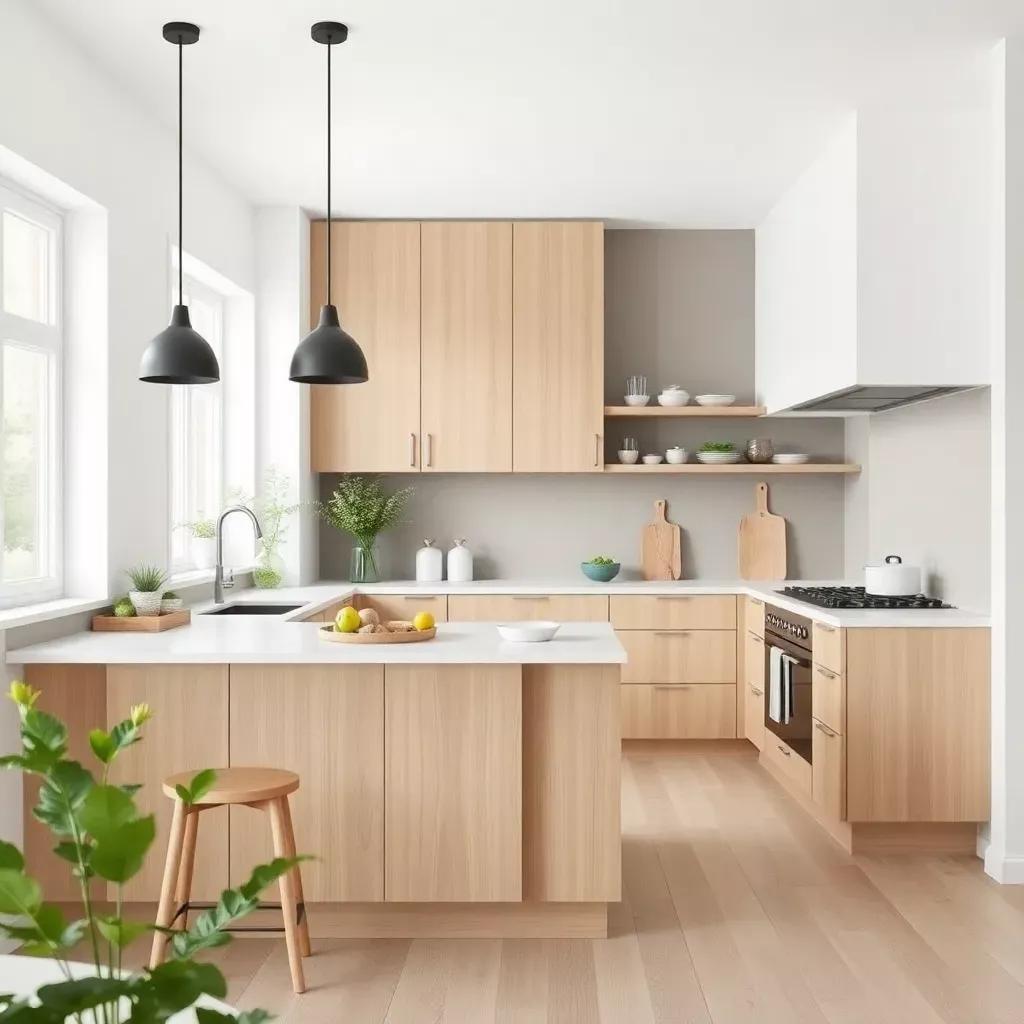
Minimalism does not have to mean white cabinets.
Natural wood can give a minimalist kitchen a much warmer personality while keeping the design simple. Light oak, ash, and maple work particularly well when you want visible grain without a heavy or ornate appearance.
The key is to let the wood be the feature rather than surrounding it with lots of decorative details.
A clean wood cabinet paired with a simple stone countertop can be enough. You can repeat the same wood tone through stools, open shelves, or flooring so the room feels connected.
One useful rule: if you already have a strong wood grain, keep the rest of the finishes quiet.
Handleless Cabinet Design
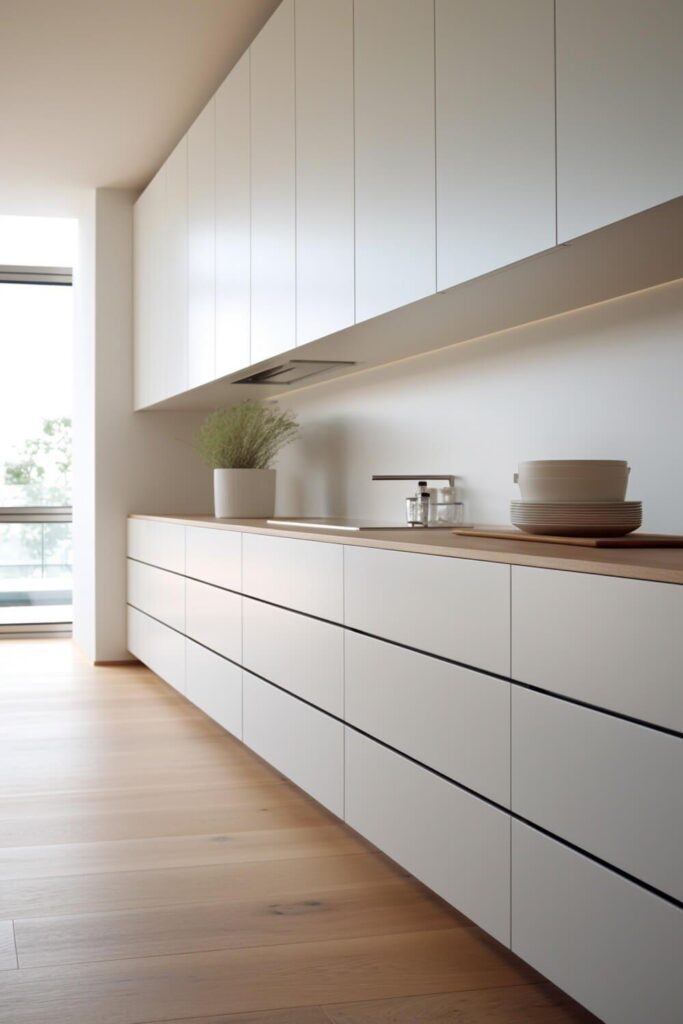
Cabinet hardware may be small, but a kitchen can contain dozens of handles. Removing them creates longer, uninterrupted lines and gives the cabinetry a cleaner appearance.
You can achieve this with integrated finger pulls, recessed channels, or push-to-open mechanisms.
Handleless cabinets work particularly well in modern kitchens where you want the cabinetry to read as one continuous surface rather than a collection of individual doors and drawers.
There is a practical side to consider too. Think about how the cabinets will be used every day, how easy they are to grip, and whether fingerprints will be noticeable on the chosen finish.
Matte Black Minimal Kitchen
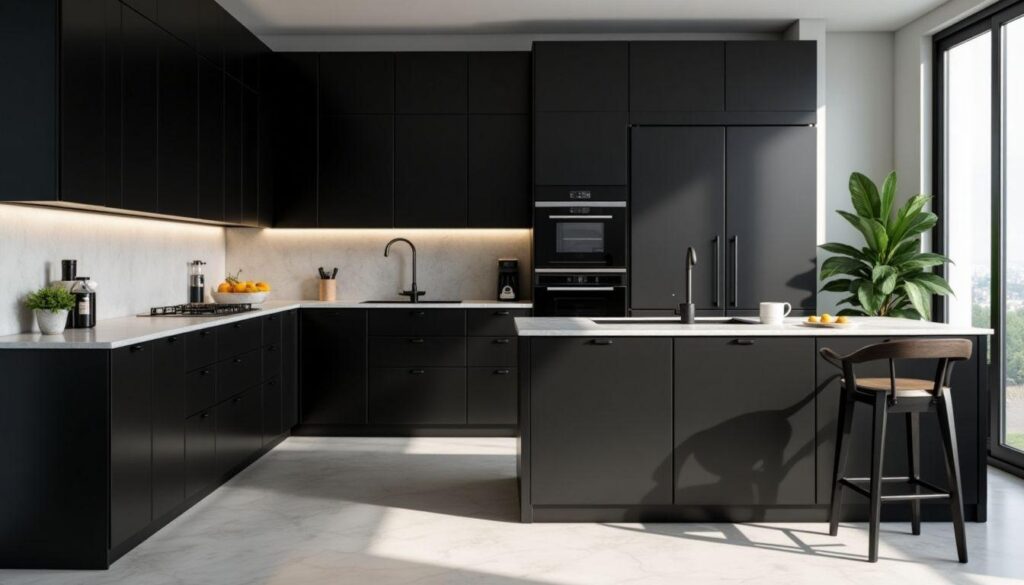
Black cabinetry can make a minimal kitchen feel bold without requiring elaborate decoration.
Matte finishes are especially effective because they have a softer appearance than highly glossy surfaces.
But a kitchen covered entirely in dark finishes can feel heavy, particularly in a smaller or darker room.
Balance is the answer.
Pair matte black cabinets with a light countertop, natural wood, pale flooring, or warm lighting. You can also use black only on the lower cabinets or island instead of covering the entire kitchen.
Let black provide the contrast.
Use counters or walls to open up the palette.
Wood can soften the overall effect.
Open Shelving Instead of Upper Cabinets
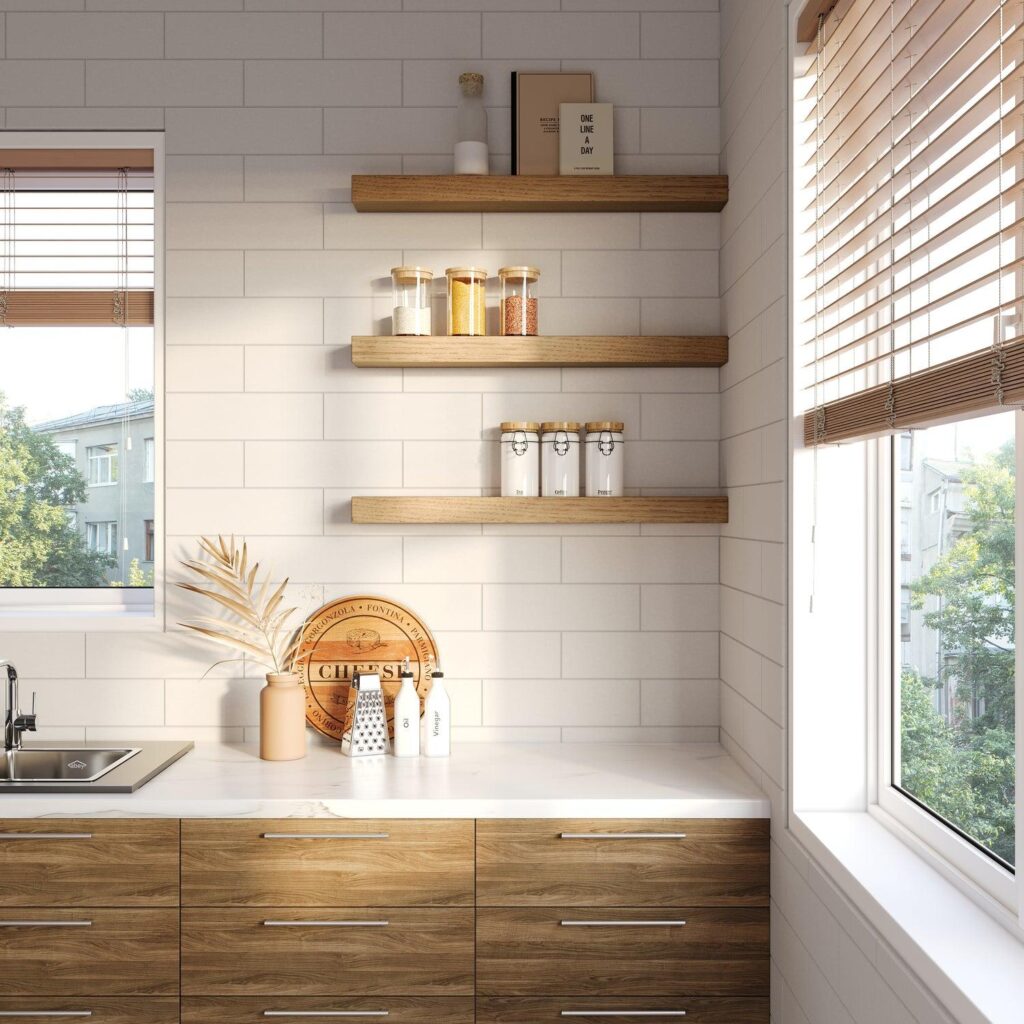
Replacing some upper cabinets with floating shelves can make a kitchen feel more open. It also gives you a place to display everyday dishes, glasses, ceramics, cookbooks, or a few plants.
But open shelving comes with a tradeoff: everything stored there becomes part of the room’s visual design.
If you like a tidy look, keep the shelves edited. A few useful objects with similar colors will usually look calmer than a shelf packed with miscellaneous items.
Open Shelving vs. Closed Storage
The best minimalist kitchen may actually use both.
Hidden Storage Solutions
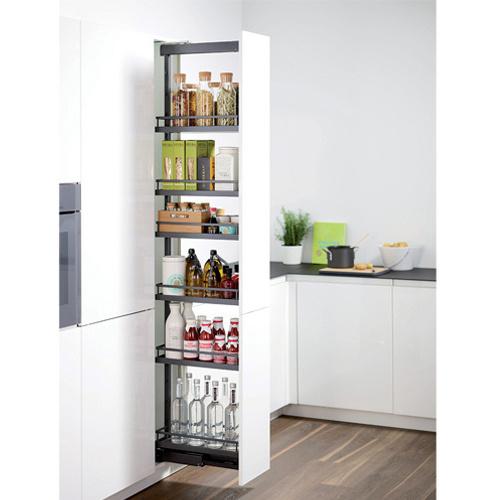
Minimal design does not mean giving up storage. In fact, smart storage is one of the easiest ways to make a kitchen look minimal.
Deep drawers can keep pots and pans organized. Pull-out pantries can make narrow spaces useful.
Appliance garages can hide coffee makers, toasters, or other countertop appliances when they are not being used.
Tall cabinets can also absorb a surprising amount of storage without spreading visual clutter across the room.
The goal is not to hide everything. Frequently used items should still be easy to reach.
Keep it easy to reach.
Store it in an organized cabinet or drawer.
Find a hidden home for it.
Neutral Color Palette
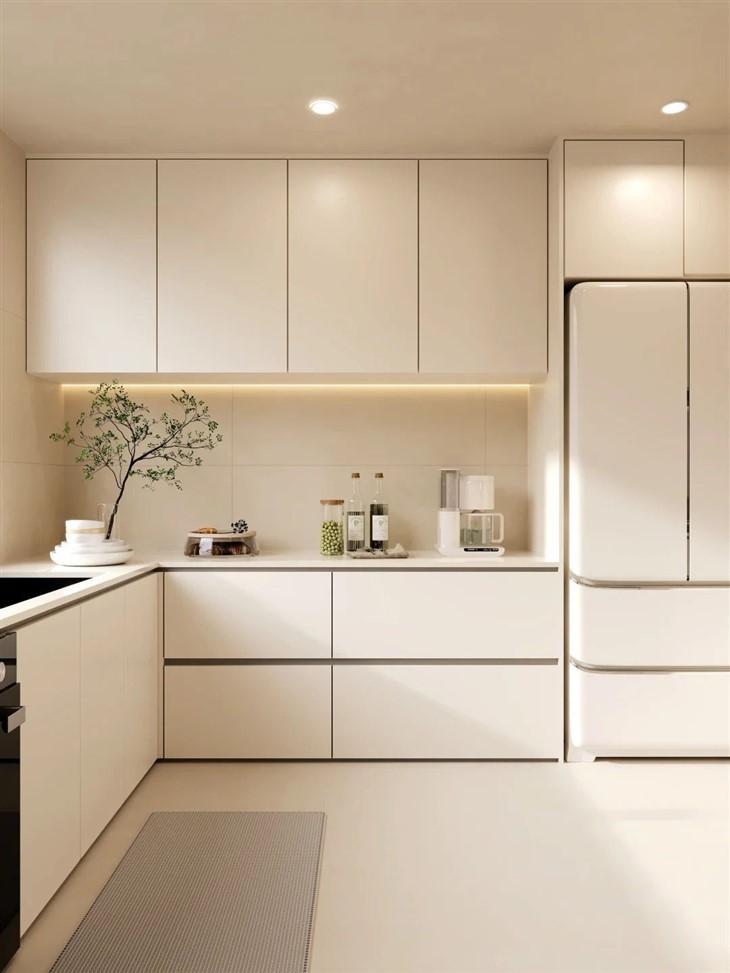
Minimal kitchens do not have to be white. Cream, beige, taupe, soft gray, greige, and muted earthy colors can all create a calm foundation.
The important part is making sure your neutrals work together.
For example, a warm white cabinet may pair naturally with light oak and a creamy countertop. Adding a blue-gray backsplash could introduce a cooler note that feels disconnected.
Instead of choosing each finish separately, look at the entire palette together.
Warm white, cream, beige, or soft gray.
Wood or another natural material.
Black, charcoal, or another restrained accent.
Large Kitchen Island with Clean Lines
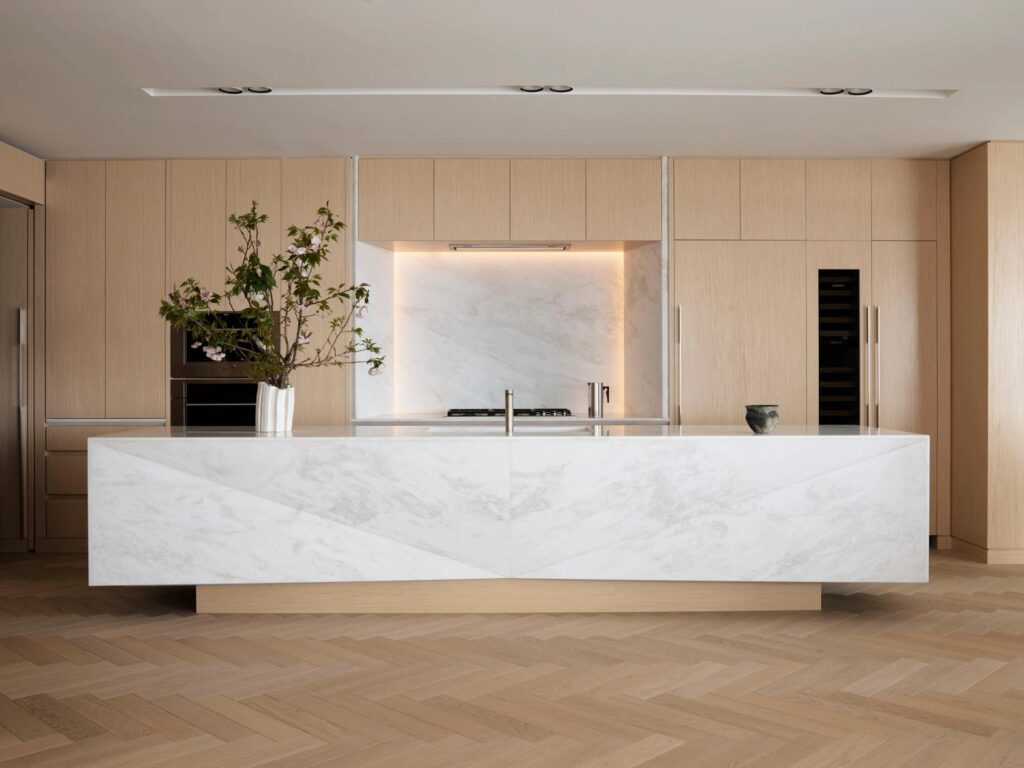
A large island can become the visual anchor of a minimalist kitchen, but size alone does not make an island successful.
Think about what you actually need from it.
Do you want extra prep space? Seating? Drawers for pots and pans? A sink? Appliance storage?
Once those functions are clear, the shape can remain simple. A clean rectangular island with a streamlined countertop often works better than an island covered with unnecessary detailing.
A large island should earn its footprint by doing more than simply filling the center of the room.
Integrated Appliances
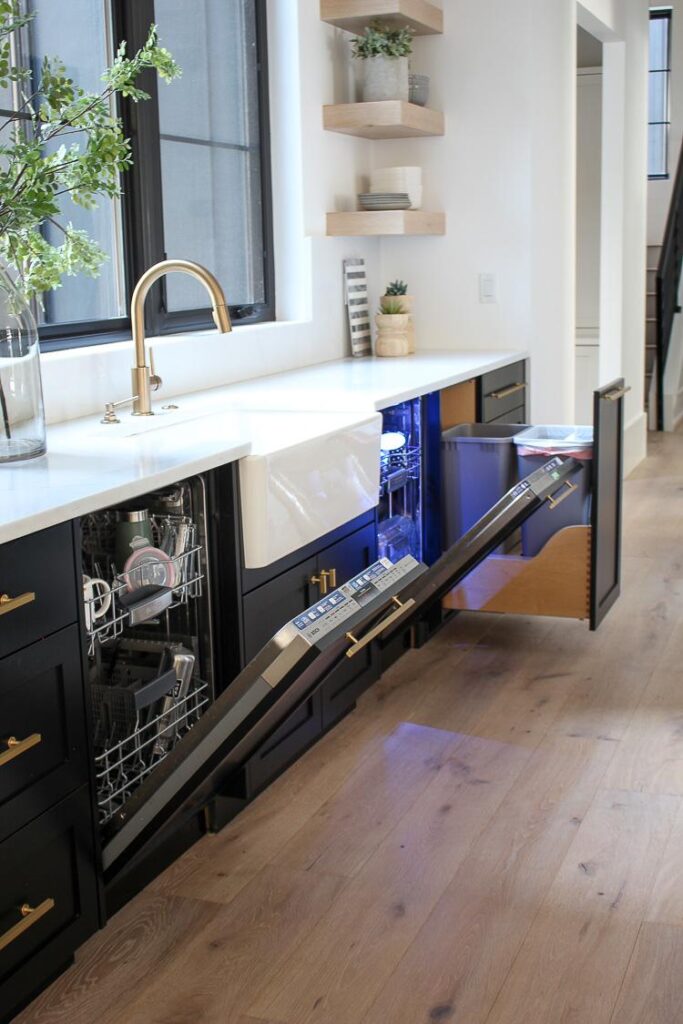
Appliances can interrupt an otherwise clean cabinet wall. Integrated designs reduce that visual break by allowing refrigerators, dishwashers, and other appliances to sit behind matching cabinet panels.
This creates a more continuous appearance, especially in kitchens where cabinetry is the main visual feature.
You do not necessarily need to integrate every appliance. Start with the ones that create the biggest visual interruption.
For example, a large stainless steel refrigerator may stand out more than a small countertop appliance. If your goal is a calmer cabinet wall, tackle the most noticeable interruption first.
A useful approach:
Identify the visual interruption → Hide or integrate it → Keep the remaining appliances visually consistent.
Simple Pendant Lighting
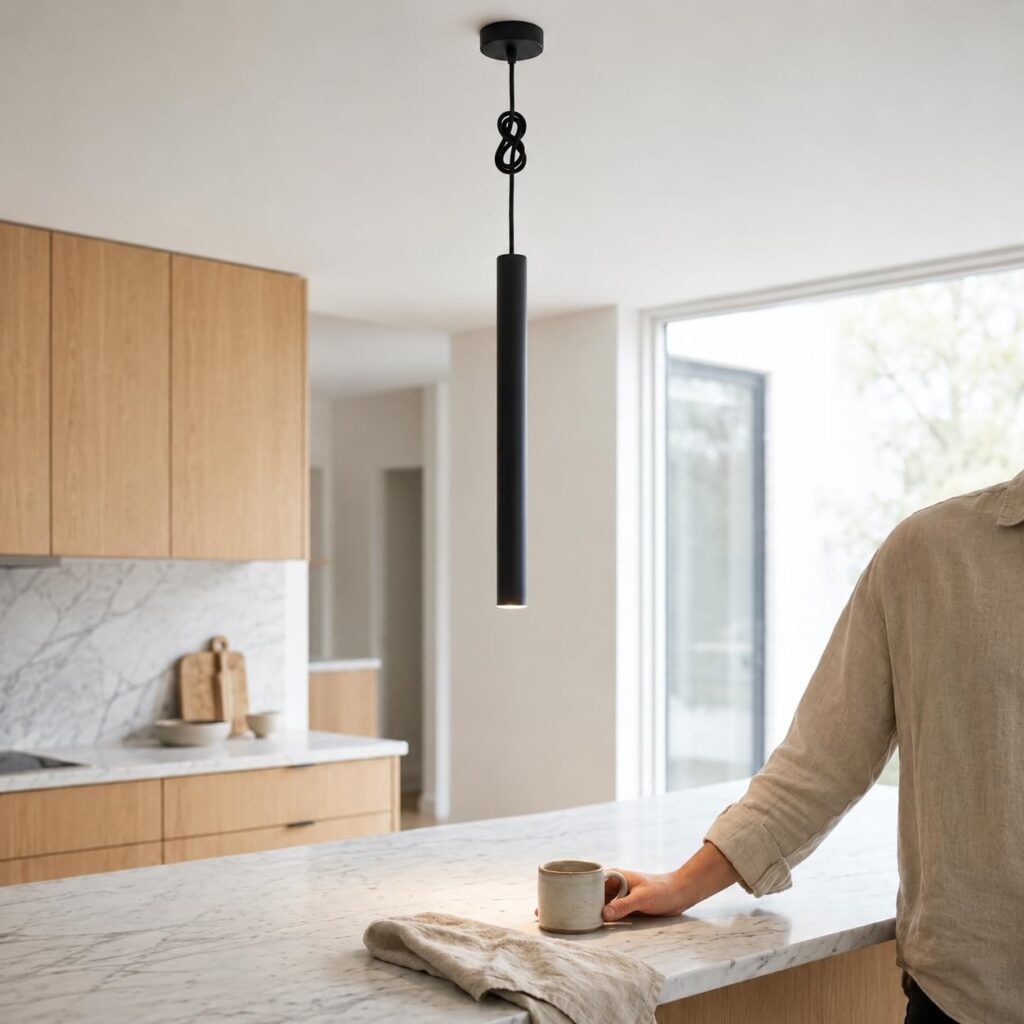
Lighting can easily become too decorative in a minimalist kitchen.
Instead of choosing several statement fixtures, consider one strong pendant over a small island or two simple pendants over a larger one.
Glass, matte black, brushed metal, and other simple finishes can work well because they add shape without competing with the cabinetry.
But decorative lighting is only one layer.
A practical minimalist kitchen still needs good task lighting for counters, cooking areas, and sinks. Under-cabinet lighting can provide useful illumination without adding much visual clutter.
Light where you prep and cook.
Create comfortable overall illumination.
Let the pendant add shape without taking over.
Natural Stone Countertops
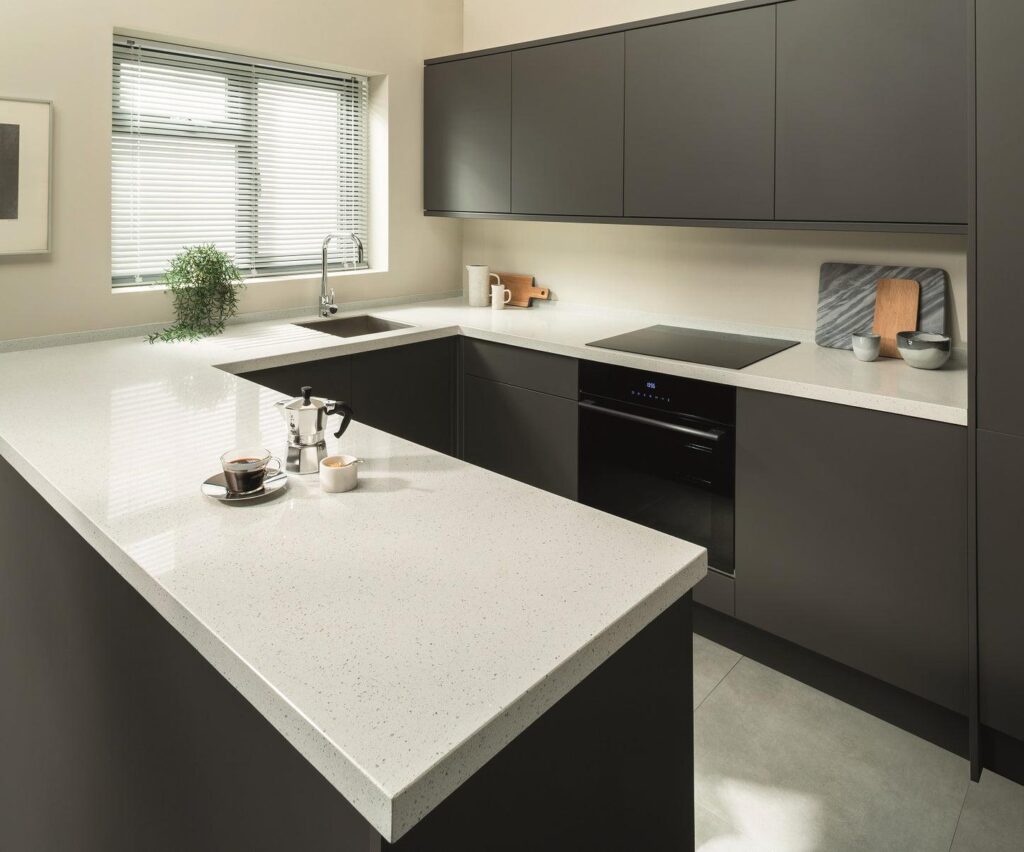
Natural stone can add exactly the kind of visual interest a minimalist kitchen needs.
Instead of relying on decorative objects, let the countertop provide texture through its natural veining and variation. Marble, quartzite, soapstone, and other stones can each create a different character.
If the stone has strong movement, keep the cabinetry and backsplash relatively quiet. If the stone is subtle, you have more flexibility with the surrounding finishes.
This is one of the easiest ways to make a minimal kitchen feel interesting without adding more stuff.
Minimal Decor with Greenery
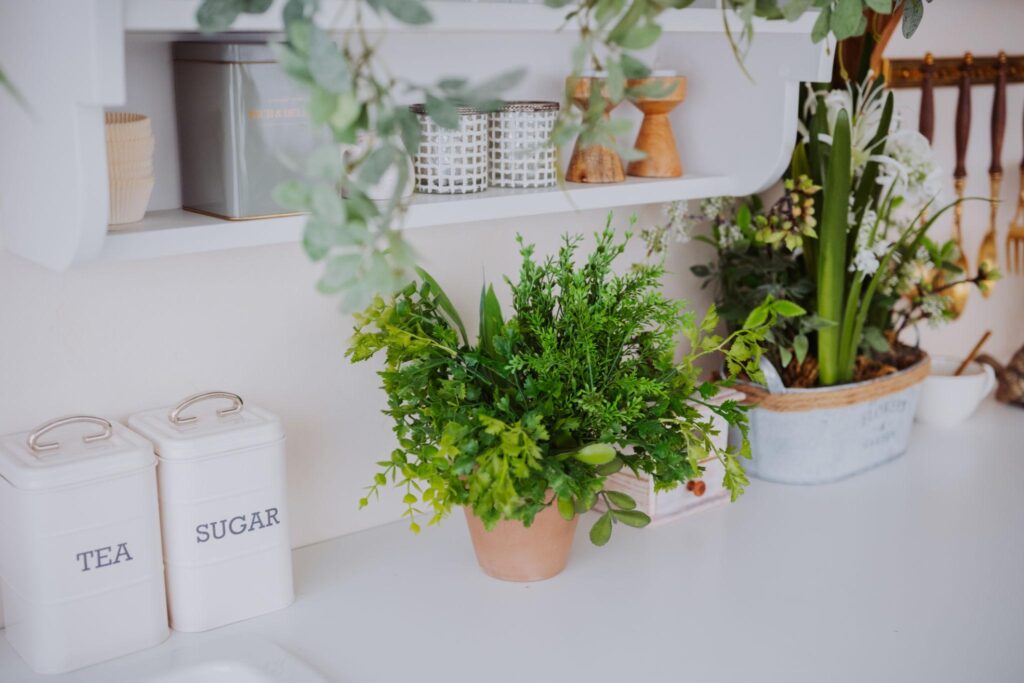
A minimal kitchen should still feel like someone lives there.
A small herb garden, a ceramic vase, a wooden cutting board, or a single plant can bring warmth without creating visual noise.
The trick is editing.
Instead of decorating every open surface, choose a few pieces that are either useful, beautiful, or connected to the natural materials already used in the kitchen.
A plant or small herb garden.
Something you actually use.
Wood, ceramic, linen, or another tactile material.
Then leave some space empty.
That empty space is not unfinished. It is what allows the other details to stand out.
Floor-to-Ceiling Cabinetry
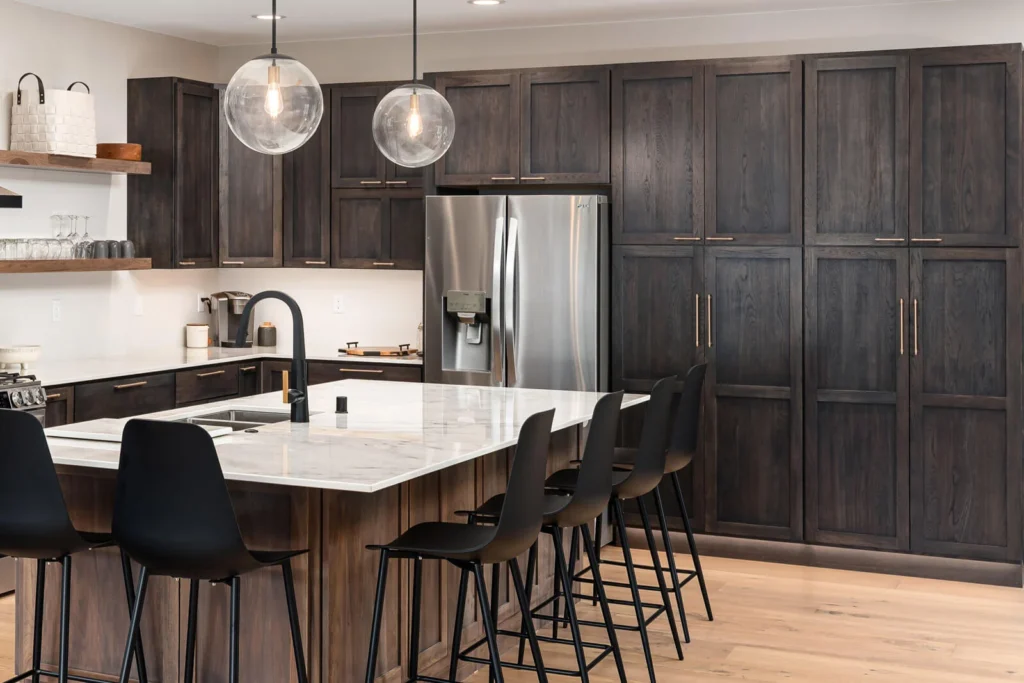
If you are short on storage, look up.
Floor-to-ceiling cabinetry uses vertical wall space for pantry storage, appliances, dishes, and less frequently used kitchen items.
It can also create a more built-in appearance because there are fewer awkward gaps above the cabinets.
For everyday items, keep the most frequently used things at comfortable reach. Higher sections can be reserved for items you use less often.
This approach can be especially useful if you want to keep countertops clear. Instead of storing small appliances and supplies in visible places, tall cabinetry gives them a dedicated home.
The goal is not simply to add more cabinets.
It is to concentrate storage so the rest of the kitchen can stay visually quiet.
How to Create a Minimal Kitchen That Still Feels Warm
A minimalist kitchen should make everyday life easier, not make you afraid to put a coffee maker on the counter.
The most successful spaces balance clean design with real-life function. You can have plenty of storage, useful appliances, comfortable seating, and personal touches while still keeping the overall room calm.
Before you finish your design, run through this checklist:
Simple fronts, restrained hardware, consistent finishes.
Hide clutter, organize drawers, and use vertical space.
Keep your main colors and materials connected.
Keep useful or meaningful pieces and remove the rest.
Layer practical lighting with one simple visual statement.
Leave some countertop and wall space intentionally empty.
The goal is not to make your kitchen look like nobody uses it. It is to make everyday life easier to see, use, and enjoy.
A truly minimal kitchen can have everything you need. It simply has very little you do not need to look at.