
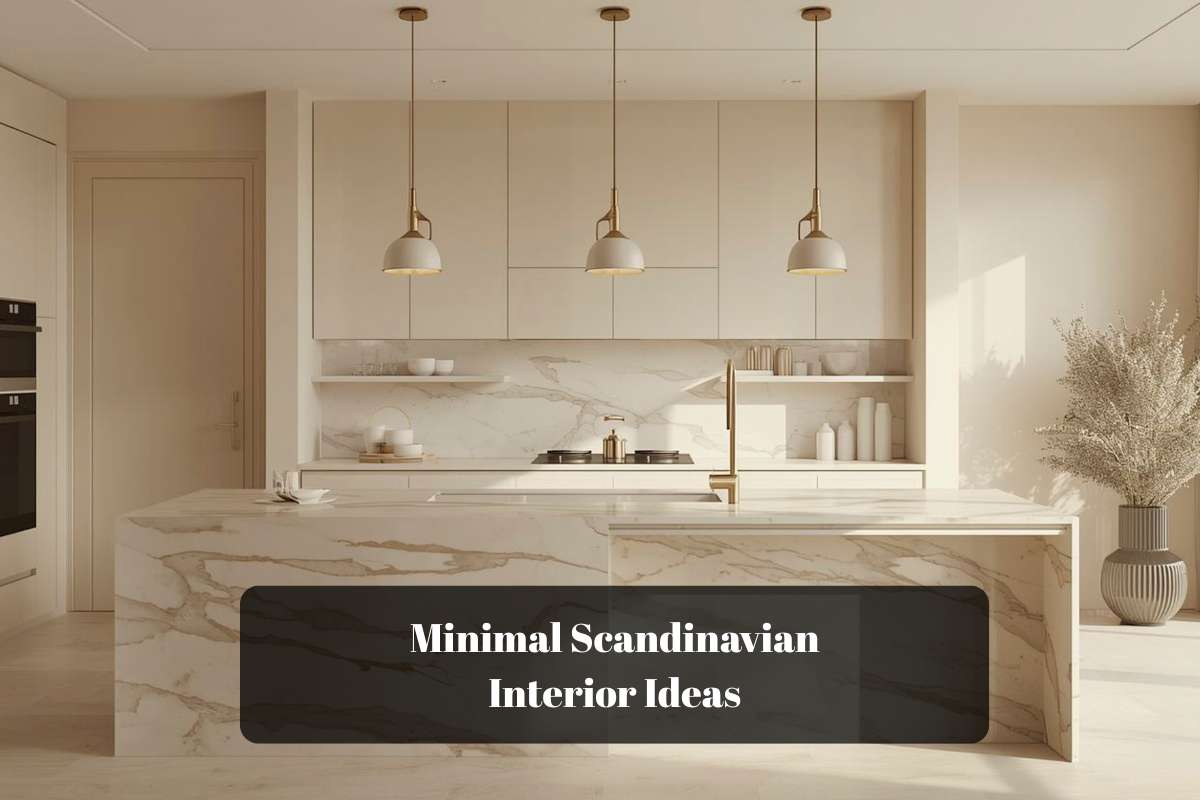
Minimal Scandinavian interiors are not about making your home look empty.
The idea is to create a space where furniture has room to breathe, everyday clutter stays under control, and natural materials add warmth without overwhelming the room.
A soft neutral palette, light wood, simple furniture, cozy textures, and plenty of natural light can give your home that relaxed Scandinavian feeling.
These Minimal Scandinavian Interior Ideas will help you create the look while keeping your home comfortable and practical.
1. Embrace a Neutral Color Palette
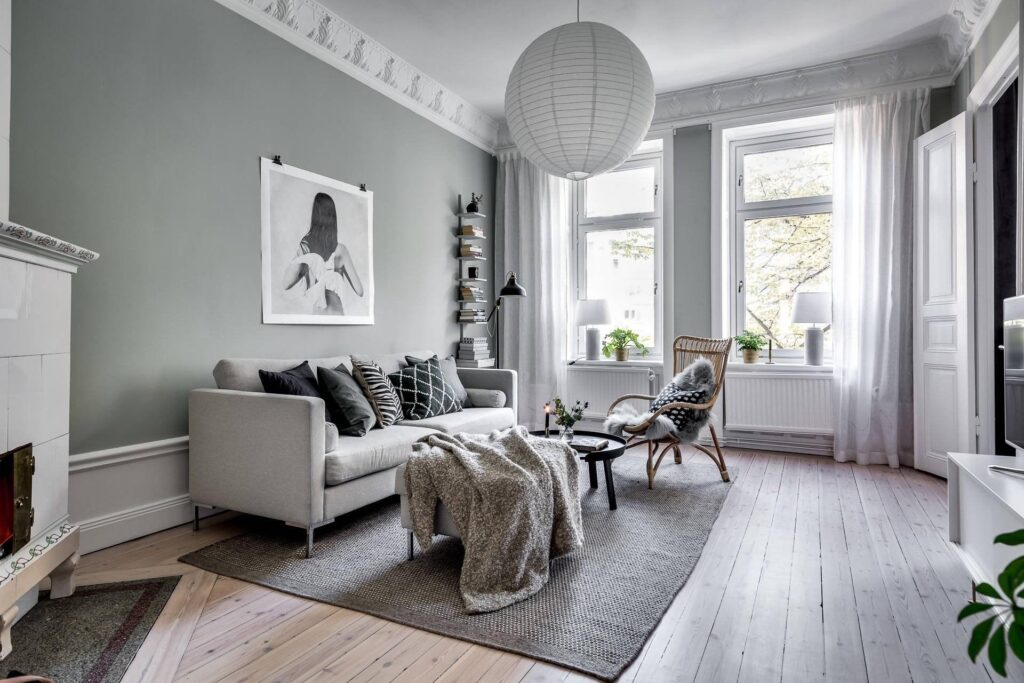
A calm color palette is one of the easiest places to start. Instead of filling the room with several competing colors, build the foundation around white, cream, beige, soft gray, and other gentle neutrals.
You can then use wood and natural textures to keep the room from feeling flat. The goal isn’t to make everything the exact same shade, but to let the colors work quietly together.
Walls & larger surfaces
Furniture & textiles
Wood & accessories
2. Choose Furniture with Clean Lines
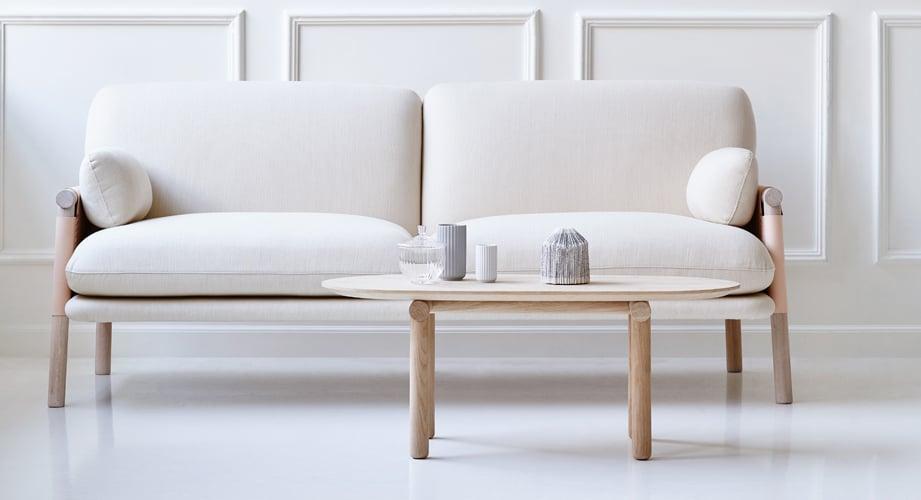
Scandinavian furniture tends to have simple shapes rather than lots of decorative details. Look for sofas with clean profiles, streamlined tables, simple chairs, and storage pieces that don’t visually dominate the room.
Furniture with raised legs can also help more of the floor remain visible, which gives the room a lighter appearance.
You don’t need to replace everything. Sometimes changing one bulky piece for a simpler design can make the whole room feel more open.
Clean, uncomplicated shapes
Raised legs can create airiness
Choose function over decoration
3. Let Natural Light Take Center Stage
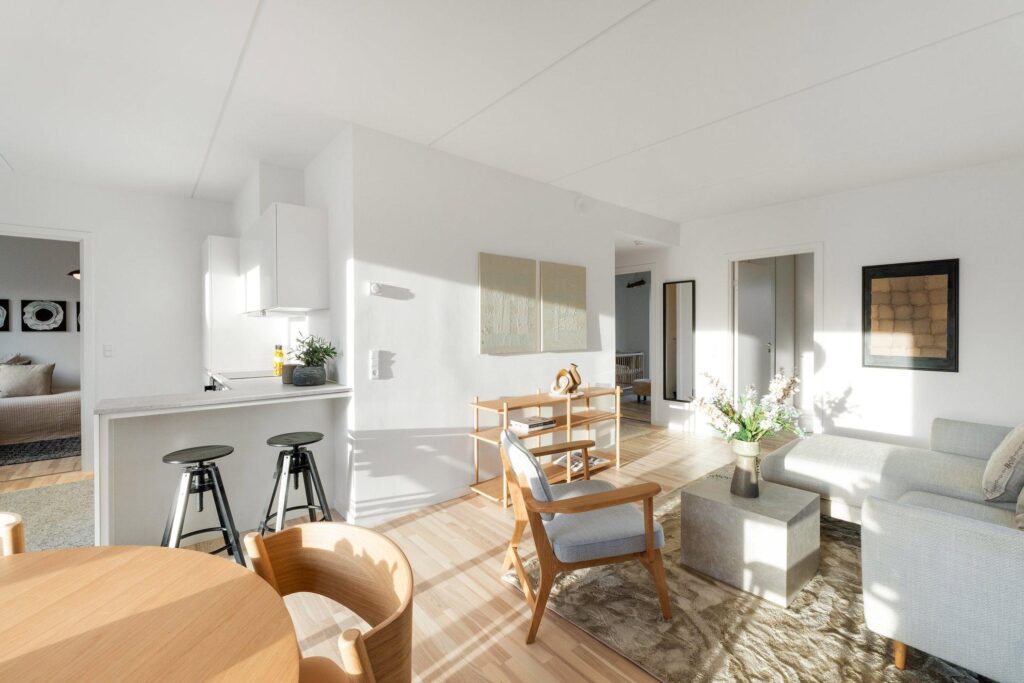
Natural light can do much of the decorating for you. Keep windows as open as practical and choose window treatments that provide privacy without making the room feel heavy.
Sheer curtains, light linen-look panels, or simple shades can work well depending on the room and how much privacy you need.
Rather than placing large furniture directly in front of your brightest window, arrange the room so daylight can travel through the space.
4. Incorporate Light Wood Finishes
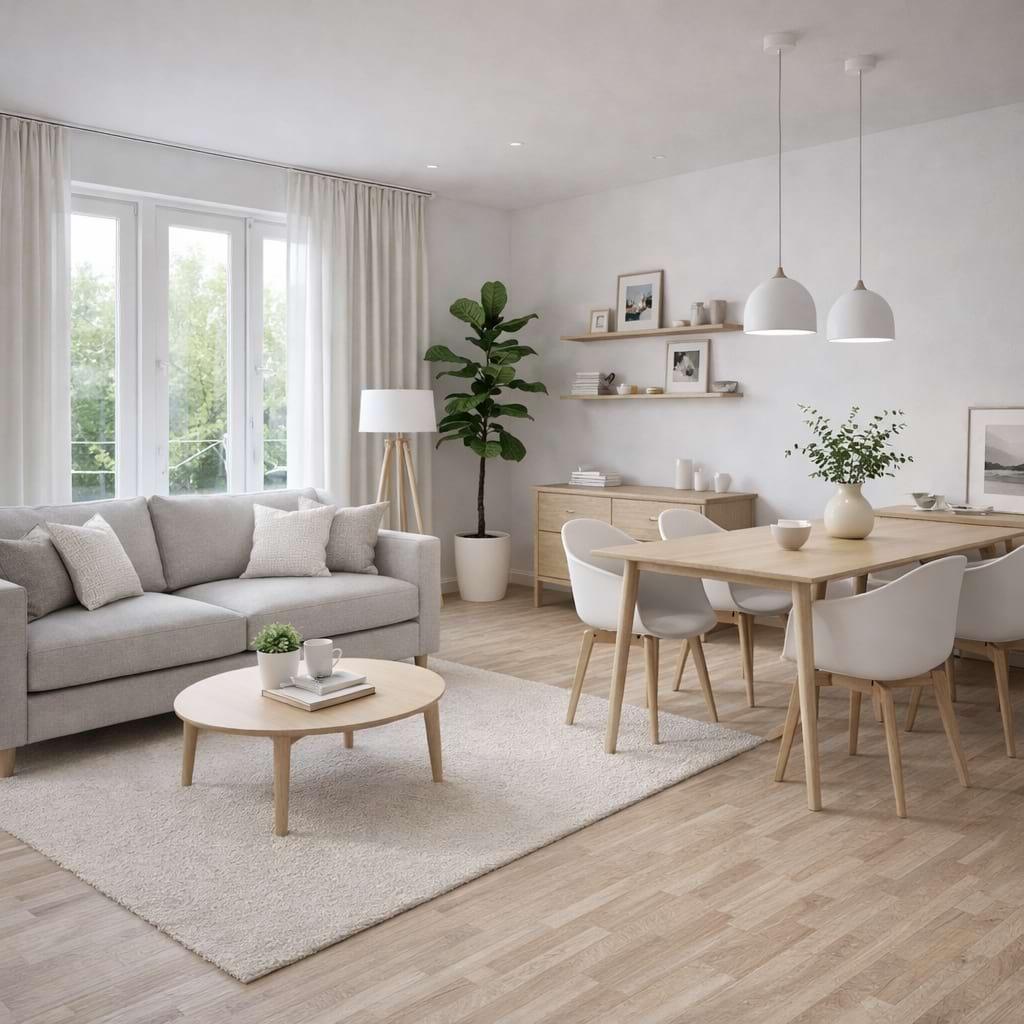
Light wood is one of the easiest ways to add warmth to a minimalist interior. Oak, ash, and similar pale finishes work beautifully with neutral walls and simple furniture.
You can introduce wood through a coffee table, dining table, shelving, flooring, cabinet fronts, or smaller accessories. You don’t need wood everywhere.
If your room already has several wood finishes, choose a dominant tone and use the others more sparingly so the space still feels cohesive.
Coffee or dining table
Shelving or cabinetry
Frames or accessories
5. Keep Decor Purposeful
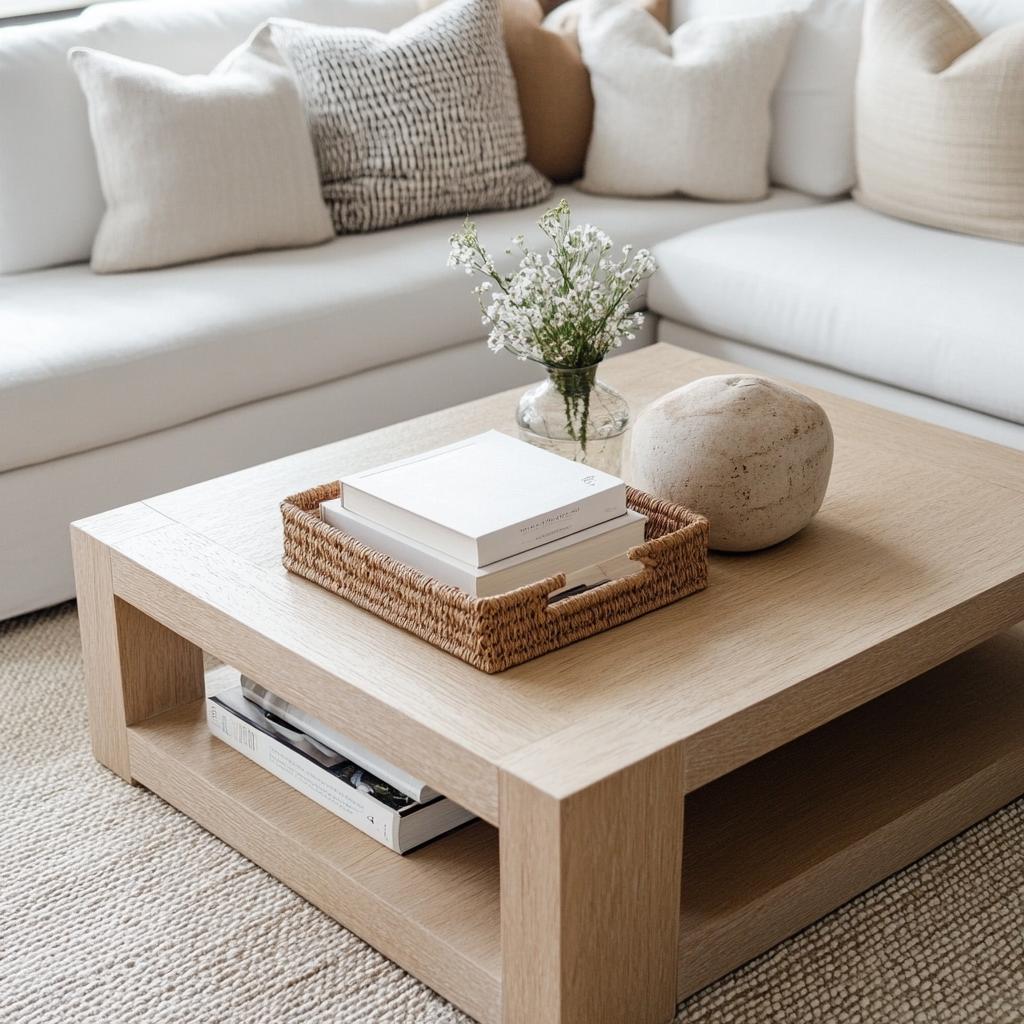
Minimal decorating doesn’t mean removing every decorative object. It means giving the pieces you keep enough space to be noticed.
Before adding another vase, candle, tray, or accessory, ask whether it adds something to the room. Does it have a purpose? Do you genuinely like it? Does it work with the rest of the space?
A small collection of things you love will usually feel more intentional than several shelves filled simply because there is empty space.
Do I use it?
Do I love it?
Does it belong here?
6. Add Cozy Textiles Sparingly
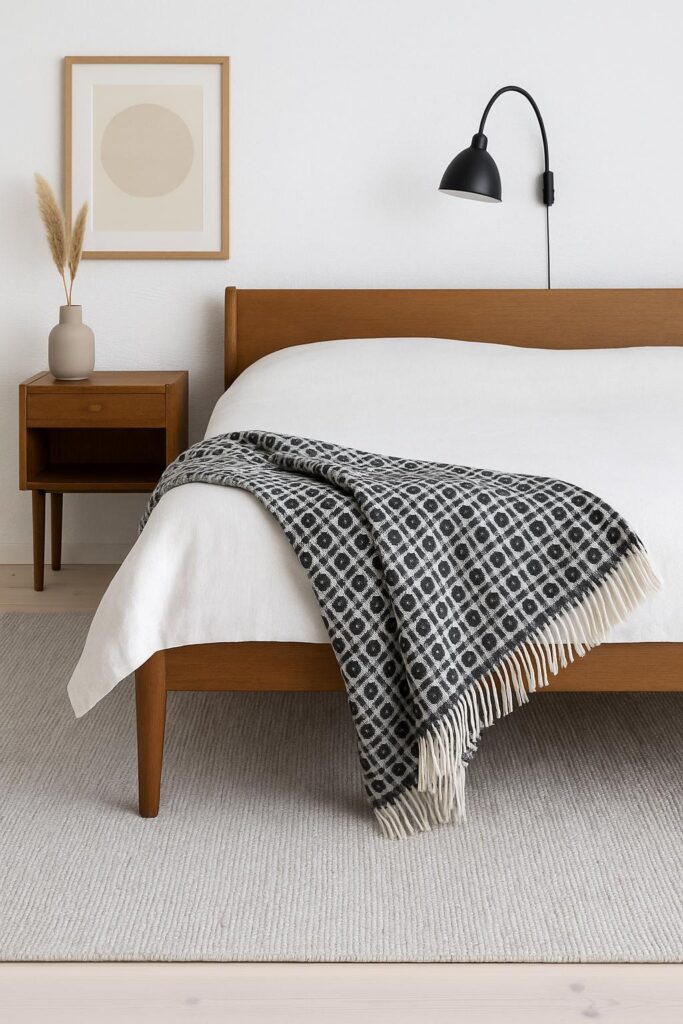
Minimal rooms can sometimes feel too hard if they’re filled with only smooth surfaces. Soft textiles are an easy way to bring warmth back in.
Try a wool or textured rug, linen curtains, a cotton throw, or a few cushions in soft neutral shades. You don’t need a large number of accessories to make the room comfortable.
Choose texture instead of adding lots of color. This keeps the room visually calm while still making it feel lived in.
Rugs & throws
Curtains & cushions
Bedding & soft layers
Read More – 16 Cozy Scandinavian Interior Ideas for a Warm and Inviting Home
7. Create Open and Airy Layouts
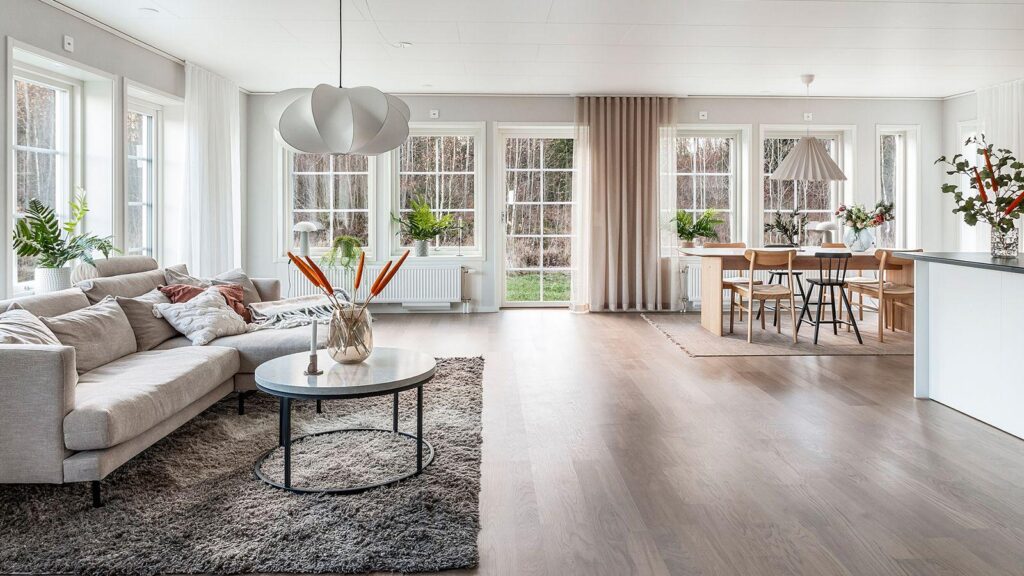
An airy Scandinavian room isn’t necessarily a large room. Furniture placement plays a big role in how open a space feels.
Give your larger pieces enough breathing room and avoid blocking natural pathways. Instead of pushing every piece against a wall, think about how people actually move through the room.
Leaving a little empty floor or wall space can make a bigger difference than adding another decorative item.
8. Use Hidden Storage Solutions
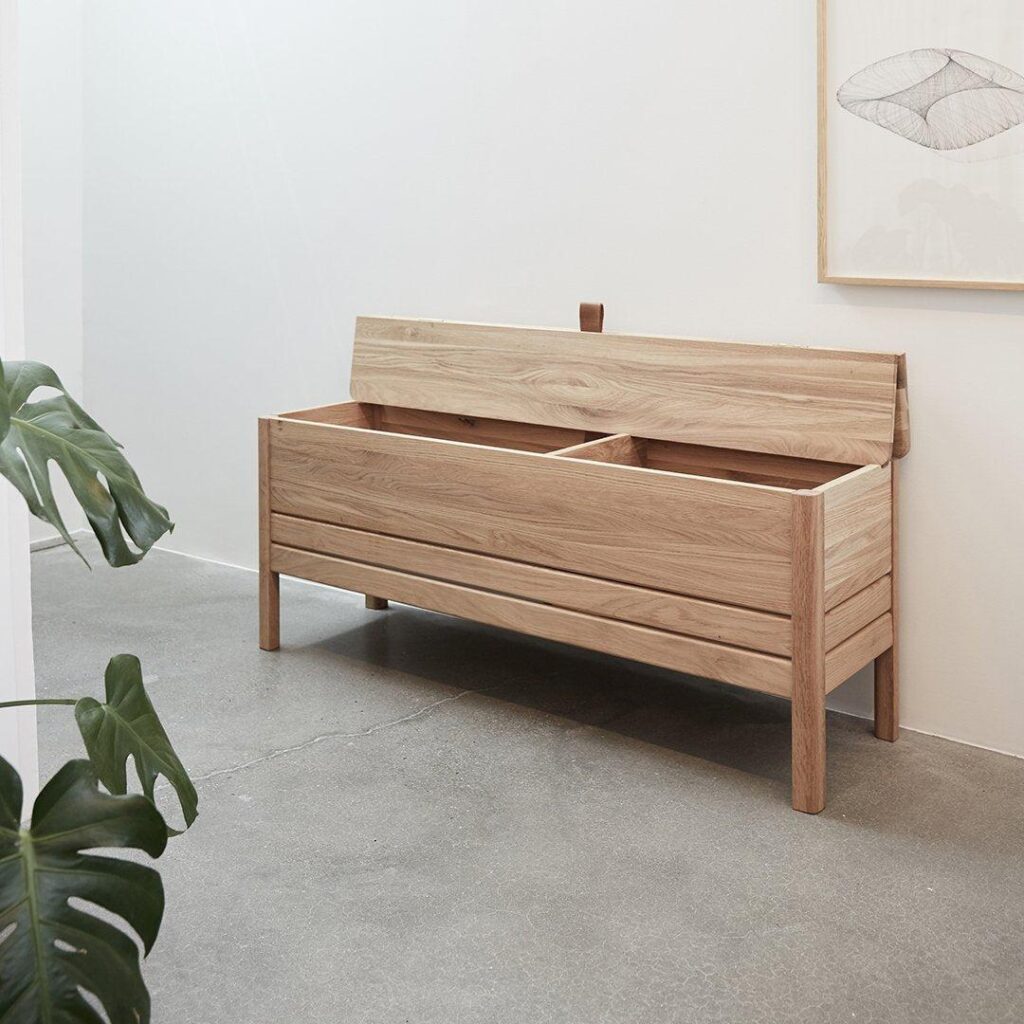
One of the simplest ways to make a home look more minimal is to give everyday clutter somewhere to go.
Closed cabinets, drawers, built-in storage, storage beds, and baskets can keep chargers, paperwork, toys, electronics, and other small items out of sight.
The best storage is easy to use. If putting something away takes too many steps, it probably won’t stay organized for long.
Keep within easy reach.
Use drawers or cabinets.
Store away from the main living area.
9. Bring Nature Indoors
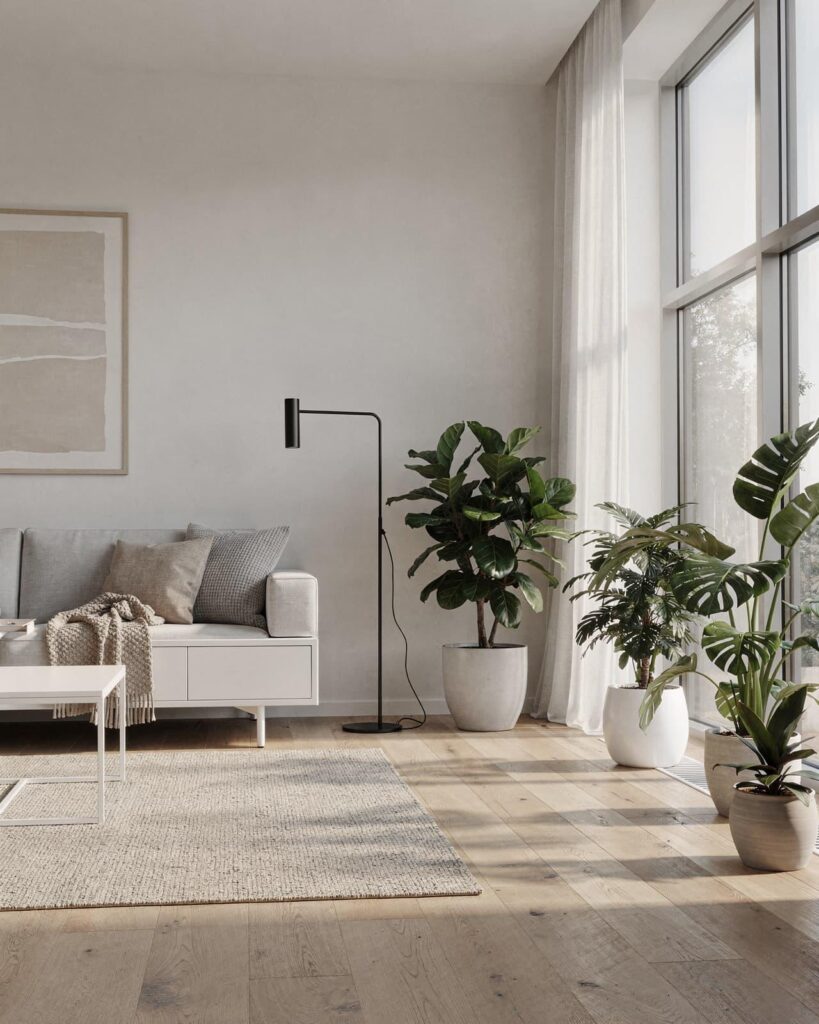
Natural elements keep a minimalist Scandinavian room from feeling too polished or sterile. You can bring them in through plants, wood, stone, woven materials, or handmade-looking ceramics.
A single plant on a side table may be enough. A wooden stool or stone bowl can also add natural texture without adding visual clutter.
Think about adding materials, not just greenery.
Warmth
Grounding
Life
Texture
10. Focus on Functional Design
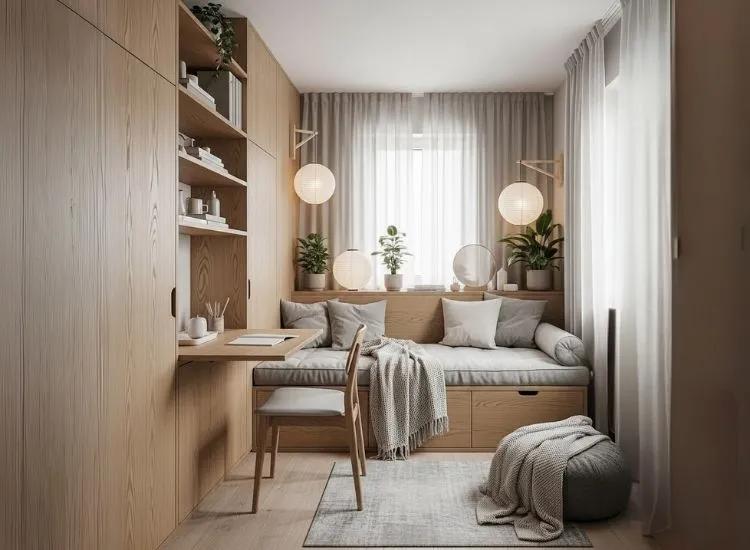
A minimalist Scandinavian home should work well before it looks good. A coffee table should give you somewhere useful to place things. A bench can provide seating and storage. A shelf can display a few objects while keeping other items organized.
Before buying something for the room, think about what job it needs to do.
When furniture solves a real need and has a simple form, you naturally need fewer pieces.
11. Opt for Minimal Wall Decor
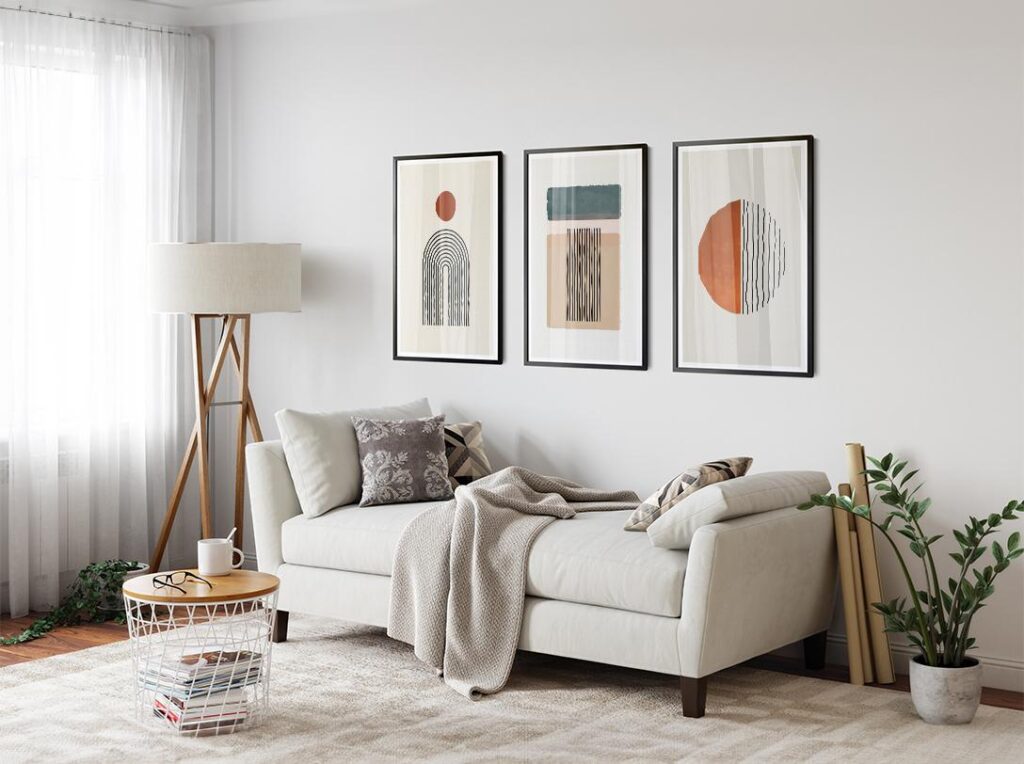
Empty walls aren’t a problem in a minimalist interior. In fact, a little breathing room can make the artwork you choose feel more important.
Instead of creating a gallery wall filled with small pieces, try one large print, a simple framed photograph, or a small collection with plenty of space between each piece.
Keep the frame style simple and choose artwork that works with the room’s existing palette.
12. Introduce Black Accents Carefully
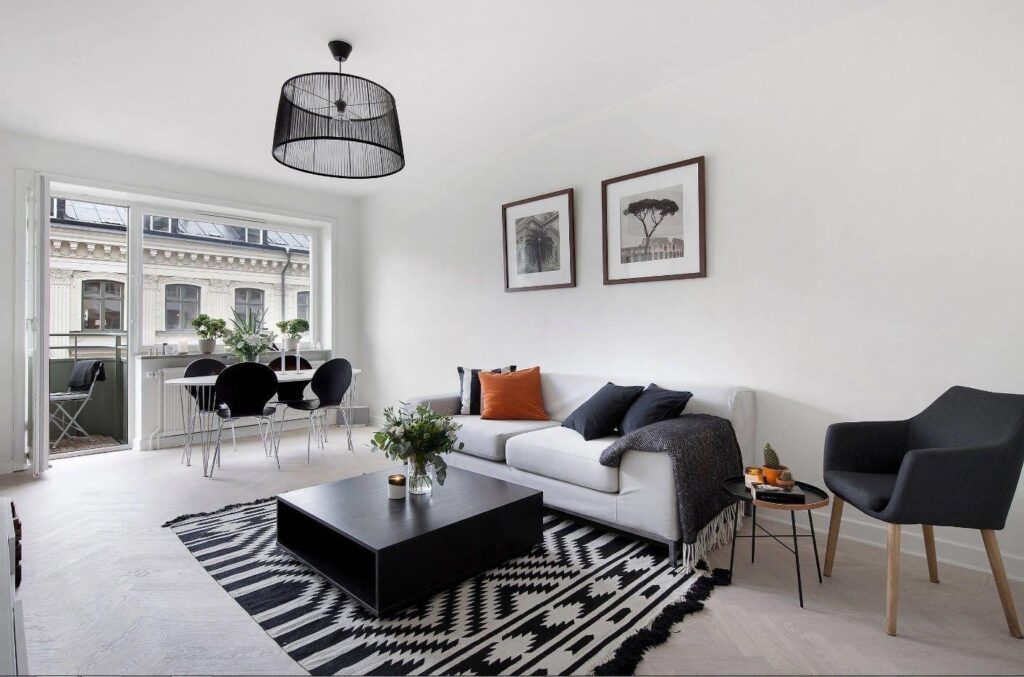
A few black details can give a neutral Scandinavian room more definition. Think black window frames, lighting, cabinet handles, picture frames, furniture legs, or a small side table.
The key is repetition without overdoing it. Two or three black elements placed around the room can create a visual connection.
13. Simplify Your Bedroom
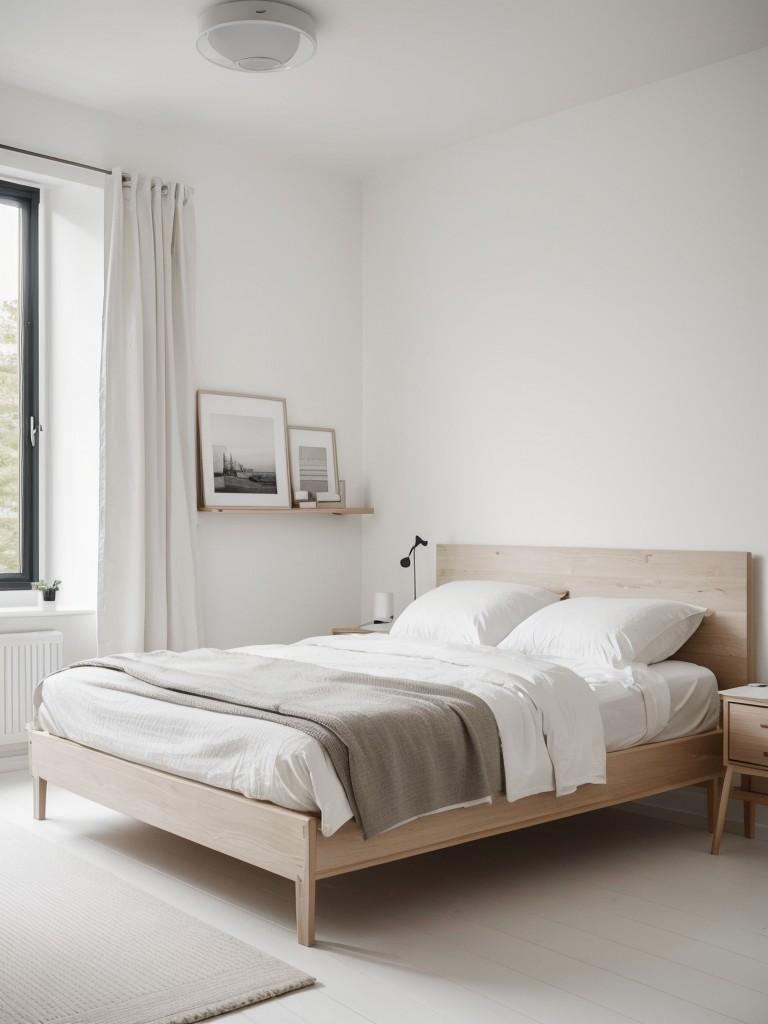
The bedroom is one of the easiest places to embrace Scandinavian minimalism because the goal is already centered around rest and comfort.
Keep the bedside area simple, choose bedding in soft neutral shades, and avoid filling the room with furniture that isn’t needed.
A light wood nightstand, simple lamp, soft bedding, and one piece of artwork may be all the room needs.
14. Use Layered Lighting
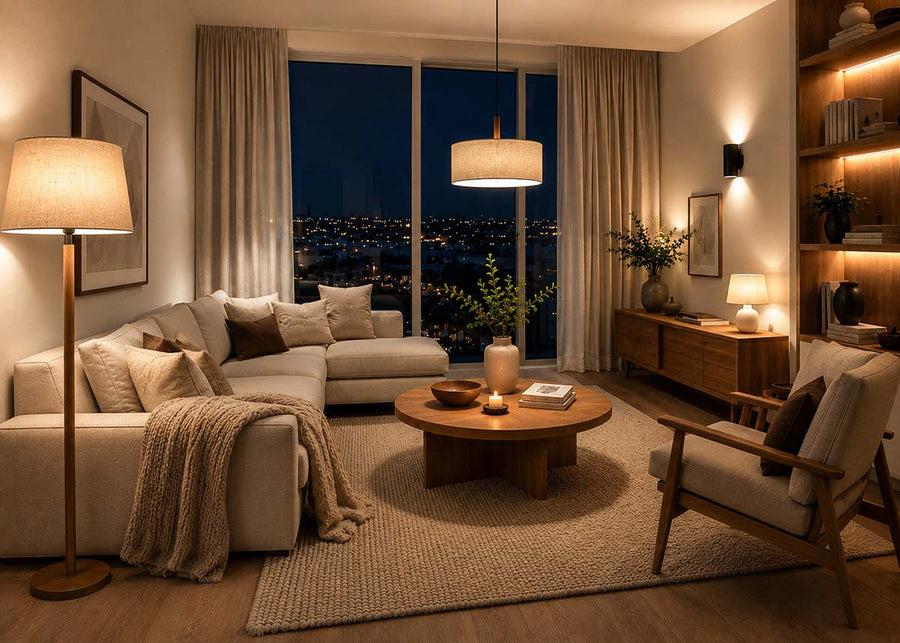
A minimalist room still needs good lighting. Rather than relying entirely on one ceiling fixture, combine different sources to create a more comfortable atmosphere.
Use general lighting for the room, task lighting where you read or work, and smaller accent lights where you want a softer glow.
Simple fixtures in black, white, metal, or natural materials can fit easily into the Scandinavian palette.
15. Keep Kitchen Counters Clear
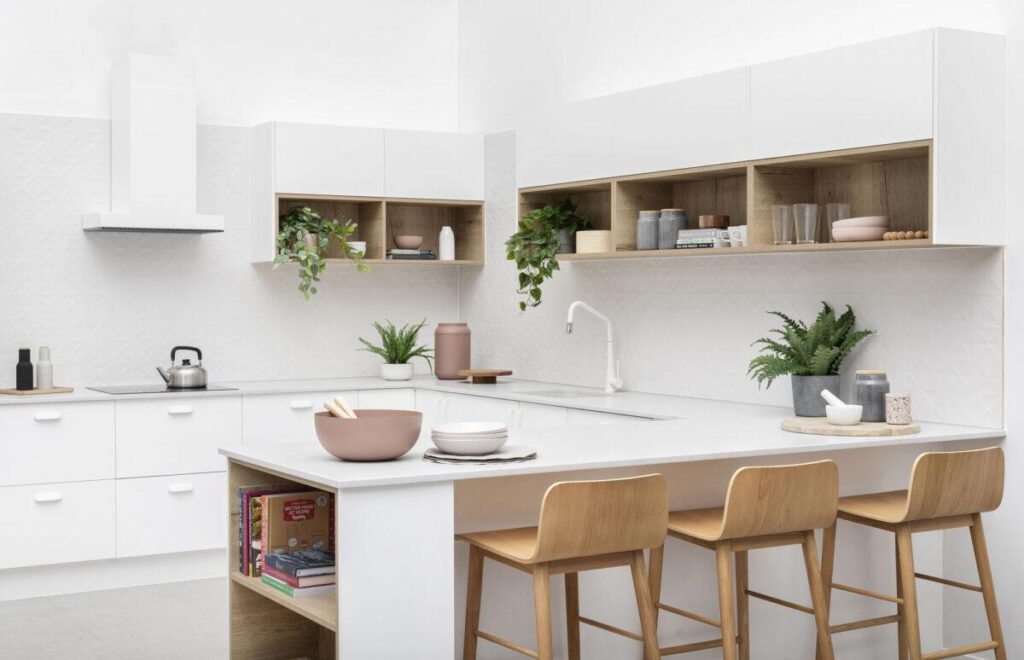
The kitchen can quickly become the busiest-looking room in the house. A minimalist Scandinavian kitchen keeps frequently used items accessible while giving everything else a proper home.
Instead of leaving every appliance, utensil, and container on the counter, decide what you actually use every day.
A wooden cutting board, a simple vase, or a few carefully arranged items can add warmth without making the worktop feel crowded.
16. Mix Textures Instead of Colors
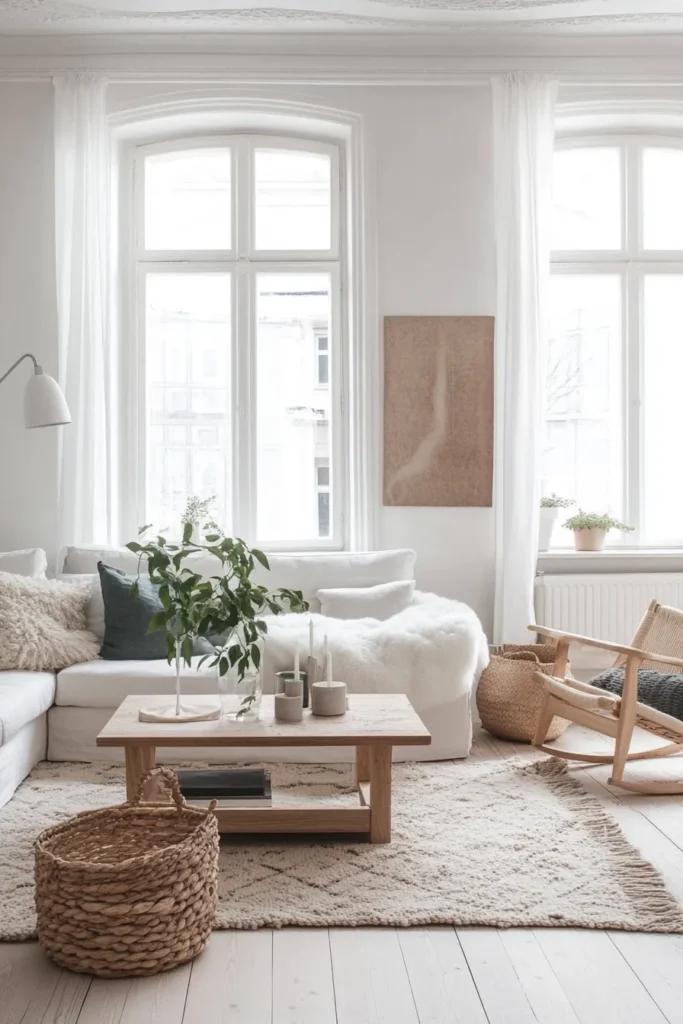
One of the best ways to make a minimalist room interesting is to vary the textures while keeping the colors restrained.
Pair a smooth wall with a woven rug, a linen sofa with a wooden table, or a ceramic lamp with a soft wool throw. The room gains depth without needing another accent color.
This is especially useful if your home already has a neutral palette and you don’t want to make it more colorful.
17. Practice Intentional Decluttering
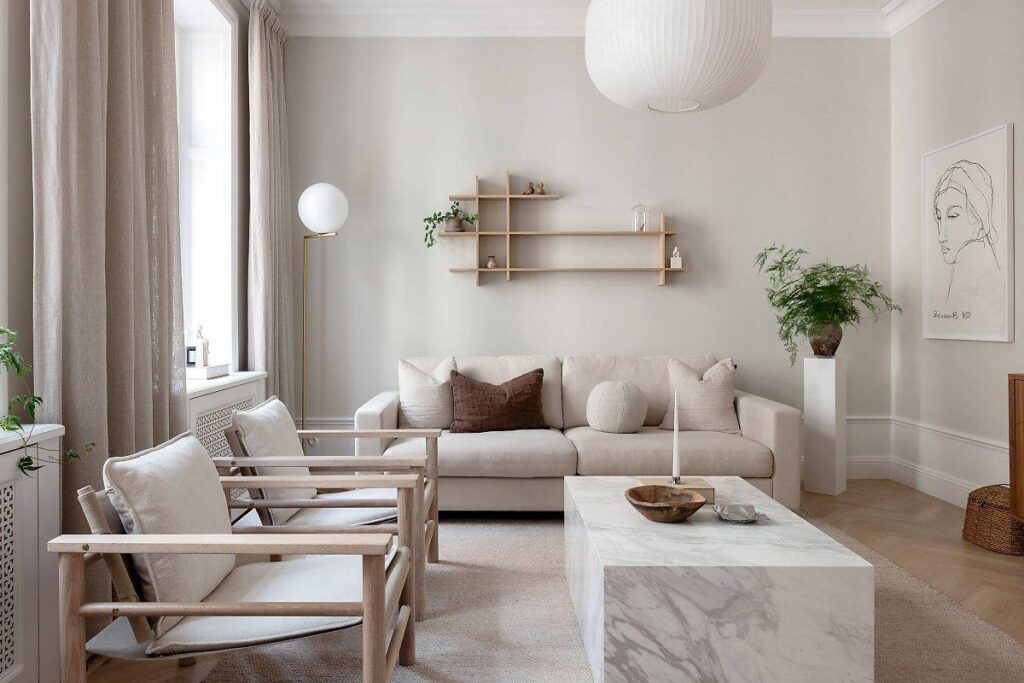
The final step isn’t about getting rid of everything. It’s about deciding what deserves space in your home.
Walk through each room and look at the things that have accumulated over time. If something is broken, unused, forgotten, or simply taking up space without adding value, consider whether you still need it.
Once you’ve simplified the room, make it easier to stay that way. Give frequently used items a convenient home and avoid adding new things simply because there is an empty surface.
Do I use it?
Do I love it?
Does it have a place?
Would I buy it again?
The Minimal Scandinavian Home Formula
You don’t need to completely redesign your home to achieve the look. Start with the elements that will make the biggest difference: a restrained color palette, simple furniture, natural materials, practical storage, and enough empty space for the room to breathe.
The goal isn’t an empty home. It’s a home with less visual noise and more room for the things that matter.