
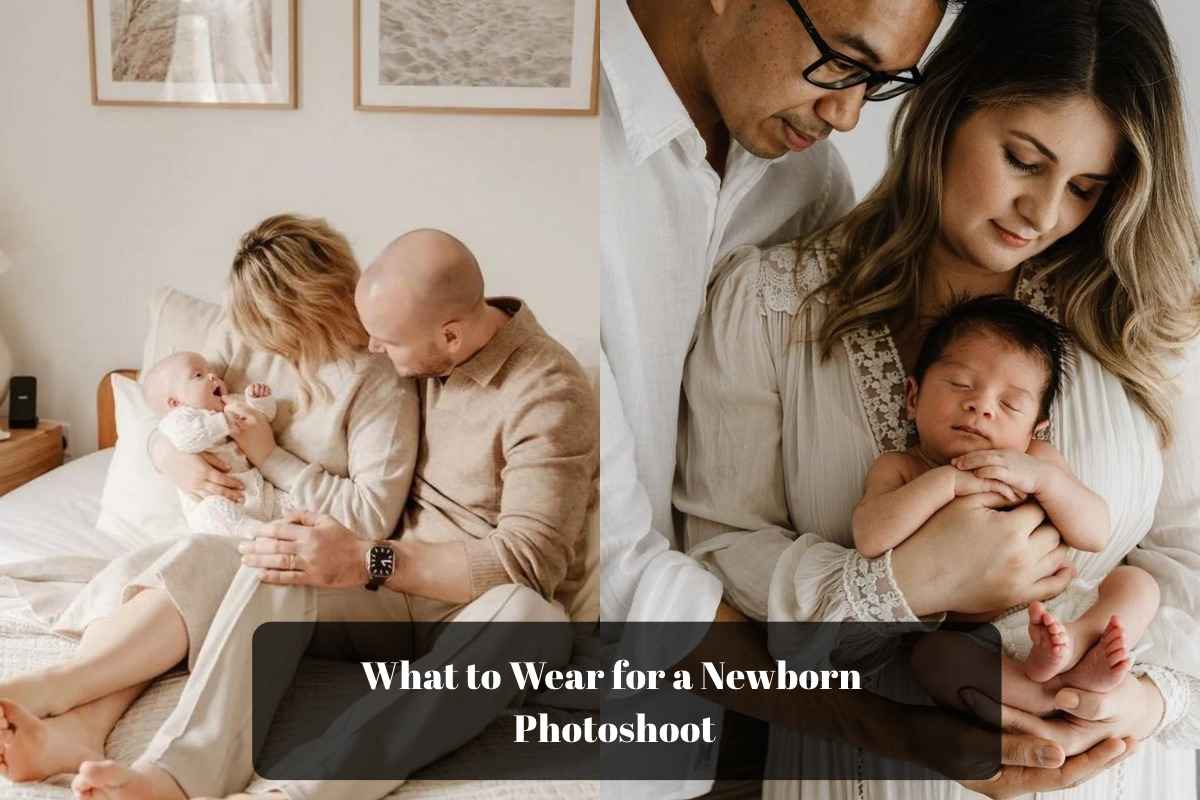
Choosing what to wear for a newborn photoshoot can feel harder than it should.
You want the baby to look adorable, but you also want Mom, Dad, and any siblings to look like they belong in the same photographs without everyone wearing matching outfits.
The easiest way to make the decision is to build the outfits around the baby and the setting.
Soft colors, comfortable fabrics, simple shapes, and a little texture tend to photograph beautifully without making the clothing compete with the baby’s face.
You also need to think about real newborn-life problems. Babies spit up, need diaper changes, get warm, and may need to be held for most of the session.
An outfit that looks beautiful on the bed but takes five minutes to remove may not be worth the trouble.
These tips will help you choose outfits for the whole family before the photoshoot, including what works for baby, Mom, Dad, and siblings.
By the end, you should have a complete outfit plan rather than a pile of clothes you’re still unsure about.
Choose the Baby’s Main Outfit First
Start with the smallest person in the photograph. A baby’s outfit usually has fewer pieces and fewer color options, so it gives you a useful starting point for the rest of the family’s clothing.
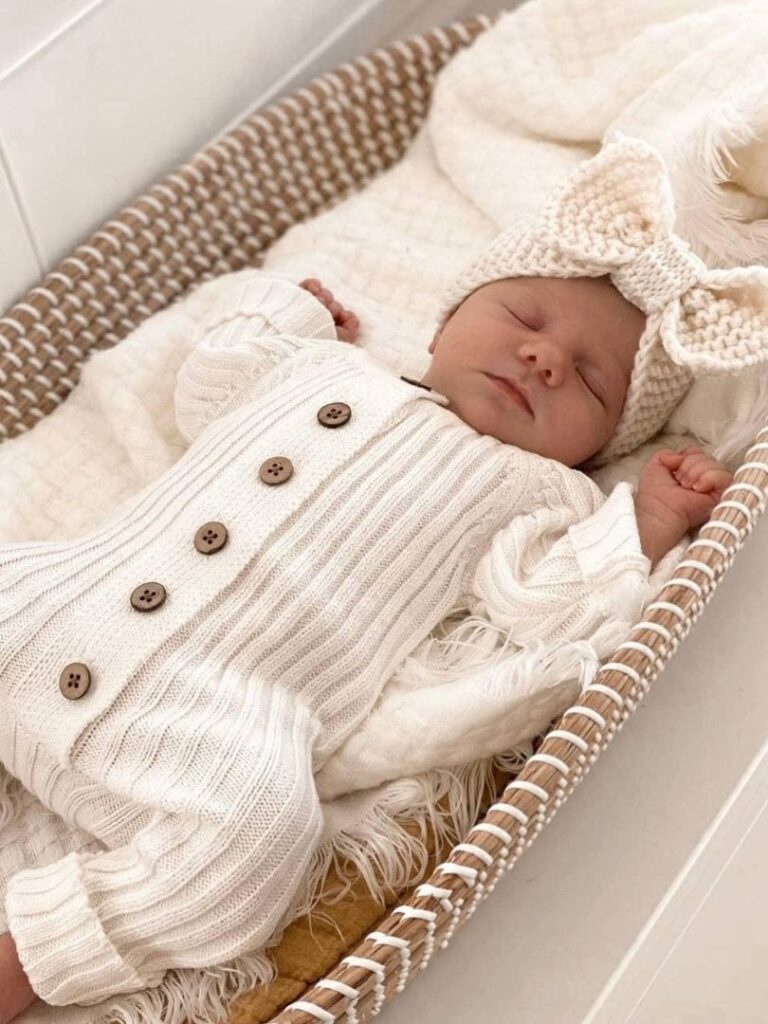
Pick one main color or fabric for the baby, then build the adult outfits around it. A cream knit romper, for example, can work with Mom in a muted beige dress and Dad in a soft gray shirt without making everyone look identical.
Keep the baby’s outfit comfortable enough to wear for the length of the session. Avoid choosing an outfit based only on how it looks on a hanger.
Dress Baby in Soft, Neutral Layers
A newborn’s clothing should be soft against delicate skin and practical enough for frequent changes. Look for cotton, bamboo, muslin, or other soft fabrics without stiff seams or rough decorations.
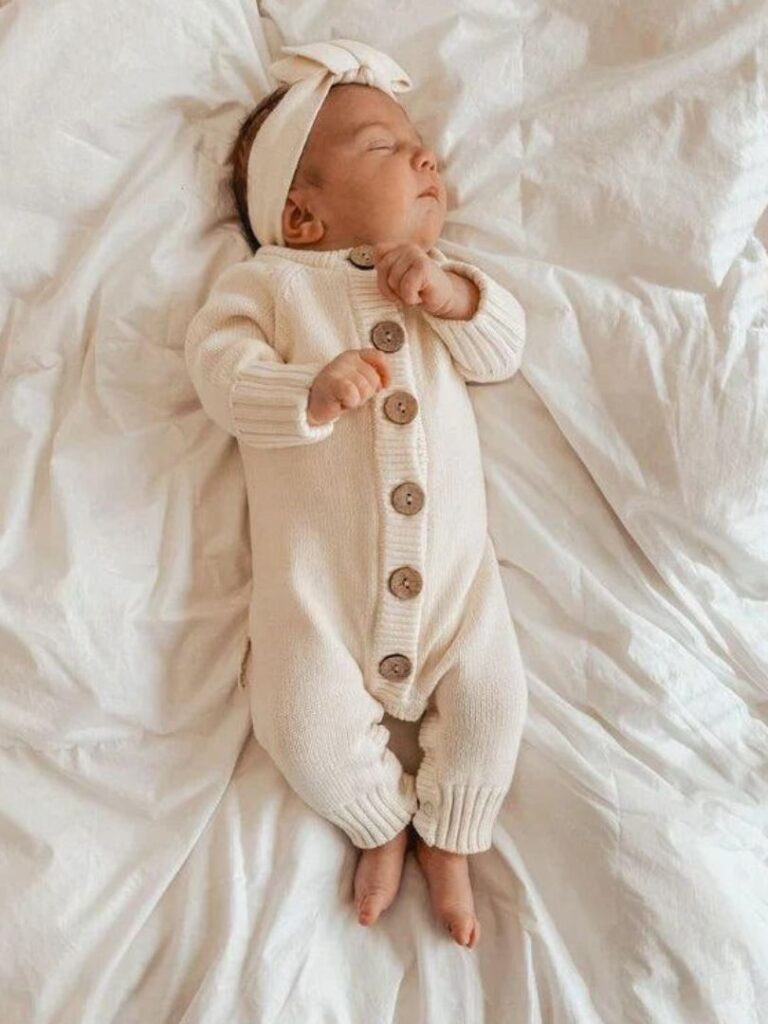
A neutral base such as cream, ivory, oatmeal, beige, soft gray, or muted brown gives you more flexibility with the rest of the family’s clothes.
Layers are useful because newborns can need a clothing adjustment during the session.
Choose pieces that can be removed without pulling tightly over the baby’s head, especially if you expect several outfit changes.
Pick Mom’s Outfit Before Coordinating Everyone Else
Mom’s outfit deserves attention because she will often appear in close contact with the baby.
Choose something you feel comfortable sitting, standing, and holding the baby in rather than selecting an outfit that only looks good while standing.
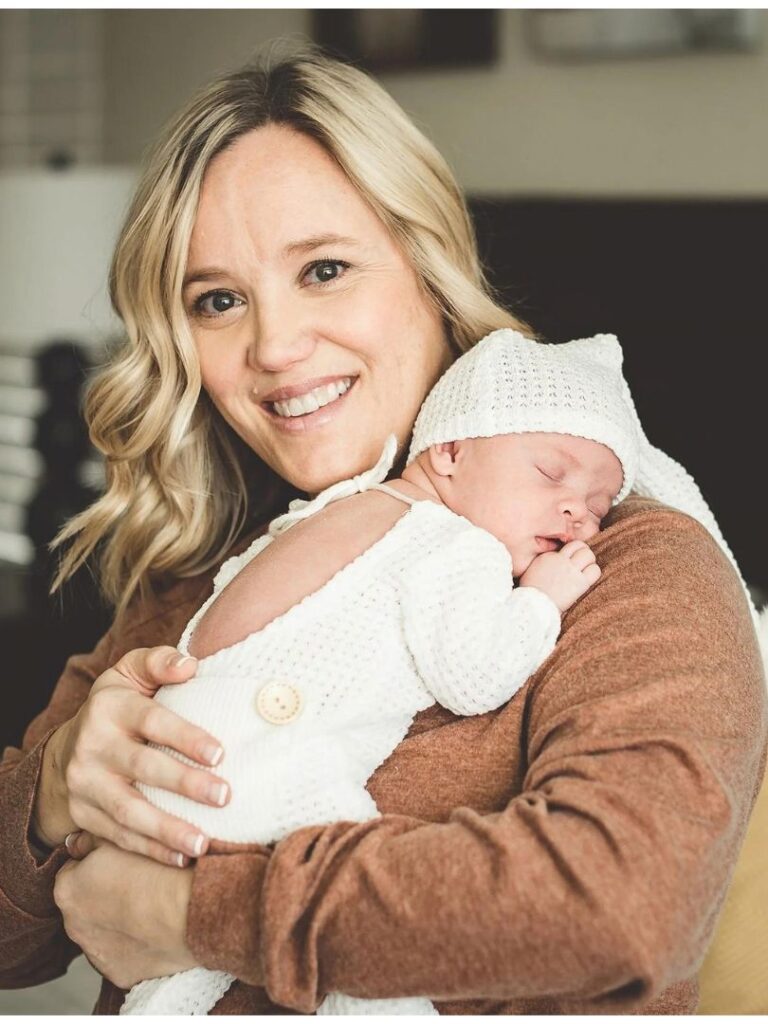
Flowing dresses, long skirts, soft knit tops, and comfortable fitted separates can all work. If you prefer pants, choose a pair that doesn’t create a bulky waistband when you’re sitting with the baby.
For a home session, lay the outfit on the bed and photograph it with the baby’s clothing before making your final choice.
It is much easier to spot a color clash in a quick phone photo than while everything is hanging in the closet.
Choose Dad’s Clothes to Complement Mom
Dad doesn’t need to match Mom’s outfit. Instead, pull one quiet color from her clothing and use it in his shirt, sweater, or trousers.
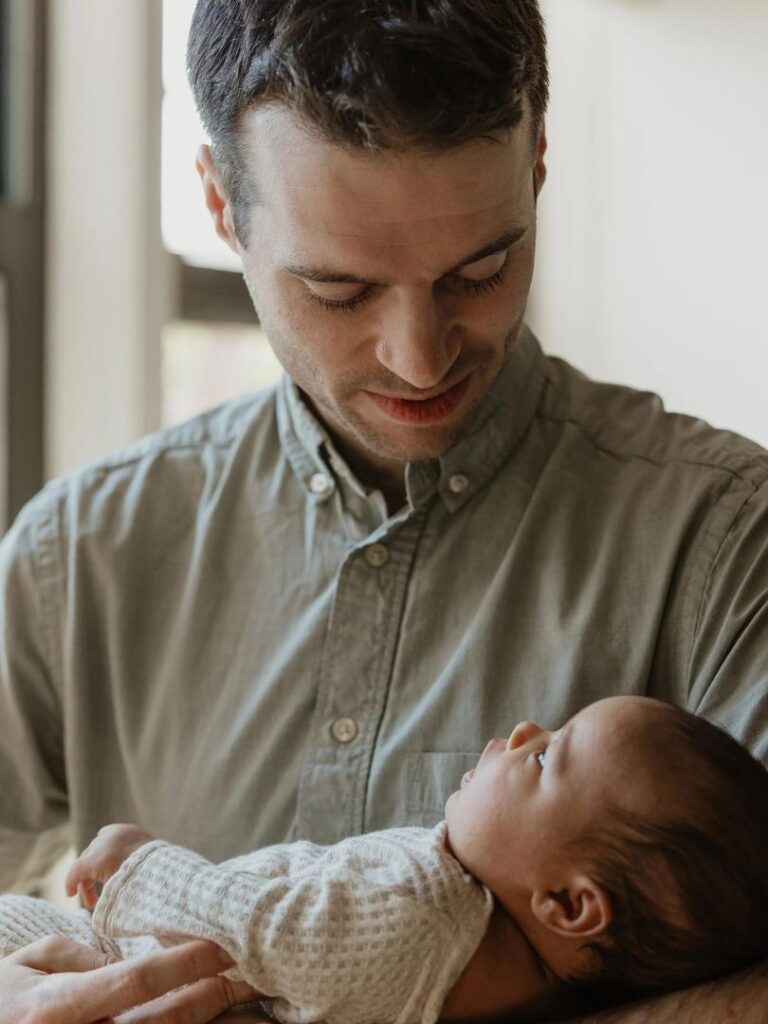
For example, if Mom wears a dusty blue dress, Dad could wear a light gray shirt with dark jeans. If Mom chooses a cream dress, Dad could wear tan, beige, brown, or soft blue.
Avoid putting both parents in the same shade from head to toe. A little difference between the outfits creates more visual depth and keeps the family photograph from looking like everyone bought a uniform.
Coordinate Colors Without Matching Exactly
Pick 2–4 related colors for the whole family instead of assigning everyone the same color.
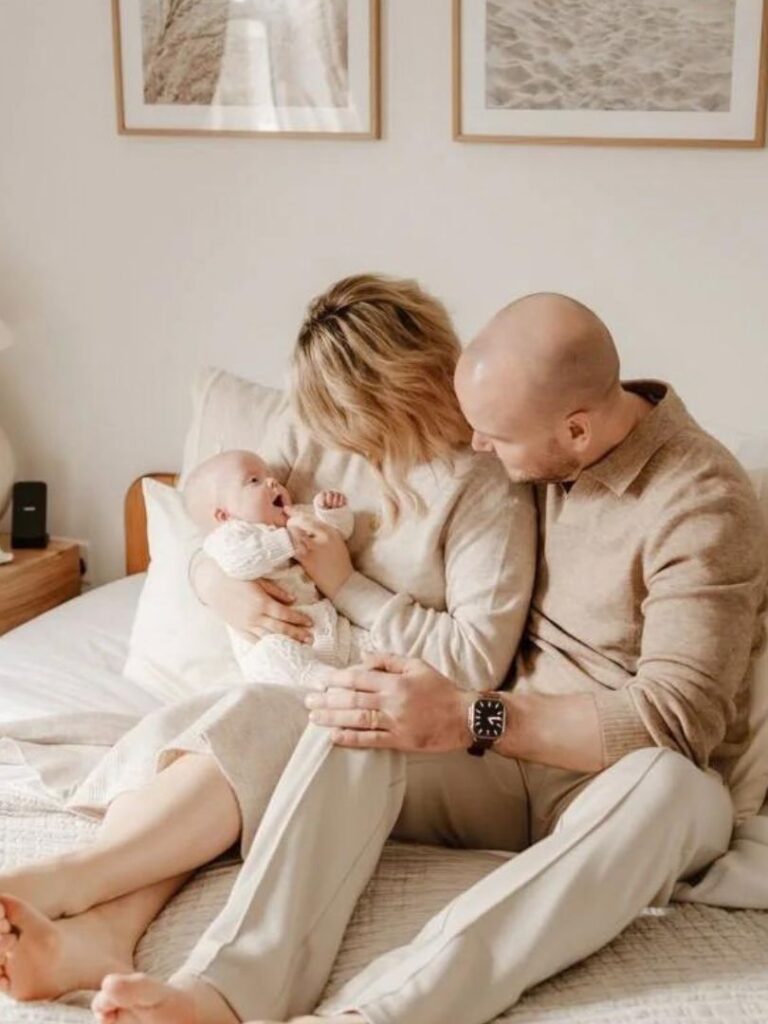
A useful approach is to choose one main neutral, one soft supporting color, and one darker accent. For example:
- Cream + sage + tan
- Beige + dusty blue + gray
- Ivory + brown + muted green
- Oatmeal + blush + warm beige
Keep the strongest color on one or two people rather than repeating it across every outfit. This helps the photographs look coordinated while allowing each person to have their own clothing style.
Use Soft Neutrals for a Timeless Family Look
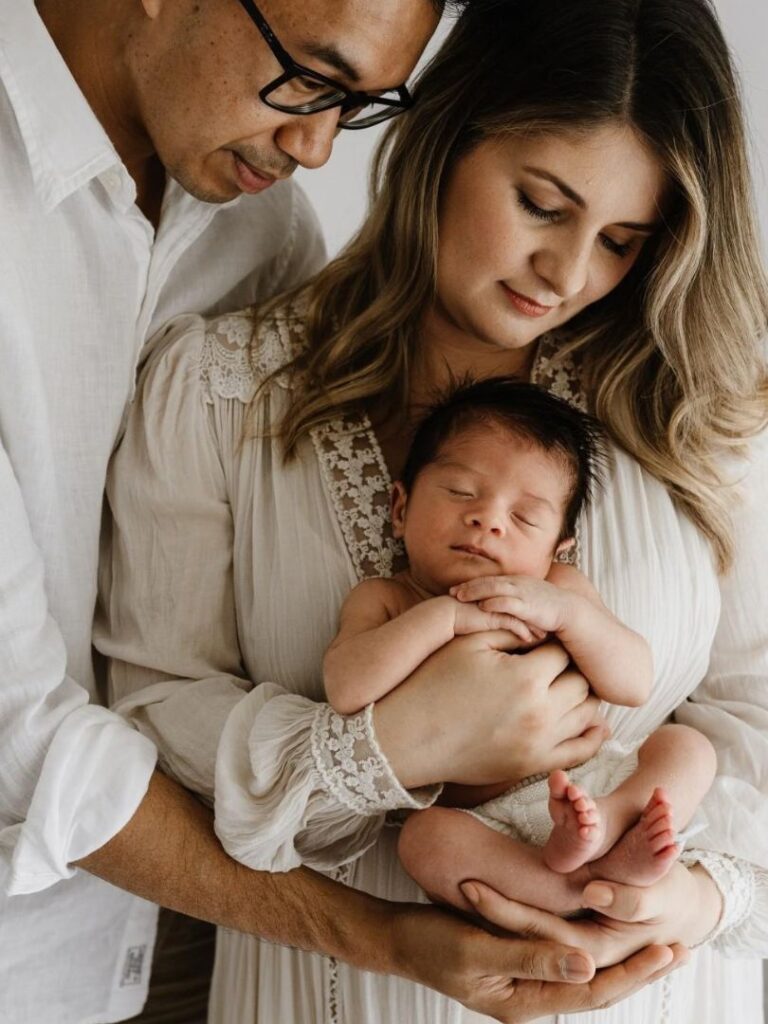
Cream, oatmeal, ivory, beige, taupe, soft gray, muted brown, and dusty shades tend to work well for newborn photographs because they don’t pull attention away from the baby’s face.
You don’t need an entirely beige wardrobe, though. If you love color, choose one muted color and pair it with two or three neutrals.
Pure white can sometimes look very bright beside a newborn’s skin, while very dark black clothing can create a strong visual block. Soft versions of both—such as ivory and charcoal—give you more flexibility.
Add Texture With Knits, Linen, or Cotton
If your outfits are all solid colors, the photographs can sometimes look flat. Texture gives the clothing more visual interest without introducing a loud pattern.
Try a chunky knit cardigan, waffle-knit top, linen dress, ribbed cotton shirt, or soft muslin layer. Keep the textures subtle when several people are photographed together.
A useful combination is one textured outfit + two simpler outfits. For example, Mom could wear a textured knit dress while Dad wears a plain shirt and the baby wears a smooth cotton romper.
Choose Fitted Clothes Over Bulky Layers
Oversized sweaters and several thick layers can make parents look wider than they expected, especially when they’re sitting or holding the baby close to their body.
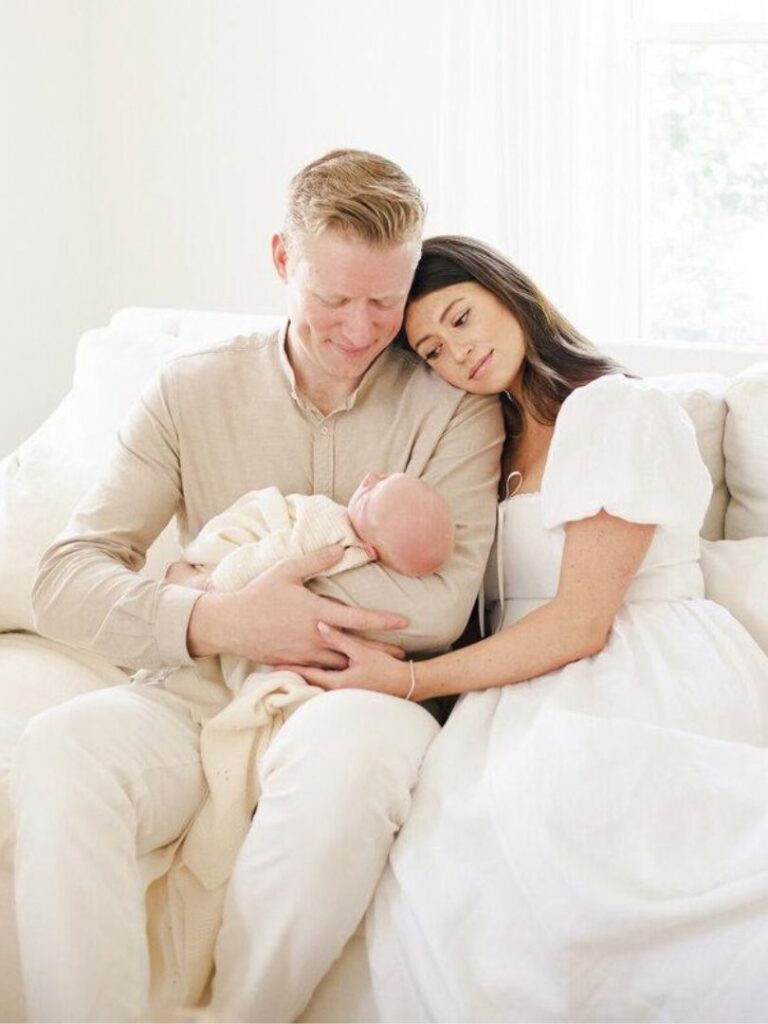
Choose clothing that follows your natural shape without feeling tight.
A fitted cotton top, lightly structured cardigan, or dress with a comfortable waist usually photographs better than several loose layers piled together.
Pay particular attention to sleeves. Very wide sleeves can surround a tiny baby and make the frame feel crowded.
Try sitting down in the outfit before the shoot. If fabric bunches heavily around your waist or arms, choose another option.
Keep Baby’s Outfit Easy to Remove
Newborn outfit changes can become stressful if the clothing has tiny buttons, complicated ties, stiff collars, or several pieces that need to be pulled over the baby’s head.
Look for front-opening, wrap-style, or generously sized neck openings when possible.
Keep one clean diaper and the backup outfit nearby so you don’t have to search through a bag while holding a sleepy baby.
If a clothing piece takes several minutes to remove at home, it probably isn’t the best choice for a photoshoot where you may need to change quickly.
Plan a Second Outfit for Baby
A second baby outfit gives you variety without needing to change the whole family’s clothing.
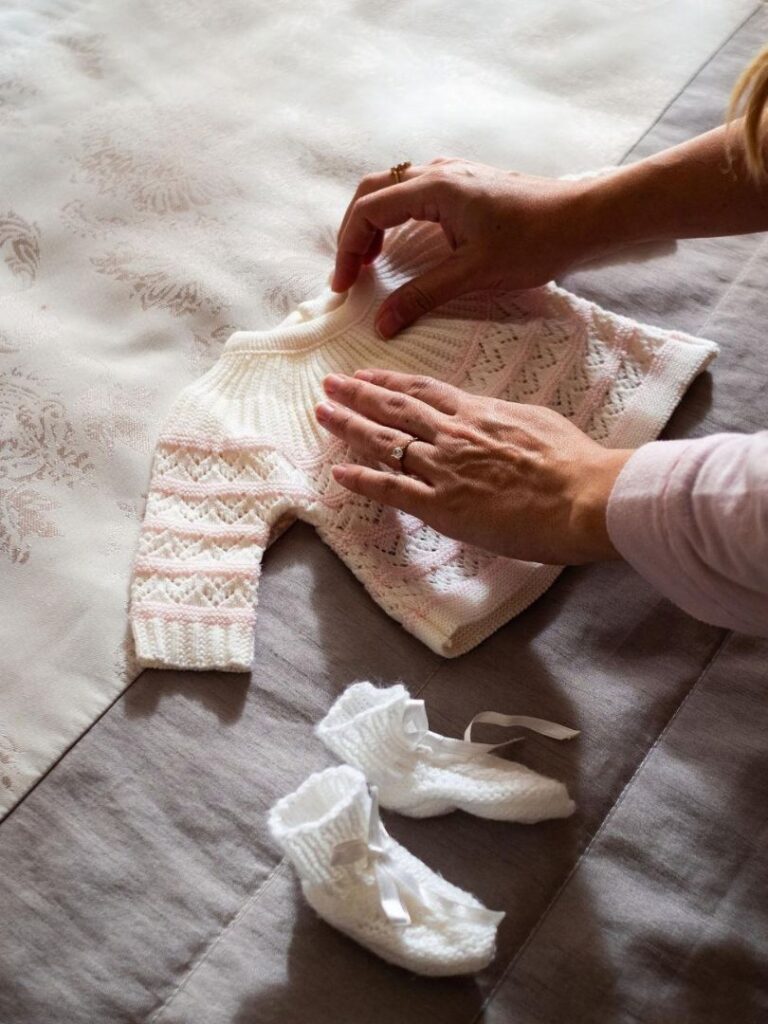
Keep the first outfit as your main look, then choose a noticeably different option for a smaller set of photographs.
For example, start with a cream romper and later switch to a soft knitted layer or a simple cotton onesie.
Don’t plan several elaborate outfit changes. One backup look is usually enough for a short home session, especially if your baby becomes unsettled during changes.
Keep the second outfit washed, dry, and within reach before the first photograph begins.
Dress Siblings in Coordinating Shades
For siblings, choose clothing that belongs to the same color family as the baby’s outfit rather than trying to dress everyone identically.
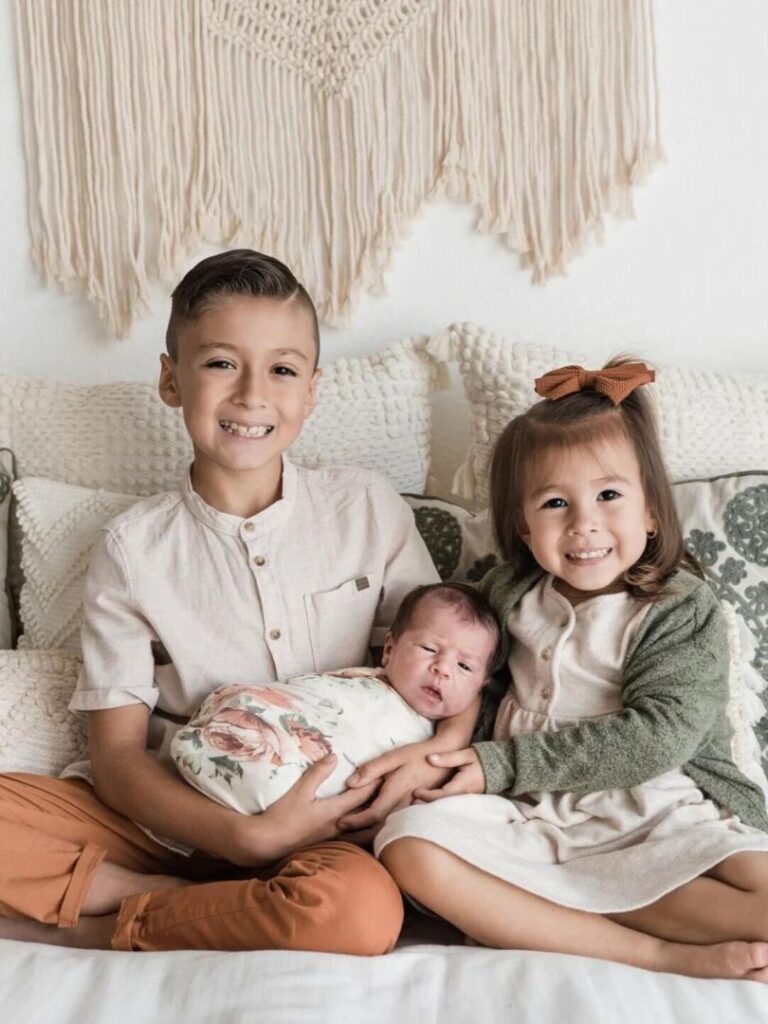
If the baby wears cream, a sibling could wear beige, muted green, dusty blue, or soft brown.
For two siblings, give them slightly different shades so their outfits remain distinct in group photographs.
Think about what happens when the sibling holds the baby. Large sleeves, stiff jackets, or uncomfortable shoes can get in the way.
Comfort matters even more for young siblings who need to sit still while holding the baby.
Avoid Busy Patterns and Large Logos
Tiny checks, bold stripes, cartoon characters, giant lettering, and prominent brand logos can pull attention away from the baby’s face.
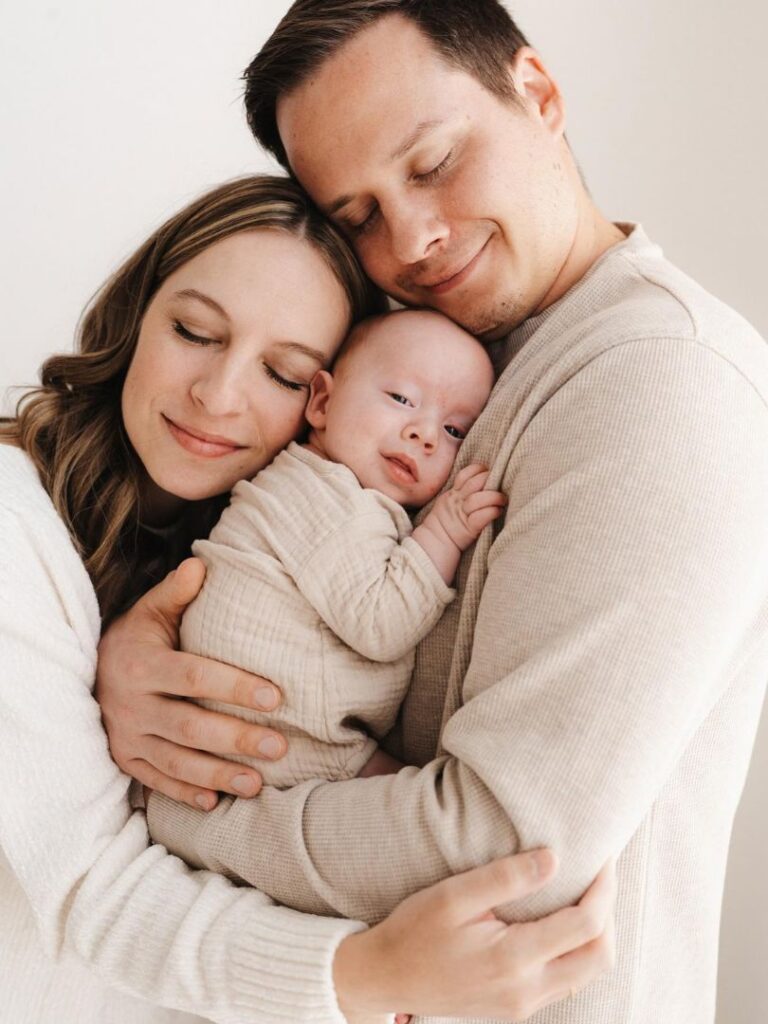
This doesn’t mean every outfit needs to be completely plain. A small floral print or subtle stripe can work if it doesn’t dominate the frame.
Hold the clothing several feet away and take a quick phone photograph of it.
If your eye goes straight to the pattern or logo before noticing the overall shape of the outfit, choose something quieter.
Match the Outfits to the Photo Location
Your clothing should make sense against the place where the photographs will be taken.
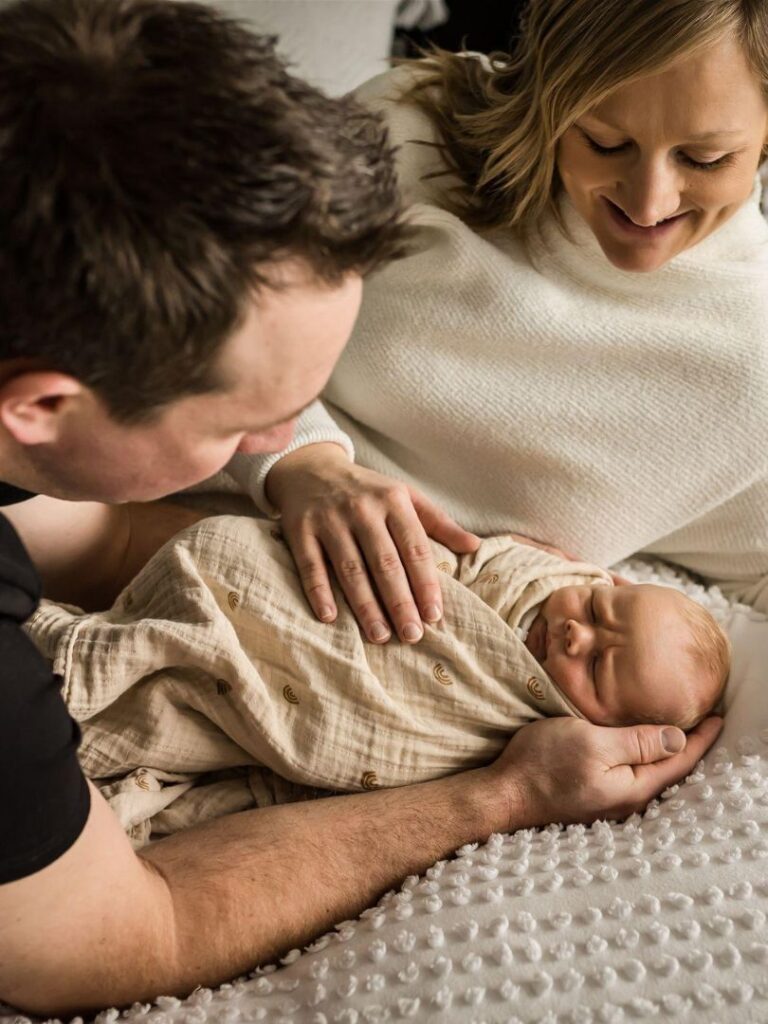
For a bright nursery with white walls and light bedding, soft beige, cream, dusty blue, or muted green can blend naturally into the room. For a room with darker wood and warmer tones, oatmeal, tan, rust, or warm brown can work better.
Take one quick photograph of the location before choosing the final outfits. Look at the walls, bedding, curtains, furniture, and floor together. Then choose clothing that adds contrast without fighting with those colors.
Prepare a Backup Outfit for Everyone
Newborn sessions rarely go exactly as planned. A spit-up, diaper leak, milk stain, or unexpected mess can take a clean outfit out of the session.
Pack one backup outfit for each person, but keep it practical. For parents, a second shirt or top may be enough.
For baby, pack at least two complete changes, including diapers.
Keep the backup clothes in one accessible bag rather than buried underneath everything else.
You’ll be glad you did if something happens five minutes before a family photograph.
Pack for the Mess You Know Can Happen
Lay Out Every Outfit Before the Photoshoot
Put every person’s planned outfit together in one place before the photographer arrives or before you begin taking photographs.
Lay out the baby outfit beside Mom’s, Dad’s, and the siblings’ clothes. Check the colors together, then look for small problems such as a bright logo, a missing sock, wrinkled fabric, or an accessory that suddenly looks out of place.
Take one photograph of the complete outfit collection with your phone. If the colors work together in that photo, you’re ready.
Keep the clothes together afterward so nobody has to make last-minute wardrobe decisions while the baby is already settled.
5-MINUTE FINAL CHECK
Put Every Outfit Together Before You Start
Do the outfits belong to the same color family?
Is anything louder than the baby’s face?
Can everyone sit, hold, and move comfortably?
Can the baby’s outfit be changed without a struggle?
Are clean backup clothes within reach?