
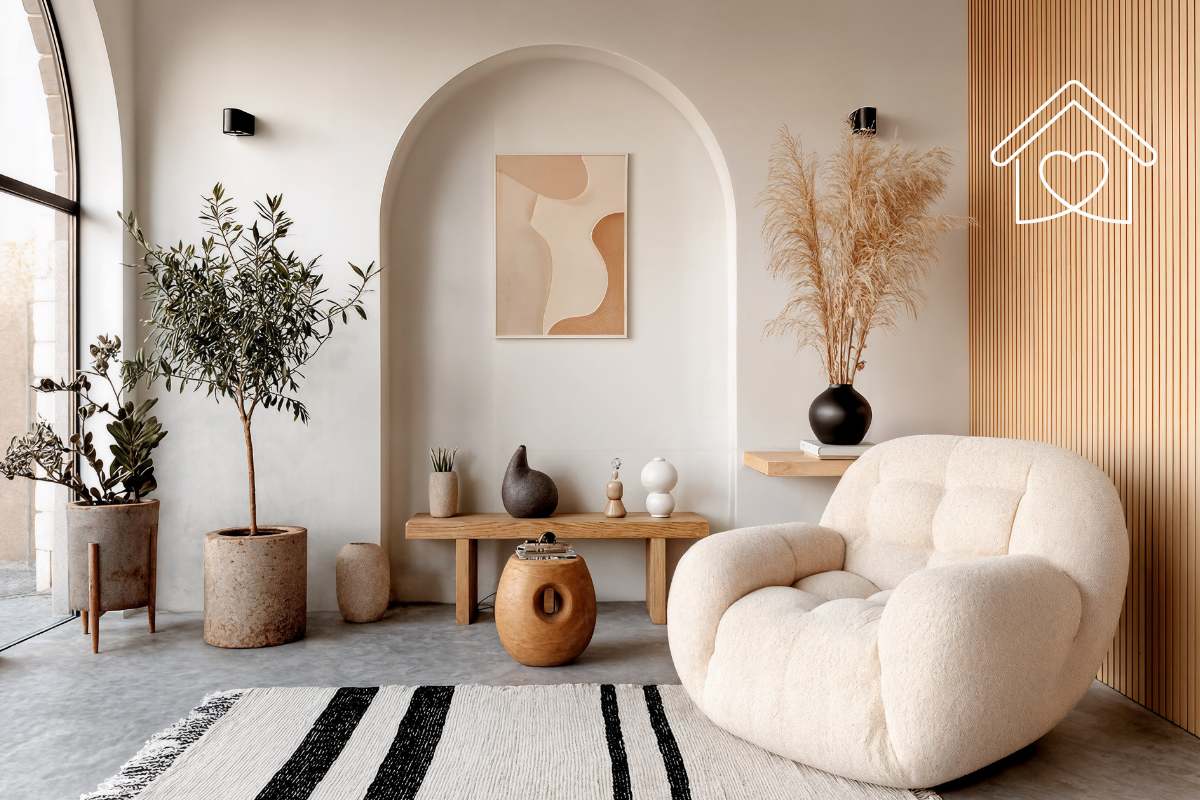
Scandinavian interiors are often shown in white, beige, pale wood, and soft gray. But that does not mean your home has to stay neutral.
The right colors can make a Nordic-inspired room feel warmer and more personal without covering up the clean, simple look that makes Scandinavian design so appealing.
The trick is balance. Start with a calm base, then bring in color through a painted wall, a sofa, artwork, a rug, or even a few books. Light wood, simple shapes, natural fabrics, and plenty of breathing room help keep the room from feeling busy.
These colorful Scandinavian interior ideas take that approach in different directions, from soft sage and dusty blue to mustard, terracotta, and jewel tones. Some changes are easy to make with decor, while others are better suited to a bigger renovation.
If your home feels a little too plain but you still want that airy Nordic feel, these ideas give you plenty of places to start.
Start With a Soft Sage Green Wall
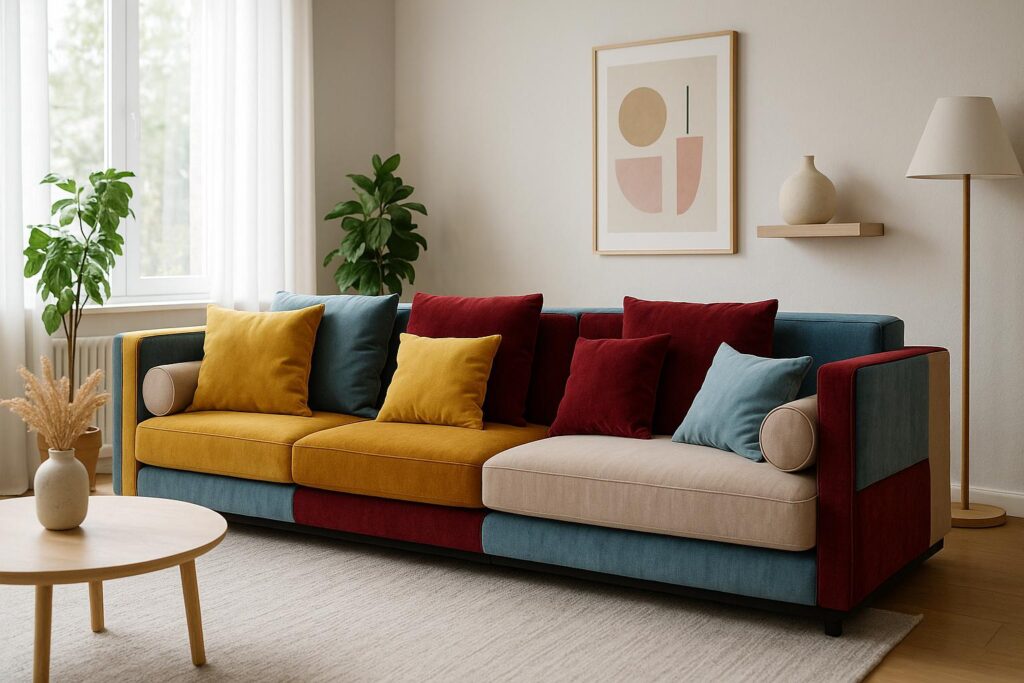
A white Scandinavian living room can sometimes feel a little too predictable. A soft sage wall gives it more personality while keeping the room calm.
Try the color behind the sofa, around a reading nook, or on the wall that gets the most natural light. Pair it with pale oak, cream upholstery, woven baskets, and simple artwork.
The important part is keeping the surrounding pieces quiet. Let the wall provide the color instead of competing with it.
Before committing to a full wall, test your paint sample beside the flooring and furniture. Natural light can change how green looks throughout the day.
White walls, pale furniture, and similar neutral tones can leave the room feeling clean but visually flat.
A soft sage wall creates a clear focal point while pale wood, cream fabrics, and open space keep the Nordic look light.
Use Mustard Chairs Instead of Lots of Small Accents
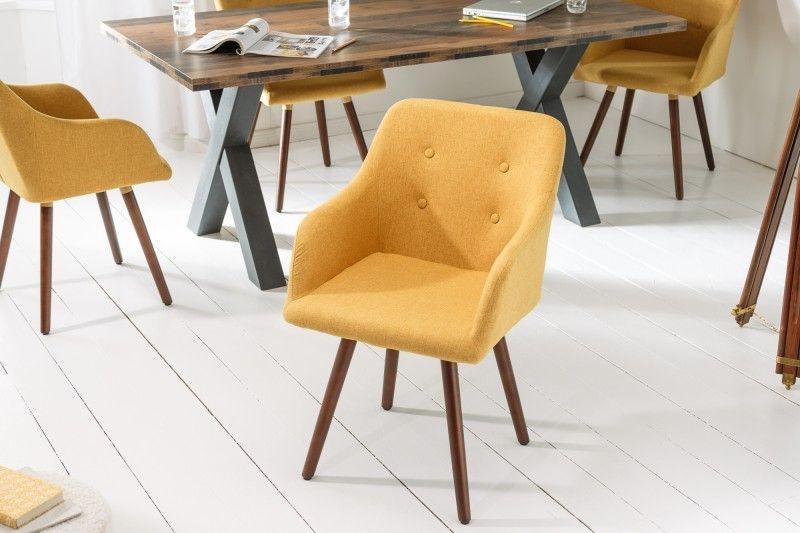
Sometimes one strong color choice works better than several tiny ones.
A pair of mustard chairs can bring warmth into a mostly neutral Scandinavian living room without requiring a complete furniture makeover. Place them opposite a pale sofa or around a simple coffee table.
Repeating the same color on two larger pieces also makes the choice feel intentional.
If you are not ready for mustard furniture, test the idea with cushions, a small footstool, or a throw first.
Two ways to bring in mustard
Keep the Bedroom Calm With Dusty Blue
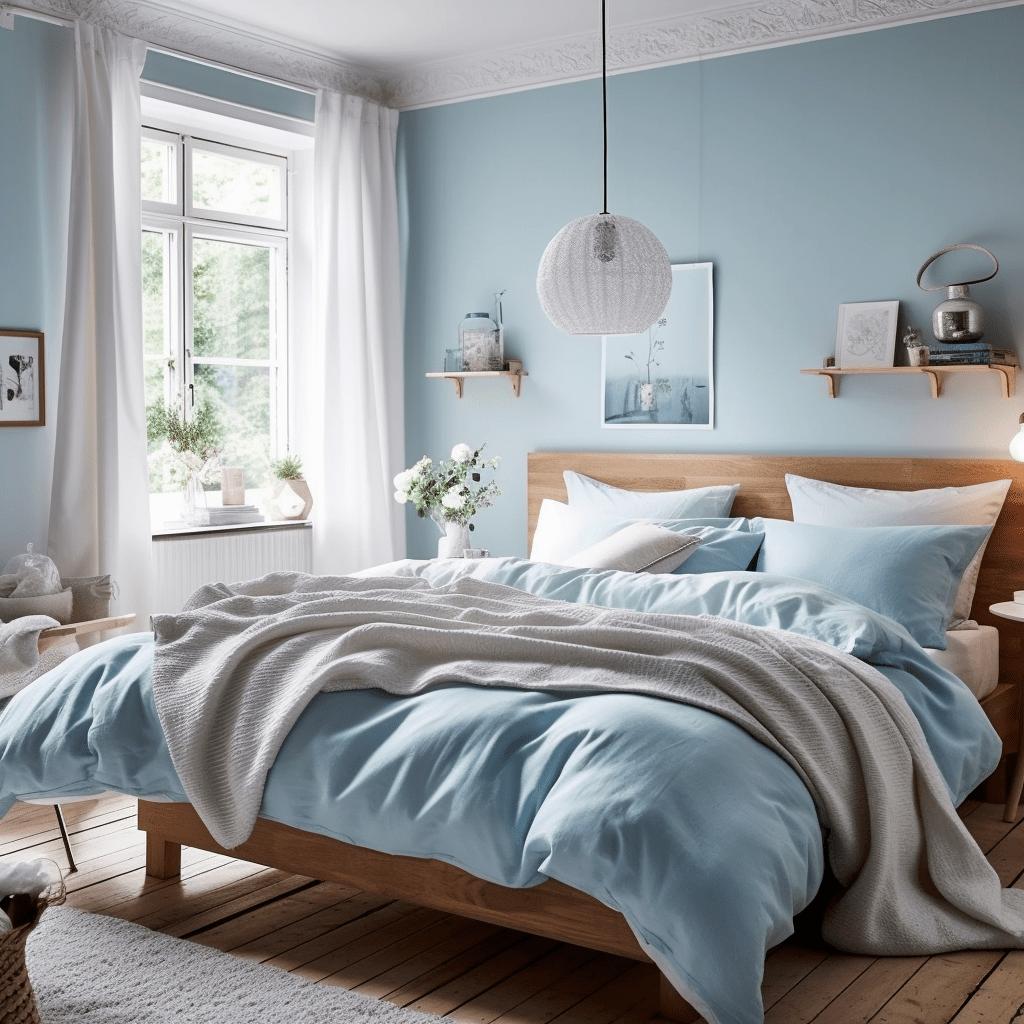
Bedrooms are a good place to experiment with softer colors. Dusty blue gives the room some personality without creating the visual noise you might get from a very bright shade.
Use it on the wall behind the bed, through linen bedding, or in a simple upholstered headboard. Then bring in pale wood and warm lighting to balance the cooler color.
A small repetition helps too. A blue cushion or piece of artwork can quietly connect the different parts of the room.
The simple bedroom formula
Warm Up the Dining Area With Terracotta
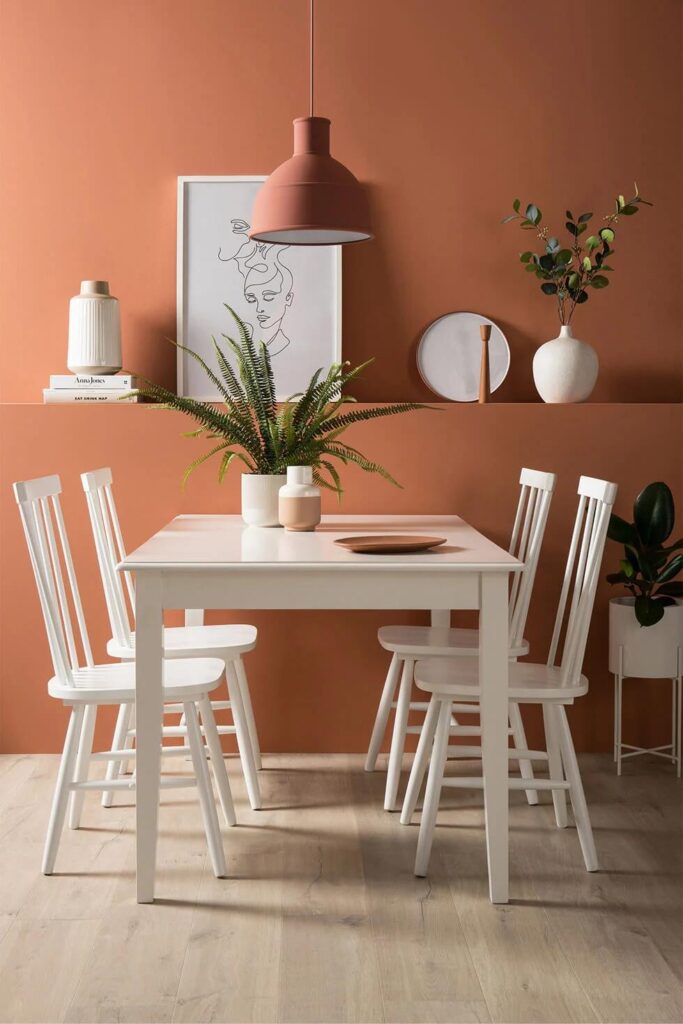
Terracotta brings an earthy warmth that works surprisingly well with Scandinavian furniture.
You could use it on dining chairs, a small feature wall, ceramic pieces, or even a runner on the table. There is no need to use the color everywhere.
Pick one main terracotta element first. Then add one or two smaller touches if the room needs more connection.
The combination of terracotta, white surfaces, and pale wood keeps the dining area warm without making it feel heavy.
Before you buy anything
Start with these three checks
Turn a Blank Wall Into a Colorful Gallery
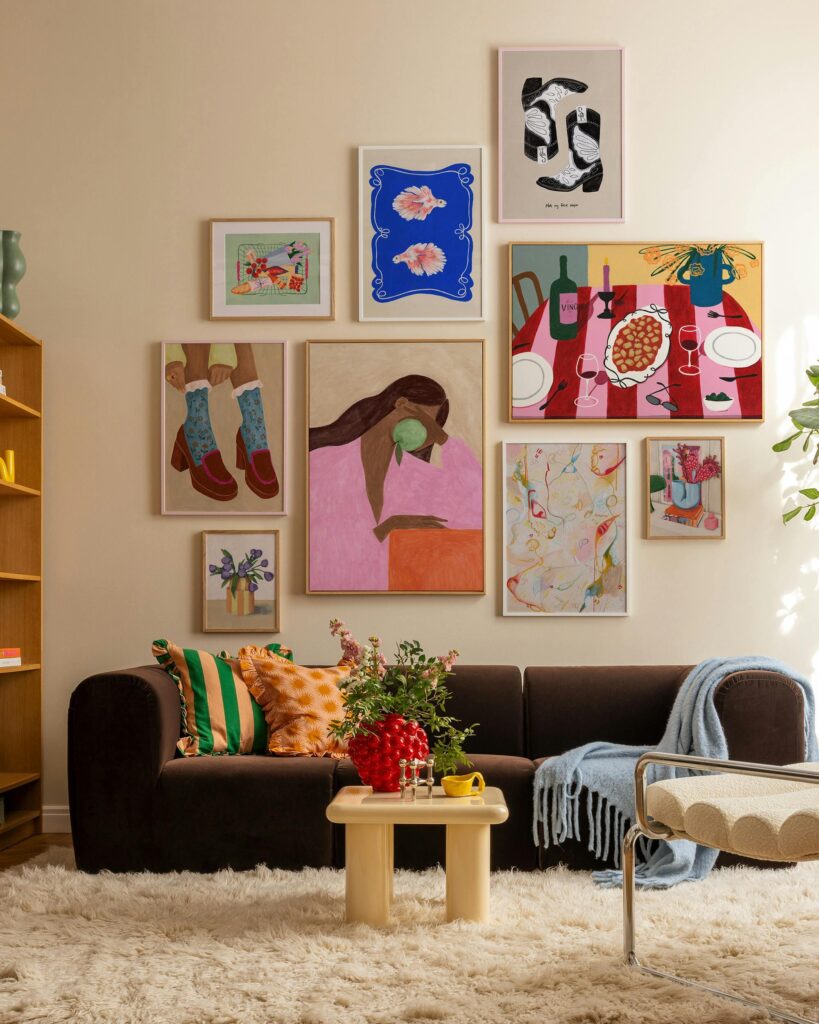
A gallery wall gives you a chance to introduce several colors without repainting the room or replacing your furniture.
Mix abstract prints, simple illustrations, photographs, and graphic artwork. The frames can vary, but keeping some order in the spacing helps the wall feel considered rather than crowded.
There is an easy trick before you start drilling holes: lay everything on the floor first.
Move the artwork around until the colors and sizes feel balanced. Then recreate that arrangement on the wall.
Gallery wall at a glance
Add Blush Pink to a Scandinavian Home Office
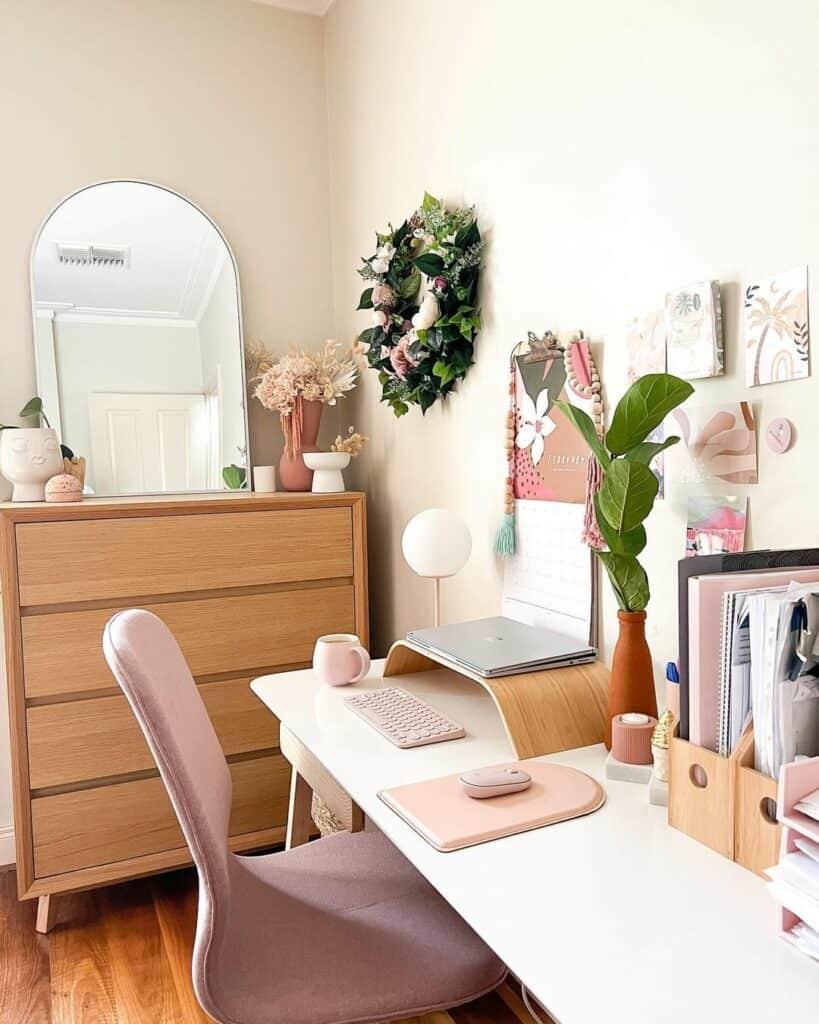
A home office does not have to feel serious just because it is a workspace. A muted blush pink wall, chair, or desk accessory can soften the room while still working with the simple Scandinavian style.
Keep the larger pieces light. Think pale wood desk, white shelving, simple storage, and one comfortable chair. Then let blush appear in artwork, a cushion, or a small lamp.
The trick is to avoid turning every surface pink. One larger pink element plus a few small repeats is usually enough.
💡 Quick Tip
Keep the desk and storage neutral, then use blush pink in one noticeable place and repeat it in two smaller details. This keeps the workspace colorful without making it distracting.
Go Bolder With Teal Kitchen Cabinets
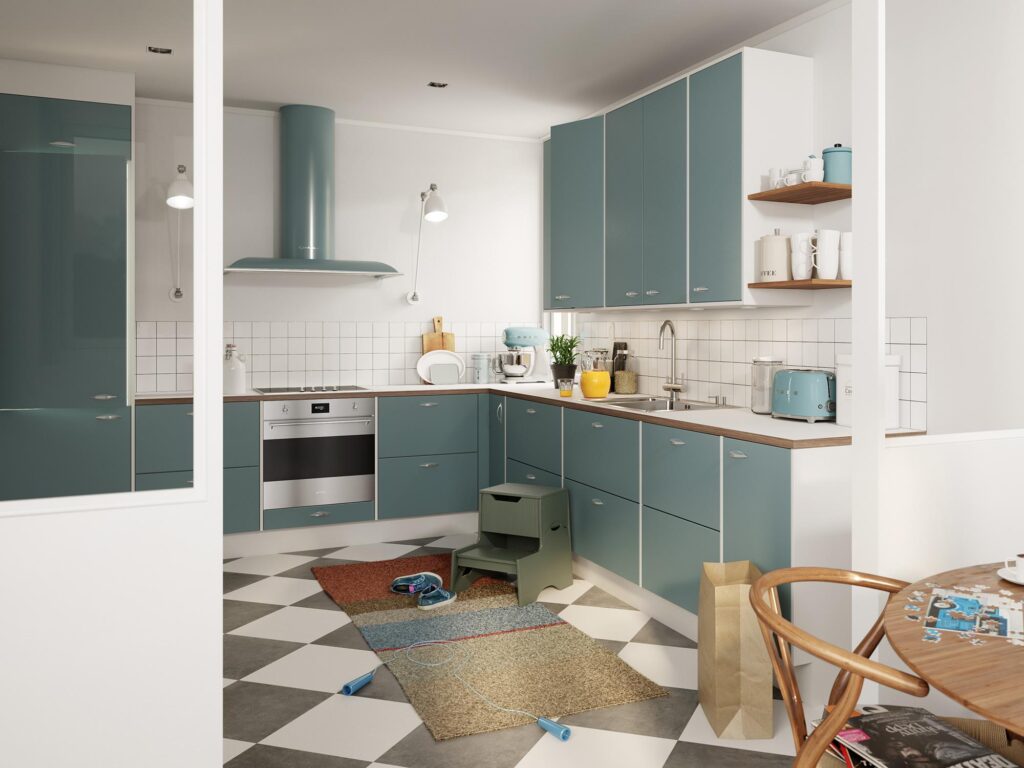
Teal cabinets can completely change a plain Scandinavian kitchen, but the rest of the room needs some restraint.
Pair the cabinets with pale wood, white walls, simple hardware, and uncluttered counters. If the cabinets are already the strongest color in the room, there is no need to add colorful appliances, busy backsplash patterns, and lots of competing accessories.
Look closely at the kitchen during the day too. A bold cabinet color can look very different under natural and artificial light.
Keep the balance simple
Balance strong cabinets with pale wood and simple surfaces.
Let natural light reach the main cabinet area.
Avoid filling the same view with several unrelated bold colors.
Do not crowd the counters with decorative pieces.
Arrange Books by Color for a Simple Rainbow Shelf
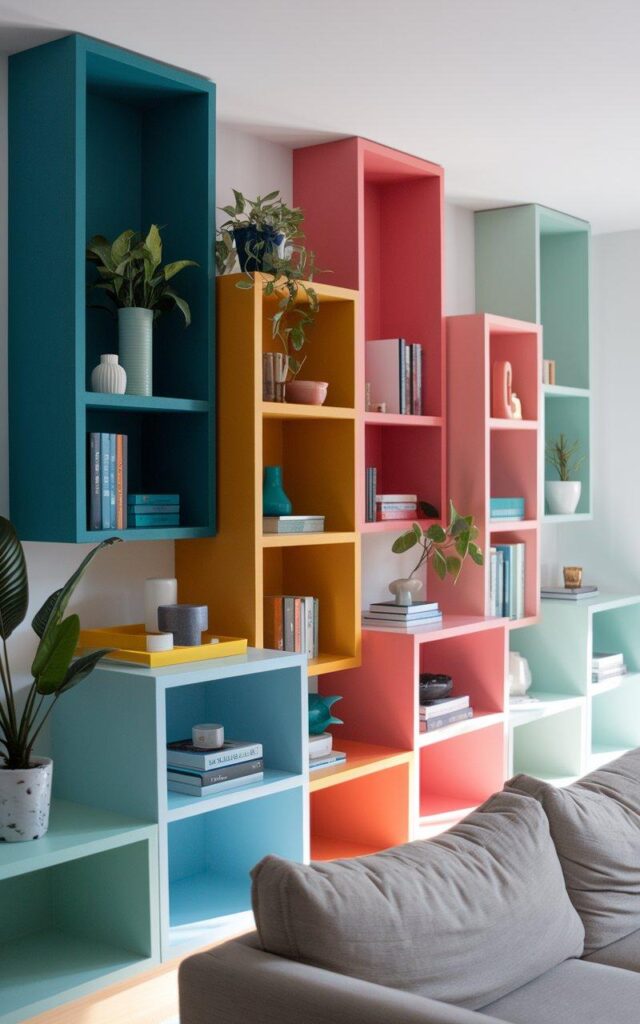
You do not always need to buy new decor to add color to a Scandinavian room. Your books can do some of the work.
Group books loosely by color on an open shelf, bookcase, or console. You can stand some upright and stack a few horizontally so the arrangement does not look too rigid.
It works especially well when the surrounding furniture is simple. The books become the colorful detail while the shelf itself stays quiet.
Try it in three steps
Pull out the books with the strongest colors and place them together.
Arrange nearby shades together rather than forcing an exact rainbow order.
Leave some empty shelf space so the display still feels airy.
Make One Wall the Star With Coral
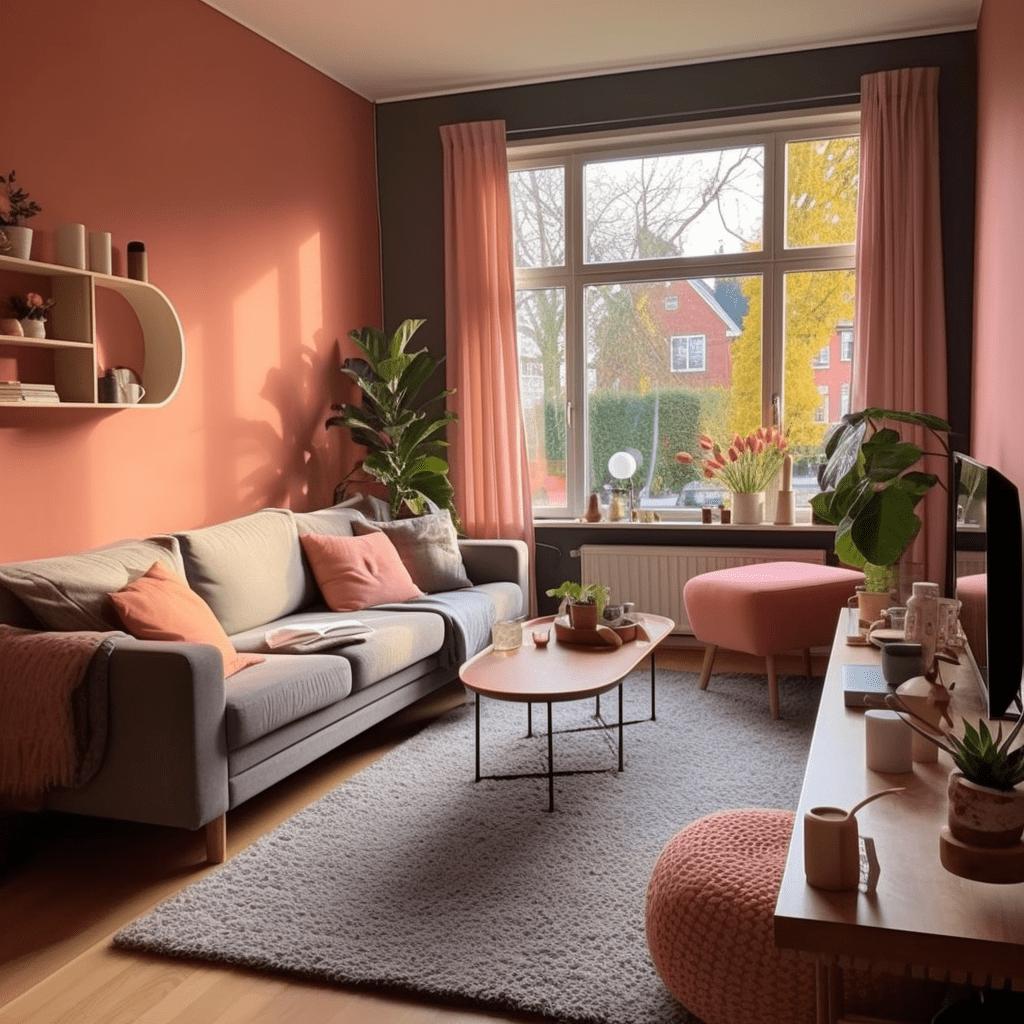
A coral wall can bring a lot of energy into a Scandinavian room. The easiest way to keep it under control is to make it the main event.
Choose one wall, such as the wall behind a sofa, dining table, or bed. Keep the other walls and larger furniture pieces neutral so the coral has room to stand out.
Then pick up a small hint of the same warm color somewhere else, perhaps in artwork or a cushion. That little repeat is enough to connect the room.
When one wall carries a strong color, let the furniture, flooring, and nearby walls stay quiet. The contrast is what makes the color work.
Keep a Colorful Kids’ Room Easy to Live With
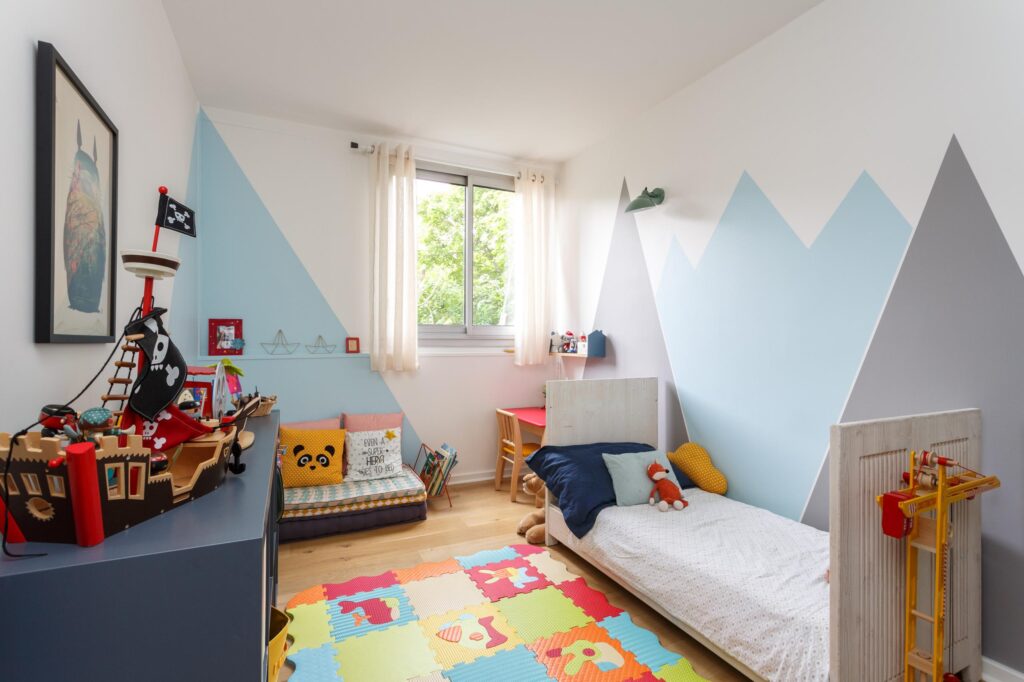
Kids’ rooms are naturally full of color, so the Scandinavian approach is less about removing color and more about giving it some structure.
Choose a simple base for the larger furniture, then bring in brighter shades through bedding, artwork, toys, storage, and small textiles.
A low shelf with colorful books can become part of the room’s design. So can a few bright storage boxes under a desk.
A practical kids’ room checklist
Keep these areas simple
Let a Jewel-Toned Sofa Lead the Living Room
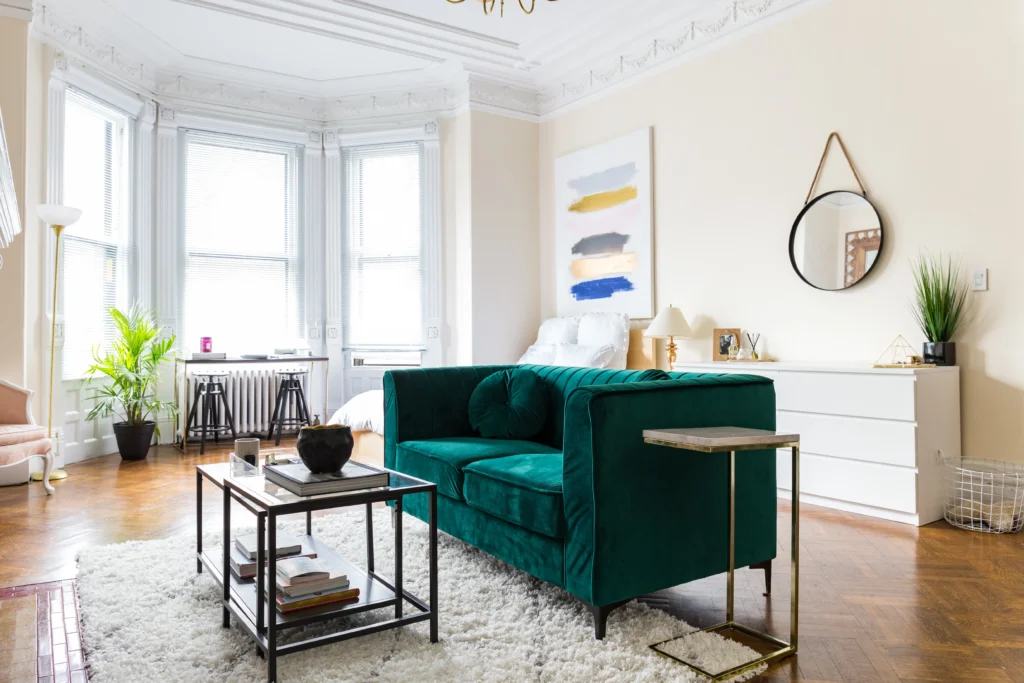
A deep green, blue, or other jewel-toned sofa can become the main color story in an otherwise simple living room.
Start there and work outward. Choose a pale rug, light wood table, neutral walls, and only a few cushions. You do not need to match every accessory to the sofa.
This approach is especially useful if you want a colorful room but do not want to paint the walls.
Build the room around the sofa
Use a Patterned Rug to Tie the Colors Together
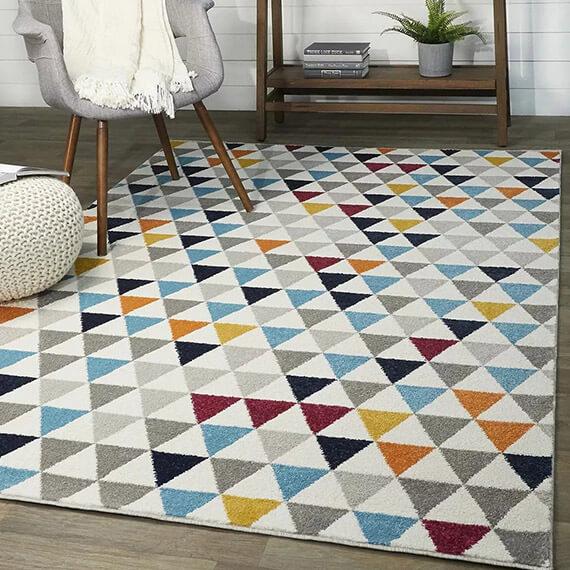
A patterned rug can be the easiest way to connect several colors that already exist in your room.
Look for a design that includes at least one color from the furniture or artwork. Then keep the larger pieces around it fairly simple.
This works particularly well in an open-plan room where the rug can help define the seating area.
If the rug is already busy, avoid placing several equally bold patterns right beside it. Let the floor provide the visual interest.
Which rug approach works best?
Bring Lavender In Through Small Bedroom Details
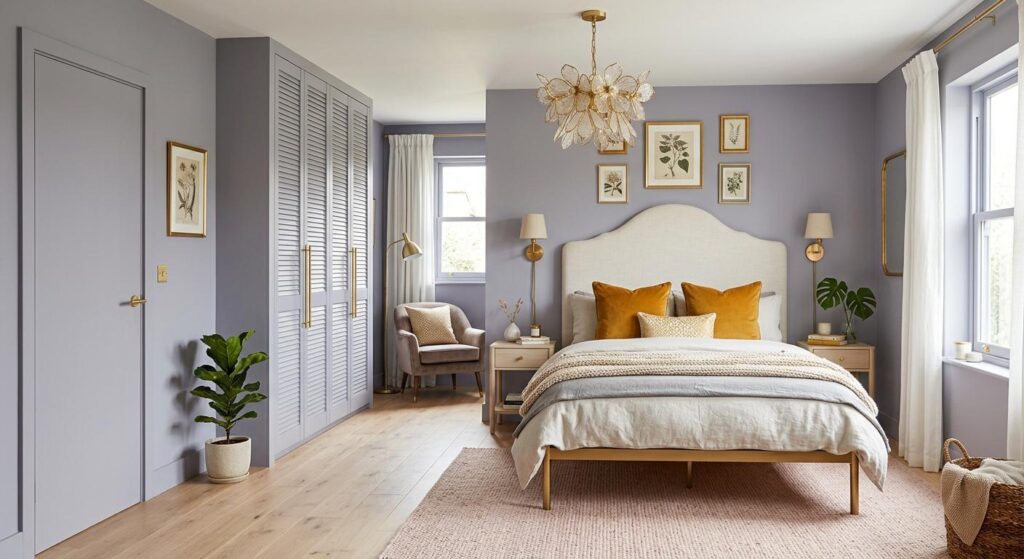
Lavender does not have to cover an entire room to make an impact.
A lavender cushion, throw, bedside lamp, artwork, or upholstered chair can give a neutral bedroom a softer color story. Pair it with white bedding and pale timber so the shade stays fresh.
This is also a useful approach if you like changing your decor from time to time. Smaller pieces are much easier to swap than painted walls or large furniture.
Lavender works best in small doses
Give the Entryway One Bright Scandinavian Moment
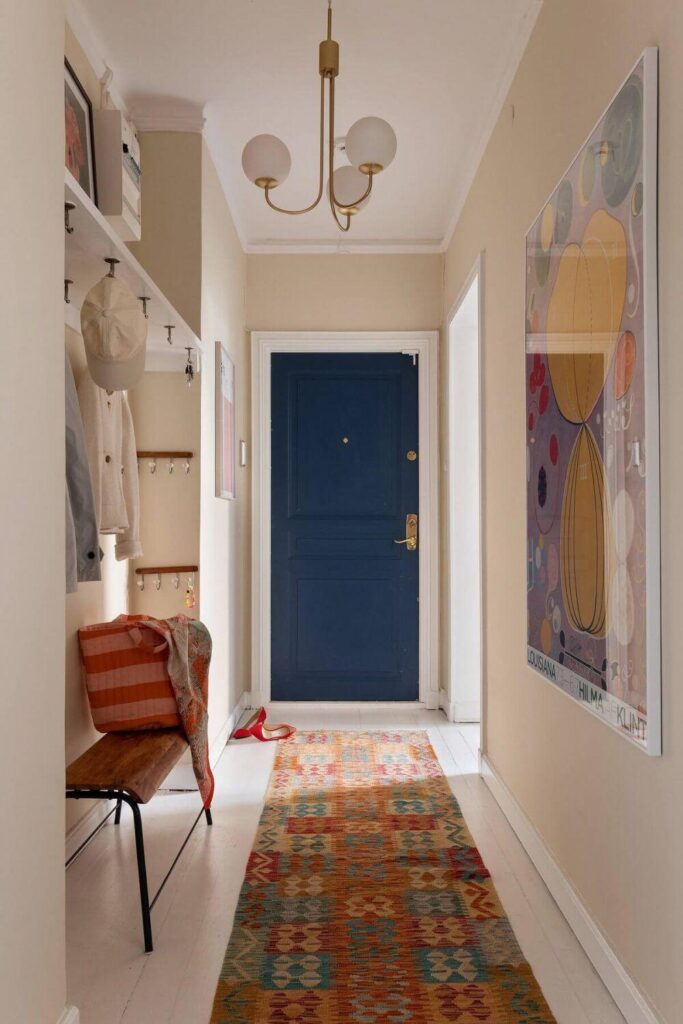
Entryways are easy to overlook. They are also a useful place to experiment because you can create a colorful focal point without changing the rest of the home.
Try a painted bench, colorful hooks, a bright piece of artwork, or a small patterned runner. Keep the storage practical and avoid filling every available surface.
A simple mirror above a colorful bench can be enough to make the entrance feel finished.
📌 Good To Know
Keep the entryway’s color on one main feature. A bright bench or artwork can make the space memorable while leaving enough room for shoes, bags, and everyday clutter.
Create a Cozy Corner With Burnt Orange
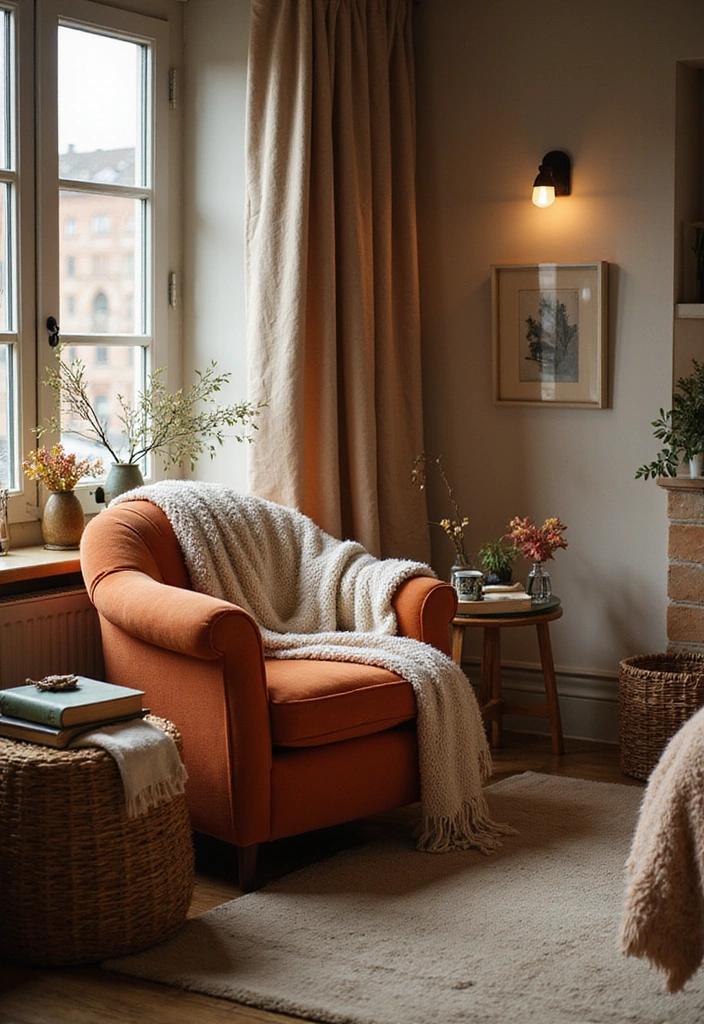
Burnt orange is a natural fit for a cozy Scandinavian corner, especially when it is paired with pale wood and warm lighting.
You could use the shade on an armchair, throw, cushion, or small rug. Add a simple side table and a floor lamp, then leave enough empty space around the seating area.
This is a good solution when you want more color but do not want to commit to painting a whole room.
An unused corner with a spare chair or empty floor can make the room feel unfinished, even when the main furniture is arranged well.
A burnt orange chair, soft throw, small side table, and warm lamp turn the corner into a useful reading or relaxing spot without adding visual clutter.
Playful Color-Blocked Walls
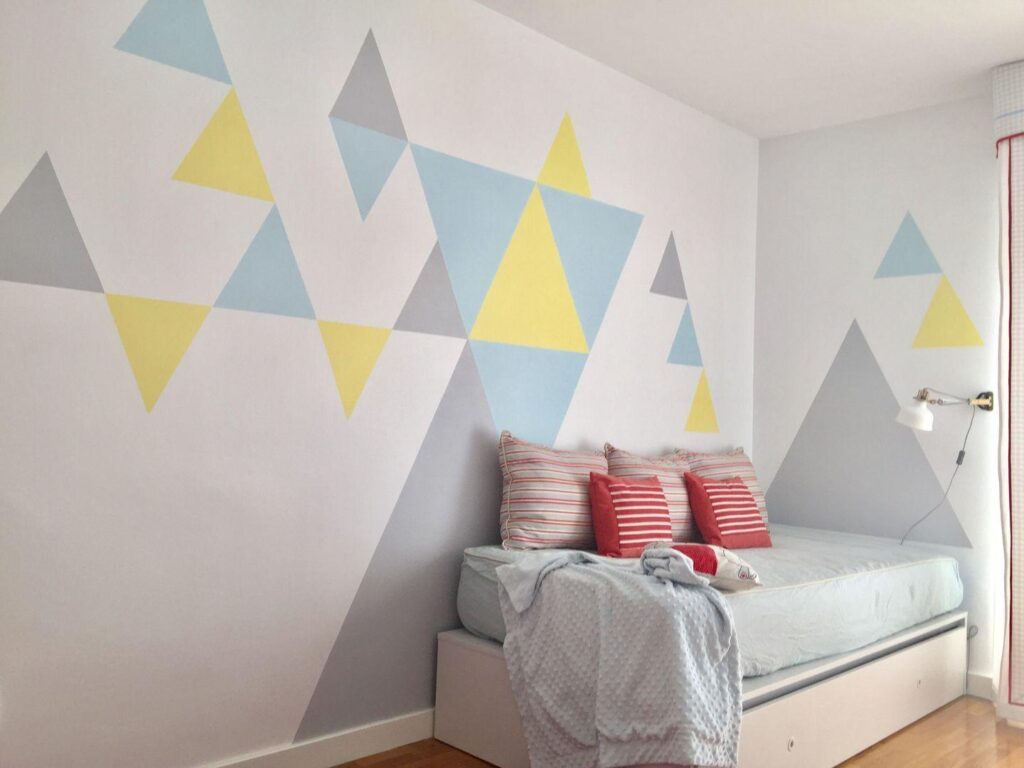
Color blocking is a fun way to bring several shades into a Scandinavian room without painting every wall the same color.
Instead of covering the whole room, use two complementary shades to define part of a wall. A painted half-wall behind a desk, a geometric corner around a bed, or a block of color behind a dining table can create a strong visual detail.
Keep the furniture simple so the painted shapes remain the focus. Straight lines and clean edges also suit the simple forms found in Scandinavian interiors.
Tip: Use painter’s tape to mark the edges before opening the paint. It gives you a much better idea of how the blocks will sit with your furniture.
Use one main color block with a second shade that supports it.
Keep furniture and flooring relatively quiet.
Do not give every wall its own competing pattern or color.
Leave some plain wall space around the painted shapes.
Scandinavian Bathroom With Blue Tiles
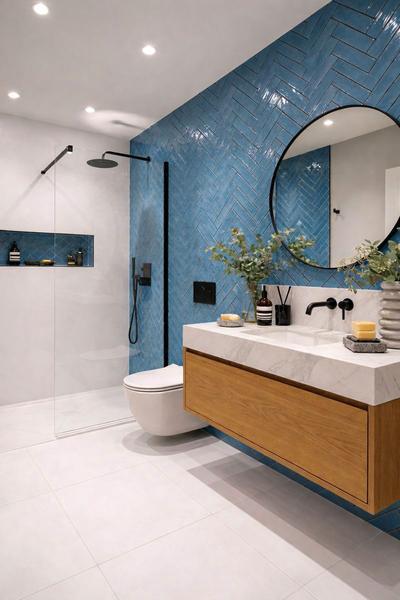
Blue tiles can give a Scandinavian bathroom a fresh burst of color while still keeping the room simple and clean.
Use blue on the shower wall, around the vanity, or across one main section instead of covering every surface. White fixtures and pale wood details help balance the stronger tile color.
The smaller the bathroom, the more useful this approach can be. A single tiled feature can create interest without making the whole room feel visually crowded.
Keep the rest of the bathroom simple with clean-lined fixtures, minimal accessories, and plenty of open wall space.
Blue tile planning checklist
Before choosing the tile
Vibrant Scandinavian Sunroom
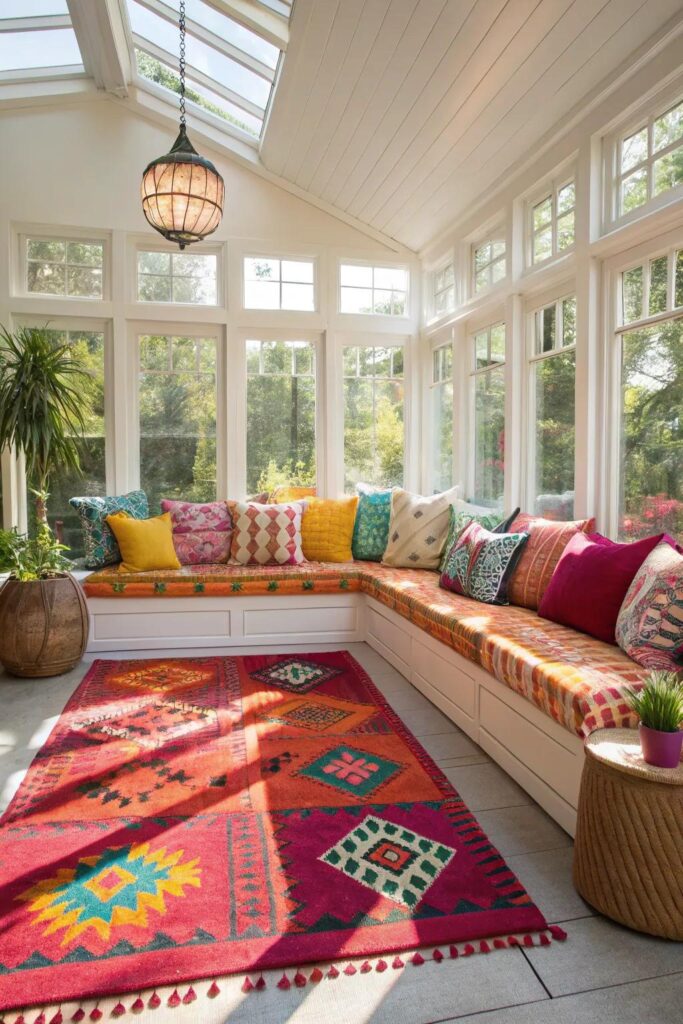
A sunroom gives you more freedom to experiment with color because natural light already makes the space feel open and bright.
Try a colorful sofa, patterned rug, painted furniture, or a collection of bright cushions. You can also bring in plants to soften stronger colors and connect the room with the outdoors.
The trick is to keep the basic shapes simple. A clean-lined sofa and light wood table can handle much more color than a room filled with ornate furniture.
Use the windows as part of the design too. Keep bulky furniture away from the brightest areas so the room still feels open during the day.
Build a colorful sunroom around three layers
My Final Take
Colorful Scandinavian design is really about finding the point where simplicity and personality meet. You can go bold with teal cabinets or a jewel-toned sofa, or keep things much quieter with dusty blue bedding, lavender accents, or a colorful gallery wall.
The important part is giving each color enough space to stand out. Light wood, simple furniture, uncluttered surfaces, and natural light can keep even stronger shades feeling comfortable.
So whether you are planning a full renovation or simply moving a few things around this weekend, these Colorful Scandinavian Interior Ideas give you plenty of ways to start.
Save this list to Pinterest so you can come back to it when you are ready to add a little more color to your home.
The colorful Scandinavian interior ideas above embrace these principles while adding vibrant touches that make each space feel bright, inviting, and full of personality. Many of these ideas are inspired by classic Scandinavian design traditions and adapted for today’s modern lifestyle.
I hope you enjoy the inspiration and discover new ways to bring the beauty of Scandinavian style into your own home.