
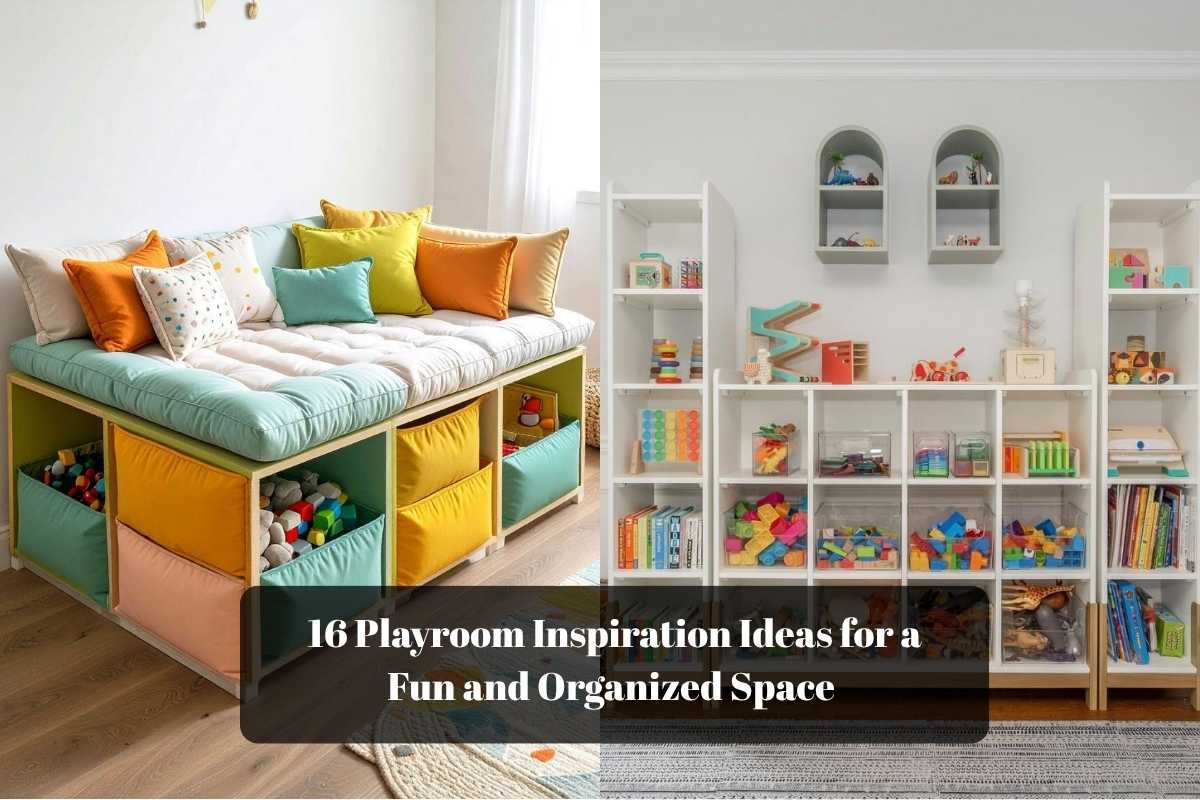
Playroom Inspiration ideas for a Fun and organized space works at designing a room that is both a place where children can play, discover, and organize things.
A well-planned playroom merges fun and organization to give children a designated space to do various activities without having toys and other items scattered around.
Some of these include theme-based rooms, such as jungle-themed rooms, outer space-themed rooms, or even fairy tale theme rooms. Other concepts include a room modeled after the Montessori philosophy and promotes free play.
Reading nooks, crafting areas, learning corners, and good storage options with labeled storage bins and cube storage units are some great ways to make the playroom both fun and easy to manage.
Create Activity Zones for Different Types of Play
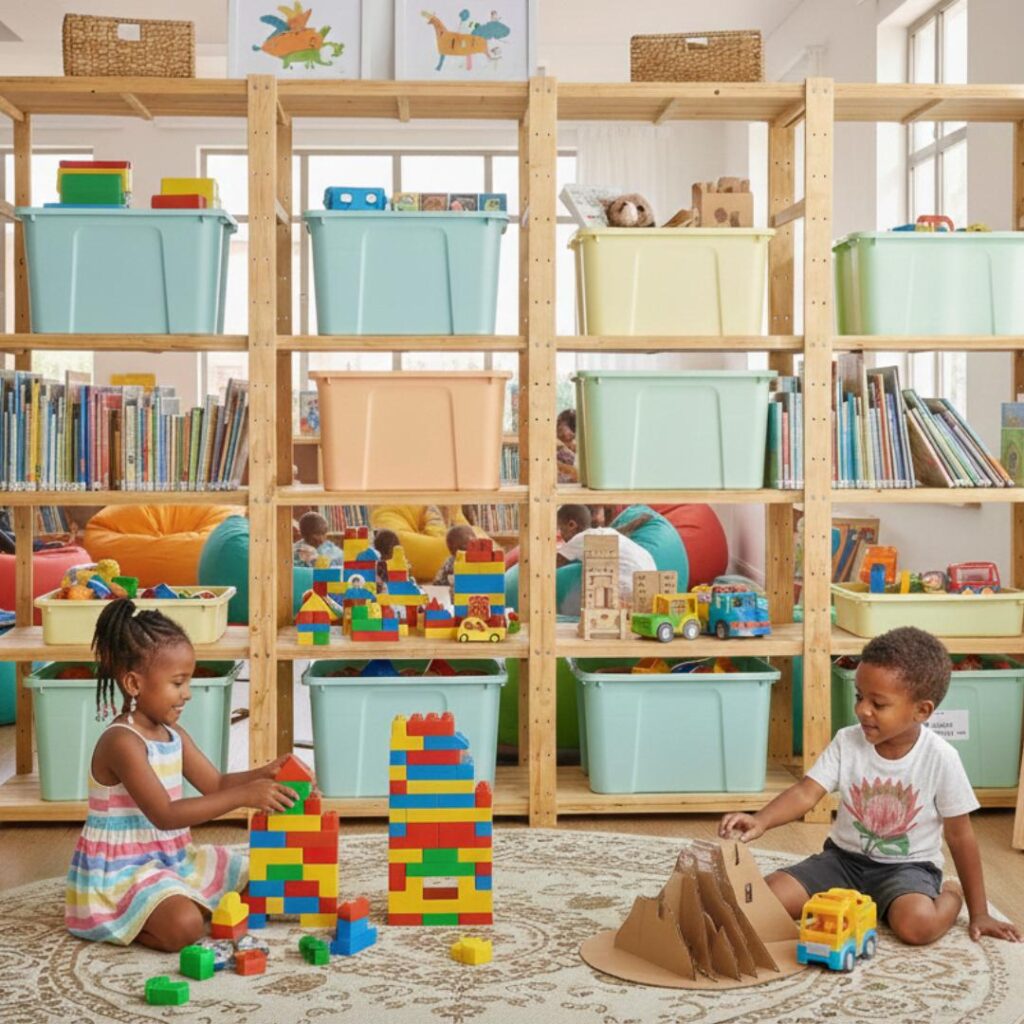
A big open playroom can turn into one huge mess very easily. Having smaller activity zones in the room will help children realize where to put their toys, and it will allow them to have prolonged playing periods.
Reading corner, construction area, arts and crafts table, and role-playing area will help to direct children to one activity and then to the next without overcrowding the room.
Even some rugs and shelves can help mark different zones without building walls.
Install Open Shelving That Kids Can Reach
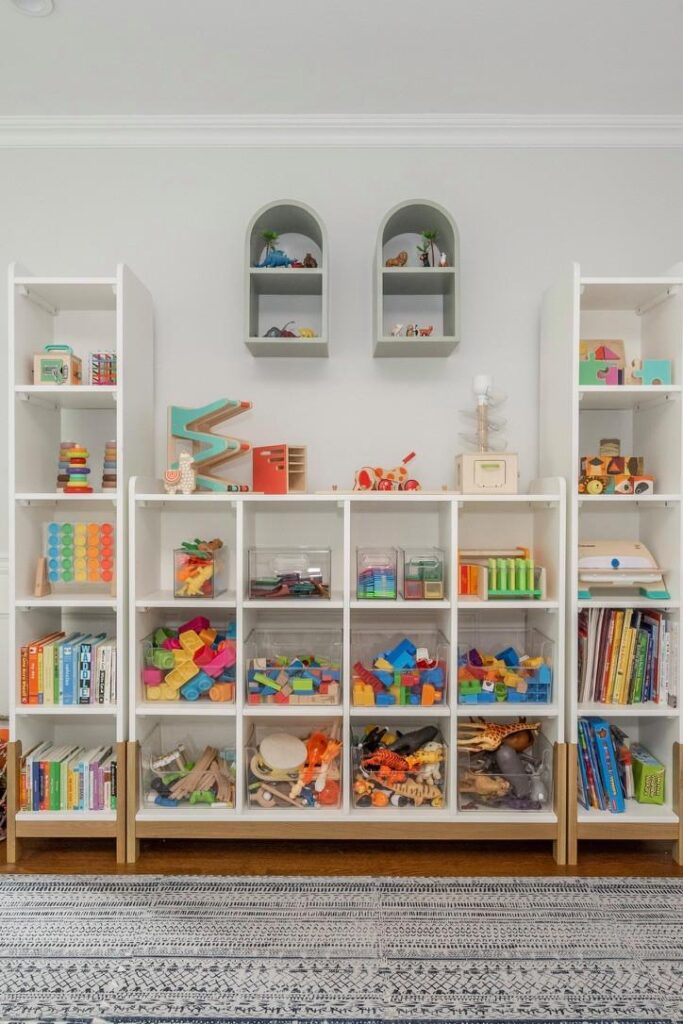
Storage is most effective if children can use it without adult assistance. An open shelf at the level of the child will turn clean-up into an activity for playtime rather than a task.
Instead of filling bins to the top with toys where all will be lost, show just a few toys in an orderly fashion. Favorite toys will definitely stand out.
Add Labeled Baskets and Storage Bins
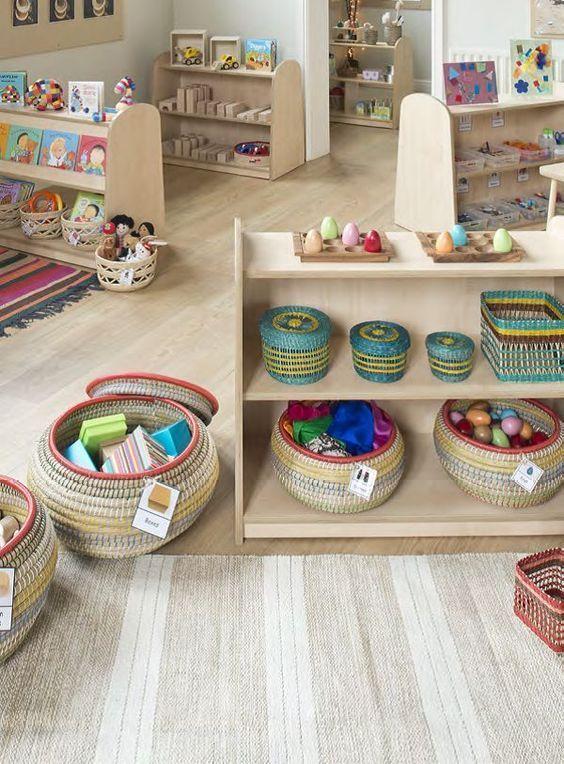
Tiny toys have an impressive talent for spreading across the entire house. Giving every category its own basket keeps the chaos manageable.
Labels with both words and simple pictures help younger children recognize where things belong before they can read.
Clear bins are another smart choice because kids can quickly spot what they’re looking for without dumping everything onto the floor.
Design a Cozy Reading Corner
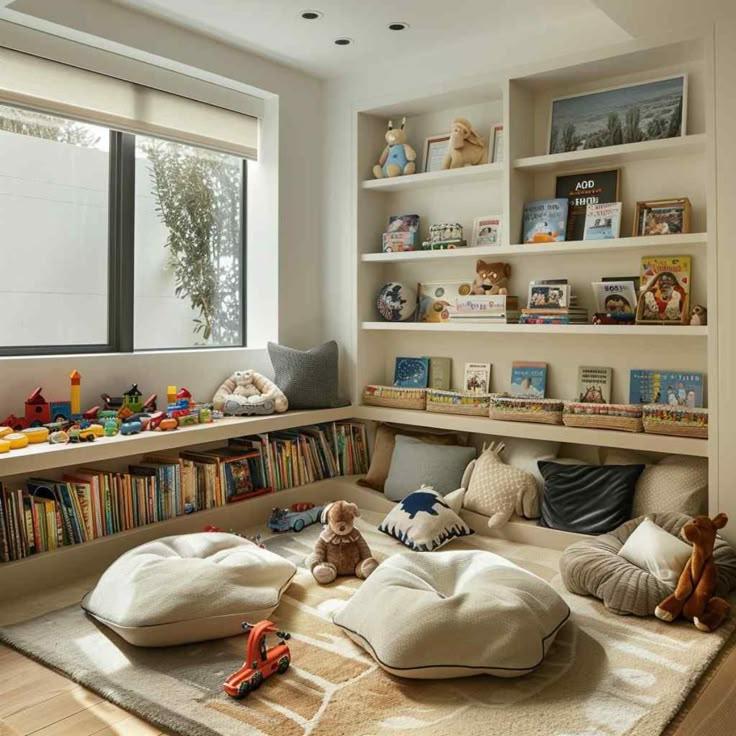
Books have to fight against loud toys, but a quiet spot for reading creates an area for the books alone.
Comfortable cushions, a little shelf facing outwards, and soft lights help children to read the books all through the day.
Changing the books after a couple of weeks keeps the old books novel without having to buy new ones.
Include a Creative Art Station
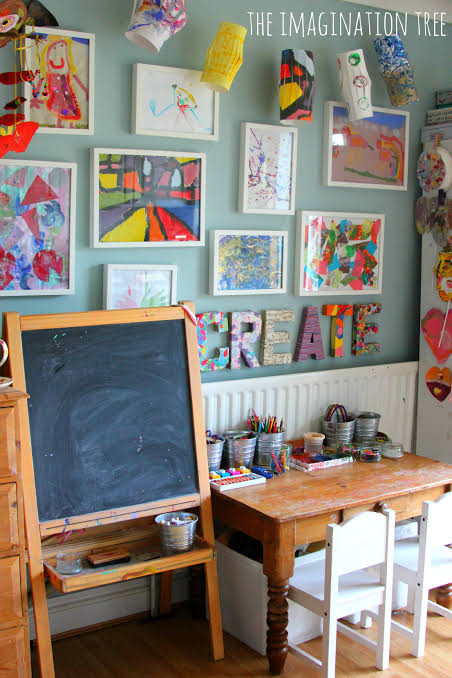
Most creativity includes glue, tape, paper, and an abundance of glitter. An art center is useful to keep everything contained.
It’s important to make sure all materials are accessible but also keep some materials like paint up high. It’s great to hang up artwork around the room so children can feel proud of their accomplishments.
Use Furniture That Doubles as Storage
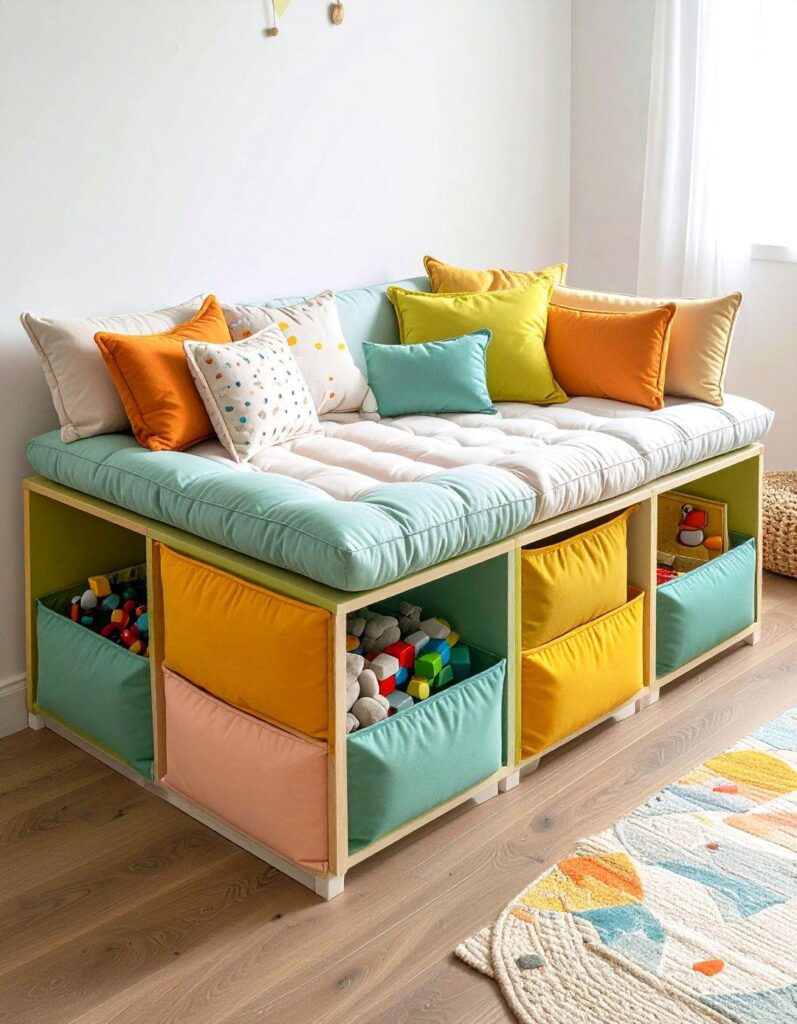
Each piece of furniture needs to be justified for inclusion into a playroom. Built-in toy bins in the form of benches, ottomans, and cubes give you the chance to have seats that store toys.
This allows you to keep your playroom looking tidy without adding any extra cabinets.
Hang a Chalkboard or Whiteboard Wall
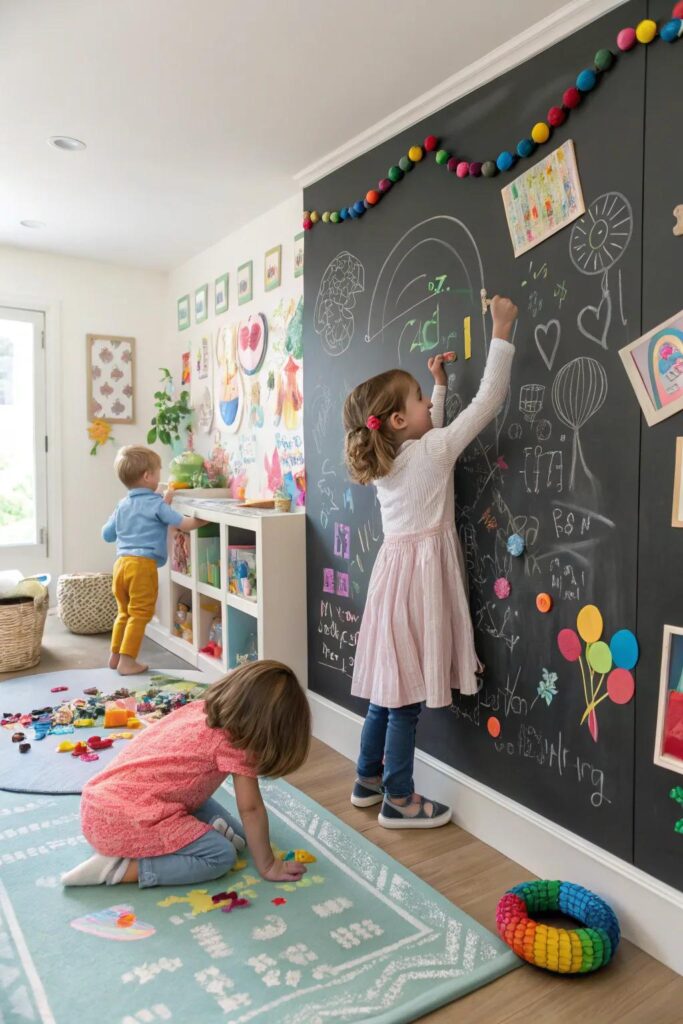
But walls don’t always need to be blank. With the use of a chalkboard or a whiteboard, the children can be given the opportunity to create big drawings, make lettering, or even develop their own games without the walls being painted with crayons.
This is an addition which will continue to develop along with them.
Choose Soft Flooring for Comfortable Play
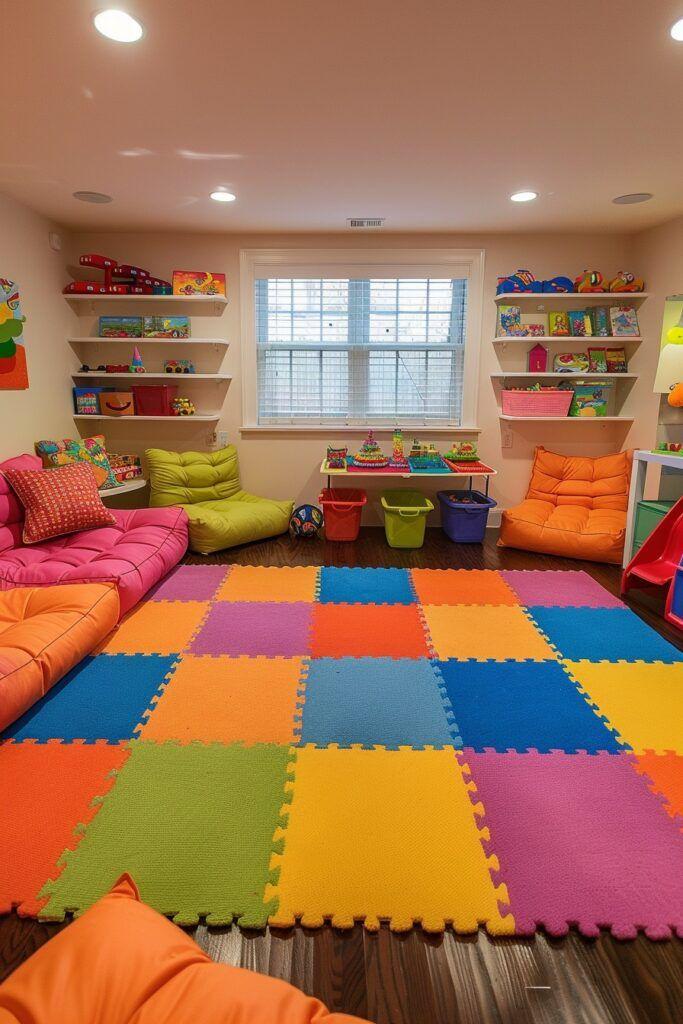
Most of the activities take place on the floor rather than on chairs. The use of thick rugs, foam or soft carpets makes it easy for toddlers to crawl, build, or even tumble.
In addition to cushioning falls, the soft floor will also reduce noise.
Rotate Toys Instead of Displaying Everything
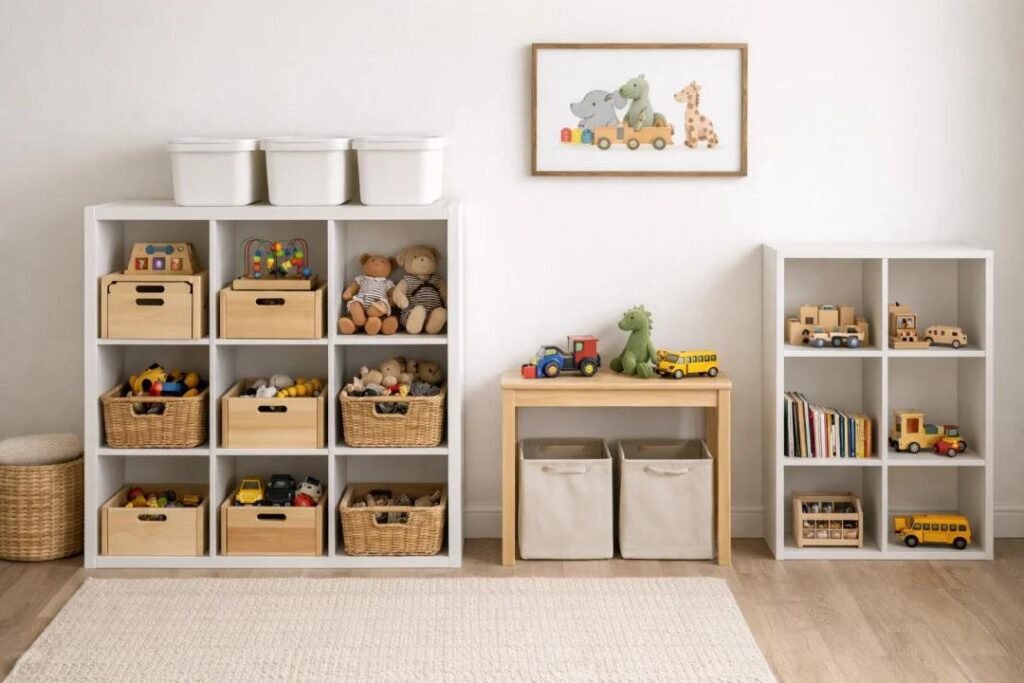
It isn’t necessarily about having more toys but less options. Some of the toys can be kept away and changed after every few weeks.
The toy that had not been played with in a month’s time becomes a novelty again. Parents are usually surprised at how long children remain entertained.
Add a Pretend Play Corner
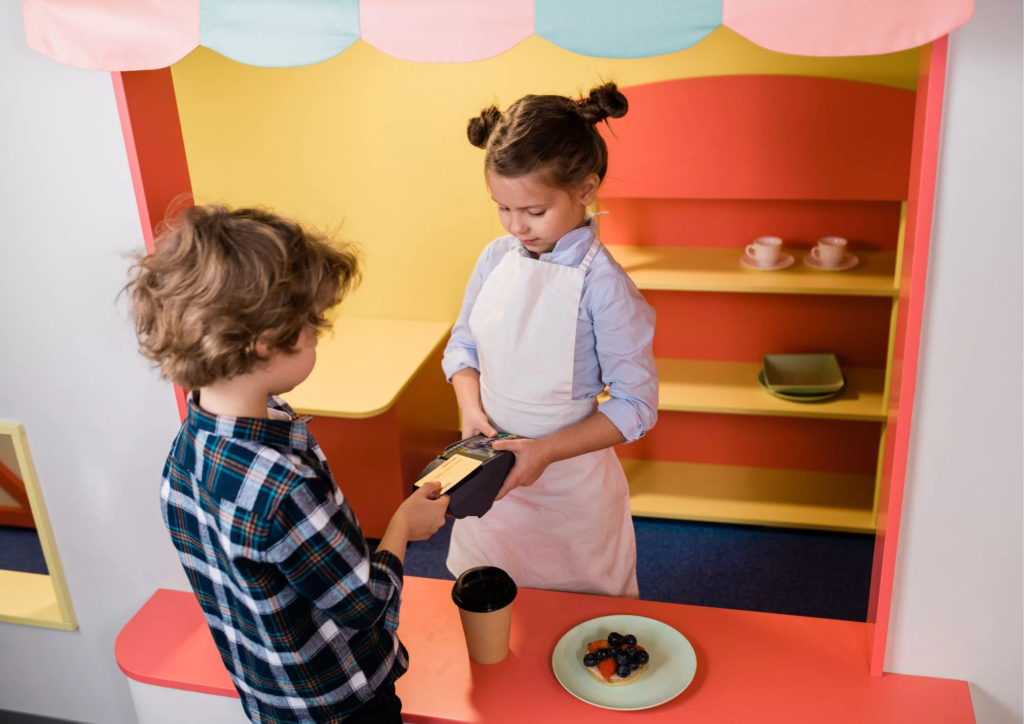
Imaginative play helps develop communication, creativity, and self-confidence. Whether it is a toy kitchen, a dress-up area, market stall, or puppet theater, imaginative play stimulates storytelling that can vary every day.
Making costumes easily accessible through hooks helps to engage in impromptu role-play rather than hide everything in drawers.
Make Use of Vertical Wall Storage
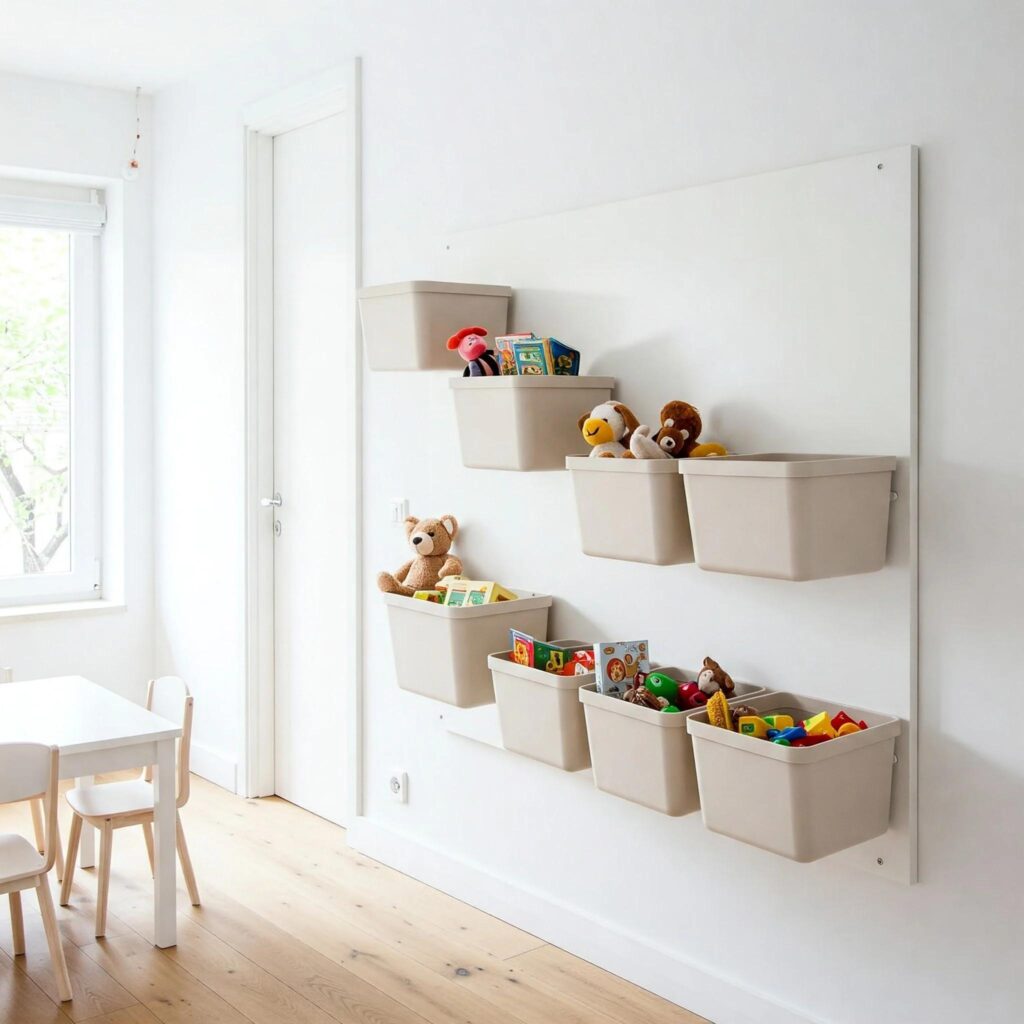
Floor space can easily become scarce, especially in small homes. The solution to that issue is to look upwards.
Pegboards, suspended shelves, hanging storage units, and mounted bookshelves allow you to use your vertical space effectively while making sure all materials remain visible.
Bring in Natural Materials
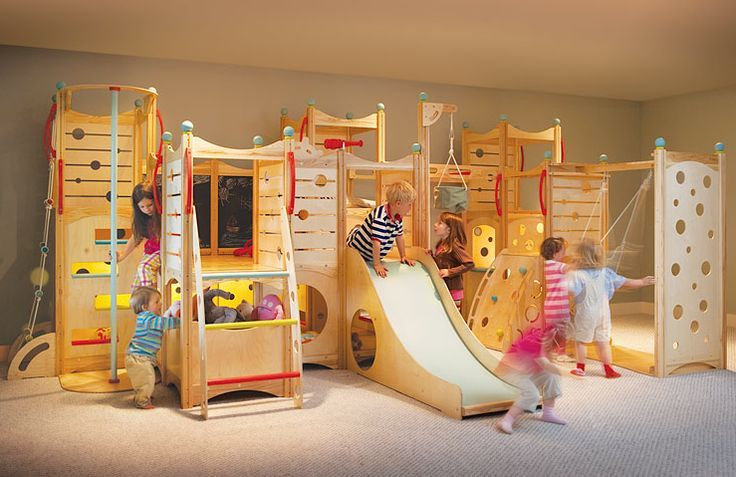
Plastics definitely have their role, but adding wooden toys and baskets will add balance to this picture.
It is true that such materials age well and look better integrated into the rest of your home’s décor. This approach helps to avoid making the environment too commercial.
Keep a Small Table for Games and Puzzles
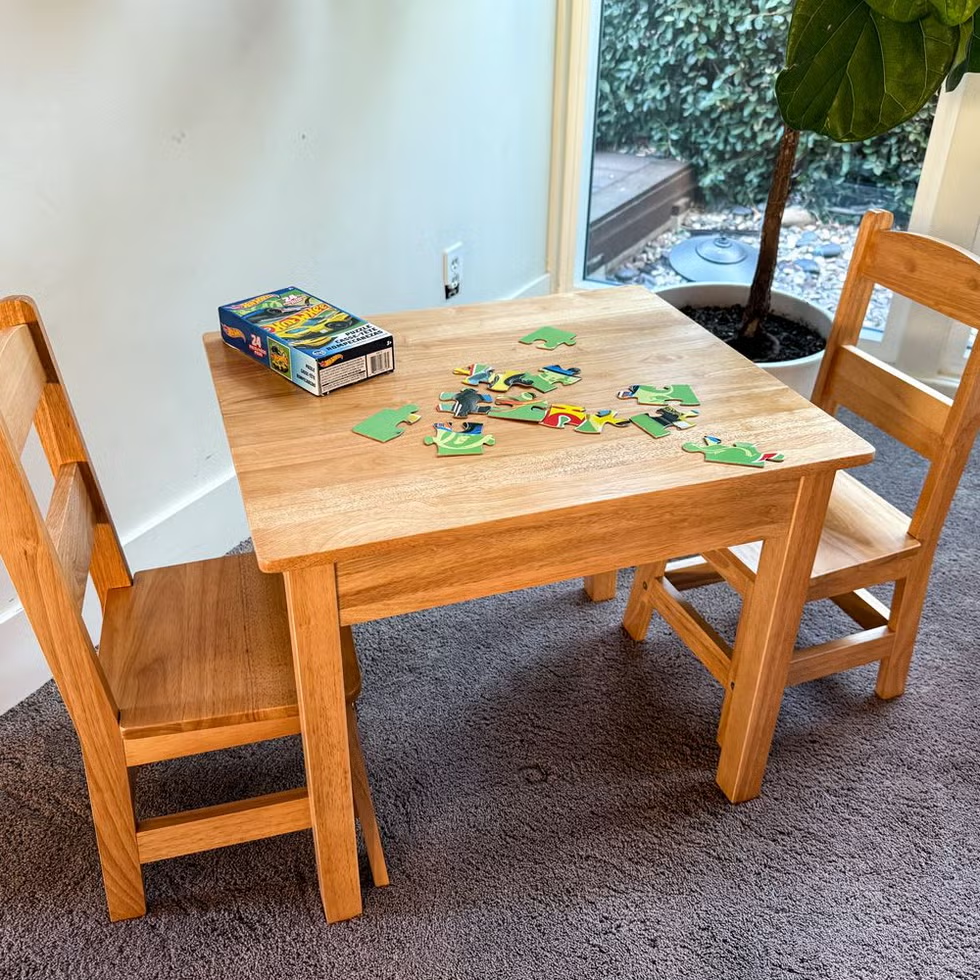
Some activities require a specific surface. The table designed for the child’s size turns into the right surface for puzzle and game playing, coloring, and construction toys that have to be kept together for some time.
Opting for light chairs will let the kids move them easily as they progress with different activities.
Decorate With Bright, Playful Wall Art
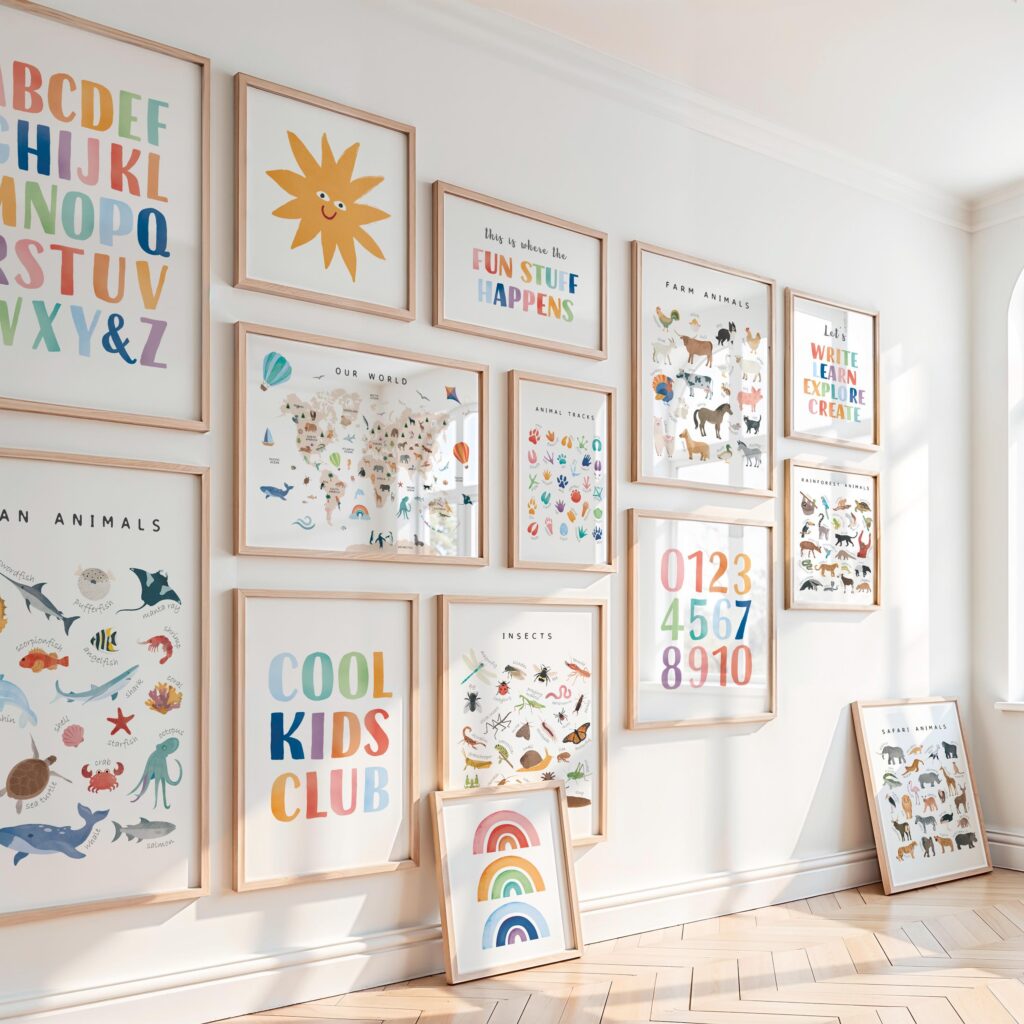
Furnishings do not have to be fancy in order to leave an impact. Happy prints, alphabets, maps, or murals can personalize the space without using up needed space for storage.
It is just as easy to change a couple of framed prints from time to time as to buy new furnishings.
Leave Plenty of Open Floor Space
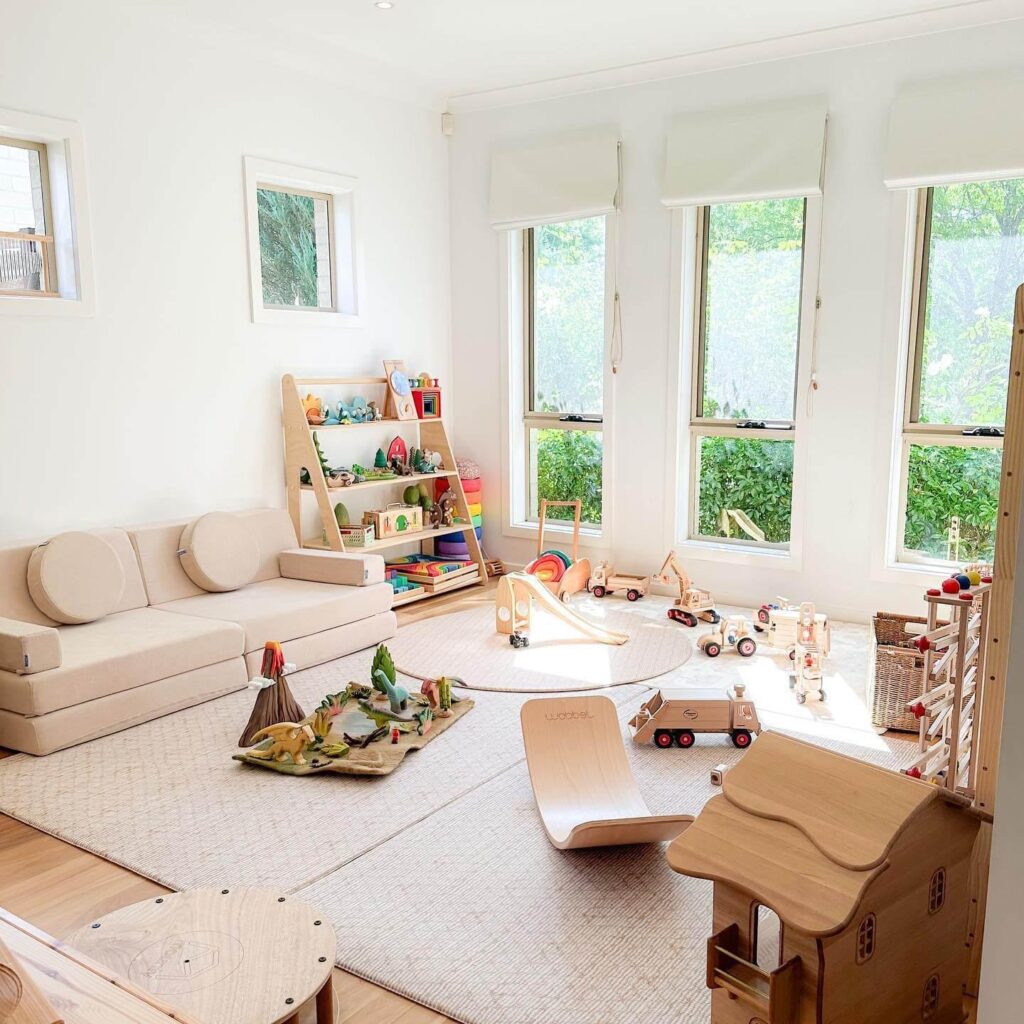
One decorating faux pas that people make is overcrowding their rooms. Kids often enjoy empty spaces rather than an abundance of furniture since it allows them to build forts, lay train tracks, and dance around.
Prior to adding another piece of furniture or even a play toy, it might be best to consider if the room needs it.
Personalize the Space With Your Child’s Interests
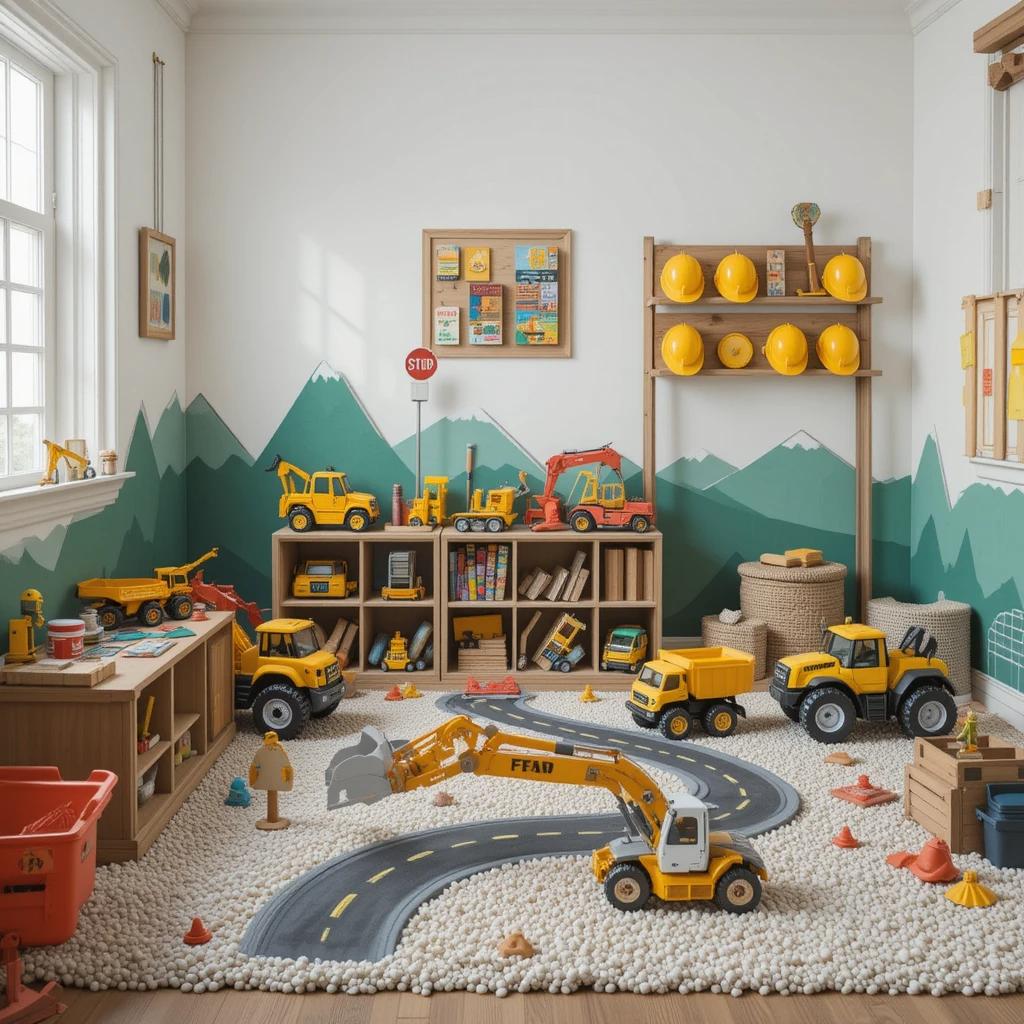
The most successful playrooms do not always strictly follow the rules set out in catalogs. The most successful playrooms are always imbued with the personal traits of the children who spend their time in these rooms.
This is because a little boy interested in dinosaurs, outer space, animals, or railways spends much more time in this room.
Thank you for the time you’ve taken to check out our playroom inspiration ideas. We hope that these will enable you to come up with a playroom that will be fun to play in, study in, and even to express yourself through their creativity in everyday life.
Through proper planning, adequate storage, and designing your playroom in keeping with your own family style, you can have an organized space where lots of fun and creativity can happen in years to come.